Blog

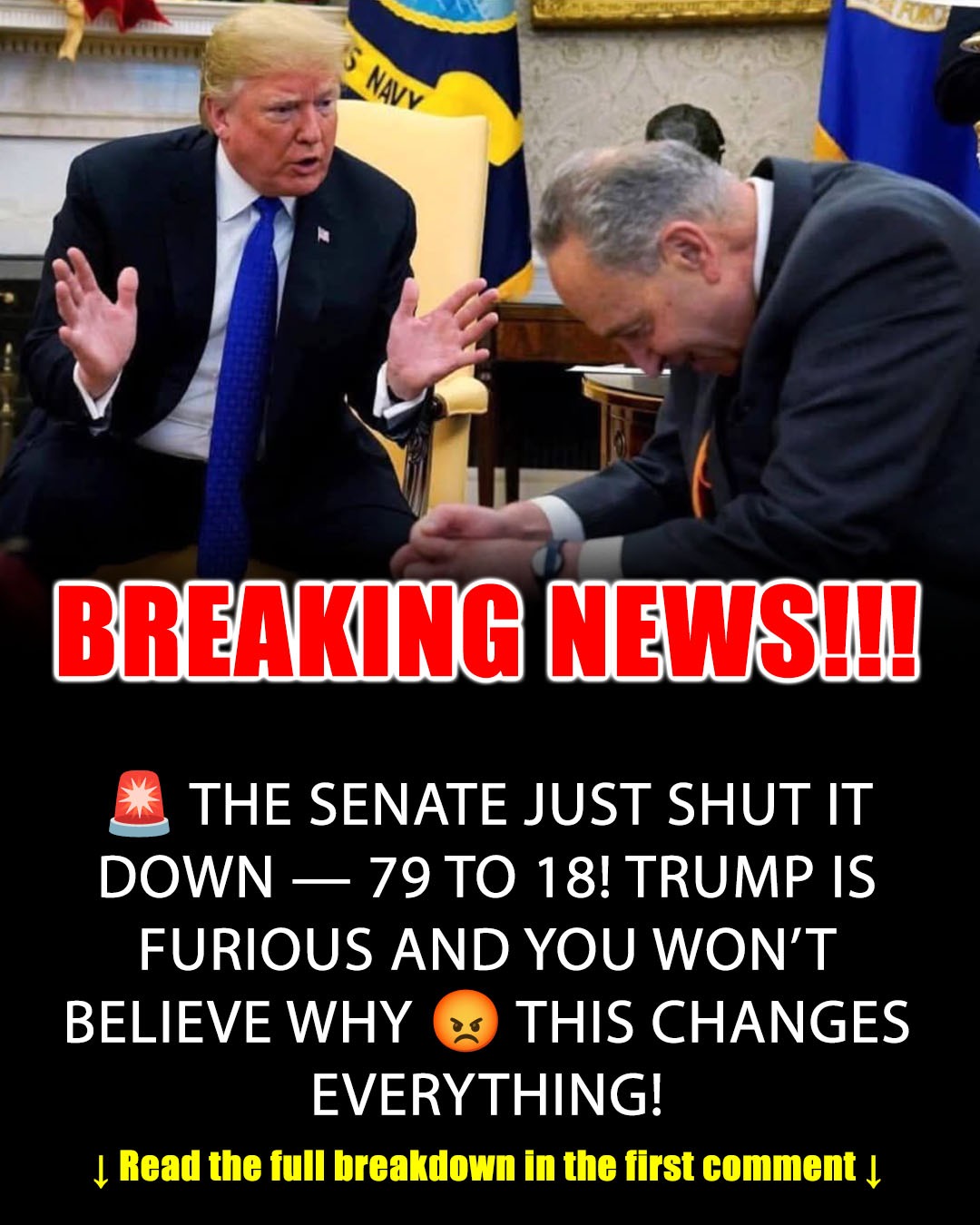
  • Senate Blocks Sanders Attempt to Halt Israel Arms Deal!

    Senate Blocks Sanders Attempt to Halt Israel Arms Deal!

    The U.S. Senate delivered a decisive blow to Senator Bernie Sanders’ push to block a major U.S. arms deal with Israel, shutting down his resolutions with overwhelming bipartisan force. The vote wasn’t surprising — not in a Congress that has historically stood firmly behind Israel — but it was revealing. It exposed just how wide the chasm has grown between Washington’s traditional foreign-policy instincts and the growing public unease over the humanitarian crisis in Gaza.

    Sanders had taken the rare step of triggering the Arms Export Control Act, a legislative maneuver Congress almost never uses, to challenge a $20 billion weapons package destined for Israel. The sale includes precision-guided bombs, tank rounds, and other munitions — the same categories of weapons that critics argue have fueled already staggering civilian losses. Gaza officials report more than 43,000 Palestinians killed since the conflict escalated, with entire neighborhoods flattened, medical infrastructure collapsing, and humanitarian aid severely strained.

    Sanders’ argument was straightforward: If the United States continues sending offensive weapons to Israel at this scale, without conditions or oversight, then the U.S. risks being complicit in actions that violate both American law and international humanitarian standards. In his view, Congress cannot simply rubber-stamp massive arms transfers while civilians are dying in staggering numbers.

    But in the Senate chamber, his proposal barely made a dent.

    Only a narrow group of progressive Democrats supported the resolutions. The rest — an overwhelming bipartisan majority — voted them down, reflecting the deep institutional muscle behind America’s long-standing security partnership with Israel. For many senators, stopping the weapons sale wasn’t an option; supporting Israel, especially during an ongoing war, remains a bedrock principle of U.S. foreign policy.

    That didn’t stop Sanders from making his case forcefully. He warned that U.S. weapons were being used in densely populated areas where civilian casualties were inevitable. He pointed to American legal frameworks — including provisions that prohibit U.S. military assistance from supporting units implicated in human-rights abuses — arguing that Congress had a moral and legal responsibility to scrutinize every arms shipment.

    Opponents countered with their own familiar arguments: Israel’s right to defend itself, the necessity of supporting a key Middle Eastern ally, and the belief that limiting U.S. arms would only embolden hostile actors in the region. Several senators insisted that withholding weapons now would be interpreted as abandonment at a moment when Israel considers itself under existential threat.

    The procedural votes on Sanders’ resolutions were never expected to succeed. But they did force something the Senate has largely avoided — a public confrontation with the question of what role American weapons are playing in a conflict where the civilian death toll has reached catastrophic proportions.

    In that sense, the real impact of the resolutions wasn’t legislative; it was political.

    For years, skepticism toward U.S. military support for Israel has been building at the edges of the Democratic Party, particularly among younger voters and those focused on human-rights issues. Sanders’ move brought that tension directly into the halls of power, pushing senators to take a recorded stance rather than quietly supporting the status quo.

    Even some lawmakers who voted against the resolutions acknowledged the discomfort. There were concerns raised — mostly behind the scenes — about the lack of transparency in arms transfers and the difficulty in verifying how, exactly, U.S. weapons are used once they reach the battlefield.

    Still, the Senate’s overwhelming rejection made one thing clear: while debates about American responsibility, human rights, and proportionality in war are getting louder in public discourse, they still face a steep institutional wall in Congress.

    The blocked resolutions also reopened a broader conversation about the role the U.S. plays in conflicts around the world. The United States is not merely a diplomatic supporter of Israel — it is Israel’s largest arms supplier. That relationship gives Washington significant leverage, at least in theory. Sanders and those who supported him argued that such leverage should be used to promote de-escalation and protect civilians. Their colleagues largely disagreed, either insisting the current policy is necessary or refusing to disrupt a decades-long strategic alliance.

    Supporters of the arms deal framed Sanders’ effort as naïve, dangerous, or both. Critics called the Senate’s vote a failure of moral courage. And ordinary Americans watching the news were left with the same conflict Washington still refuses to resolve: how can a country that champions human rights around the world continue supplying weapons to a war that is producing mass civilian casualties?

    While the resolutions ultimately failed, they succeeded in doing something U.S. foreign-policy debates rarely accomplish — forcing lawmakers to go on record, in plain view of the public, at a moment when public sentiment is far from unified.

    It also raised a question the Senate will not be able to dodge forever: What does accountability look like when American weapons are involved in large-scale civilian harm?

    For now, the arms transfer moves forward. The votes are counted. The bipartisan consensus holds.

    But the debate Sanders pushed into the spotlight isn’t going away. If anything, it may intensify as the civilian toll mounts, the humanitarian situation worsens, and voters — especially younger ones — demand that lawmakers justify not just their alliances, but the consequences of them.

    The Senate won the procedural fight. Sanders lost the vote. But the moral and political question he raised is still hanging in the air, unresolved, and it’s growing louder with every new image and every new statistic coming out of Gaza.

    For Washington, this wasn’t just a legislative moment — it was a warning shot. And it won’t be the last.
  • A FIGHT OVER WHAT IS REALLY BEING HIDDEN!

    A FIGHT OVER WHAT IS REALLY BEING HIDDEN!

    The world today runs on rumor. Not truth, not certainty—rumor. It’s the currency people trade when facts are delayed, redacted, or smothered under layers of legal procedure. So when the final court decisions arrived, they didn’t land like a revelation or a breakthrough. They dropped like a cold reminder of how little the public ever truly sees. The files weren’t explosive. They weren’t the smoking gun people had hyped online. Instead, they were a map of absences—entire sections sealed, names hidden, pages blacked out by thick strokes of ink. And in those blank spaces, the imagination of the public did what it always does: it filled the void with everything from plausible theories to outright fantasy.

    People had been waiting for months. Every delay became a conspiracy. Every update sparked another wave of speculation. Some swore the documents hid a political scandal. Others insisted it was a corporate cover-up. A few claimed something even darker—that the state was protecting itself from accountability. But once the decisions were released, the real picture was far more human and far more complicated.

    The truth, buried beneath the noise, was simple: the secrecy wasn’t designed to protect power. It was designed to protect the vulnerable. The sealed portions shielded the identities of those who stepped forward—whistleblowers, victims, witnesses who had risked their safety and reputations to testify. They were people who walked into those courtroom doors knowing they might lose their jobs, their relationships, even their sense of normalcy. They did it not for attention, not for some political crusade, but because they believed that staying silent would be worse.

    And that is the part nobody wants to talk about—the cost of testifying. People imagine it’s a dramatic, cathartic moment. In reality, it’s slow and suffocating. It’s endless nights of anxiety and the quiet dread of wondering whether telling the truth will ruin your life. For some, it already has. That’s why the rules protecting their identities are strict. Not polite suggestions. Hard lines. And now that those protections have become a public battleground, the tension is rising again.

    It’s a strange conflict: on one side, a public hungry for transparency, convinced that anything withheld must be part of some cover-up. On the other, the courts trying to honor promises made to individuals who stepped into danger to shed light on wrongdoing. The clash becomes a philosophical one—who deserves to know what, and when? What matters more: collective curiosity or individual safety? When does the pursuit of truth cross the line into violating the very people who enabled that truth to emerge?

    The controversy doesn’t stop at the documents themselves. It spills into social media feeds, late-night talk shows, podcasts that thrive on outrage. Influencers claim they’re “just asking questions,” even as they fan flames they know are built on half-facts. The internet loves a mystery more than a reality, because mysteries allow anyone to insert themselves at the center of the narrative. And this case, with its sealed testimonies and carefully guarded identities, offers endless opportunities for people to project their own theories and agendas.

    Meanwhile, the actual individuals behind those redactions try to live their lives quietly, hoping no one connects dots that were never meant to be connected. They aren’t hiding because they did something wrong. They’re hiding because telling the truth made them targets. Some have already faced retaliation—anonymous threats, online harassment, strange cars parked outside their homes. None of that gets reported in the outrage cycles. The public rarely sees the fallout behind the curtain.

    There’s a deep irony: the same people demanding transparency often ignore the cost of exposure. They want every detail, every name, every sentence unsealed. But once it is, once a witness is dragged into the spotlight, they move on, leaving that person to deal with the consequences alone. The system knows that pattern too well, which is why the sealed portions of the case are guarded with such intensity. These aren’t political secrets. They’re promises—heavy ones.

    Still, the tension doesn’t fade. It lingers because humans hate unfinished stories. We crave endings that explain everything, tie every thread into a neat package. But life, and especially justice, doesn’t work that way. Sometimes the truth is messy, incomplete by necessity. Sometimes you have to accept that the whole picture can’t be revealed without hurting people who’ve already sacrificed enough.

    What makes this particular situation even more volatile is the timing. Distrust in institutions is already high. People feel lied to, manipulated, left out of decisions that affect their lives. So when any piece of information is withheld, it hits a nerve. The public isn’t just reacting to this case—they’re reacting to years of built-up frustration. The court, however, isn’t playing politics. Its responsibility is narrower, simpler: uphold the law, protect those who came forward, and avoid turning a legal process into a public spectacle.

    And yet, despite all the noise, there’s a quiet truth buried here. The existence of sealed documents doesn’t mean the system is hiding corruption. It means people inside the system are trying to protect honesty. Real, vulnerable, human honesty. The kind that doesn’t survive long in the open.

    People who testified gave the court fragments of their lives—painful memories, personal risks, complicated truths. And in return, the court offered one thing: safety. Not forgiveness, not power, not fame—just safety. A promise that their courage wouldn’t come back to destroy them. If that promise breaks, nobody else will ever testify in a case like this again.

    So the story remains suspended. The public knows pieces, but not the whole. The headlines shout, but the real narrative runs deeper—through fear, loyalty, justice, and the fragile relationship between truth and secrecy. The unresolved tension isn’t a failure of the system. It’s the cost of trying to balance two forces that will never fully agree: the hunger for transparency and the duty to protect the brave few who stepped into the light.

    And maybe that’s the point. Some stories aren’t meant to end cleanly. Some truths stay in the shadows not because they’re dangerous to the public, but because bringing them into the open would destroy the people who carried them. In a world addicted to exposure, that kind of restraint feels almost radical.

    But it’s necessary. And it’s human.

  • My MIL Told the Women in Her Family to Wear White to My Wedding, She Expected Me to Break, but My Speech Stunned Everyone

    My MIL Told the Women in Her Family to Wear White to My Wedding, She Expected Me to Break, but My Speech Stunned Everyone

    On my wedding day, I thought the worst was behind me. The guests were settled, the music drifted softly through the church, and Daniel squeezed my hand with the steady warmth that always grounded me. I was minutes from walking down the aisle toward the man who made every bad relationship before him feel like a lesson instead of a wound. Life felt simple, hopeful, full of promise.

    Then his mother walked in.

    Margaret had never been openly cruel. She specialized in the polite kind of meanness—smiles coated in sugar, comments sprinkled with venom, a tone that always made you feel like you were being quietly judged and found lacking. For three long years, I had endured her refined, passive-aggressive campaign to convince me I wasn’t worthy of her son.

    It started with the small stabs. “What a lovely dress, Emily,” she’d say, “perfect for your… style.” If I mentioned my job, she’d respond, “You’re very sweet. Not everyone needs ambition.” Everything about me was wrong: my work, my cooking, my décor, even my manners. Once the engagement was official, she didn’t soften—she intensified. She became convinced she had to “fix” me before I married her son, as if Daniel needed rescuing from the woman he chose.

    Wedding planning sent her into full dictatorship. She questioned every decision I made, from the venue to the cake to the bridesmaids’ shoes. We had a twenty-minute debate about napkin shapes because she acted like she was planning a royal gala instead of her son’s wedding. And whenever Daniel defended me, she’d pull out her wounded-mother routine: a dramatic sigh, trembling lips, and a guilt-trip so heavy he always felt compelled to back down.

    She didn’t work alone, either. Her two sisters and their three daughters formed a synchronized choir of disapproval, echoing every criticism she made. To Daniel, they were sweetness and warmth. With me, they were sharp-eyed critics waiting for a misstep. I convinced myself it was temporary. I told myself it wasn’t worth fighting over. But nothing prepared me for the stunt they pulled on the day of the wedding.

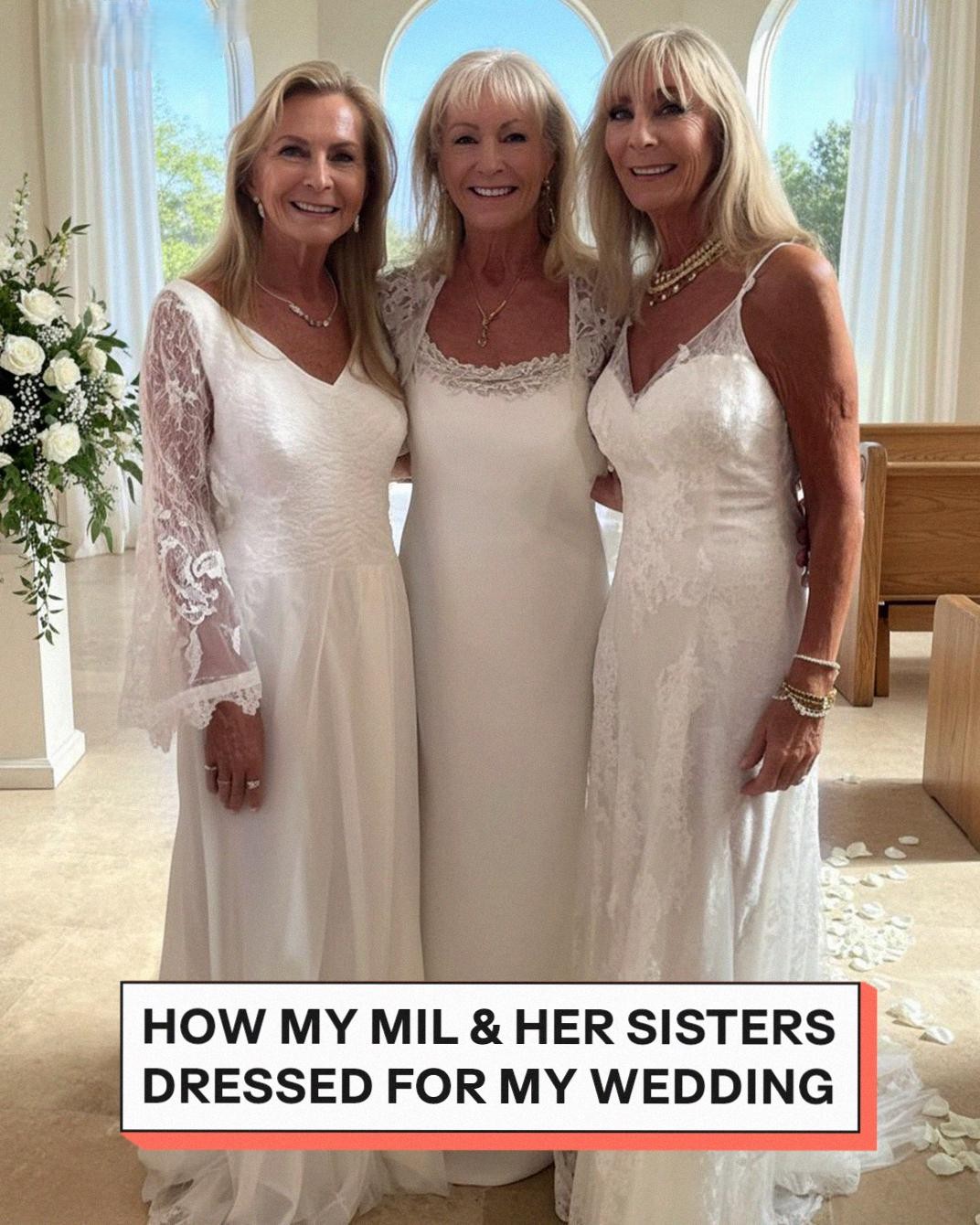
    I was adjusting my dress near the entrance, taking a moment to breathe, when the double doors swung open. In marched Margaret, her sisters, and her nieces—six women in total, every one of them wearing bridal white. Not ivory. Not cream. Pure, gleaming, ceremonial white. Sparkling gowns, full glam hair and makeup, like a small army of imitation brides.

    The guests gasped. The music faltered. The entire church froze as they stepped forward like they were on parade.

    Margaret locked eyes with me, gave a tight, triumphant smile, and said, “I hope you don’t mind, dear. We all felt white looked so fresh for today.”

    Daniel went scarlet with fury. He started toward them, ready to remove half his family from the church before vows were even exchanged. But something inside me hardened. Three years of swallowing her condescension, biting my tongue, and pretending not to notice the insults—it all snapped into clarity.

    I touched Daniel’s arm. “Let me handle this.”

    He hesitated, then stepped aside. I walked to the microphone, and the DJ, sensing something big, cut the music instantly. The room dropped to silence. All eyes swung to me—and then to the six women preening in their fraudulent bridal gowns.

    “Hi everyone,” I began, smiling calmly. “Before we start, I want to take a moment to acknowledge some… very special guests.”

    Margaret’s chin lifted like she’d just been crowned queen.

    “I’d like to thank my mother-in-law, Margaret, and her lovely sisters and nieces. You all look stunning. Truly. The level of effort you put into your outfits today is impressive.”

    They glowed under the attention.

    “And,” I added sweetly, “I especially appreciate that you all wore white. It’s such a bold choice. Not many people would risk ignoring the one universally understood rule of wedding etiquette.”

    A ripple went through the church. Margaret’s smile twitched. One niece swallowed hard.

    “But really,” I said, voice warm and unshakable, “I’m not upset. Not even a little. And I’ll tell you why.”

    I watched Daniel, who was now grinning like he’d just seen his bride turn into a warrior.

    “Because even if six hundred women walked into this church right now, wearing the most extravagant wedding gowns money could buy… everyone here would still know exactly who the bride is.”

    The room erupted. Applause, cheers, whistles—the entire church rose up like a wave. Margaret’s face collapsed into stiff, humiliated shock. Her little entourage froze beside her, suddenly realizing how ridiculous they looked.

    I finished softly: “Thank you, ladies. This day wouldn’t be nearly as memorable without you.”

    I set down the microphone, walked to Daniel, and he lifted me clean off the floor.

    “That,” he whispered, “was legendary.”

    The rest of the night, Margaret and her “white brigade” sat together in uncomfortable silence, as stiff and decorative as centerpieces. They didn’t mingle, didn’t smile, didn’t dare approach us. And for the first time since meeting her, I felt a clean, quiet confidence settle inside me—I had finally stood up for myself.

    But the story didn’t end there.

    Three months later, Margaret called and asked to meet for coffee. Her voice was softer than I’d ever heard it. Curiosity got the better of me, so I agreed. When we sat down, she took a long breath and looked straight into my eyes.

    “Emily… I owe you an apology.”

    I didn’t speak. I just let her continue.

    “I was wrong about you. I thought I was protecting Daniel, but I wasn’t. I was unkind, and I was unfair.” Her voice trembled. “When you spoke at the wedding, I realized how much grace you have. You handled that situation better than I ever would have. And my son is happier with you than I’ve ever seen him.”

    She wasn’t suddenly a new woman. And I wasn’t ready to forgive years of digs and cruelty in one conversation. But her apology was real. It was the first genuine moment she had ever given me.

    “Thank you,” I told her. “It means a lot.”

    Over time, our relationship changed. Slowly. Carefully. We never became best friends, but we built something honest—respectful, human, manageable. And that was enough. Because I had learned something important: sometimes the only way to stop someone from walking all over you… is to stand up in front of a crowd and remind them exactly who you are.

  • The Sandwich Mans Secret!

    The Sandwich Mans Secret!

    At work, there was this quiet guy named Paul. You know the type — the one who slips through the office without drawing attention, always polite, always steady, but somehow invisible to most people. He ate the same plain sandwich every day. No chips, no drink, no variation. Just a simple peanut butter and jelly sandwich wrapped in wax paper. We teased him for it sometimes, gently, the way coworkers do when they think they’re being harmless. He’d just smile, shrug, and go right back to eating.

    When he quit, it surprised everyone. He didn’t make a big announcement or send out a farewell email. He just told our manager and packed up his cubicle. I happened to be nearby, and when I offered to help him clean out his desk, he thanked me with that quiet smile of his. I expected to find nothing more than a few pens and old sticky notes. Instead, tucked in the back of his drawer, I found a thick bundle of children’s drawings held together by a stretched-out rubber band.

    There were hearts. Stick-figure families. Little kids holding hands. One showed a sandwich, floating in the air like a gift from heaven, being handed to a line of children. Another had a speech bubble that said, “I’m not hungry today. Thank you, Mr. Paul.”

    It stopped me cold.

    Paul never talked about having kids. He never showed pictures. He never mentioned nieces, nephews, nothing. Just routine, quiet kindness, and his boring sandwich. When I asked him about the drawings later, he didn’t give me a story. He didn’t launch into a proud explanation. He just said, “You ever been to the West End Library around six? Come by sometime. You’ll see.”

    So a few days later, I drove over after work, curiosity eating at me. I pulled into the parking lot expecting… I don’t know. Something small. Something simple.

    What I saw instead was Paul standing by the side entrance with a cooler bag and rows of brown paper sacks neatly packed inside. And around fifteen kids — some homeless, some skirting the edge of crisis — were lined up, waiting quietly. When a child stepped up, he handed them a bag with steady hands and a gentle word. No bragging. No preaching. No expectations.

    When he saw me, he smiled like I’d caught him watering his plants, not feeding half the struggling kids in our area.

    “Most of them don’t get dinner,” he said. “So I figured I could make sure they get one meal a day.”

    That’s when it hit me: the plain sandwiches he brought to work weren’t his lunch. They were test runs. He made the exact same sandwich every morning — for the kids. Something familiar, cheap, filling, and easy to duplicate. “PB&J,” he said. “No one complains. Some of them say it’s the best part of their day.”

    All those times we joked about his “boring lunch”… it felt sickening in hindsight.

    I started helping him. At first, it was just after work — carrying bags, handing out food, making the small talk he struggled with. He didn’t ask for help. He never did. But he let me.

    One morning, while we stood in his tiny apartment making sandwiches at dawn, I finally asked him why he started doing all this. He kept spreading peanut butter as he answered.

    “I grew up in foster care,” he said. “Some nights, I didn’t eat. You learn fast how small you can feel. Hungry and invisible… that sticks with you.”

    It wasn’t a speech. It wasn’t emotional. It was just truth. And I realized that for Paul, giving out sandwiches wasn’t charity. It was a way of stitching up a wound that never fully healed.

    Then, one week, he didn’t show up. No texts, no calls. I waited at the library with the cooler bag full of sandwiches he’d prepped the night before, but no sign of him. One little girl tugged at my sleeve and asked, “Is Mr. Sandwich Man okay?”

    Two days later, the hospital called me. Me — his emergency contact. The only one.

    Paul had collapsed from exhaustion and stress. When I walked into his room, he looked small in the hospital bed, pale and embarrassed. But he still smiled.

    “Did you bring sandwiches?” he whispered.

    I told him I did — I made them myself. He closed his eyes, relieved.

    “Promise me you’ll keep it going,” he murmured. “Just until I’m back.”

    I promised.

    And I did. For weeks, I left work right at five, rushed home to make sandwiches, and drove them to the library. At first, the kids eyed me with uncertainty, but when they saw that the sandwiches were the same, their shoulders dropped in relief.

    People at work eventually noticed me leaving in a rush every day. When I explained why, their guilt hit them just like mine had. One by one, they started joining in. Fridays became “Sandwich Fridays.” We filled the break room with bread, peanut butter, jelly, and paper bags. Someone designed little stickers for the bags — a cartoon sandwich with a superhero cape. Paul would’ve hated the attention, but he would’ve loved the intention.

    When Paul finally recovered, he didn’t come back to the office. He said he couldn’t. That the hospital wake-up call made him realize what mattered.

    So he started a nonprofit: One Meal Ahead. The name came from something his foster dad told him once — “You don’t have to fix everything, kid. Just make sure you’re one meal ahead of the worst day.”

    He lived by that. And because of him, a lot of kids got through days that would’ve broken them. Some of them grew up and came back to visit him. One boy — now in high school — told me, “He didn’t try to solve our lives. He just made sure I wasn’t hungry. That was enough.”

    Paul never bragged. Never asked for thanks. Never tried to be a hero. He just showed up with a quiet, consistent kindness that built a bridge between his childhood and someone else’s needs.

    And sometimes, when I’m making sandwiches with the Friday crew, I think about all the jokes we made about his plain lunches. How blind we were. How easily we missed the quiet miracle happening right in front of us.

    Heroes don’t announce themselves. They don’t give speeches. They don’t shout for attention.

    Sometimes, they just carry a cooler bag and show up with a sandwich and a smile — every single day — because they know exactly what it feels like to be hungry and invisible.

    And because they refuse to let someone else feel that way if they can help it.

  • Confirmed by Trump Himself!

    Confirmed by Trump Himself!

    The Social Security Administration has released its official Cost-of-Living Adjustment for 2025, and while the increase isn’t as dramatic as the record-setting jump Americans saw in 2023, it still delivers meaningful relief at a time when prices for essentials remain stubbornly high. With more than 70 million Americans depending on Social Security — retirees, people with disabilities, survivors, and SSI recipients — even a modest boost can make a real difference.

    For 2025, the COLA sits at 3.2%, a figure calculated to match ongoing inflation and ensure that benefits maintain their buying power rather than slowly eroding year after year. The adjustment will automatically appear in January payments, requiring no action from beneficiaries.

    For the average retired worker, this translates to about $50 more per month, raising the typical check to approximately $1,790. It’s not life-changing, but for many seniors who rely on Social Security to cover groceries, medication, rent, and rising utility costs, it’s a welcome increase — especially after a year when housing and healthcare costs pushed budgets to the limit.

    To give Americans a clearer picture of how this adjustment affects different groups, the SSA released updated estimates across all major benefit categories. For retirees, the average benefit moves from roughly $1,871 to about $1,920. Meanwhile, workers who choose to delay retirement until age 70 — the point of maximum benefit — will see their top payment rise to just over $5,000 per month. Those who take benefits early at age 62 will see a more modest cap of around $2,781.

    Disability beneficiaries will also experience the increase. The average monthly disability payment, currently around $1,401, will climb to roughly $1,438, while the maximum amount rises above $3,900. Survivor benefits follow the same 3.2% upward adjustment. A surviving spouse receiving the average benefit will see their monthly amount rise from about $1,509 to approximately $1,549.

    Supplemental Security Income — a lifeline for more than seven million Americans with very limited income — will also rise. An individual’s federal benefit will increase from $943 to about $968, while couples will see their maximum move from $1,415 to approximately $1,452.

    The COLA exists for one reason: to help ensure that people living on fixed incomes do not fall behind when prices rise. It’s an attempt to keep seniors from being forced to choose between food and medications, or between rent and utility bills. And while this year’s increase is welcomed, many advocates argue that it still does not fully match the reality of living costs across the country. Medicare premiums, prescription drug prices, and property taxes often rise faster than general inflation, meaning that even with the adjustment, financial strain persists.

    Still, the 2025 COLA offers stability — a small but important buffer for households that have watched every expense creep upward. For many people, Social Security is not supplemental income. It is the primary source of support. Nearly half of retirees depend on it for at least 50% of their income, and for one in four seniors, Social Security provides almost everything they live on.

    With the 3.2% increase now finalized, beneficiaries should prepare for a few key steps heading into the new year. First, January’s check will automatically reflect the increase — no forms, no calls, no paperwork required. Second, the SSA will send personalized letters in December outlining each person’s exact new benefit amount. These notices usually arrive by mail, but anyone with an online SSA account can view theirs digitally.

    This is also the time for beneficiaries to review their budgets. A $40-$60 bump may not seem like much, but for those who carefully track every expense, it can be the difference between a tight month and a manageable one. Reviewing insurance premiums, medication costs, and utility changes alongside the new benefit amount can help ensure there are no surprises in early 2025.

    Americans approaching retirement, or those already navigating it, also need to consider taxes. While Social Security benefits themselves are not taxed by many states, some do tax them fully or partially. At the federal level, up to 85% of Social Security income can be taxable depending on the beneficiary’s total combined income. For people living on a tight budget, understanding how their COLA increase interacts with taxes can prevent a rude shock at tax time.

    That’s why financial planners encourage older Americans to stay informed, whether through the official SSA website, trusted organizations like AARP, or reputable retirement resources. With ongoing conversations in Washington about Social Security’s future, potential tax changes under new political leadership, and the rising cost of long-term care, staying educated is as important as the monthly checks themselves.

    The 2025 COLA won’t solve the long-term challenges facing the program, nor will it erase the financial pressure many seniors feel. But it does what it was designed to do: give Americans on fixed incomes a fighting chance against inflation. For millions of retirees who count every dollar, even a modest increase can go a long way.

    As the new year approaches, beneficiaries can expect their updated payment letters, revised deposits, and a slightly easier time keeping up with rising costs. And in a landscape where economic uncertainty feels constant, that little bit of predictability matters.

    The bottom line is simple: the COLA increase won’t make anyone wealthy, but it will help countless Americans stay afloat another year — keeping necessary purchases within reach and ensuring that seniors, people with disabilities, and survivors do not face inflation alone.

    If you’re planning your retirement strategy, reviewing your tax situation, or considering a move to a more tax-friendly state, knowing how these adjustments affect your monthly benefits can help you make smarter long-term financial decisions. In a world where every dollar counts, understanding your Social Security benefits is one of the most powerful tools you have.

  • BREAKING – Pray for President Trump – Something Massive Just Happened! See more

    BREAKING – Pray for President Trump – Something Massive Just Happened! See more

    The announcement of a peace deal between Israel and Hamas in late 2025 sent a shockwave through the international community — not just because it marked the end of two years of brutal conflict, but because of who brokered it and who praised it. Former President Donald Trump, long known for polarizing politics at home and abroad, found himself receiving unexpectedly warm acknowledgments from political rivals who rarely, if ever, had reason to commend him. The agreement, seen by many as a turning point in a devastating and exhausting war, pushed long-standing tensions into a new chapter — fragile, uncertain, but undeniably historic.

    The conflict itself began with the October 2023 Hamas attack, one of the deadliest assaults in Israel’s history, leaving 1,300 Israelis dead and more than 250 hostages taken into Gaza. Israel’s response was swift and overwhelming: an extended military campaign that devastated Gaza, resulting in thousands of Palestinian deaths and the destruction of entire neighborhoods. For two years, ceasefires came and went like passing storms — temporary pauses that never held. The international community pushed repeatedly for negotiation, but both sides remained entrenched in their positions.

    What ultimately broke the deadlock was a series of intensive negotiations supported by Qatar and other regional mediators. Over months, envoys shuttled between capitals, leaders spoke behind closed doors, and a team under Trump’s direction worked to extract commitments that had eluded diplomats for years. The final deal included two major components: a full ceasefire from both sides, and the release of captives — all twenty surviving Israeli hostages in Gaza and more than 1,900 Palestinian prisoners held by Israel. The scale of the exchange, and the willingness of both sides to agree to it, stunned observers who had grown cynical about any path toward peace.

    What surprised Americans even more were the voices praising Trump’s role. Former President Bill Clinton, who had been deeply involved in Middle East diplomacy during the 1990s, publicly commended Trump and his team. Clinton, choosing his words carefully, said that they “deserve great credit” for maintaining commitment to negotiations despite setbacks. He emphasized that moments like this — rare, delicate, and hard-won — must be treated as the first stone in a foundation rather than a finished structure. “This is a fragile moment,” he warned, “but it is also a moment full of possibility. What happens next will determine whether today’s news becomes a lasting peace or just another chapter in a long cycle of conflict.”

    Senate Minority Leader Chuck Schumer echoed some of Clinton’s sentiment. His focus, however, was squarely on the release of hostages — something he called “a wonderful day, a profoundly hopeful moment.” While Schumer didn’t lavish Trump with extended praise, he made it clear the administration’s role in securing the hostages’ freedom was appreciated. For Democrats and Republicans alike, the human dimension of the agreement was a rare point of shared relief.

    When Trump addressed Israeli leaders after the announcement, he struck a tone that surprised even some of his supporters. He urged Israel to “turn away from endless warfare and move toward diplomatic solutions,” framing the agreement as an opportunity to seek long-term regional stability. He spoke of the cost of the past two years — in lives, in grief, in shattered communities — and said openly that the region could not afford another cycle of destruction. He applauded the negotiators, the intermediaries, and even the leaders from opposing sides who chose restraint over escalation.

    Other Democratic leaders reacted more cautiously, but the overall tone remained positive. House Minority Leader Hakeem Jeffries highlighted the importance of humanitarian aid entering Gaza at levels not seen since before the war. “People needed food, medicine, and safety, and the ceasefire makes that possible,” he said. Former President Barack Obama issued a similar message, applauding the humanitarian corridor and emphasizing the importance of rebuilding trust. Neither directly credited Trump — their statements focused on outcomes rather than on the administration — but their approval of the deal’s impact underscored how significant the agreement was.

    Still, the praise, however measured, represented something unusual for American politics: a moment where political rivals acknowledged progress on an issue that transcended party lines. Behind the scenes, some analysts suggested that Democrats saw no benefit in politicizing the deal. The region had endured catastrophic losses. Families were shattered on both sides. The humanitarian situation in Gaza had become intolerable. A ceasefire was not a political win so much as a long-awaited breath of relief for millions. In that context, withholding credit entirely would have seemed petty.

    Questions quickly pivoted to the durability of the ceasefire. After decades of broken truces, skepticism ran deep. Reporters asked Trump whether he believed the deal would hold. He admitted that the future was uncertain. “Nothing in this region is guaranteed,” he said, “but commitment is the first step toward peace. We have that commitment today.” He added that he hoped another Republican president would continue the work if his administration didn’t remain in office beyond the next election. It was a subtle hint at both the fragility of the agreement and his desire to keep the diplomatic momentum going.

    The broader international reaction was mixed. Many nations celebrated the breakthrough, while others reserved judgment, wary of how quickly conditions could deteriorate. But even the skeptics acknowledged the significance of the prisoner exchange and the immediate reduction in violence. The release of thousands of prisoners and hostages created an emotional turning point — families reunited, names removed from lists of the missing, and a moment of visibility for suffering that had too often been abstracted by politics and distance.

    Whether this agreement becomes a stepping stone or a footnote remains to be seen. Peace in the region has never been linear. But for one moment, political rivals in Washington, leaders abroad, and families on both sides of the conflict shared something rare: a sense of hope that the cycle of violence had finally paused long enough for diplomacy to breathe.

    And in an era where praise across party lines is nearly extinct, the response from figures like Clinton and Schumer showed just how extraordinary — and desperately needed — this development was.

  • Throughout history, people have tried to read meaning into physical traits

    Throughout history, people have tried to read meaning into physical traits

    Throughout history, people have tried to read meaning into physical traits — palms, facial lines, posture, and just about anything else the eye can land on. Leg shape is one of those features that, in various cultures, has been linked to personality and behavior.

    None of it is scientific, but people still find it fascinating because, strangely enough, the descriptions sometimes hit close to home. You wouldn’t build your identity around something like this, but you can definitely enjoy the insights the same way you’d enjoy a horoscope — a little entertainment, a little introspection.

    The idea is simple: the way your legs align when you stand naturally — whether your thighs, knees, or ankles touch — supposedly hints at what kind of person you are. Some women swear the descriptions nail their temperament. Others just enjoy the curiosity of it. Whatever camp you fall into, the interpretations are interesting enough to explore.

    One common classification mentions “Type B” legs — where the thighs touch, the knees meet, but the lower legs separate before coming back together at the ankles. In folklore and personality lore, women with this leg shape are said to be independent, grounded, and confident. They carry themselves with a quiet sense of capability that doesn’t need constant verification. People around them often pick up on that calm certainty even before they speak.

    This type of woman is comfortable being on her own. Solitude isn’t frightening or lonely — it’s restorative. She thinks clearly when she has space, makes decisions without needing applause, and moves toward her goals with steady focus. She doesn’t chase validation. She doesn’t rush into relationships, commitments, or obligations. She prefers to be selective rather than distracted.

    Because of that independence, she can be misread by others. Some see her confidence as distance. Some mistake her self-reliance for disinterest. But people who take the time to get past the surface quickly discover someone loyal, warm, and incredibly passionate about the things and people she chooses to invest in. She doesn’t waste energy on the wrong places, which means she gives her best where it counts.

    In friendships, women with this so-called Type B alignment are seen as steady forces. They’re not dramatic, not clingy, not volatile. They show up when it matters. They give honest advice. They protect the people they love with a calm determination that makes them reliable anchors during storms. Their boundaries are firm but fair: they won’t tolerate disrespect, manipulation, or emotional chaos, and they don’t apologize for that.

    Romantically, the lore paints them as intense but controlled partners. They’re not reckless with affection. They don’t dive into relationships out of boredom or fear of being alone. Instead, they look for someone who respects their autonomy and doesn’t try to cage it. A partner who can stand beside them, not above or behind. Someone who understands that independence doesn’t exclude intimacy — it strengthens it.

    Because they know what they want and don’t want, they’re selective. They prefer partners who communicate directly, think for themselves, and don’t crumble under pressure. They’re drawn to people with ambition and purpose. They can’t stand insecurity disguised as ego, or neediness disguised as devotion. They want balance: closeness without suffocation, companionship without control.

    In relationships, they’re all-in — loyal, attentive, thoughtful. They pursue passion with intention and depth. But if a relationship becomes toxic or imbalanced, they don’t linger. They don’t drag out endings that should happen. They leave when it’s time to leave, even if it hurts. That ability often surprises people who expect them to cling the way many do when emotions are involved. Independence, for them, isn’t a pose — it’s part of their foundation.

    In lifestyle terms, this leg-shape folklore often describes women who manage their lives with order and quiet discipline. They plan without becoming rigid. They take care of themselves, physically and emotionally. They notice details most people miss. Their routines aren’t strict or obsessive, but intentional. They know how to recharge and aren’t afraid to say no to protect their energy.

    Type B personalities in this mythos are also labeled as creative introverts — women who thrive when they can explore ideas privately before bringing them into the world. They make excellent problem-solvers because they observe first, analyze second, and act last. But when they act, they do it with clarity.

    Their confidence can intimidate people who expect women to soften themselves in public. Some may call them aloof or too direct. But the truth is simpler: they don’t dilute themselves to make others comfortable. They like who they are, and they protect that identity carefully.

    Despite their strong exterior, they’re not cold. They feel deeply — they just don’t broadcast every emotion. They choose who gets access to their vulnerability, and once they trust someone enough to open up, they do so with total sincerity. That vulnerability, when given, is real and rare.

    The cultural symbolism attached to this leg type also links it to emotional steadiness. These women don’t swing wildly between moods. They stay balanced. Their calmness makes them excellent partners, friends, and problem-solvers, because they can step back, breathe, and avoid turning small issues into catastrophes.

    As with any physical-trait personality reading, none of this is hard science. It’s not a diagnosis. It’s not destiny. No body part reveals the secrets of your identity. But the reason these descriptions circulate — and the reason women keep reading them — is because sometimes the reflections feel familiar. Sometimes they spark conversations about personality that women relate to more than they expect. And sometimes the simple act of reading something about yourself — true or not — helps you see yourself from a new angle.

    Think of it the way you’d think about astrology or personality archetypes. You’re not meant to take it literally. You’re meant to take it playfully — to consider it, compare it to your reality, and use whatever pieces feel useful.

    So if you have Type B legs, the folklore says you’re probably a woman who owns her independence, moves through life with confidence, protects her peace, and refuses to shrink for anyone. You want love that respects your autonomy, friendships built on loyalty, and a life shaped by your own choices.

    Again — not science, just cultural interpretation. But if the shoe fits, wear it.

  • When I turned 18, my grandma knitted me a red cardigan. It was all she could afford. I did like it, and I just told her a dry

    When I turned 18, my grandma knitted me a red cardigan. It was all she could afford. I did like it, and I just told her a dry

    When I turned 18, my grandma knitted me a red cardigan. It was all she could afford. I did like it, and I just told her a dry

    “Thanks.” She died weeks later. Years passed. I never wore it.

    Now my daughter is 15. She asked to try it on. We froze.

    Hidden in the pocket, there was a small, folded note with my name written in her delicate handwriting.

    I had never noticed it before, and my hands trembled as I carefully opened it.

    Inside, Grandma had written a simple message

    : “One day, you’ll understand how much love is stitched into the things we give, even when words are hard to say.”

    The ink was faded, but her warmth seemed to rise from every curve of her letters.

    My daughter sat beside me quietly, sensing the importance of the moment. It felt as though time had traveled backward, letting me hear her voice again—soft, gentle, and full of patience.

    I realized then that the cardigan wasn’t just a gift; it was a reminder of the love I had overlooked in my rush to grow up.

    I told my daughter about how Grandma spent long evenings knitting it, humming softly as she worked.

    As I spoke, I felt a slow, healing kind of regret turning into something lighter—gratitude for a memory I finally understood.

    My daughter slipped the cardigan over her shoulders and smiled. “It feels warm,” she said, and I knew she meant more than the fabric.

    Watching her, I felt as though Grandma had left us a bridge—connecting her love from the past to our lives now. And for the first time, I truly wished I had said more than just “Thanks.”

  • When I became a parent at seventeen, life moved faster than I expected. I loved my baby deeply, but every day felt like a new challenge.

    When I became a parent at seventeen, life moved faster than I expected. I loved my baby deeply, but every day felt like a new challenge.

    When I became a parent at seventeen, life moved faster than I expected. I loved my baby deeply, but every day felt like a new challenge.

    When money grew tight, I made the difficult choice to sell my late dad’s watch. It was the only thing I had left from him, a small piece of comfort.

    Still, caring for my child meant more than anything I owned.

    At the shop, the owner glanced at my baby and shook his head softly.

    He said I was giving up my future without even realizing it.

    His words lingered with me long after I left the store. But I knew my future was the little one in my arms. So I walked away, hoping someday things would get brighter.

    Years passed, and my son grew into a thoughtful young man.

    On his eighteenth birthday, the same shop owner appeared at our door.

    He carried a small box wrapped neatly, as if saved for a long time. He said he had been waiting for the right moment to return it. My heart fluttered as I realized what might be inside.

    When my son opened the box, we both froze in quiet surprise.

    Resting gently inside was my father’s watch, polished and shining.

    The shop owner smiled and said he believed in second chances. He wanted my son to have something that carried history and love. In that moment, I felt life had come full circle in the kindest way.

  • I Found a Diamond Ring on a Supermarket Shelf and Returned It to Its Owner — the Next Day, a Man in a Mercedes Showed Up at My Door

    When a widowed father of four finds a diamond ring lying in a grocery store aisle, he ends up making a choice that costs him nothing, yet changes everything. What unfolds is a quiet reminder that in a world full of hardship, honesty still matters — and sometimes life gives back in ways you never see coming.

    It began with a knock on the door and a man in a suit standing beside a black Mercedes. Just that morning, I had been doing what I always do — juggling four children, one broken appliance, and the general chaos of our home.

    Grace was crying over a lost teddy. Lily was upset because her braid looked “lumpy.” Max had managed to drizzle maple syrup across the tiles while the dog followed happily behind him. And Noah, being nine, was already asking what was for dinner even though breakfast dishes were still in the sink.

    I wasn’t expecting anything beyond the usual marathon of mess and noise.

    My name is Lucas. I’m 42, a widower, and a father trying to keep a household running with tape, prayer, and whatever strength I have left. Two years ago, shortly after our youngest was born, my wife Emma was diagnosed with cancer. We thought it was exhaustion from the newborn phase. It wasn’t. It was brutal. It was fast. And in less than a year, she was gone.

    Now it’s just me and four kids: Noah at nine, Lily at seven, Max at five, and two-year-old Grace. I work full-time at a warehouse and take whatever extra jobs I can on nights and weekends. The house leaks when it rains. The dryer has to be kicked twice before it works. Our minivan rattles like it’s holding itself together out of habit. Still, the bills get paid. The kids are fed. They’re safe. They know they’re loved — that’s all that matters to me.

    One Thursday afternoon, after school pickups and daycare runs, we stopped at the grocery store for the basics. Milk, cereal, apples, diapers — and whatever I could stretch the week’s budget to cover.

    Max had squeezed himself into the lower rack of the cart, narrating our trip like a car race. Lily was critiquing bread rolls as if she were a judge on a baking show. Noah had knocked over a display and muttered “my bad.” And Grace was sitting in the seat, singing the same line of “Row, Row, Row Your Boat” while dropping crumbs everywhere.

    I was steering the cart one-handed, trying to maintain order, when something gleaming between the apples caught my eye.

    It was small, gold, and unmistakably real. A diamond ring.

    I picked it up carefully. It was heavy in a way no toy ring ever could be. I glanced around, but the aisle was empty. No one frantic. No one searching.

    For a moment — one brief, quiet moment — I thought about what that ring could do for us. Brakes for the van. A working dryer. Groceries without worry. The braces Noah would need soon. The possibilities went through me like an ache.

    But then I looked at my kids — at Grace, sticky-haired and laughing, at Lily watching me with curious eyes, at Max wedged in the cart, at Noah drumming his fingers on the cart handle. And I knew.

    This wasn’t mine. And I couldn’t be the kind of father who even hesitated in front of them.

    I slipped the ring into my pocket, ready to return it to customer service, when a trembling voice pushed through the aisle.

    “Please… please, it has to be here…”

    An older woman came around the corner — distressed, frantic, almost in tears. Her cardigan was slipping off, her purse was spilling, and her eyes were darting desperately across the floor.

    “Ma’am? Are you alright?” I asked gently.

    When she turned toward me, her gaze landed on the ring in my hand. She gasped — a raw, broken sound.

    “My husband gave me that ring,” she whispered. “On our 50th anniversary. He passed away three years ago. I wear it every day. It’s all I have left of him.”

    She reached for it with trembling fingers. For a moment, she just held it against her chest as if she were trying to breathe life back into her own heart.

    “Thank you,” she managed. “You don’t know what this means to me.”

    “I know what it’s like to lose someone,” I said quietly.

    She noticed the kids behind me and offered a soft smile. “They’re beautiful. You’re raising them with a lot of love.”

    Then she asked my name, nodded as if memorizing it, and walked away, clutching the ring like she’d just been given her husband back.

    I thought that was the end. We went home. I squeezed groceries into what was left of the budget. I wiped syrup off Max’s face. I tucked everyone in. Life went back to the usual.

    The next morning, someone knocked on the door — sharp, deliberate. A man in a charcoal coat stood on my porch, the black Mercedes idling behind him.

    “Lucas?” he asked. “I’m Andrew. You met my mother, Marjorie, yesterday.”

    He explained that his mother had told him everything — how she’d lost the ring, how devastated she’d been, and how returning it had restored a hope she hadn’t felt since losing her husband.

    “She’s been barely holding herself together,” he said. “That ring was his last gift to her. Losing it nearly shattered her.”

    He reached into his coat and handed me an envelope.

    “Before you open that,” he said, “my mother asked me to tell you something. She said your wife would be proud of the man you are.”

    I didn’t have any words. I don’t think I even breathed.

    He nodded at my kids behind me, then walked back to his car. “Whatever you choose to do with it,” he said gently, “just know it meant something.”

    After dropping the kids off, I opened the envelope in the minivan. Inside was a check for $50,000, and a note:

    “For your honesty. For giving my mother back a piece of her heart. For reminding her — and me — that good people still exist.

    Use this for your family.

    —Andrew”

    I pressed my forehead against the steering wheel and let the quiet, heavy relief wash through me.

    Within a week, the brakes were fixed. The fridge was full. Grace had new bedding that helped her eczema. Lily declared a pizza night “the fanciest night of her life.” We made a “vacation jar,” its sides plastered with the kids’ colorful drawings.

    “Are we rich now?” Max asked.

    “Not rich,” I said. “But safe.”

    That night, I pulled all four kids into my arms and held them close.

    Sometimes life takes too much. Sometimes it breaks you in half. But sometimes — when you least expect it — it gives something back.

    Something you didn’t know you were still hoping for.