Blog

  • My Daughter Crocheted 80 Hats for Sick Children – Then My MIL Threw Them Away and Said, She Is Not My Blood

    My Daughter Crocheted 80 Hats for Sick Children – Then My MIL Threw Them Away and Said, She Is Not My Blood

    For most of Emma’s life, it had been just the two of us. Her dad died when she was three, and from that moment on, our little world became small, steady, and fiercely protected. Years later, when I met Daniel, I was cautious. He wasn’t. He stepped into our lives with the gentlest confidence, like he already knew where he belonged. He packed her lunches, learned her favorite bedtime stories, and memorized the way she liked her hot chocolate. He never called her his stepdaughter. She was his daughter. He lived it. But his mother, Carol, refused to see it that way.

    Carol’s comments were always delivered with a sweet smile and a sharpened edge. “It’s sweet you pretend she’s your real daughter,” she told Daniel once, as if she were complimenting his haircut. Another time, she said stepchildren never feel like true family. And once, the sentence that made every muscle in my body turn to stone: “Seeing her must remind you of your dead husband. What a burden.” Daniel shut her down every time, but the poison always slipped through. We learned to limit contact, keep visits short, and hope that time might soften her. It never did.

    Meanwhile, Emma grew into a kind, thoughtful girl with a talent for pouring her whole heart into things. When December rolled in, she announced her latest plan: she wanted to crochet eighty hats for children spending the holidays in hospices. She taught herself from YouTube tutorials, used her allowance to buy yarn, and spent every afternoon stitching hats while her feet dangled off the couch. Each time she finished one, she held it up with proud eyes, then tucked it into a large bag beside her bed. By the time Daniel left for a two-day business trip, she had seventy-nine of them done and had already laid out the colors for the final one.

    Daniel’s absence was exactly the opportunity Carol had been waiting for.

    Whenever he traveled, she found an excuse to “check in”—to make sure the house was “presentable” or to see how we behaved without her son around. I never understood why she did it, but that day, it became painfully clear.

    Emma and I had just come back from the grocery store. She rushed to her room, excited to finish the last hat. Seconds later, her scream tore through the house.

    I dropped everything and ran. I found her kneeling on the floor, shoulders shaking violently, her face buried in her hands. Her bed was bare. The bag of hats—weeks of careful work, hours of hope and effort—was gone. Before I could ask what happened, a voice behind me explained it.

    Carol stood in the doorway, casually sipping tea from one of my good cups. “If you’re looking for the hats,” she said, almost bored, “I threw them away. Total waste of time. Why should she spend money on strangers?”

    I stood up slowly, feeling a cold fury spread through me. “You threw away eighty hats meant for sick children?”

    She rolled her eyes. “They were ugly. Mismatched colors, crooked stitches. She’s not my blood, so she doesn’t represent my family, but I’d prefer she not embarrass us with useless hobbies.”

    Emma let out a choked sob. Carol didn’t flinch. She set her cup down, muttered something about us being too sensitive, and walked out of the house.

    I wanted to chase her, scream at her, throw her out by her coat collar. But Emma collapsed against me, and her pain mattered more than my anger. I held her until she cried herself empty. When she finally fell asleep curled up in my lap, I slipped outside and tore through our trash bins, then the neighbor’s bins. Nothing. Carol had taken the hats somewhere else.

    I sat awake most of the night, my daughter’s heartbreak echoing in my ears. I thought of calling Daniel but didn’t want to burden him mid-trip. I figured I’d tell him when he got home.

    That hesitation changed everything.

    The next afternoon, the moment he stepped inside, he called out, “Where’s my girl? I want to see the hats! Did she finish the last one while I was gone?”

    Emma was on the couch. The second she heard the word hats, she broke into tears. Daniel froze. Confusion, fear, and a rising panic crossed his face. I pulled him aside and told him everything. His expression shifted from disbelief to horror to a quiet, shaking rage.

    “I don’t know what she did with them,” I said. “I looked everywhere.”

    He walked straight to Emma, knelt beside her, and held her close. “Sweetheart, I’m so sorry. I promise you Grandma will never hurt you again.” He kissed her hair, stood up, grabbed his car keys, and walked out the door.

    Two hours later, he came back with a large garbage bag in his arms.

    He called his mother immediately. “Mom, I’m home. Come over. I have a surprise for you.”

    She arrived, annoyed she had to cancel a dinner reservation. She walked past me like I was air. “Daniel, this better be good.”

    He lifted the bag and dumped it onto the table.

    Emma’s hats spilled out. All eighty. Smelling faintly of trash but intact.

    “It took me over an hour to search your apartment building’s dumpster,” he said. “But I found them. All of them. These aren’t just hats. This is eight weeks of a child’s love and effort. And you destroyed it.”

    Carol scoffed. “You went dumpster-diving for this? Honestly, Daniel.”

    When he didn’t answer, she switched to her favorite weapon. “She’s not your daughter.”

    Something inside him hardened. He stepped forward. “Get out. We’re done.”

    She sputtered. “What? Daniel, you can’t cut me off over yarn!”

    He didn’t shout. He didn’t shake. He just said, “I’m a father. And my daughter needs to be protected from you. Leave.”

    She turned to me. “Are you seriously allowing this?”

    “Absolutely,” I said. “You earned it.”

    The door slammed so hard the windows rattled.

    The next days were quiet. Emma didn’t crochet. She didn’t talk about the hats. She carried sadness like a weight around her neck. So Daniel did the only thing he could think of—he bought a huge box of new yarn, fresh hooks, and packaging supplies. He set it in front of her and said, “If you want to start again, I’ll help you. I’m terrible at this, but I’ll learn. Will you teach me to crochet?”

    Emma giggled—the first laugh since the incident—and nodded. Daniel’s first attempts looked like tangled spaghetti, but they sat side-by-side every night until all eighty hats were finished again.

    When the hospice posted photos of smiling children wearing Emma’s hats, the post went viral. People around the world praised her kindness. She responded with one simple line: “My grandma threw the first set away, but my daddy helped me remake them.”

    Carol called Daniel, sobbing, hysterical. “People are calling me a monster! Take it down!”

    Daniel didn’t waver. “We didn’t post it. The hospice did. Actions have consequences.”

    Emma and Daniel crochet together every weekend now. Our home is peaceful, warm, and free of the cold shadow Carol used to cast.

    She still sends messages on holidays, asking if we can “fix things.”

    And every time, Daniel simply replies, “No.”

    Emma doesn’t need a grandparent who tears her down. She has a father who lifted her back up, stitch by stitch.

  • BREAKING – Former US President to Be Arrested for Treason and Espionage! See More

    BREAKING – Former US President to Be Arrested for Treason and Espionage! See More

    The alert hit every major newsfeed at 2:13 a.m. Eastern Time: “Former U.S. President Elias Ward under sealed federal investigation.”
    No details. No confirmation. Just a whisper dropped into the bloodstream of a sleepless nation—and within minutes, it detonated.

    For years, Ward had been a polarizing figure, a man whose presidency left behind a trail of fierce loyalty, deeper division, and unanswered questions. But nothing—nothing—prepared the country for the storm that erupted before sunrise.

    According to the first anonymous leak, federal prosecutors were preparing charges of treason, espionage, and conspiracy against the former commander-in-chief. Within hours, additional unnamed sources piled on: secret intelligence transfers, encrypted communications with foreign intermediaries, sealed handoffs, compromised assets overseas. None of it verified. All of it explosive.

    Ward’s supporters dismissed it as political sabotage. His critics called it long overdue. Everyone else hovered in that tense middle ground—uncertain, wary, glued to screens, waiting for a single official voice to explain what the hell was going on.

    But no such voice came.

    The Justice Department refused to comment.
    The Attorney General’s office stayed dark.
    Ward’s own spokesperson vanished from social media.
    Even Ward himself went silent, which only fed the fire.

    By dawn, the story had swallowed the country whole.

    Cable networks looped the same footage again and again: Ward stepping out of a black SUV two months earlier, heavily guarded, unsmiling, disappearing into a private courthouse entrance. At the time, the images barely made a ripple. Now, viewed through a different lens, every frame felt sinister.

    Reporters scrambled outside Ward’s mountain estate, where the lights were off and the gates remained shut. Agents in unmarked vehicles were spotted near his property line, though none identified themselves or explained why they were there. Some said they were federal. Some said state. One neighbor claimed they looked foreign.

    Speculation mutated by the minute.

    One rumor insisted the indictment was already signed. Another claimed Ward had fled. A third swore intelligence agencies were divided—some demanding accountability, others terrified of the classified fallout an arrest might unleash.

    In the vacuum of clarity, chaos filled the space.

    Online, theories spiraled into full-blown mythology. Some insisted this was the beginning of a constitutional unraveling. Others believed it was an elaborate hoax planted to destabilize the country from within. A handful claimed Ward was the target of a deep-state vendetta. Another faction pointed to encrypted “drops” on fringe sites, claiming Ward had been working undercover all along.

    Everyone had an answer.
    No one had the truth.

    And as the hours passed, something even more unsettling emerged.

    Former officials—people normally eager to defend or attack Ward—clammed up. One by one, they deferred questions, declined interviews, refused to speak on or off the record. Their silence carried weight. It suggested not just caution, but fear. The kind of fear that comes when people know more than they’re allowed to say.

    Financial markets sensed blood in the water.
    Foreign governments released cautious statements, urging “stability.”
    Intelligence analysts warned of aggressive probing attempts from abroad, waiting to see if America was entering a moment of internal vulnerability.

    By late afternoon, the White House press secretary appeared before cameras for the first time. The statement was short, cold, and meticulously crafted:

    “The Department of Justice conducts its investigations independently. The administration will not comment on unverified claims or ongoing processes.”

    Not a denial.
    Not a reassurance.
    Just ambiguity dressed as professionalism.

    The press corps erupted with questions, none of which received answers.

    Meanwhile, across the country, ordinary people argued in grocery aisles, bars, group chats, and boardrooms. Families split across dinner tables. Old political wounds reopened. Every cable panel featured analysts insisting their version of events must be the truth, and every host leaned in because chaos meant numbers.

    The allegations—still entirely anonymous—became gospel for some and blasphemy for others.

    But beneath the noise, something else was happening—quiet, subtle, far more dangerous.

    Anonymous accounts claiming insider knowledge began circulating snippets of “classified documents,” which analysts quickly flagged as forged. Deepfake audio purporting to capture Ward negotiating with a foreign agent appeared on a fringe site. The voice, tone, and cadence were eerily convincing but digitally manufactured. The disinformation machine was awake, alive, and accelerating.

    By evening, thousands were gathering outside federal courthouses in multiple cities. Some demanded Ward’s arrest. Others held signs defending him. The tension flickered like exposed wiring. All it needed was a single spark to set off a national short circuit.

    Through it all, Ward remained unseen.

    Late that night—23 hours after the initial leak—his lawyer finally stepped before microphones. She spoke plainly:

    “There is no indictment. There are no charges. There is no treason, no espionage, no conspiracy. These claims are fabrications designed to provoke instability. We will pursue action against those spreading deliberate misinformation.”

    Her voice was steady, confident. But her eyes told another story—tight, sharp, calculating. The expression of someone who knew the full truth wasn’t ready for daylight.

    Despite her firmness, the frenzy didn’t break. Many didn’t believe her. Some insisted she was lying. Others wondered if she was telling the truth but hiding something worse. The narrative had already grown bigger than any denial.

    By midnight, the country was exhausted, frayed, and still without clarity.

    No arrest had occurred.
    No evidence had surfaced.
    No agency had substantiated a single claim.

    All that remained was a nation rattled by a rumor powerful enough to warp reality for a full day.

    And in the end, that was the point.

    The danger wasn’t whether Ward was guilty or innocent.
    It wasn’t whether the allegations were real or invented.
    It wasn’t even about Ward himself.

    The real threat was simpler and far more corrosive:

    A society primed to accept any dramatic whisper as fact, any anonymous leak as proof, any unverified claim as destiny.

    In an age where information moves faster than truth, the most fragile thing left is trust.

    And on this chaotic night, trust didn’t just crack — it bled.

  • Breaking – In several regions, while using their toilets, people were attacked by!

    Breaking – In several regions, while using their toilets, people were attacked by!

    In several regions around the world, people have learned the hard way that the most ordinary part of daily life can hide a deadly surprise. It sounds absurd—almost like an urban legend parents tell kids to make them flush properly—but snake attacks in bathrooms are very real, and far more common than most people want to believe.

    It happens in places where wildlife and human living spaces overlap, especially in tropical and subtropical regions. During heavy rains, flooding, or heat waves, snakes search for cooler, darker, more sheltered environments. Toilets, sewer systems, and plumbing lines become an accidental refuge. And when someone sits down without looking, the results can be catastrophic.

    In Thailand, a case that made international headlines involved a man who walked into his bathroom late one evening, half-asleep, expecting nothing more than a quiet moment. Instead, he bolted upright in agony, screaming for help. Coiled inside the bowl was a twelve-foot python that had slithered up through the pipes during a rainstorm, seeking somewhere dry to rest. The snake struck as soon as it sensed movement, latching onto the most vulnerable part of his body. Neighbors rushed in after hearing his cries, and rescuers spent nearly half an hour prying the python off. The man survived but needed surgery and months of recovery—and admitted he couldn’t enter a bathroom without checking it for years.

    A similar nightmare happened in South Africa. A Dutch tourist, staying at a nature lodge, stepped into an outdoor restroom after dinner. Within seconds, he stumbled out, drenched in sweat and clutching himself in terror. A Cape cobra—one of the most dangerous snakes on Earth—had been resting inside the bowl, disturbed only when he sat down. The bite left him with severe tissue damage and internal complications. He lived, but only because medical staff reached him fast enough to administer antivenom. He later admitted the psychological trauma lingered far longer than the physical wounds.

    The United States isn’t immune to these encounters, either. In Texas, a woman sitting down felt a sudden sharp pain and immediately jumped to her feet. A rat snake—non-venomous, but still capable of inflicting serious harm—was curled in the water. In Australia, where wildlife seems to treat human property like an extension of its natural habitat, a woman faced a carpet python that bit her thigh as she used the bathroom at night. She said she thought she’d sat on a nail at first—until she saw the glint of scales.

    These incidents, while shocking, follow the same pattern: a hidden entry point, an unsuspecting person, a snake following its instincts, not aggression. Thankfully, every victim in these widely reported cases survived, though some needed surgery, antibiotics, and therapy to cope with the trauma.

    Experts who investigate these incidents explain that bathroom plumbing can create a perfect pathway for snakes. During the dry season, reptiles seek moisture and cool temperatures. During rainy periods, sewer lines flood, pushing snakes upward. Older buildings with cracked pipes or poorly sealed drainage systems are especially vulnerable, allowing snakes to find their way into toilets, bathtubs, sinks, or behind bathroom fixtures.

    One wildlife specialist put it bluntly: “People assume snakes won’t come through a toilet because the idea feels ridiculous. But a determined snake can hold its breath for long periods and navigate tight spaces. Pipes are nothing.”

    In many rural regions, especially where snakes are a daily reality, people have developed habits that might seem extreme but make perfect sense. They bang on the toilet lid before opening it. They shine a flashlight into the bowl at night. Some even keep a stick or a broom next to the door, just in case something is hiding where it shouldn’t be.

    Urban residents often ignore the possibility—until a photo or video of a reptile emerging from a toilet goes viral. But plumbers in warm climates quietly confirm that it happens more than the general public realizes. One Australian plumber claimed he had retrieved at least nine pythons from bathroom fixtures in a single year, most of them discovered by terrified homeowners who had simply gone in to brush their teeth.

    And while many of these snakes are harmless to humans in terms of venom, the shock alone can cause injuries—falls, slips, panic attacks. The location of the bite, often sensitive and vulnerable, makes the physical aftermath even more traumatic.

    But the question remains: how do you actually prevent snakes from making their way into your bathroom?

    Experts suggest a few practical measures. First, keep bathroom drains covered with metal mesh whenever possible, since snakes follow airflow and water scent. Second, inspect sewer lines and make sure pipes aren’t damaged or cracked—snakes can slip through openings that look impossibly small. Third, keep toilet lids closed when not in use. In tropical regions, homeowners sometimes place weights on the lids to keep larger snakes from pushing them up.

    Most importantly, stay aware. If you live in an area where snake sightings are common, assume they will look for shelter inside buildings during certain seasons. And while they rarely seek confrontation, they will defend themselves when startled—especially in tight quarters.

    Even when the animal isn’t venomous, the bite of a large constrictor can cause deep wounds, infections, and extensive psychological distress. Many victims report the same lingering fear: the feeling that something might be waiting, hidden just out of sight, in a place where you’re supposed to feel safe and relaxed.

    Despite the horror of these stories, wildlife specialists emphasize that snakes don’t sneak into toilets to attack people. They’re not hunting. They’re not stalking. They’re simply moving along paths that make sense in their natural world. Pipes and drains mimic burrows, tunnels, and shaded retreats. Humans just happen to be on the other end of that journey.

    Still, the unpredictability of these encounters has carved its way into the public imagination. Videos of snakes emerging from toilets rack up millions of views. News headlines repeat the same shocked tone: “Snake Bites Man While Using Toilet,” “Woman Attacked in Bathroom,” “Python Found Under Toilet Seat.” Every story fuels the same instinctive fear—because no matter how much we understand the science, the idea of a reptile hiding in a toilet bowl is viscerally terrifying.

    For now, experts advise caution in areas where snake encounters are common. Check before you sit. Be alert during rainy seasons. Call professionals if you suspect a snake has entered your home through plumbing.

    Most people will never face a snake hiding in their bathroom. But for those who do, the memory lasts a lifetime—proof that even the most ordinary everyday routine can take a sudden, chilling turn when nature slips quietly into the wrong place.

  • Wow! Never realized this! Story Of The Day

    Wow! Never realized this! Story Of The Day

    Tank trucks are built to look tough and heavy-duty, but one of their most important safety features is also the easiest to overlook. Hanging near the rear bumper, almost dragging along the pavement, is a simple metal chain. Most people glance at it and assume it’s decorative, outdated, or maybe something to keep the truck steady. But that tiny piece of metal quietly prevents disasters every single day.

    Inside every tanker, especially those hauling fuel, chemicals, or other volatile liquids, constant motion creates friction. Liquids slosh back and forth. The metal tank vibrates and rubs against its own frame. Tires spin against asphalt. Air rushes past the vehicle at high speeds. All of this motion builds static electricity — the same kind of charge that shocks your fingertips when you touch a doorknob, but magnified to life-threatening levels. If those charges build up too high and release as a spark, the entire truck becomes an ignition point. And when a vehicle is full of flammable cargo, one spark is all it takes to create an explosion.

    That’s exactly why the grounding chain exists.

    It’s not glamorous. It’s not high-tech. But it’s brilliant in its simplicity. As the truck rolls down the road, the chain bounces and scrapes along the ground. That constant contact gives electricity an escape route — a path from the truck’s metal body into the earth. Instead of building up and waiting to strike, the charge is released safely and consistently. The chain is essentially a lifeline, one that keeps both the driver and everyone around them safe.

    This wasn’t always common practice. Decades ago, tanker explosions caused by static buildup were far more frequent. Investigations traced many of them back to small sparks that ignited vapors around the truck. The fix was cheap, effective, and easy to implement, so the industry adopted grounding chains across the board. Over time, they became standard equipment, and safety regulations tightened. Inspectors from the U.S. Department of Transportation and similar agencies worldwide now check that grounding systems — including chains — are intact and functioning. It’s a non-negotiable requirement.

    Still, many people misunderstand the chain’s purpose. Some think it helps stabilize the truck. Others assume it’s there to reduce swaying, vibrations, or noise. Some believe it’s outdated and unnecessary, replaced completely by new technologies. But experts disagree. Modern safety systems do exist: retractable grounding reels, anti-static fluids, advanced bonding straps, and electronic discharge monitors. They’re helpful, but they don’t fully replace the chain’s reliability. Technology can glitch. Electronics can fail. A simple metal chain rubbing the road? That almost never does.

    More importantly, the chain works whether the driver remembers it or not. It isn’t a switch. It’s not something that needs activation. Its job never stops, and it never requires a human to think about it. The moment the truck moves, the chain does its work.

    Of course, like anything exposed to weather, friction, and heavy use, grounding chains need maintenance. Road salt corrodes metal. Repeated scraping against concrete wears down the links. If the chain becomes too short to touch the ground, it’s useless. Drivers and mechanics are trained to check it regularly, making sure it’s long enough, strong enough, and free of breaks. A single worn link can compromise the whole mechanism.

    To most drivers on the road, the chain is invisible. They pass by tanker trucks at full speed, never realizing that something as small as a spark could put their lives at risk if not for that simple protective strip of metal. It’s easy to forget how fragile safety can be — how many disasters are prevented not by flashy innovations but by humble tools doing their job quietly in the background.

    Tanker trucks play an essential role in everyday life. They deliver the fuel that powers our cars, the chemicals that make our goods, the industrial liquids needed for everything from farming to manufacturing. We depend on those shipments just to keep our cities running. With so much riding on these vehicles, every safety measure matters.

    The grounding chain is a perfect example of an overlooked solution that saves countless lives. It doesn’t draw attention. It doesn’t need recognition. It simply does what it was designed to do — discharge static electricity before it becomes a threat.

    In an age obsessed with cutting-edge technology, it’s easy to underestimate tools that seem old-fashioned. But sometimes the simplest answer remains the best one. A thin metal chain, barely noticeable to the average person, is a quiet guardian protecting drivers, neighborhoods, highways, and entire communities.

    Every time a tanker truck rolls safely down the road, that chain plays a part in preventing tragedy. And while high-tech systems continue to evolve, there’s no replacing the reliability of constant ground contact — an unbroken link between the machine and the earth beneath it.

    In the end, the chain doesn’t just protect the truck. It protects everyone around it: people at gas stations, families driving alongside, workers unloading flammable cargo, and entire neighborhoods that would be devastated by a fuel explosion.

    It’s a reminder that safety doesn’t always look impressive. Sometimes it’s a few feet of rattling metal doing the job nobody notices, yet everyone depends on.

    And the next time you see that chain dragging behind a tanker truck, you’ll know: that little detail is the difference between an ordinary day and a life-altering disaster.

  • Trumps Treasury Secretary Reveals Who Will Be Eligible For The $2,000 Tariff Dividend!

    Trumps Treasury Secretary Reveals Who Will Be Eligible For The $2,000 Tariff Dividend!

    The administration has spent the past several weeks promoting a new idea it calls a “$2,000 tariff dividend,” framing it as a direct financial boost for most American households. From televised interviews to speeches in the Oval Office, the President has pitched the concept as a way to return money generated from newly expanded tariffs — a sign, he says, of a stronger economy and a fairer trade landscape.

    But behind the confident public messaging, the policy remains far from reality.

    The Treasury Secretary has taken a more measured approach, emphasizing that no such program can exist without congressional approval, a detailed legislative framework, and a legally protected revenue source. That last point is especially volatile: a pending Supreme Court decision will determine whether the tariffs intended to fund the dividend are even lawful. Until that ruling arrives, the entire proposal sits on shaky ground.

    The idea itself blends politics, economics, and legal strategy. Administration officials have floated alternative versions — targeted tax cuts, one-time rebates, even “birth investment accounts” meant to grow with each child. But none of those alternatives can move forward without the support of lawmakers, and right now, Congress is fractured on nearly every major fiscal issue.

    For millions of families facing rising grocery bills, high rents, medical debt, and wages that simply haven’t kept up, the possibility of a $2,000 payout understandably sparks hope. It’s an easy headline, an appealing number, and a rare promise that seems to acknowledge the real financial pressure ordinary people feel every day.

    But the math tells a different story.

    Tariff revenue alone cannot currently support a nationwide annual payout on that scale. The gap between what tariffs bring in and what a dividend would cost is enormous. And with Congress battling over deficit reduction, infrastructure demands, and competing tax proposals, it’s unclear where the remaining funds would come from.

    In other words, the idea resonates emotionally — but fiscally, it’s nowhere near landing on the runway.

    Behind the scenes, advisers argue over how to define “eligibility,” which income brackets would qualify, and whether the payout would be a one-time benefit or a recurring dividend. None of those details have been finalized, and without legislation, they remain hypothetical talking points rather than policy.

    For now, Americans should understand this proposal for what it is: a political concept, not an authorized program. Without a bill, budget clarity, or judicial certainty around tariff legality, no checks are being printed and no direct payments are scheduled. The suggestion may influence public conversation, but it does not yet influence anyone’s bank account.

    Still, the moment is telling. It reflects a climate where financial relief — any form of it — feels urgently needed. After years of economic whiplash, many people are exhausted, and leaders know that. The promise of prosperity, even in draft form, lands loudly because the need is real.

    But meaningful policy can’t survive on applause alone.

    It must rest on transparency, honest accounting, and cooperation among institutions that are too often locked in conflict. A proposal as significant as a national dividend can only work if it is built on clear numbers and collective agreement, not on rhetoric or political strategy.

    That’s the larger story here — not just a potential payment, but what it says about trust. Citizens want to believe that their leaders can deliver real solutions. Leaders want to inspire confidence. Between those two goals lies a wide space where promises must be backed by concrete steps, not hopeful sound bites.

    Economic hope grows best when officials speak plainly, when expectations are set responsibly, and when the public is treated as a partner rather than an audience.

    For now, the tariff dividend remains an idea floating in the political atmosphere — powerful enough to spark debate, but not grounded enough to take off. Whether it ever becomes more than that will depend on Congress, the courts, and a willingness to build policy on solid ground rather than headlines.

    Until then, Americans should watch closely, stay informed, and remember: the most impactful promises are the ones backed by action, not just ambition.

  • Michael J Fox Kids Shared Sad News!

    Michael J Fox Kids Shared Sad News!

    Michael J. Fox has spent more than thirty years wrestling with Parkinson’s disease, and the weight of that battle shows. Now in his early sixties, he speaks with a raw honesty that strips away any illusions about what he’s facing. The world still sees the bright-eyed kid from Back to the Future, the charismatic actor who seemed indestructible, but Fox himself confronts a very different reality. The disease is relentless. It doesn’t pause, it doesn’t negotiate, and it doesn’t care how beloved he is.

    In recent years, the toll has become increasingly visible. Parkinson’s has tightened its grip, affecting his facial muscles, his mobility, his balance—every part of his daily life. Surgeries, fractures, and painful recoveries have become part of the rhythm of his existence. Each fall seems to hit harder. Each injury takes longer to heal. And still, he gets up. Still, he pushes forward. But he no longer pretends it’s easy. Fox is brutally aware of his own mortality, and he isn’t sugar-coating a damn thing. “Every day it’s tougher,” he admits. “I’m not going to be 80.” Most people would flinch at a statement like that. Fox delivers it with the calm resignation of someone who has spent years staring down the truth.

    Director Davis Guggenheim, who documented Fox’s life closely, came away shaken and oddly inspired. He described Fox as a man with a rare perspective—hard-earned, painful, but profoundly real. It’s the kind of perspective most people only gain when life corners them, strips them down, and forces them to rebuild. Parkinson’s has done exactly that to Fox. The disease has stolen from him relentlessly, but in its own cruel way, it has also reshaped him. He calls it a “complex gift,” the kind nobody would ask for but one that changes everything. It has forced him to reevaluate what matters, who he is, and how he chooses to live the years he has left.

    Fox doesn’t pretend the journey has been noble or graceful. Depression has been a recurring shadow. There were stretches when he felt swallowed by hopelessness. The constant pain, the surgeries, the broken bones—they piled up. Some days he felt like he was losing pieces of himself faster than he could hold on to them. Yet even at his lowest, something inside him refused to quit. That stubborn streak—equal parts survival instinct and defiance—is still there. When he calls himself a “tough son of a b****,” he isn’t trying to sound heroic. He’s stating a fact. The man has been knocked down more times than most people can imagine. And he keeps getting up.

    His physical struggles are only part of the story. Parkinson’s rewires your life from the inside out. The simplest tasks become battles. Standing, walking, eating, speaking—everything requires effort. Yet Fox has never used his illness as a shield or an excuse. He has shown his decline publicly, allowing the world to see the unfiltered truth of living with a degenerative disease. That honesty has turned him into a symbol of resilience, not because he tries to be inspirational, but because he refuses to hide.

    Despite what he’s lost, Fox remains deeply connected to the world, driven by purpose. The Michael J. Fox Foundation has become one of the most influential forces in Parkinson’s research, funneling massive resources into scientific breakthroughs. He knows he might never personally benefit from those advancements, but that’s never been the point. He wants the next generation to face a different future—one where Parkinson’s doesn’t steal decades, possibilities, or dignity.

    Even as his body weakens, his clarity sharpens. He talks openly about pain, about fear, about aging faster than he should. But he also talks about gratitude. He credits his wife, Tracy Pollan, and his children for grounding him, for giving him reasons to stay in the fight. He describes moments of joy that still cut through the hardship—small things, slow days, the rare sense of peace when he stops trying to control what he can’t.

    His story isn’t a tragedy, even if parts of it are heartbreaking. It’s a portrait of a man who refuses to let the darkest parts of his life define its total meaning. He acknowledges the reality without surrendering to it. He has learned to live inside the struggle, not outside of it.

    Fox is under no illusions. Parkinson’s has changed him permanently. It will keep changing him. But he meets that fact with a strange combination of acceptance and defiance. He knows he’s running out of time. He knows the disease will keep taking. But he also knows who he is—a fighter who’s made an impact far beyond Hollywood, someone who turned suffering into a movement, someone who kept going long after most people would have given up.

    There’s a certain weight in the way he talks about the future. It’s not fear. It’s not defeat. It’s simply truth. He has lived with Parkinson’s long enough to understand its trajectory, and he doesn’t pretend it will be gentle. But he still wakes up each morning ready to face whatever the day demands. That’s not blind optimism. It’s grit. A hard-earned resilience built over decades of bruises, setbacks, and relentless determination.

    Michael J. Fox’s journey is still unfolding, and he’s walking it with the same courage that’s defined every chapter of his life. He’s older, slower, more fragile—but he’s also sharper, wiser, and more grounded than ever. His body may be failing him, but his spirit hasn’t cracked. If anything, it has hardened into something unbreakable.

    The bad news is straightforward: Parkinson’s is winning the physical fight. The good news—if it can be called that—is that Fox hasn’t lost himself. He’s facing the truth head-on, without flinching, without pretending, and without letting the disease erase the core of who he is. That’s the kind of strength that outlives the body. The kind that leaves a mark long after the struggle ends.

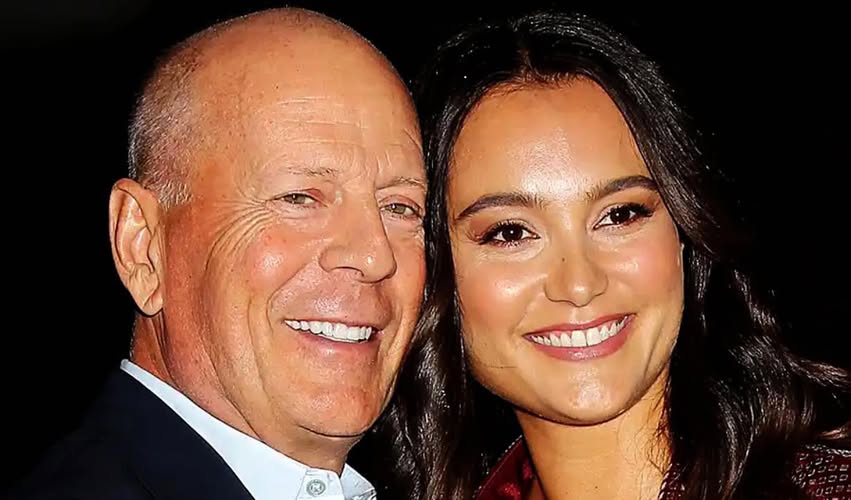
  • Bruce Willis family is standing closer than ever!

    Bruce Willis family is standing closer than ever!

    Bruce Willis’ decline is no longer whispered speculation or online rumor—it’s the blunt truth his family wakes up to, tends to, and braces against every single day. Inside their home, the shift is unmistakable. Life has been rearranged around him, not out of fear, but out of fierce loyalty and love. The man millions knew as the unstoppable hero of action films is now shielded by the quiet strength of the people he once protected. They’ve learned to build a new version of normal, where every gesture matters, every moment carries weight, and the simplest signs of recognition can change the whole tone of a day.

    Emma Heming Willis has stepped fully into a role she never imagined she’d need. She’s become the anchor of the household, the steady presence through changes that arrive without warning. Her days revolve around tiny victories: a relaxed expression, a spark of recognition, a small piece of clarity cutting through the fog. Conversations have shifted from words to instincts. She reads him in his breathing, in the way he holds a cup, in the look he gives when a memory flickers. She measures the day not in accomplishments, but in moments where peace outweighs fear.

    Demi Moore, still deeply connected to the man who was once her husband, stands shoulder to shoulder with Emma—not out of duty, but out of genuine care and shared history. Their daughters move in the orbit created by these two women, forming a protective triangle around Bruce. They anticipate what he needs before he asks. They adjust the rhythm of the home to match his pace. Together, they’ve built a kind of sanctuary where he’s never alone, never unguarded, never facing the confusion of his condition without a familiar face beside him.

    There’s an unspoken understanding among them all: the diagnosis cannot be changed, so the experience must be softened. Every sound in the house is gentler now. Every routine is deliberate. They’ve stripped away anything that adds noise or stress, shaping an environment where Bruce can move through his days with as much comfort and dignity as possible. It’s not dramatic. It’s not glamorous. It’s steady, patient, everyday love—the kind that doesn’t need to be thanked or acknowledged to feel real.

    Outside the walls of their home, the world watches a very different version of Bruce Willis. Fans send messages, old movie clips, photos, stories about what he meant to them. To these people, he’ll always be the wisecracking action star, the man who jumped off buildings and fought villains with a smirk. But inside the house, the family sees the quieter truth. They’re not holding onto John McClane. They’re holding onto Bruce—the partner, the father, the friend. They see the man who exists after the spotlight fades, after the scripts stop coming, after the disease shifts the ground beneath him.

    The grief they feel doesn’t come in loud breakdowns. It comes in subtle moments: the pause before answering a question he no longer understands, the way a memory they share lands differently now, the realization that the future they imagined has been rewritten. But within that grief, something else has taken root. The family has found a deeper closeness, a kind of unity that isn’t forged in good times, but in the quiet, exhausting, necessary work of caring for someone who once cared for them.

    Bruce himself navigates this new reality with the same resilience he’s always had, even if he can’t express it the way he used to. Some days are easier than others. Some moments feel almost normal. Other moments are harder—confusing, disorienting, heavy. But the people around him refuse to let the illness define the meaning of his life. They choose to see him, not the symptoms. They hold onto the parts of him that still shine through in expressions, in gestures, in flashes of the man they’ve always known.

    Demi and Emma, despite everything tabloids tried to paint about them over the years, have become a team in the truest sense. They share responsibilities, worries, strategies, victories. They don’t compete. They don’t divide. They blend into one unified support system focused only on what’s best for him. It’s not a dynamic people expect, but it’s real, and it’s built from love that has evolved rather than evaporated.

    The daughters—grown, thoughtful, unwavering—have stepped up in ways that speak volumes. They’ve traded nightlife and noise for quiet evenings at home. They bring a tenderness into the house that keeps the energy warm without being overwhelming. They remind him of who he is, who he was, and who he remains to them. They help carry the emotional weight that can crush families in situations like this. Instead of splintering, they’ve fused together.

    There’s something profound about the way they’ve chosen to walk him through this. They can’t change the progression of the illness, but they can change the landscape around it. They’ve decided that he will not face fear alone, he will not drift into confusion without a hand to guide him, and he will not slip away from the world without being surrounded by unwavering affection.

    In the past, Bruce Willis’ legacy was built on explosions, one-liners, and the iconic toughness that made him a global figure. Now, his legacy is taking on a different shape—one rooted in the devotion of a family refusing to let him fade quietly. Their love is not loud or performative. It’s consistent. It’s patient. It’s relentless. It’s the kind of strength you don’t see on a movie screen, but it’s far more powerful than any role he ever played.

    Behind the fame, behind the disease, behind the loss of clarity, what remains is something simple and unbreakable: a family choosing to love him harder, gentler, and more intentionally than ever before. And in these quiet rooms, filled with memories and soft assurances, Bruce Willis is not slipping away alone. He is held, supported, and surrounded—every day, every moment, by the people who know him best.

    This is not the action-packed ending fans might imagine, but it’s real. It’s human. And it matters far more. Bruce Willis is living out this chapter wrapped in the kind of love that doesn’t need an audience to be extraordinary.

  • Breaking – When payment could occur!

    Breaking – When payment could occur!

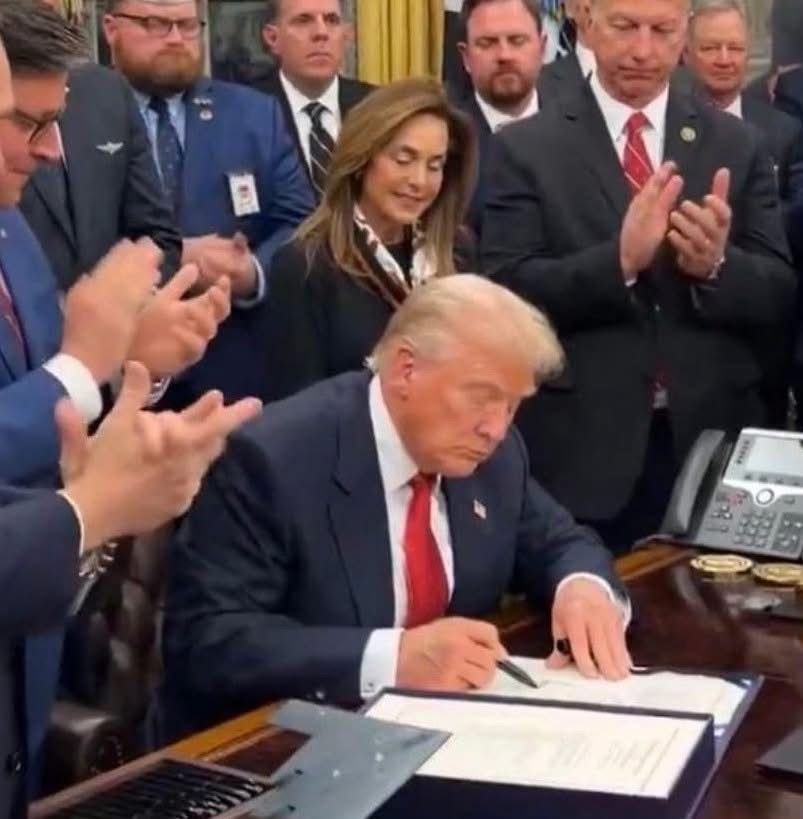
    President Donald Trump has rolled out a sweeping proposal on Truth Social, pitching a national dividend funded entirely by tariffs. His promise is blunt: every eligible American would receive a minimum of $2,000, with high-income earners excluded. It’s the kind of headline-grabbing pledge that taps into frustration over rising costs and stagnant wages, but the mechanics behind it raise more questions than answers.

    Trump frames the strategy in simple terms—tax foreign imports, generate massive federal revenue, and send part of that money directly back to Americans. In his view, tariffs aren’t just an economic tool; they’re leverage. He insists the country has regained wealth, respect, and strength under his philosophy, calling anyone who opposes tariffs a “fool.” To him, taxing imports isn’t a burden on consumers—it’s a path toward national prosperity and financial relief for everyday families.

    The idea plays well rhetorically: foreign companies pay more to sell goods in the United States, and that revenue becomes the fuel for a universal dividend. But the details surrounding distribution are still a fog. A structured system doesn’t exist yet. There are whispers of potential models—tax rebates deposited during filing season, direct credits applied to healthcare costs, or even a brand-new federal payment program—yet none have been finalized or officially outlined.

    What’s clear is that Trump is betting big on tariffs as the foundation for a domestic cash-back model. Imported goods, whether consumer electronics, vehicles, textiles, or raw materials, would carry heavier taxes. That money would flow into federal coffers at a scale he believes could sustain the dividend. Supporters see it as a nationalist economic reset, a shift that puts American households ahead of foreign producers. Critics warn that tariffs tend to circle back to consumers through higher prices, reducing the very financial cushion the dividend aims to provide.

    Still, Trump presents the plan as a win-win. He argues that the financial hit taken by foreign exporters outweighs any temporary price increases at home, and that the dividend would more than compensate for any added cost. He maintains that America, under strong tariff policies, is flush with resources, enjoying record market performance and historically low inflation. Whether those claims hold up to economic scrutiny is a separate battle, but his message resonates with voters who feel squeezed by global competition and disconnected from economic gains they see on paper but not in their bank accounts.

    The timing of payments remains one of the biggest unknowns. Without a finalized mechanism, no calendar can exist. The idea of quarterly payouts has been floated by some policy commentators; others envision an annual lump sum modeled loosely on the Alaska Permanent Fund. A healthcare-based credit system could distribute benefits monthly. But all of these scenarios remain speculative until Trump or his advisers produce specifics.

    For now, the plan exists as a bold, attention-grabbing promise. It reflects Trump’s long-held belief that tariffs are a weapon the U.S. has failed to use to its full advantage—a way to pressure foreign governments, tilt trade deals, and raise revenue without touching American taxpayers directly. Whether the math behind a universal $2,000 dividend actually works is something economists, political opponents, and even allies will debate intensely in the coming months.

    But Trump’s supporters hear something different: a straightforward offer. Tax foreign imports. Fill the treasury. Pay Americans directly. Simple, forceful, and designed to hit home for millions of voters who feel the economy hasn’t rewarded them in years.

    As the discussion grows, one thing is certain—this proposal has shifted the landscape. It forces policymakers, economists, and everyday Americans to confront a question that blends politics with pocketbook reality: Is a tariff-funded national dividend feasible, or is it a high-stakes promise without a roadmap?

    Until a detailed plan emerges, the only solid part of Trump’s announcement is the message he’s hammering out to the country: foreign producers will pay more, Americans will receive more, and tariffs will become the engine powering a new kind of national income. Whether the execution will match the ambition remains to be seen, but the debate is already well underway, and the promise of a direct payout has ensured the nation is paying attention.

  • Urgent – Iran will strike America tonight and will start with the state of!

    Urgent – Iran will strike America tonight and will start with the state of!

    Tensions across the Middle East have reached a boiling point in early 2025, and Israel now finds itself in the center of a storm that’s growing louder by the hour. Reports—unconfirmed but widespread—suggest the country may have come under a series of coordinated strikes. The information is murky, the sources varied, but the pattern is impossible to ignore. Something is unfolding, and it’s happening fast.

    Initial intelligence coming out of the region points to direct military aggression, though no official account has fully clarified who launched the attacks or why. Eyewitnesses describe explosions and unusual aerial activity, while defense officials scramble to verify the origin of the strikes. Some analysts suspect a foreign state acting through covert channels; others point to militant groups looking to exploit regional chaos. In a landscape already shaped by proxy conflicts and unresolved feuds, both scenarios are plausible.

    The timing is as dangerous as the attacks themselves. The Middle East has spent months slipping deeper into instability. Fragile ceasefires have fractured. Long-standing rivalries have resurfaced. Political fractures and shifting alliances have created an atmosphere where a single miscalculation can ignite a much larger crisis. Israel, historically positioned at the crossroads of regional volatility, is once again bracing for the blowback.

    Security experts warn that the current climate resembles a powder keg waiting for a spark. Competing powers are testing boundaries, militant groups are seizing opportunities, and diplomatic ties are strained thin. Any strike on Israel—confirmed or not—has implications that ripple far beyond its borders. If this situation escalates, multiple nations could be pulled in, willingly or otherwise. The stakes are enormous, and the room for error is nearly zero.

    Inside government buildings in Jerusalem, decision-makers are locked in nonstop briefings. Military leaders are reviewing possible response scenarios. The challenge lies in distinguishing real threats from misinformation at a time when every rumor spreads at lightning speed. The wrong conclusion could trigger a wider conflict; hesitation could invite more attacks. The responsibility of finding the right balance grows heavier by the hour.

    What complicates matters even more is the regional landscape. Iran, Lebanon, Syria, and various non-state militias all factor into the equation. Each has its own agenda, alliances, and motivations. Some operate openly, others move in shadows. Intelligence networks are working overtime to determine whether the reported strikes are isolated incidents or the beginning of a coordinated campaign. Meanwhile, allied nations watch the developing crisis with mounting concern, preparing contingency plans of their own.

    International leaders have begun calling for restraint, echoing a familiar plea that often seems powerless against the region’s deeper fractures. Diplomats urge calm. Analysts warn that retaliation could escalate. But Israel still has to answer the question no one else can answer for it: what just happened, and who is responsible?

    As uncertainty grows, citizens across the region brace for what could come next. Borders tighten. Air defenses go on alert. News networks switch to rolling coverage. Tension hangs in the air like static, and the sense that the region stands at a turning point is shared by everyone from military strategists to ordinary families watching from their living rooms.

    Whether this moment becomes the beginning of a new conflict or a reminder of the region’s fragile balance depends entirely on the decisions made in the coming hours and days. Israel’s response will set the tone. Regional actors will react accordingly. International powers will either pressure restraint or take sides.

    For now, the world watches as Israel confronts a wave of uncertainty, preparing for the possibility that the situation will intensify before it stabilizes. The only thing that’s clear is that the Middle East, once again, stands on the edge of something potentially historic—whether catastrophic or diplomatic remains to be seen.

  • With heavt hearts, we announce the passing of this iconic actor!

    With heavt hearts, we announce the passing of this iconic actor!

    With heavy hearts, the film world is saying goodbye to Udo Kier, the magnetic, fearless, utterly unforgettable actor whose career spanned more than five decades. Known for playing villains, monsters, vampires, and some of cinema’s strangest and most memorable characters, Kier built a legacy unlike anyone else. He died at 81 in Palm Springs, California, his partner Delbert McBride confirmed, leaving behind a body of work that shaped horror, arthouse, and Hollywood cinema in equal measure. The cause of death wasn’t disclosed.

    Kier’s life began with chaos. Born Udo Kierspe in Cologne in 1944, he arrived into a world at war. Only hours after his birth, the hospital was bombed. He and his mother were pulled from the rubble—an origin story so dramatic it almost sounds invented. His childhood in postwar Germany was marked by poverty and instability. He later described it as “horrible,” recalling how his mother struggled to raise him after learning the man she loved was already married with three children. They lived without hot water until he was seventeen. Yet even in that bleak environment, Kier developed an eye for performance, a taste for attention, and a desire to leave hardship behind.

    He eventually moved to London to study English and was discovered in a coffee shop—one of those chance encounters that shaped the rest of his life. “I liked the attention, so I became an actor,” he joked in a 2024 interview. His breakthrough came with the cult horror classic Mark of the Devil in 1970, where his unsettling beauty and piercing gaze made him an instant standout. Audiences didn’t forget him, and neither did directors. He possessed the kind of face and presence that made him impossible to overlook.

    Kier’s early career was filled with serendipity. On a flight, he happened to sit next to director Paul Morrissey, who cast him in Flesh for Frankenstein and Blood for Dracula, two films produced by Andy Warhol that cemented his reputation as a fearless performer. He played grotesque roles with elegance. He played monsters with melancholy. If a character required danger, strangeness, or erotic menace, Kier delivered it with style. Handsome, otherworldly, and impossible to ignore, he could have become a teen idol, but his career leaned hard toward the strange, the artistic, the edgy.

    European cinema embraced him completely. Directors like Rainer Werner Fassbinder and Lars von Trier turned Kier into a fixture of their most ambitious work. He appeared in Fassbinder’s The Stationmaster’s Wife, Lola, The Third Generation, and Lili Marleen, each time elevating the material with his unpredictable energy. With von Trier, he became a recurring presence—Breaking the Waves, Dancer in the Dark, Dogville, Melancholia, Nymphomaniac. His relationship with von Trier grew so close that Kier became godfather to one of the director’s children.

    Eventually Hollywood came calling, and Kier entered a new chapter. His role in My Own Private Idaho introduced him to American audiences in a fresh way and led to collaborations with Madonna in her book Sex and several of her music videos. He soon became a familiar face in some of the biggest films of the 1990s and early 2000s: Ace Ventura: Pet Detective, Johnny Mnemonic, Armageddon, End of Days, Blade. Whatever the scale of the production, Kier knew how to stand out. Even in small roles, he had a way of seizing the camera.

    The later years of his career showed no slowdown. He appeared in acclaimed genre films like Brawl in Cell Block 99 and Dragged Across Concrete, and delivered one of his most memorable performances in the 2022 comedy Swan Song, playing a flamboyant, retired hairdresser coming back for one last job. The film earned him widespread praise and reminded audiences that Kier could do much more than menace—he could charm, joke, and break hearts.

    His voice made him a legend in the gaming world as well. Fans of Command & Conquer: Red Alert 2 will never forget Yuri, the sinister psychic villain Kier portrayed with a mix of silkiness and menace. He later voiced characters in Call of Duty: WWII, proving that his talent translated effortlessly across mediums.

    Kier himself understood why people remembered him. “If you play a small part, it’s better to be evil and scare people than be the guy in the post office who goes home to his wife,” he once said. “Audiences remember you more.” He approached his work with humor, honesty, and total commitment. Reflecting on his vast career, he joked: “One hundred movies are bad, fifty you can watch with a glass of wine, and fifty are good.”

    In 1991, he moved to Palm Springs, where he lived in a converted mid-century library. He filled his home with art, plants, architecture books, and personal collections. He adored gardening and once said that if he hadn’t become an actor, that’s what he would have done. He was a fixture at the Palm Springs Film Festival—warm, welcoming, and always ready to greet fans who treasured his eccentric charm.

    Kier was openly gay throughout his life, long before Hollywood became comfortable with queer actors. He never hid, never apologized, and rarely discussed it—simply living his life without letting anyone else define him. He said his sexuality had never been a problem in his career, a statement that reflected both his confidence and the respect he commanded.

    His death marks the end of a singular chapter in film history. No one acted like Udo Kier. No one looked like him. No one captured the strange beauty of darkness the way he did. His legacy is enormous—275 films, countless unforgettable characters, and a life lived with boldness, humor, and absolute individuality.

    The world didn’t just lose an actor. It lost an icon.