Blog

  • Breaking – Here is when to expect the payout!

    Breaking – Here is when to expect the payout!

    The promise landed with the force of a campaign-trail thunderclap, packaged in the kind of simplicity that always makes people pause: a $2,000 dividend for every working family, paid straight from the revenue of aggressive new tariffs. The idea sounded clean, sharp, and almost elegant—money flowing back to the people, a closed loop where America taxed foreign goods and handed the spoils to its own citizens. At least, that was the pitch.

    But beneath the applause lines and viral clips, the reality was already buckling under its own weight.

    In the weeks following the announcement, analysts across the political spectrum did the math publicly, loudly, and with increasingly sharp tones. Tariffs had generated money, yes, but nowhere near enough to sustain the sweeping promise being televised across the country. Billions had come in—less than half of what the proposal needed—but most of that revenue was already locked in legal disputes, frozen behind injunctions and tied up in a bureaucratic maze that even seasoned policymakers struggled to explain.

    And the courts were circling.

    The Supreme Court had agreed to hear a challenge to the administration’s use of emergency powers to impose the tariffs in the first place. The courtroom buzzed with tension as the justices pressed the government’s lawyers on how far executive authority could stretch before it snapped. Observers could see the writing on the wall: skepticism ran deep, and a ruling against the administration would not only strip the proposal of its foundation but could also trigger a legal domino effect—including possible refunds to corporations, importers, and trade groups that had been fighting the tariffs for months.

    The political stakes were enormous. The economic stakes were bigger.

    Still, the White House hammered the message: the money was coming. Soon. Very soon.

    But behind closed doors, even the administration’s allies admitted that no one had a timeline—not for the rollout, not for the eligibility rules, not for the mechanism of the payment itself. Would it be mailed checks? Digital disbursements? Tax credits? A rebate on future filings? No one could say. Congress hadn’t passed anything concrete, and negotiations had stalled in a fog of competing priorities.

    Some lawmakers called it bold. Others called it reckless. Most, however, said it was classic election-year theater: a headline dressed as a policy.

    Americans, meanwhile, reacted the way they often do in moments like this—split between cautious hope and seasoned cynicism. Families struggling with rent, medical bills, and groceries treated the idea of a $2,000 check like a warm breeze blowing in their direction. They didn’t trust it, not fully, but they felt the pull of what it could mean. A few weeks of breathing room. A repaired car. A month without choosing between bills. Even skeptics found themselves imagining the “what if.”

    But as the days rolled on, the optimism thinned. Reporters kept asking the same question: When should Americans expect the payout?

    Every answer from officials seemed to blur into the same fog: “Working on it… reviewing options… finalizing details… awaiting legislative cooperation.”

    Behind the curtain, congressional aides whispered about the real issue: there simply wasn’t agreement on who would qualify. Income caps? Household size? Citizenship status? Phase-outs? Would the payment be universal or targeted? Every proposal met resistance before the ink was dry.

    And then there was the politics.

    Hardliners wanted strict limits. Moderates wanted broad access. Governors demanded assurances that states wouldn’t get saddled with administrative costs. Policy wonks worried about inflation. Economists worried about market reaction. And fiscal conservatives warned that relying on tariff revenue—a notoriously unstable source of income—was a house built on shifting sand.

    Still, the administration refused to back down. At one point, the President doubled down on camera, insisting that “high earners won’t get a dime” and that if the courts blocked the tariff mechanism, “we’ll do something else—trust me.”

    It was the “something else” that raised eyebrows. No one in Congress knew what it meant. No one in the Treasury Department, either, according to a leaked memo circulating quietly through Washington.

    Meanwhile, the people waited.

    In diners, barbershops, grocery store aisles, and endless social media threads, the same conversation kept looping: Is this real? Is the money actually coming? Or is this just another promise meant to fade after the election cycle?

    For many Americans, the answer didn’t matter as much as the feeling. The story had cracked open a familiar wound—one shaped by years of political pledges that never made it into the real world. Stimulus talk, tax talks, rebates, credits, relief programs—people had seen the cycle enough times to spot the pattern. Excitement. Confusion. Delay. Disappointment. Repeat.

    And yet, hope clung to the corners of the narrative, stubborn as ever. Because in a country where millions live close enough to the financial edge to feel the breeze when it shifts, even the rumor of relief becomes a kind of temporary comfort.

    But as hearings continued, court challenges grew louder, and congressional negotiations moved at a crawl, the truth became impossible to ignore: there was no timeline, no distribution plan, no clarity.

    Just a promise floating in political air.

    A familiar promise. One with weight but no shape.

    And so, as the final briefings of the month concluded, the only honest answer left standing was the one no official wanted to say aloud: Americans shouldn’t expect the payout anytime soon. Not next week. Not next month. Maybe not at all.

    For now, the idea remained exactly what it had always been—a headline dressed as certainty, drifting through the national conversation, offering hope that couldn’t yet be cashed.

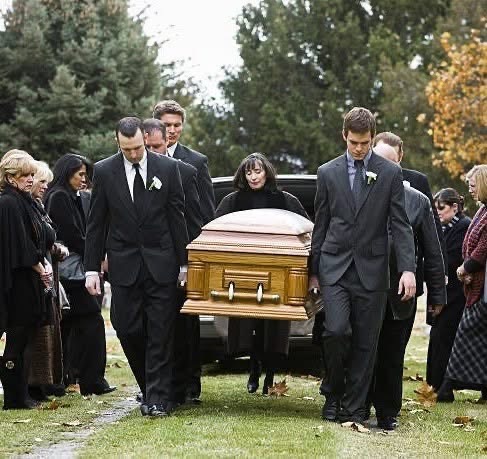
  • SOTD – The Day After the Funeral, Everything Took a Different Turn!

    SOTD – The Day After the Funeral, Everything Took a Different Turn!

    The day after the funeral, I expected quiet. Grief usually settles like dust—slow, heavy, silent. Instead, chaos found me before breakfast. My phone rang with such intensity that I knew before answering something had cracked open overnight. On the other end was her son, his voice a mix of anger, confusion, and something softer buried beneath—fear, maybe. He kept repeating, “Why would she do this? Why would she write you?”

    It took a moment before I understood what he meant. While sorting through the last of her things, he had found a letter tucked inside an old keepsake box she always kept near her bedside. It wasn’t addressed to him. It wasn’t addressed to the family. It had my name written in her familiar, looping script.

    I hadn’t expected anything from her—not gifts, not money, not recognition. I was simply someone who had been there in the last stretch of her life. Someone who helped her with appointments, meals, and the long, uncomfortable afternoons when her body felt heavy, and her mind felt even heavier. I was there because I wanted to be. Not for any reward. Not for thanks.

    Still, hearing that she’d left something behind for me sent a strange chill through my chest.

    He read parts of the letter aloud, his voice strained and uneven. She had written about her fear of becoming a burden, about her gratitude for the quiet moments we shared, and about how my presence made her feel less alone. She wrote that she wished she could change her will to acknowledge what our bond had meant to her, but she didn’t want to ignite conflict in her final days. The letter was her way of giving me something she felt she still owed—a truth spoken plainly, without expectation.

    But that wasn’t the part that broke him.

    In the same box, he had found old notes and receipts—fragments of plans she once had to open a small trust in his name. It was never completed. Not because she didn’t care about him, but because she had spent those last months obsessing over how to repair the growing distance between them. She thought about calling him more. She wrote reminders to invite him to dinner. She scribbled drafts of conversations she wanted to have, apologies she thought she owed, questions she was too afraid to ask.

    She’d tried, in her own imperfect way, to find her way back to him.

    Those unfinished plans hit him harder than the letter to me. He had expected money. He had expected some acknowledgment of his place in her life. But what he found was more painful: evidence of regret. Evidence that she had spent her last months longing for a closeness they’d let slip through their fingers.

    It was easier for him to be angry at me—at my presence in those last days—than to face the truth she wrote in her own hand.

    When he demanded answers, I didn’t raise my voice. I didn’t match his anger or defend myself. I told him what I knew: that the letter wasn’t meant to replace him. It wasn’t meant to divide anything. It wasn’t a statement about worth or inheritance. It was simply her last attempt to say thank you to someone who helped her carry the weight she didn’t want him to see.

    I told him what I had seen firsthand: that she loved him deeply, even when she didn’t know how to show it. That she talked about him constantly. That she wished things were different. That she was proud of him, no matter how far apart life had pushed them.

    There was nothing left in her estate that could be fought over. No savings. No property. No hidden accounts. All he had was a letter she wrote to me and a box full of the intentions she never acted on.

    What she left him wasn’t money—it was clarity. Hard, heavy, inconvenient clarity.

    He fell silent for a long time on the phone. The shouting stopped. The defensiveness drained out of his voice. He wasn’t angry anymore; he was grieving something deeper than death. He was grieving the time he didn’t take, the conversations he didn’t have, the space he let grow between them thinking there would always be more chances.

    We all make that mistake once.

    After the call, I sat alone in my kitchen with the quiet finally settling around me. I realized that the most valuable thing she had left me wasn’t the letter—it was the reminder that kindness matters, even when no one notices. That the moments we give people in their hardest days can shape their memory of themselves. And that sometimes the appreciation for those moments arrives in the form of a handwritten note discovered only after we’re gone.

    A few days later, he reached out again. This time, he wasn’t yelling. He wasn’t defensive. He sounded tired, like someone who had been awake all night sorting through more than just cardboard boxes.

    “I read the whole letter,” he said quietly. “I think she wanted me to understand something. And I think I didn’t, not until now.”

    There was no accusation left in his voice. Only the ache of realization.

    He asked if we could meet for coffee—not to rehash the past, but to try to understand each other better. To figure out, maybe, how to honor the person we both cared about in different ways.

    We met at a small café she used to love. We talked about her laugh, her stubbornness, her habit of leaving handwritten notes around the house. We talked about the years that slipped through his fingers, and the ones I spent with her at the end. There was no bitterness between us, just two people rearranging the emotional debris left behind by someone they cared for.

    Her letter didn’t divide us—it bridged something neither of us knew how to fix alone.

    He apologized for how he acted. I accepted it. Not because I needed an apology, but because I understood the grief behind it. The kind that doesn’t show up neatly, the kind that lashes out before it softens.

    By the time we parted, we agreed on one thing: her last gift wasn’t about gratitude or regret. It was about connection—messy, imperfect, overdue connection. And maybe, in a way, her final wish was that the two people who stood with her at different points in her life might find their way to understanding each other too.

    Some inheritances come in envelopes. Others arrive in moments where truth finally surfaces.

    Hers arrived in ink. His arrived in clarity. Mine arrived in peace.

    And all of it, somehow, became enough.

  • Hillary Clinton Shares Sad News!

    Hillary Clinton Shares Sad News!

    The news came quietly at first, wrapped in a short statement and a brief video clip, but it carried a weight that spread fast across the country. Hillary Clinton, a figure who has been woven into the fabric of American politics for more than three decades, stepped forward with an announcement that felt heavier than anything she had shared in recent years. For someone known for her composure, her endurance, and her ability to push through the harshest political storms, the emotion in her voice struck people immediately.

    She didn’t offer all the details. She didn’t need to. “There comes a time when we all must pause, reflect, and make space for what truly matters,” she said, each word measured, her tone softer than the confident cadence most people were used to. There was vulnerability behind it—not weakness, but the unmistakable sound of someone acknowledging the limits of their strength after a lifetime spent being strong for others.

    Clinton has lived more lives than most public figures ever do. As First Lady, she redefined the role and weathered storms that would have sent others running. As a Senator, she built a reputation for grit and policy depth. As Secretary of State, she carried the weight of international crises and diplomacy on her shoulders. And as the 2016 Democratic presidential nominee—the first woman from a major party to win that slot—she stepped into history with millions watching, supporting, doubting, celebrating, and criticizing all at once.

    But behind the speeches, behind the public expectations and political wars, there was always a private life that paid the quiet price. Years on the national stage can drain anyone, no matter how seasoned. Her announcement, whether related to health, family, or a decision to pull back from the spotlight, reminded the world that public figures don’t get to be invincible. They age. They struggle. They hurt. They face the same turning points the rest of us do—only with cameras waiting outside the door.

    For many, her message landed with a sting of sadness. Supporters described feeling as if an era was shifting. Even people who hadn’t always agreed with her politically found themselves pausing, taking in the humanity behind her words. In a culture where strong public figures often appear untouchable, seeing Clinton speak with such openness struck a chord.

    Within hours, social media filled with reactions—some somber, some grateful, many reflective. Former campaign staffers shared photos of long nights on the road, describing her kindness behind the scenes. Young women wrote about how her resilience inspired them to run for office, start organizations, or simply speak up in places where they once felt silenced. People who grew up watching her navigate the brutal arena of American politics expressed admiration for her ability to endure criticism that would have crushed most.

    Hashtags like #ThankYouHillary and #WeStandWithHillary spread rapidly. What emerged wasn’t just political sentiment—it was a collective acknowledgment of a public life lived under relentless pressure. Even those who didn’t share her politics recognized the extraordinary endurance required to remain in national service for so long.

    Her announcement also pulled back the curtain on something rarely discussed openly: the emotional cost of decades spent fighting, advocating, and absorbing the weight of national expectations. Clinton spent much of her adult life as a symbol—sometimes of progress, sometimes of controversy, but always of something larger than herself. The nation often saw the armor, but few glimpsed what it protected.

    That’s what made her message so striking. For once, Hillary Clinton wasn’t speaking as a candidate, a diplomat, or a strategist. She was speaking as a person. Someone who had reached a moment that demanded honesty with herself and with the people who had walked beside her all these years.

    Her words hinted at a transition—a recognition that a new season of life was unfolding. Maybe it was a step back. Maybe it was a farewell to certain responsibilities. Maybe it was simply a pause to tend to personal matters that public life had pushed aside. Whatever the specifics were, the tone made one thing clear: it was deeply personal.

    Reactions from political colleagues were immediate and heartfelt. Senators who once debated her fiercely expressed sympathy and respect. Former administration officials shared stories of her leadership behind closed doors: the late-night briefings, the way she checked on staff after grueling days, the quiet guidance she offered younger team members who were still learning how to navigate Washington. Even rivals acknowledged that while political differences may run deep, life’s hardest news sits above the fray.

    For many Americans, the moment felt like a reminder of something easy to forget: the people who shape the country’s political landscape are still human. Behind every public decision lies a private life filled with relationships, fears, illnesses, uncertainties, and emotional strain. Clinton’s announcement peeled back that reality in a way that invited reflection rather than debate.

    It also reinforced how enormous her legacy truly is. She shattered glass ceilings long before those words became a political slogan. She inspired generations of women who watched her stand in places where women had never stood before. Whether admired or criticized, she remained impossible to ignore—a force who left her mark on foreign policy, national politics, and the broader cultural imagination.

    Her latest message, however, wasn’t about influence. It was about perspective. It invited the country to look past the headlines and remember the fragility woven into every life, even those lived under the brightest lights.

    As people continue to react, one thing feels certain: whatever chapter comes next for Hillary Clinton will be defined on her terms. Whether she returns to the public stage later, steps away permanently, or transitions into a quieter role, the respect she earned through decades of service won’t fade. Her story has always been bigger than politics; it has been about resilience, reinvention, and the pursuit of purpose through every phase of life.

    And now, as the nation absorbs her emotional announcement, supporters and observers alike find themselves doing exactly what she urged—pausing, reflecting, and making space for what truly matters.

    Even in this moment of sadness, the response carries a quiet truth: her influence isn’t ending. It’s simply taking a different shape—one defined not by campaigns or titles, but by the lasting impact she’s had on millions of lives and on the course of American history.

  • Our Beloved Wheel Of Fortune Host Passed Away! He Was A Real LEGEND, We Are Going To Miss You

    Our Beloved Wheel Of Fortune Host Passed Away! He Was A Real LEGEND, We Are Going To Miss You

    The news spread quickly, first as a whisper and then as a wave of shock: Chuck Woolery, one of the most recognizable and enduring faces in American television, had passed away at 83. For millions of people, his name carried the sound of spinning wheels, flashing lights, and the familiar comfort of game shows that became nightly rituals. But behind the legacy of “Wheel of Fortune,” “Love Connection,” and countless other programs was a man whose presence had shaped decades of entertainment and left a mark few hosts ever reach.

    His close friend and podcast co-host, Mark Young, was the one who shared the heartbreaking update. The two had built a strong friendship over the years, and Mark had been with him at his home in Texas on the day everything changed. Chuck had mentioned feeling unusually tired and decided to lie down. Nothing about the moment suggested what was coming. A little later, he returned struggling to breathe, trying to stay composed but clearly in distress. Emergency services were called right away, but by the time help arrived, it was too late. The man who once brought so much energy and wit to television screens across America was gone.

    Born on March 16, 1941, in Ashland, Kentucky, Chuck Woolery grew up far from Hollywood. His early life didn’t suggest future fame, and he started out just like countless others who dreamed of music, performance, or a shot at something bigger. Before he ever touched a game show set, Chuck was a musician. He started out singing in church and playing guitar, and eventually joined a pop duo called The Avant-Garde. In 1968, they had a hit song titled “Naturally Stoned,” a light, airy track that found surprising success and briefly put the group in the national spotlight. Chuck’s voice, charisma, and easy charm made him stand out even then.

    After his time with the band, Chuck moved into country music, releasing several singles and performing regularly. But it was television that ultimately became the arena where his natural presence blossomed. He had the kind of calm, centered charm that made viewers feel like they were sitting in the studio with him. That warmth got him noticed, and in 1975, he became the very first host of “Wheel of Fortune.” At the time, the show was just another new entry in a crowded schedule, but his upbeat personality and smooth delivery helped shape it into a household staple.

    Chuck spent six years hosting the beloved program, and his combination of wit, timing, and approachability set a tone that carried on long after he left. He had a way of talking to contestants that felt personal, a way of managing the energy of the room that made everything feel effortless. People trusted him. They genuinely liked him. And that ability followed him from one show to the next.

    After “Wheel of Fortune,” he went on to host “Love Connection,” where his catchphrase “We’ll be back in two and two” became iconic. For years, he guided awkward first dates, mismatched personalities, and heartwarming success stories — all with that same calm grin and voice made for television. Later came shows like “Scrabble,” “Greed,” and “Lingo,” adding to a career that stretched across generations. Even people who didn’t grow up with him could instantly recognize the voice, the smile, and the unmistakable presence.

    But beyond the cameras, Chuck lived a quieter, more grounded life. Friends often described him as warm, loyal, and endlessly curious. He loved conversation, loved sharing stories, and had a surprisingly sharp sense of humor that didn’t always show through the polished TV persona. His later years brought him back into the public sphere through a podcast with Mark Young, where he spoke candidly about life, culture, and the journey that had shaped him. It was a setting where audiences got to see more of the man behind the studio lights — reflective, thoughtful, and still sharp at an age where many retreat from the spotlight.

    His passing brought an outpouring of tributes from viewers, colleagues, and fans who grew up hearing his voice during family dinners, quiet evenings at home, or late-night reruns. People remembered not just the shows, but the moments — watching “Wheel of Fortune” with grandparents, hearing his steady voice during the awkwardness of “Love Connection,” or enjoying the unpredictability of “Greed” when prime-time game shows were still event television. Chuck represented an era of TV where hosts were more than narrators. They were part of the home, part of the routine, part of people’s memories.

    His death also hit hard because he was one of the last remaining giants from a time when game shows ruled the airwaves. Before social media, before streaming, before the endless churn of content, there were hosts like Chuck Woolery who became familiar faces across countless households. He didn’t rely on gimmicks or theatrics. He relied on presence — steady, warm, and unmistakably authentic.

    What his closest friends emphasize now is not just the career but the person. The man who stayed humble despite fame. The man who checked in on people even when he had his own struggles. The man who worked tirelessly but still made time for laughter, long conversations, and the people he cared about.

    In the end, Chuck Woolery’s legacy is not defined by a single show or moment but by the decades of connection he built with audiences. He carried himself with dignity, with charm, and with a sense of humor that never faded. His passing marks the end of a chapter in American entertainment history, and for everyone who grew up watching him, it feels strangely personal.

    He leaves behind decades of work, generations of fans, and a legacy rooted not in controversy or spectacle, but in the rare talent of making people feel at ease. He was a steady presence in an unpredictable industry — a familiar voice, a comforting smile, and a reminder that warmth goes a long way.

    Chuck Woolery was, simply put, a legend. And he will be missed.

  • The Night My Son’s Girlfriend Revealed a Secret That Shattered My Marriage

    The Night My Son’s Girlfriend Revealed a Secret That Shattered My Marriage

    My son brought his girlfriend home for the first time to meet me. I was excited — he rarely introduced anyone, so this felt serious. My husband was supposedly on a business trip that day, or so I thought. So it was just the three of us having dinner together. Everything was going perfectly. She was polite, sweet, and clearly nervous, but in a cute, genuine way.

    Then, while we were chatting, her eyes drifted over to the bookshelf behind me. She froze. At first, I didn’t understand what happened — she was staring at a framed photo of my husband. Her face completely changed. All the color drained from her cheeks, and she looked like she had just seen a ghost.

    I asked her gently if she was okay, but she didn’t answer. She just kept staring at the picture. Then she whispered, “That man… that’s your husband?”

    I nodded, confused. My heart started racing because something in her voice told me this wasn’t a simple recognition. She took a deep breath, looked at my son, then back at me, and said the words that nearly made me fall out of my chair:

    “I’m so sorry… but that man is actually my mother’s boyfriend.

    I felt my entire world tilt. My husband had been “traveling for work” almost every month. Suddenly, it all clicked in ways I didn’t want it to. My son stared at her in shock, trying to process what she meant. I asked her to explain, and she continued, her voice shaking.

    She told us her mother had been dating a man for almost a year. A man who claimed he was separated. A man who always had excuses for why he couldn’t stay the night or spend holidays with them. A man who said he traveled often for “business.” She said her mother was in love with him — deeply — and honestly believed he was going to leave his wife “soon.”

    And then she said the part that cut me open:
    “He calls himself Mark with us… but that’s him. Same face. Same voice. Same watch.”

    My husband’s name is Mark.

    My hands were trembling. My son looked like someone had punched him in the chest. This wasn’t just cheating. This was a double life. A second home. Another woman. Another family forming right under our noses.

    I asked her one final question, even though I was terrified of the answer:
    “Does your mother know he’s married?”

    She swallowed hard. “No. She thinks your husband is divorced.”

    I sat back, feeling sick, humiliated, and furious all at once. The business trips. The late-night calls. The sudden “emergencies.” The unexplained receipts. All the little things I had dismissed came crashing together into one horrifying truth.

    My son’s girlfriend started crying, apologizing over and over. But she didn’t owe me an apology. She saved me. She told me the truth my own husband never had the courage to face.

    That night, everything changed. And when my husband came “home” the next day, suitcase in hand, I was waiting for him — with the photo, the truth, and the question he never expected:

    “Which family were you with last night?”

  • The Perfect First Date That Took a Shocking Turn the Next Morning

    The Perfect First Date That Took a Shocking Turn the Next Morning

    I went on a date with a guy my friend set me up with. Honestly, I had low expectations — blind dates usually end in awkward small talk and forced politeness. But this one started differently from the moment he arrived. He showed up with flowers — real roses, not the cheap grocery-store kind. He smiled, handed them to me, and for the first time in a while, I felt genuinely surprised.

    Dinner was perfect. He was charming in a calm, confident way. He opened every door, pulled out my chair, listened when I talked, and never once made the conversation about himself. I kept thinking, Finally, someone who actually gets it.

    When the check came, I reached for my wallet out of habit. Big mistake. He immediately slid his card down and said, “Absolutely not. A man pays on the first date.” Normally I’d argue, but the way he said it — steady, self-assured, not controlling — actually made me smile. I walked away thinking this might have been one of the best first dates I’d ever had.

    Then came the next morning.

    I woke up to a long message from him. At first, I thought it was a cute “good morning,” maybe a follow-up to plan a second date. But when I opened it, my stomach dropped.

    The message wasn’t sweet — it was an invoice.

    He had broken down the entire cost of the date: the roses, the dinner, the drinks, the Uber he paid for. Line by line. With prices. And at the end, he wrote:

    “Since you insisted on paying your share, here’s your half. Please send it by noon.”

    At first, I thought it had to be a joke. No one could go from romantic gentleman to accountant-in-a-mental-crisis overnight. I replied, asking if he was being sarcastic.

    He wasn’t.

    He doubled down. Said it was “only fair,” and that he didn’t want to “start a relationship with someone who expects to be spoiled.” Spoiled. Me. The same me who literally tried to split the check the night before.

    I didn’t send him anything, obviously. I blocked him and told my friend never to set me up on a date again unless she personally ran a psychological background check first.

    The funniest part? She told me afterward that he’d bragged for years about how he was a “traditional man,” how he believed in paying for women, how he treated dates “right.” Turns out he only meant for the first twelve hours — until the bill processed on his card.

    So yeah, best first date ever… followed by the most chaotic morning-after message I’ve ever received. And honestly, I’m still laughing about it.

  • The DNA Test That Tore My Family Apart — and the Truth None of Us Expected

    The DNA Test That Tore My Family Apart — and the Truth None of Us Expected

    Sixteen years ago, my son Tom had a daughter, Ava, with his now ex-wife, Mia. I loved Mia like a daughter from the moment she entered our lives. So when their marriage collapsed because Tom cheated, I was devastated. Mia had no close family, nowhere to go, and she was trying to raise a newborn alone. My husband and I didn’t hesitate — we took both Mia and baby Ava into our home. We helped raise Ava like she was our own granddaughter in every sense that mattered.

    Tom didn’t wait long to move on. Less than a year later, he remarried, and a few years after that he had a new son. Overnight, he distanced himself from Ava, barely visiting, barely calling, acting like she didn’t exist. Eventually, he completely disowned her. It broke Mia’s heart. It broke mine too.

    Two years ago, my husband was diagnosed with lung cancer. It was a difficult time — emotionally and financially. One night, Tom came over acting unusually tense. He started talking about inheritance, saying his son deserved “more” and that Ava shouldn’t get anything because, in his exact words, she was “just a bastard.” My husband almost threw him out right then, but Tom wasn’t done. He then demanded we do a DNA test on Ava because he was “sure” she wasn’t his biological child.

    My husband snapped and kicked him out of the house. But the damage was done — Ava had overheard the entire conversation. She was shaking, heartbroken, but she insisted she wanted to do the DNA test to end the doubt once and for all. Mia agreed, though it clearly reopened old wounds.

    Those next two weeks felt like an eternity. We tried to keep Ava distracted, tried to reassure her, but she was terrified of losing the family she had left. When the results finally came back, all of us sat together in the living room — Mia trembling, Ava silent, my husband holding my hand like he was bracing for impact.

    The results stunned us.

    Ava was Tom’s biological daughter — 99.999% paternity. There was never any doubt. The child he rejected, the child he insulted, the child he insisted wasn’t his… was, in fact, his own flesh and blood.

    Tom didn’t apologize. Not once. Instead, he got angry, blaming Mia for “making him doubt,” blaming us for “taking her side,” and even blaming the lab for giving him “a result he didn’t trust.” It was unbelievable. My husband told him to leave and not come back until he learned to treat his daughter with the respect she deserves.

    Ava cried for hours that night — not from the test result, but from the realization that her own father chose to believe the worst about her rather than accept the truth.

    My husband passed away last year, still furious at Tom. And as for me — I’ve made my decision. When it comes to inheritance, love, and loyalty, Ava will always be my granddaughter. Biology only confirmed what my heart already knew.

  • I Lent My Sister Money and Lost More Than I Expected—Until Life Returned the Truth

    I Lent My Sister Money and Lost More Than I Expected—Until Life Returned the Truth

    When my sister and her husband first asked to borrow the money, I believed every word they said. They spoke about overdue bills, unexpected expenses, and the fear of losing their home. Wanting to help family, I handed over $25,000 without hesitation. I trusted them completely, never doubting their promises. I never imagined that trust would become a lesson I’d remember for years…..CONTINUE READING IN BELOW

  • At 18, Barron Trump FINALLY Admits What We All Suspected…

    At 18, Barron Trump FINALLY Admits What We All Suspected…

    The only child of Melania and Donald Trump, Baron Trump was born in Manhattan on March 20, 2006. He was directly raised by Melania, who ensured humility and solid values despite his immense privilege. Baron attended Columbia Grammar, St. Andrew’s Episcopal, and Oxbridge Academy, graduating in 2024. He is compassionate and intelligent, knows French, Slovenian, and English, and he has a strong relationship with his mother…..CONTINUE READING IN BELOW

  • The Phone Call My Husband Never Answered — And How It Changed Us Forever

    The Phone Call My Husband Never Answered — And How It Changed Us Forever

    The Phone Call My Husband Never Answered — And How It Changed Us Forever My husband didn’t answer his phone for ten hours When he finally called back, my brother picked up and said four words that shattered him: “She didn’t make it.” My husband went cold. He thought I had died He dropped everything and sprinted into the hospital, pale, shaking, out of breath. He tore through the hallways, eyes wild, scanning every room in the maternity ward. ….CONTINUE READING IN BELOW