Blog

  • Melania Trumps entrance with the Christmas tree, dressed in a bathrobe and rubber gloves has gone viral

    Melania Trumps entrance with the Christmas tree, dressed in a bathrobe and rubber gloves has gone viral

    Melania Trump has never needed theatrics to command attention — her presence alone does the job. But when she stepped out to welcome the official White House Christmas tree this year, the internet instantly lit up. Not because of political tension, not because of controversy, but because of what she was wearing. A winter-white Dior coat, bright red gloves, plaid stilettos, and a freshly updated hair color combined into a look that sent social media into a frenzy.

    On November 24, 2025, the North Portico was soaked in classic holiday tradition. An 18.5-foot fir was delivered by horse-drawn carriage, guided by two towering Clydesdales named Logan and Ben. Handlers in vintage suits and top hats completed the picture — it looked like a scene ripped straight from a holiday postcard. The military band played Christmas standards, cameras clicked, and everything unfolded with picture-perfect ceremonial timing.

    Then Melania stepped out, and the entire internet forgot about the tree.

    She greeted the Michigan-grown fir with her signature calm elegance, calling it “a beautiful tree.” But the moment the photos hit social media, the fashion world — and the armchair critics — pounced.

    Her Dior coat, which she wore belted and draped like a sculpted winter robe, triggered instant comparisons.

    “She wore her pajama robe.”

    “White bathrobe and red rubber gloves.”

    “Trying out to be the angel on top of the tree.”

    “She’s literally wearing a bathrobe.”

    “She got new shoes from Piggy.”

    Her red leather gloves sparked their own jokes, with Twitter users claiming she looked like she’d just finished washing dishes or scrubbing countertops before stepping in front of photographers.

    But for every joke, an equal chorus defended her style choices:

    “Melania is rockin’ her plaid stilettos.”

    “She has the best shoes every single time.”

    “Elegance is back in the White House.”

    “She is beautiful and sophisticated. Grace in motion.”

    Classic internet — loud, divided, and fully invested.

    While the coat drove the memes, experts in fashion and beauty were fixated on something else entirely: her hair.

    This wasn’t her usual blonde. It was warmer, richer, and far more dimensional.

    Suzie McGill of Rainbow Room International praised the update, saying the luminous shade “perfectly flatters her skin tone and adds a polished glow.” She described it as a look that brightens the face without crossing into overstyled territory.

    Kirsty Judge of the Rush Artistic Team coined the term “cinnamon blonde” for Melania’s new color — a luxurious blend of tawny beige, warm acorn tones, and delicate vanilla-blonde threads. It’s the kind of layered color that only seasoned colorists can achieve, with depth and light woven intentionally through the hair.

    In short: the hair was a hit, even among people who had plenty to say about the coat.

    But this wasn’t a moment that existed in a vacuum. It carried echoes of Christmases past — especially the notorious 2018 secret recordings that resurfaced during the 2020 election cycle.

    Those tapes, leaked by her former friend and adviser Stephanie Winston Wolkoff, captured Melania venting her frustrations about being scrutinized for everything she did — even holiday decorating.

    “I’m working … my [expletive] off on the Christmas stuff… who gives a [expletive] about the Christmas stuff and decorations? But I need to do it, right?”

    She also responded sharply to questions surrounding migrant family separations, expressing exasperation about the political narratives and media handling.

    “Oh, what about the children that were separated? Give me a f****** break… I was trying to get the kid reunited with the mom.”

    The tapes painted a raw, unfiltered picture of a First Lady feeling trapped between obligation, public perception, and the unrelenting pressure of the job. Wolkoff’s secret recordings and later memoir were met with furious criticism from the Trumps. Stephanie Grisham blasted Wolkoff’s actions as a betrayal:

    “Secretly taping the First Lady and willfully breaking an NDA to publish a salacious book is a clear attempt at relevance.”

    That history lingers. So when Melania appears at a Christmas ceremony, the public memory reopens — the good, the bad, the viral, and the controversial.

    Still, despite the past storms, Melania walked out this year looking composed, confident, and entirely unfazed by the noise around her. If the commentary bothered her, it didn’t show. She smiled, she admired the tree, and she executed the tradition the way she always has — flawlessly, even with the internet turning her coat into meme material.

    This moment also highlighted something consistent about Melania: she does not speak often, but when she appears, she knows the spotlight is unavoidable. Whether people love her fashion choices or poke fun at them, they pay attention. And she seems to understand that her image is part of the role, whether she’s reenvisioning holiday décor or simply greeting the tree that will dominate the Blue Room through December.

    In the end, the ceremony became a collision of nostalgia, style debates, hair-color analysis, and old controversies resurfacing. Typical modern politics: a Christmas tree delivery that somehow ends up being as much about public memory as holiday cheer.

    But one thing is certain: Melania Trump still knows how to turn an ordinary tradition into a moment the country won’t stop talking about — whether the internet is praising her, roasting her, or dissecting her hair shade under a microscope.

    And judging by how calm she looked under the White House portico, she wouldn’t have it any other way.
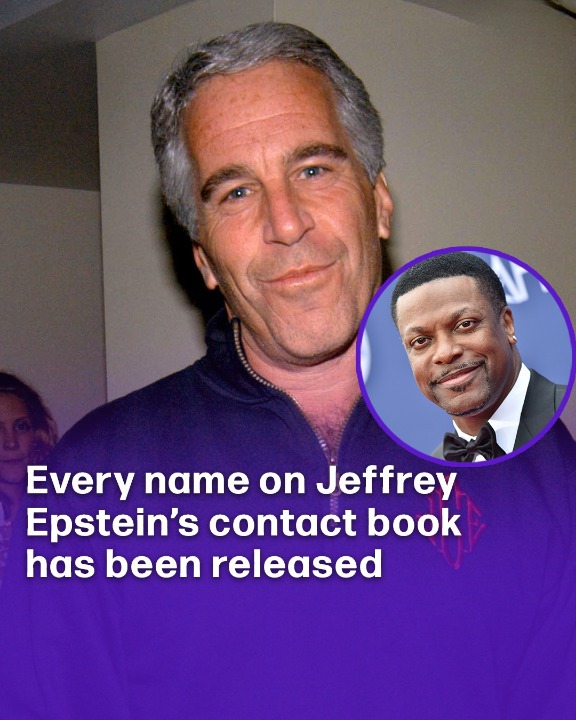
  • Full list of names in Jeffrey Epsteins contact book has been revealed

    Full list of names in Jeffrey Epsteins contact book has been revealed

    The U.S. House of Representatives has taken a dramatic step in one of the most controversial cases of the last decade, voting to force the Justice Department to publicly release a massive collection of documents tied to Jeffrey Epstein, his associates, and the network that operated around him for years. After years of speculation, incomplete disclosures, and fragmented leaks, Congress is now compelling full transparency — and the public is bracing for impact.

    Earlier in November, a congressional committee already dropped an enormous first batch: 20,000 pages of records. That alone reignited debates, accusations, and renewed calls for accountability. But lawmakers made it clear that this initial release was only the beginning. With the House vote finalized, far more documents — some of the most sensitive — will begin rolling out in the coming weeks.

    The files contain everything from flight logs and archived emails to internal communications from the Justice Department. They include estate records, investigative notes, and documents tied to Epstein’s 2019 death, officially ruled a suicide but still clouded by doubt in the public mind. Together, they paint the closest thing to a complete picture the public has ever seen of the people connected to Epstein, either directly or peripherally.

    And one of the most talked-about pieces is Epstein’s contact book — a detailed catalog of names, phone numbers, and personal references. But one point has already been stressed by lawmakers and investigators: being listed does not imply guilt, wrongdoing, or participation in illegal acts. The book includes a broad mix of people — some who were victims or whistleblowers, others who had minimal or indirect contact, and some who unknowingly crossed paths with Epstein through business or social circles.

    Still, the list is packed with high-profile figures. Many have long been the subject of speculation, and their presence here will almost certainly spark more attention. A few examples stand out:

    Ghislaine Maxwell, Epstein’s close companion and accomplice, sentenced in 2021 for sex trafficking, is documented extensively.

    Prince Andrew appears as well — unsurprising, given the accusations from Virginia Giuffre and his highly publicized fallout from the scandal.

    Bill Clinton and Donald Trump are included, largely because both used Epstein’s aircraft at different times in the past. Both have repeatedly denied any involvement in Epstein’s crimes and face no formal allegations.

    The list also includes celebrities like Michael Jackson, Naomi Campbell, Courtney Love, Mick Jagger, and Chris Tucker. Their involvement ranges from brief interactions to social acquaintances — none have been accused of participating in Epstein’s criminal activity.

    Numerous business leaders, wealthy families, and entertainment figures appear, including Les and Abigail Wexner, Glenn and Eva Dubin, Bill Richardson, Tom Pritzker, and others whose names have circulated in past reporting. Their levels of association vary widely: former friendships, business ties, past dating relationships, or simple name entries from Epstein’s expansive social circles.

    Flight logs reveal a broader cast: chefs, assistants, security personnel, stylists, educators, administrative staff, and individuals who worked for Epstein at different times. Some, like Sarah Kellen, Nadia Marcinkova, and Adriana Ross, were named years ago as potential co-conspirators in the original 2008 plea deal. Others were merely employees with no allegations tied to them.

    The list also includes accusers like Virginia Giuffre and Courtney Wild — which reinforces how complex and wide-spanning the records are. Epstein kept the names of victims alongside the names of celebrities and wealthy friends, all without context. This is exactly why investigators continue cautioning the public not to jump to conclusions as more pages roll out.

    The political stakes around the release are enormous. The decision to compel disclosure is being framed by lawmakers as a matter of public accountability and the need for government transparency. The Justice Department’s handling of Epstein’s earlier plea deal, the failures surrounding his detention, and the murky circumstances of his death have fueled distrust for years. Many see the release as overdue.

    But others warn that selectively surfaced names will be used for sensationalism, misinterpretation, and political warfare. Some figures on the list — especially those with powerful allies or enemies — may face renewed waves of public scrutiny regardless of their actual connection to Epstein’s crimes.

    The documents are expected to expose inconsistencies in previous statements, gaps in the original investigations, and internal missteps across multiple agencies. They may also shed new light on how Epstein maneuvered around law enforcement for so long and how many people knew far more than they admitted.

    Still, one fact remains central: inclusion in these documents, including the contact book, does not automatically translate into participation in wrongdoing. Some individuals were victims, some were bystanders, some were professional contacts, some were friends from decades earlier, and some were pulled into Epstein’s orbit without understanding who he truly was.

    Yet the release will undeniably reshape public understanding of the Epstein case. It will raise new questions about power, influence, and the systems that allowed Epstein to operate for years with impunity. And depending on what future batches reveal, it may force accountability for institutions that failed to protect victims long before Epstein’s arrest in 2019.

    For now, the public waits as the next wave of documents is prepared for release — names, logs, emails, and evidence that have been locked away for years. The people involved, whether connected closely or distantly, are already bracing for renewed scrutiny. And as more information surfaces, the culture-wide effort to understand the truth behind Epstein’s network will likely intensify.

    Anyone affected by the issues raised in these disclosures is encouraged to seek support. The Survivors Trust provides confidential assistance at 08088 010 818 during posted hours.

    The coming weeks promise more revelations — and more pressure on the Justice Department to finally deliver transparency where it was long denied.

  • This Child Grew Up To Be One Of The Most Evil People In The World!

    This Child Grew Up To Be One Of The Most Evil People In The World!

    The girl in the faded childhood photograph looks harmless, even sweet — wide-eyed, small-framed, and unaware of the darkness waiting for her. But she would grow into one of the most infamous female serial killers in American history, a woman whose life spiraled from early trauma into violence that shocked the nation.

    Born in 1956 in Rochester, Michigan, she entered the world already marked by chaos. Her father, a man with a long record of violent and sexual offenses, was sentenced to life in prison for kidnapping and raping a seven-year-old girl. Not long after receiving that sentence, he died by suicide behind bars. Her mother disappeared soon after, leaving the little girl and her brother abandoned before they were old enough to understand what was happening.

    The children were taken in by their maternal grandparents. Any hope of stability died quickly. The girl later alleged that her grandmother drank heavily and that her grandfather physically and sexually abused her repeatedly throughout her childhood. She grew up in a home soaked in fear, instability, and secrets — a breeding ground for future tragedy.

    At just fourteen years old, she became pregnant after being raped, and rumors circulated for years that the father of her child may have been her own brother. She gave birth to a baby boy and placed him for adoption immediately, believing it was the only chance he had at a decent life. Before she could legally drive a car, she had already endured more loss and trauma than most people face in a lifetime.

    When her grandmother died, she dropped out of school and survived by selling her body on the streets. It wasn’t a choice — it was survival. Between 1970 and 1980, her life unfolded like a police blotter: arrests for disorderly conduct, drunk driving, assault, shoplifting, and prostitution. She was constantly drifting, constantly scraping by, constantly fighting. Her brother died in 1976, and her grandfather ended his own life not long after. Each loss pushed her further off the rails.

    Eventually she hitchhiked to Florida, hoping distance might reset her life. Instead, she plunged deeper into instability. In 1982, she was arrested for armed robbery and served time. By then, she had already attempted suicide six times between ages fourteen and twenty-two. Mental illness, trauma, and poverty were carrying her toward a breaking point.

    Florida was where her story took its final, violent turn.

    Working as a prostitute along highways and truck stops, she met Richard Mallory, a 51-year-old electronics store owner. The two ended up together in a secluded wooded area outside Daytona. What happened next would become the center of national debate. She shot Mallory three times, leaving his body to be discovered two weeks later.

    She initially claimed they argued over money. Later, she testified that Mallory assaulted her, beat her, and raped her before she fought back in self-defense. Her story was complicated by the fact that Mallory had a history of sexual violence — something that would only become public after her conviction. But by then, the narrative was set: a dangerous drifter had killed a man.

    What no one yet knew was that she would soon confess to killing seven more men.

    Between December 1989 and November 1990, her trail of victims stretched across Florida. All were middle-aged white men. Some were construction workers, one a rodeo hand, one a retired police chief, one a truck driver. The pattern was the same: she met them while prostituting, claimed they attempted to assault her, and shot them in what she insisted was self-defense.

    But the sheer number of bodies and the consistency of the circumstances overwhelmed her claims. Police linked the murders through ballistics and stolen items. Her confession calls — emotional, frantic, and contradictory — sealed her fate.

    She was charged with six counts of first-degree murder. One victim’s body was never found, though she admitted to killing him as well. Ultimately, she received six death sentences.

    Her name was Aileen Wuornos.

    Dubbed the “Damsel of Death,” she became a media obsession. Her life story — the abuse, the homelessness, the violence — was picked apart, sensationalized, and debated endlessly. Was she a predator? A victim of lifelong trauma who snapped? A woman fighting for her life on the margins of society? Psychologists pointed to severe mental illness, untreated trauma, and years of instability. Prosecutors painted her as a cold-blooded killer.

    On October 9, 2002, at age forty-six, Aileen Wuornos was executed by lethal injection. In her final years, she vacillated between claiming self-defense and expressing rage and paranoia. To some, she was a monster. To others, a tragic product of abuse and neglect. To most, she remained an unsettling reminder of what can emerge from a childhood steeped in pain.

    In the end, the little girl in the picture didn’t stand a chance. The world failed her long before she ever laid a hand on anyone — and by the time she became infamous, there was no path left back to who she might have been.

  • Erika Kirks Stylish Pantsuit Gains Attention During Interview with Megyn Kelly!

    Erika Kirks Stylish Pantsuit Gains Attention During Interview with Megyn Kelly!

    Erika Kirk walked onto the stage in Glendale, Arizona expecting an evening defined by honesty, healing, and hard-earned strength. The interview with Megyn Kelly had been arranged to give her a space to talk openly about the challenges she’s faced in recent years — the upheaval, the grief, the personal rebuilding. But the moment she stepped into the lights, it became clear that the night would carry an unexpected layer of attention. Kirk’s wardrobe choice, a striking black pantsuit with sheer detailing and lace accents, immediately lit up social media. It wasn’t subtle. It wasn’t traditional. And paired against Kelly’s crisp white pantsuit and understated styling, the contrast was impossible to ignore.

    Within minutes of the first photos hitting the internet, the commentary exploded. Some viewers praised Kirk for showing up with unapologetic flair, calling her outfit bold, modern, and refreshingly expressive. They saw courage in her look — a woman refusing to shrink herself even under emotional weight. Others weren’t so generous. They questioned whether the dramatic lace, the statement heels, the layered jewelry glinting under the stage lights were too attention-grabbing for such a serious interview. But Kirk didn’t flinch. She didn’t acknowledge the noise at all. She kept her posture steady, her tone calm, and her focus exactly where she intended it to be: on her story.

    As the conversation unfolded, the surface-level chatter about fashion felt increasingly small next to the depth she brought to the discussion. Kirk spoke openly about the emotional terrain she’s been forced to navigate as her family life shifted in ways she never expected. She described the loneliness that creeps in after public loss, the way grief reshapes the rhythm of everyday moments, and how she has learned to accept support from people who genuinely want to help her stand back up. Her voice was soft at times but unwavering, especially when she talked about her children — how she protects their space, how she tries to give them steadiness even when her own heart is unsteady.

    Kelly asked her about the public scrutiny that has followed her through this period, the commentary from strangers who believe they have the full story when they’ve only seen fragments online. Kirk didn’t lash out, even though she could have. Instead, she chose grace. She admitted the criticism sometimes stings, especially when it hits on days when exhaustion outweighs resilience. But she said the experience has made her more intentional about how she responds to people — meeting judgment with empathy, choosing calm over defensiveness, and relying on her faith when the noise gets too loud.

    The interview took a more personal turn when Kelly brought up a recent moment that had gone viral: a tender gesture Kirk made during an embrace at a memorial service. The clip had been dissected from every angle, with strangers offering theories about its meaning. Kirk explained the truth simply — it was instinct. A gesture she’d offered her whole life, something soft and automatic when she’s comforting someone or receiving comfort herself. The internet had turned it into symbolism, but to her, it was nothing more than a human moment between people who were hurting.

    She also opened up about a hope she had held close during one of the most difficult stretches of her life — the hope that her family would grow. It was a desire rooted in love, not in trying to replace what was lost. For the first time that night, her voice caught slightly as she described what it meant to carry that hope quietly, knowing how fragile everything felt around her. That vulnerability shifted the energy in the room. The audience wasn’t looking at the lace on her shoulders anymore. They were listening.

    As the interview approached its end, the online debates about her outfit already felt irrelevant compared to the story she had laid out — a story of a woman rebuilding her life piece by piece, anchored by faith and the wellbeing of her children. She didn’t present herself as polished perfection. She didn’t try to spin her experiences into something inspirational. She simply shared what it looks like to survive heartbreak when the world is watching, and how she has learned to move forward with dignity instead of bitterness.

    By the time the lights dimmed, the viral frenzy around her clothing had softened into background noise. What lingered was the image of a woman choosing strength over spectacle, clarity over chaos, and grace over gossip. Kirk left the stage the same way she entered it — steady, composed, unapologetically herself. And for all the noise that had surrounded her outfit, something quieter and far more meaningful had risen to the surface: the unmistakable portrait of someone fighting through personal loss with resilience, faith, and a steady commitment to her children and herself.

    In a world quick to judge based on appearances, Erika Kirk reminded everyone that a person’s clothing might spark a conversation — but it’s their courage that leaves the lasting mark.

  • My Husband Took the Day Off to Cook Thanksgiving Dinner – but What I Saw on Our Kitchen Camera Ruined Everything

    My Husband Took the Day Off to Cook Thanksgiving Dinner – but What I Saw on Our Kitchen Camera Ruined Everything

    Thanksgiving morning felt too perfect to be real — the kind of quiet, cozy morning you only see in movies. I woke to the warm scent of cinnamon drifting through the hallway, grounded by the sharper kick of fresh coffee. For a moment, I thought I’d dreamed it. My husband, Eric, doesn’t wake up early. He doesn’t cook. And yet, when I walked into the kitchen, there he was — barefoot, cracking eggs like he’d been doing it his whole life.

    “Morning, babe,” he said, giving me a grin that didn’t match the man I’d lived with for eight years. “I took the day off. I’m cooking Thanksgiving dinner this year. Your job is to relax.”

    Relax. On Thanksgiving. I almost laughed. “You’re serious?”

    “Dead serious,” he said, whisk in hand. “No chopping, no basting, no yelling at the oven.”

    “I don’t yell,” I muttered.

    “Sure you don’t.” He bent, kissed my forehead, and added, “Go get your weird tea at the café. Come back later. I want this to be a surprise.”

    He looked almost proud of himself, sleeves rolled up like he was auditioning for a cooking show. Maybe, I thought, this was him turning a corner. Growing up. Trying.

    “Okay,” I said. “But call if you need anything.”

    “I’ve got this, Coraline,” he said — the name only my mother uses. I should’ve noticed. I didn’t.

    Two hours later, my chai latte was cold, my book unread, and something in my gut felt off. I grabbed my phone and opened the nanny cam feed — the one we installed after a string of break-ins. I only meant to check in. I didn’t expect my life to split open.

    The video loaded, and a woman walked into my kitchen like she owned the place — glossy brown hair, cream sweater hugging her curves, heels tapping like she was arriving for a photoshoot. She wasn’t confused or sneaking. She moved like she’d memorized the path between counters.

    Then Eric followed behind her.

    “Mel,” he said softly.

    She smiled. “This house always smells so good. It’s the cinnamon, isn’t it, babe?”

    She leaned into him, and he wrapped his arms around her waist like it was muscle memory. Their kiss was slow. Familiar. Confident.

    The café around me blurred out. My chest locked. My hands shook.

    “Oh, Eric,” she said, scanning my kitchen. “Where’s the famous turkey your wife thinks you’re cooking?”

    Eric laughed — laughed. “Cora practically cried when I said I’d cook this year.”

    “Poor thing,” Mel giggled. “So trusting.”

    My vision tunneled as I watched them season two turkeys — one for the dinner tonight, one for their “private Thanksgiving tomorrow.” When she reached for him, when he slapped her backside and she squealed, something in me snapped cleanly.

    I closed the app. No screaming. No crying. Just cold, sharp silence.

    Thanksgiving dinner had just become a stage. And Eric had already cast himself as the idiot.

    I didn’t go home. I drifted through the botanical gardens like a ghost, letting the cold air steady me. I watched a little girl feed ducks while her father snapped pictures, my mind replaying each second of betrayal.

    “Let him think he fooled me,” I whispered. “Let him think he’s winning.”

    When I finally walked through the door at four, the house smelled like the holiday I wanted — rosemary, garlic, cloves, pie warming on the counter. It should’ve hurt. It didn’t. Not anymore.

    “Cora!” Eric called. “Surprise!”

    He beamed proudly, apron dusted with flour. I surveyed the table — spotless, magazine-perfect — and I smiled like a woman in love.

    “This is amazing, honey,” I said sweetly. “You really outdid yourself.”

    He kissed my cheek, still smelling faintly like someone else. And I let him soak in every compliment.

    Family arrived at six. My mom with her perfect chutney jars. My dad with pies. My brother Chad with his snark and beer. Eric’s parents, glowing with pride. Everyone fussed over Eric’s meal, praising him, teasing him, marveling at his “talent.”

    Eric preened. “Cooking just comes naturally to me.”

    I checked my coat pocket, feeling the phone that held the screen recording. I’d captured the video earlier under a bare tree, hands trembling. Now, the evidence sat there waiting like a lit fuse.

    After dessert, I stood.

    “Before we end the night, I want to give a toast,” I said. “But first… you should see something.”

    Eric’s grin froze.

    I clicked the remote.

    The TV lit up with an image of my kitchen from hours earlier.

    “What’s that, honey?” his mother asked.

    “It’s just a little behind-the-scenes footage,” I said calmly.

    I pressed play.

    Mel appeared on screen. Then Eric. Then their kiss. Their laughter. Their turkey for tomorrow. Their mockery.

    The room went silent except for the sound of my world finally righting itself.

    Eric shot to his feet. “Turn it off! Coraline, turn it off!”

    I didn’t.

    His mother gasped. His father swore. My brother muttered, “Unbelievable,” under his breath.

    When the video ended, I lifted my glass.

    “Happy Thanksgiving, Eric.”

    He sputtered, desperate. “Cora, it’s not what it looks like—”

    “It’s exactly what it looks like,” his mother snapped. “I’m ashamed of you.”

    His father added, “You brought another woman into your wife’s kitchen. Into her home.”

    “This is my house!” Eric shouted.

    “No,” I said. “My parents helped me buy this house. Your name is nowhere on the deed.”

    His mouth opened, then closed. No one defended him. Not his parents. Not mine. Not even himself.

    “You’re leaving tonight,” I said. “Your mistress has a turkey waiting.”

    He stared at me, broken. “Cora… please—”

    “No,” I said. “You’ve performed enough today.”

    Chad opened the door for him. Eric walked out into the cold with nothing but his coat.

    The click of the door behind him felt like the first inhale after drowning.

    Later, as the family quietly cleaned up around me, my mother squeezed my hand. “You didn’t deserve this.”

    “I know,” I said. And I meant it.

    The tears never came. Because I hadn’t lost anything that was mine.

    What I gained was something I should’ve claimed years ago:

    My self-respect.

    And the truth is simple — betrayal doesn’t always break you.

    Sometimes, it just clears the room.

  • Donald Trump uses shock slur in late-night Thanksgiving message

    Donald Trump uses shock slur in late-night Thanksgiving message

    Donald Trump has never been shy about stirring controversy, but this year’s late-night Thanksgiving message ignited a political firestorm unlike anything he’s delivered during the holiday season before. What should’ve been a simple greeting — a moment of national calm — turned into a scorched-earth rant that stunned not just his critics, but many of his own supporters as well.

    Hours earlier, the nation was already tense. Two National Guard members had been shot near the White House, setting off alarms about security and immigration policy. Officials identified the suspect as 29-year-old Rahmanullah Lakanwal, an Afghan national who arrived in the U.S. in 2021. He was later injured by law enforcement and hospitalized. The tragedy reignited a raging political battle — and Trump seized the moment.

    Late that night, he posted a message on Truth Social that began like a standard holiday greeting but quickly veered into hostile territory. What followed wasn’t a Thanksgiving message — it was a political broadside. Trump demanded what he called a “permanent pause” on immigration from all “Third World countries,” tying the D.C. shooting directly to national policy. Then he expanded his criticism, blasting Democratic leaders with fiery language that was shocking even by his standards.

    But the part that blew up the internet came next.

    In the same message, Trump used a derogatory slur to refer to Minnesota Governor Tim Walz and made sharp, inflammatory comments about Representative Ilhan Omar, once again invoking her background, her faith, and her immigrant history. Screenshots of the post spread like wildfire within minutes.

    Walz responded within the hour with a short message on X — pointed, cold, and impossible to ignore: “Release the MRI results.”

    It was a rare moment where a sitting governor effectively implied a former president was mentally unfit — and did so publicly.

    Then CNN revealed a detail that undercut Trump’s core claim. While he implied the Biden administration was responsible for allowing Lakanwal into the country, immigration records showed something else entirely: Lakanwal had applied for asylum in 2024, and his application was approved in April 2025 — under Trump’s own administration.

    When a reporter asked Trump about that discrepancy, he dismissed her as “stupid” and sidestepped the correction entirely.

    His Thanksgiving message continued for several paragraphs, escalating rather than cooling down. Trump insisted the country was being overrun by people who “hate, steal, murder, and destroy everything that America stands for,” promising that such individuals “won’t be here for long.” The post exploded across social platforms, instantly becoming one of the most discussed political statements of the holiday.

    Reactions were predictably split. Trump loyalists praised his bluntness, calling it “necessary truth-telling.” Others — including conservatives who still support parts of his agenda — said the language crossed a line, especially on a day traditionally reserved for unity and gratitude. Immigrant communities, advocacy groups, and several lawmakers condemned the remarks as xenophobic and dangerous.

    Meanwhile, independent analysts pointed out that Trump’s proposed “permanent pause” on immigration raises constitutional questions, logistical issues, and potential blowback from allies abroad. But none of that slowed the momentum online. The debate metastasized within hours, with thousands of posts dissecting the slur he used, the timing of the message, and the broader intent behind it.

    The backdrop of the D.C. shooting only intensified the discourse. While the investigation remains ongoing, the revelation that the suspect’s asylum approval occurred under Trump’s own administration added a layer of irony — one the former president clearly wanted to avoid addressing.

    What made the message even more striking was the sheer contrast between the nation’s expectation — a simple “Happy Thanksgiving” — and what they received: a storm of insults, warnings, and explosive declarations about immigration, national security, and political enemies. It was a reminder that Trump doesn’t shift tone for holidays, for tragedy, or for optics.

    And yet, the timing was strategic. Immigration is once again a central issue ahead of 2026, and Trump has always thrived when the national conversation is volatile. This message ensured he dominated the political space across Thanksgiving weekend.

    Now, with investigations ongoing, tempers still high, and fact-checkers dissecting every sentence of his post, the fallout from Trump’s Thanksgiving message is far from over. It will shape the debates in the coming days — from cable news panels to kitchen tables.

    Whether viewed as refreshing honesty or reckless provocation, one thing is certain: Trump made sure no one ended Thanksgiving night thinking about turkey, gratitude, or family traditions.

    He made the day about him — and the country is still arguing about what he said.

  • She is 82 and still turning heads! With ageless beauty and unmatched poise, this star has lit up screens and hearts for years

    She is 82 and still turning heads! With ageless beauty and unmatched poise, this star has lit up screens and hearts for years

    Linda Evans is one of those rare stars whose presence doesn’t fade with time — it deepens. At 82, she still radiates the sort of effortless grace that made her a television icon in the 1980s, a decade many people remember with an almost nostalgic ache. The music was better, the fashion was bold, and primetime TV felt like a nightly event. And at the center of that era’s glossy, glamorous entertainment was Dynasty — and Linda Evans, the woman who helped define it.

    Her story begins far from the spotlight. Born Linda Evenstad on November 18, 1942, she grew up in a quiet Norwegian-American family, the middle child with a temperament to match — soft-spoken, reserved, almost shy. Her family’s name traced back to a tiny farm in Norway where her great-grandmother lived before emigrating to America in 1884. When Linda was six months old, her family moved to North Hollywood, landing her right in the orbit of an industry that would eventually shape her life.

    She wasn’t a natural attention-seeker, but she had a quiet presence people noticed. Acting wasn’t even her idea — a high school drama classmate pushed her into it, sensing something she didn’t yet see in herself. That push turned out to be the pivot point of her life. From small guest roles to commercial spots, her path was steady, not meteoric. She worked as a cashier at a local theater long before she had her own star on the Hollywood Walk of Fame — which was eventually placed just a few steps away from where she had once taken tickets as a teenager.

    Her real break came in 1965 when she landed the role of Audra Barkley in The Big Valley. Working alongside the formidable Barbara Stanwyck forced Evans to grow, toughen up, and take her craft seriously. That role put her on the map. But it was the 1980s — the era of hairspray, shoulder pads, and unapologetic opulence — that made her a household name worldwide.

    In 1981, she stepped into the role of Krystle Carrington, the loyal, elegant moral anchor of Dynasty. Krystle wasn’t the loudest character, but she was the heart — the steady counterweight to the fiery, glamorous chaos brought by Joan Collins’s iconic Alexis Carrington. Their on-screen clashes became legendary: the catfights, the pool battles, the diamonds, the power suits. Despite all the spectacle, Evans grounded Krystle with sincerity, vulnerability, and a believable warmth. Her performance earned her a Golden Globe and multiple People’s Choice Awards, cementing her place in pop culture history.

    But off-screen, Evans’ life carried its own drama — far quieter, far more painful. Her marriage to actor John Derek famously ended when he left her for 16-year-old Bo Derek, a scandal that dominated tabloids. Evans endured the humiliation with a composure that shocked even her critics. She never lashed out publicly. She never played the victim. Instead, she rebuilt her life quietly, eventually marrying developer Stan Herman — though that relationship, too, ended.

    When Dynasty wrapped in 1989, Evans made a decision that few stars at her level ever make: she stepped away. She didn’t chase roles. She didn’t try to cling to relevance. She left Hollywood behind altogether, retreating to the peaceful Pacific Northwest to breathe, to heal, and to redefine herself outside of fame.

    She embraced wellness, spirituality, quiet living. Cooking became a passion. Solitude became a friend. And Hollywood, as always, came calling eventually. In 2009, she unexpectedly joined Hell’s Kitchen UK, surprising everyone — including Gordon Ramsay — by winning the entire season. Her charm was undeniable, her humility refreshing, and her resilience on full display.

    But her family carried heavy burdens. Cancer touched her family with brutal force: both parents battled it, as did two of her sisters. In 2020, when she participated in a Hope Walk, she dedicated it to her youngest sister, Charlie, who was fighting the disease at the time. In 2022, Charlie passed away. Evans posted a quiet, heartbreaking tribute: “My beloved sister Charlie, forever in my heart.”

    Evans herself faced serious health challenges. A slipped disc caused agonizing chronic pain; she admitted that at her lowest moments, she understood how suffering could push a person toward despair. Cortisone injections weakened her hair, and she struggled with depression. In 2014, she was cited for reckless driving after taking a sleeping pill while in severe pain — a moment she later called a turning point. Pain management, surgeries, and laser treatments eventually brought her relief, and slowly, she reclaimed her energy, her confidence, her peace.

    Today, Linda Evans lives far from the glitter of Hollywood in a calm, secluded estate outside Olympia, Washington. She sold her sprawling “Northwest villa” and chose something simpler — a cozy home surrounded by 70 acres of trees and wildlife. Deer wander through her yard. She grows her own fruits and vegetables. She keeps her Dynasty wardrobe in storage, admitting that she rarely opens the door because the memories are overwhelming.

    Her home is warm, intimate, and filled with pieces of her long history. She often speaks about the power of silence, the necessity of introspection, and the deep comfort she’s found in living an authentic life. Where many stars cling to fame, Evans gracefully stepped away from it to understand who she was outside of the spotlight.

    That’s the secret to her enduring appeal.

    She didn’t chase relevance. She didn’t fall apart. She didn’t try to be something she wasn’t.

    She simply evolved.

    She is 82 now — elegant, grounded, unfiltered, and still turning heads not because of Hollywood glamour, but because of the life she has lived, the grace she has shown, and the quiet strength she carries.

    Some stars burn out. Some flicker. Linda Evans isn’t one of them.

    She keeps glowing — steady, warm, unmistakable — a reminder that true beauty isn’t about age at all.

    It’s about character.

  • It began with something so ordinary Denton’s old jacket. I was cleaning out our closet when I slipped my hand into a pocket and found a crumpled note.

    It began with something so ordinary Denton’s old jacket. I was cleaning out our closet when I slipped my hand into a pocket and found a crumpled note.

    The handwriting wasn’t his, and the words hit like a punch to the gut: “This is between us. No one else can know.” Beneath it, a phone number.

    My stomach flipped. Was this the beginning of the end? I stared at that line, my heart pounding with dread. Every instinct screamed to ignore it but I had to know.

    I dialed the number, bracing for a truth I wasn’t sure I was ready to hear.

    A quiet voice answered and gave me only an address by the sea before hanging up. No names, no explanations. Just coordinates for what felt like heartbreak

    . I drove the coastline the next morning, the wind roaring louder than the thoughts in my head. My hands trembled on the wheel. Was Denton having an affair? Living a life I didn’t know?

    The mansion at the end of the road didn’t calm me it confirmed my fears. It was too perfect, too private.

    I climbed the stone steps like they were made of glass, convinced my world was about to break.

    But what waited on the other side wasn’t betrayal it was confetti. Laughter. Familiar faces shouting “Surprise!” in unison. I stood frozen in disbelief.

    And there he was Denton holding roses and beaming through tears. “Happy 10th anniversary,” he whispered, pulling me close.

    That note, that mystery, the phone call it was all part of his surprise. He’d brought me back to the mansion where we first fell in love, where we once promised each other forever. Every step, every doubt, had led me here back to us.

    In that moment, the fear melted into something softer: clarity. Denton hadn’t hidden something from me he’d built something for me.

    A memory. A reminder. A love letter in disguise. And I realized just how often fear tries to rewrite stories before they finish.

    What I thought was the start of an ending was really the beginning of something beautiful. Love, it turns out, isn’t just found in grand gestures it’s in the moments that scare you, surprise you, and ultimately, bring you home.

  • On Mother’s Day, my mother-in-law handed me a $367 dinner check and said,

    On Mother’s Day, my mother-in-law handed me a $367 dinner check and said,

    “This is your gift to the real moms at the table.” I smiled, paid my part—and gave her the shock of her life.

    I’m 35 and have been married to Ryan for nearly 10 years.

    After years of miscarriages and fertility treatments, motherhood felt like a dream slipping further away.

    Still, I went to Cheryl’s “ladies-only” Mother’s Day dinner—just me, my MIL, and my two sisters-in-law, both of whom are moms.

    They got gifts. They toasted with prosecco. I got water and polite pity

    . Then Cheryl tapped her glass and said, “Since you’re not celebrating anything, it’s only fair you pay for us mothers.”

    She slid the bill to me. I looked at the check. Then I looked at her—and smiled. Actually,”

    I said, “Ryan and I just got the call. We’ve been matched. A baby girl. She’s being born tomorrow. We fly out in the morning.” Silence.

    Then I stood up, left $25 for my meal, and said,

    “This is my first Mother’s Day too. Being childless doesn’t make me your wallet. Or your punchline.”

    The next day, I held my daughter for the first time. Her name is Maya. And when she wrapped her tiny fingers around mine,

    I knew: I didn’t need to prove I was a mother. I just needed her.

  • AT 74, JAY LENO PLANNING FOR DEATH, LEAVES CHUNK OF CASH TO CARS – NO ONE LIVES FOREVER!

    AT 74, JAY LENO PLANNING FOR DEATH, LEAVES CHUNK OF CASH TO CARS – NO ONE LIVES FOREVER!

    Jay Leno is 74 now, and he’s finally acknowledging what most people spend their lives dodging: time catches everyone. The man has been an institution in American entertainment for decades—workhorse comedian, late-night king, and the guy who could talk cars with the enthusiasm of a kid discovering engines for the first time. But age has a way of shifting priorities, and Leno is making decisions that underline one blunt truth he’s not afraid to say out loud: nobody gets out of here alive.

    The accidents and health scares he’s survived didn’t soften him; they sharpened him. They reminded him that even the most relentless personalities hit limits eventually. So he’s doing what practical people do—putting his affairs in order. And in Leno’s world, that means addressing not just the finances and legalities, but the massive, historic, obsessively maintained car collection that defines him as much as his comedy ever did.

    He’s setting aside a significant part of his fortune specifically to protect those cars after he’s gone. Not to sell them off. Not to chop the collection into profitable pieces. To preserve them. To keep them together. To make sure they’re treated the way he treated them—with respect, curiosity, and meticulous care. Leno has always insisted he doesn’t “own” these machines so much as he’s a temporary steward of automotive history, and he’s now ensuring that stewardship continues without him.

    Anyone who knows his collection understands why he’s doing it. It’s not just a garage. It’s a rolling museum that tracks more than a century of engineering. Steam cars, jet-powered experiments, one-off prototypes, million-dollar supercars, classics restored to better-than-factory condition—he has it all. And he didn’t just stash them away as trophies. He drove them. He understood them. He took them apart and put them back together again. Every car in that warehouse has a story, and most of those stories include Leno’s hands covered in grease.

    This isn’t a man passing down toys. This is a man passing down a legacy—one shaped in metal, fuel, and obsession. Cars were never a hobby for him. They were a language. They were the throughline of his life, the thing that grounded him when fame, schedules, and the demands of millions pulled him in a hundred directions. When he wasn’t performing, he was in the garage. That’s where he did some of his best thinking. That’s where he felt like himself.

    And even now, long after most people would’ve slowed down, he’s still maintaining the collection with the same energy he had decades ago. But he’s realistic enough to know that at some point, even he won’t be the one behind the wheel. That realism isn’t grim—it’s responsible. He’s aware of what happens when massive collections fall into unprepared hands: they get scattered, neglected, or dumped on the market piece by piece. He won’t let that happen.

    The truth is, Leno has never been sentimental in a corny way. He’s sentimental in a practical way. He believes in preserving things that matter. He believes in honoring craftsmanship. And he believes that if you care about something, you don’t leave its future to chance. So he’s building a plan that outlives him, a structure that keeps his life’s passion intact. He’s making sure the engines he loved so much keep running.

    His fans aren’t surprised. If anything, they’re reflective. Leno has been a constant presence in their lives—someone who made people laugh every night and showed them that success doesn’t have to mean losing your grounding. He worked nonstop. He stayed out of scandal. He treated fame like a job, not a license to act like a monarch. And through it all, the cars were his anchor.

    As he prepares for what he bluntly calls “the inevitable,” he’s not indulging in melodrama. He’s just facing the truth head-on, the same way he always has. Mortality doesn’t intimidate him. It motivates him. He knows the jokes will fade, the show clips will gather digital dust, and the world will move on. That’s how it goes. But this collection—this living archive of human ingenuity—can stand the test of time if he sets it up right. And that’s exactly what he intends to do.

    He’s also aware that legacy isn’t about ego. It’s about contribution. The cars aren’t just rare machines; they’re lessons. They’re historical markers. They’re reminders of what ambitious people can build when they push limits and refuse to accept mediocrity. Leno wants future generations to experience that. He wants them to see the craftsmanship. He wants them to understand the evolution of engineering. He wants them to feel the same spark he felt the first time a motor growled to life under his hands.

    He’s not trying to be immortal. He’s trying to preserve something that deserves to outlast him.

    Behind the blunt tone and matter-of-fact attitude, there’s something honest about all of this. Leno has lived a big life, a loud life, a busy life. He’s been everything people expected of him and more. But he’s a realist before anything else. He knows the road has a finish line. He’s just making sure the vehicles he trusted and admired make it past that line without him.

    In a way, this plan of his—this move to safeguard the collection—is the most personal thing he’s ever done. He’s not doing it for applause. He’s not doing it for headlines. He’s doing it because love for something, when it’s real, doesn’t evaporate when the end approaches. It becomes even clearer, even sharper.

    Jay Leno has spent his lifetime with engines in his ears, grease on his sleeves, and an encyclopedic knowledge of automotive history in his head. He’s given the world humor and entertainment, but he’s also given it something tangible—machines preserved, stories preserved, history preserved. And now he’s making sure that the roar of those engines keeps echoing long after he can’t hear it anymore.

    He’s preparing for the final lap with the same steady confidence he brought to every stage, every show, every project. He’s not afraid. He’s not dramatic. He’s practical, focused, and consistent. And as he sets the foundation for what happens next, one thing is clear: Jay Leno’s legacy won’t be defined by the day he stops breathing, but by the generations who will stand in front of those cars, long after he’s gone, and feel the spark he carried his whole life.