Blog

  • The Morning a Simple Question Changed Everything!

    The Morning a Simple Question Changed Everything!

    The morning always followed the same rhythm in our house. He showered first, humming off-key behind the curtain while I put the coffee on. It was one of those quiet domestic routines we never thought about—just the comfortable background of our life. But that one morning, everything shifted with a single sentence.

    “Hey babe, come look at this mole on my back. Does it look bad?”

    At first I laughed, assuming he was joking the way he always did. He had a habit of turning the tiniest things into dramatic performances. I expected to pull the curtain back and find him grinning, waiting for me to roll my eyes. But when I stepped into the bathroom, steam swirling out into the hallway, something in his voice made my heart drop. It wasn’t teasing. It wasn’t casual. It was trembling.

    I pulled the curtain open just enough to see him standing perfectly still, his back toward me. No jokes. No smirk. His shoulders were tight, like he was trying not to breathe too deeply. Then I saw the spot—a dark, irregular patch that hadn’t been there before. Uneven edges. Almost like a splash of ink someone had flicked onto his skin. For a second, my throat closed.

    “Hey,” I said softly, trying to keep my voice steady as I touched his arm, “let’s get it checked out. Just to be safe.”

    He nodded, but the fear stayed in his eyes, stubborn and raw.

    For the next few days, we pretended everything was normal. We worked, we ate dinner, we took evening walks the way we always did. But underneath the routine was a quiet heaviness neither of us dared to touch. He kept trying to joke—little quips, silly voices, exaggerated sighs—but something behind those jokes was different. Like he was acting out a version of himself he wasn’t sure he could hold together.

    And I noticed every single crack.

    When the dermatologist appointment finally came, we sat in the waiting room holding hands, our fingers laced tightly enough to leave marks. The silence felt heavy, but not uncomfortable—more like we were both holding our breath, waiting for someone to tell us the rules of our life had changed.

    The doctor examined the spot with calm precision. Her face revealed nothing. She didn’t panic, but she didn’t wave it off either. After a long moment she said, “I’d like to run a biopsy just to be thorough.”

    The word biopsy landed like a weight in the room. The walls felt closer. The chair felt smaller. He nodded, but his jaw clenched. On the drive home, he rested his head against the window, watching the blur of cars and buildings, and whispered, “I didn’t think something so small could change everything.”

    I reached over, slipped my hand into his, wishing touch alone could pull the fear out of him.

    The days that followed were the slowest of our lives. Every morning felt like waking up under water. We cooked elaborate meals we didn’t actually want to eat. We binge-watched comedies and barely laughed. At one point we rearranged the living room furniture simply because it was something we could control.

    But something surprising grew in those days. In the middle of the uncertainty, in the quiet moments between the fear-filled ones, we started talking in a way we hadn’t in years. Honest. Vulnerable. Real.

    He told me he used humor as armor because he didn’t know how to express fear. I told him I sometimes forgot he needed comfort too because he was always the one making everyone else feel safe. It was as if the possibility of something terrible stripped us down to the truth: love is not just in the big moments—it lives in the quiet acknowledgments, the whispered reassurances, the willingness to sit with someone through the waiting.

    We held each other a lot. Sometimes in silence. Sometimes while he cried into my shoulder when he thought I wasn’t looking. Sometimes while I held him tighter than usual because I didn’t trust my own voice.

    Then finally the doctor called.

    I could hear him on the phone from the other room. A beat of silence. Then a deep exhale, so heavy it sounded like it carried weeks’ worth of dread. When he walked toward me, his eyes were already brimming with relief.

    “It’s benign,” he said, voice shaking. “It’s nothing. Just something to monitor.”

    I didn’t realize I’d been holding my breath until that moment. I didn’t realize how afraid I’d been until my knees felt weak. We held each other like survivors pulled out of a storm.

    That night, while we made tea in the kitchen, he came up behind me and wrapped his arms around my waist. His face pressed against my shoulder. His voice was quiet, steady, almost reverent.

    “I’m never taking mornings for granted again.”

    It hit me then how one ordinary day, marked only by a shower curtain and a simple question, had cracked us open in a way nothing else ever had. It reminded us that life rarely announces its turning points. That fear, for all its weight, can sharpen the outline of what truly matters. That the things we treat as routine—morning showers, silly jokes, coffee brewing—can become sacred the moment we imagine losing them.

    The scare didn’t destroy us. It softened us. Reminded us we’re fragile. Reminded us that love isn’t just about holding on when everything is fine—it’s about standing together in the spaces where fear lives too.

    Some mornings now, he’ll call out from the shower just like before. Silly, ridiculous jokes. And when I hear him laugh, a real laugh this time, I let myself appreciate it in a way I never used to.

    Life didn’t change because the mole was dangerous. It changed because it could have been. Because for a brief moment, we were forced to stare at the possibility of losing the life we’d built, the routines we took for granted, the person we loved without thinking twice.

    That morning didn’t break us. It woke us up.

    It reminded us that every ordinary day is a gift, even if it arrives wrapped in steam and fear and a question called out from behind a shower curtain.

    And now, each morning feels a little brighter—because we know how easily it could have been different.
  • Guess Who This Little Boy Turned Into – SOTD

    Guess Who This Little Boy Turned Into – SOTD

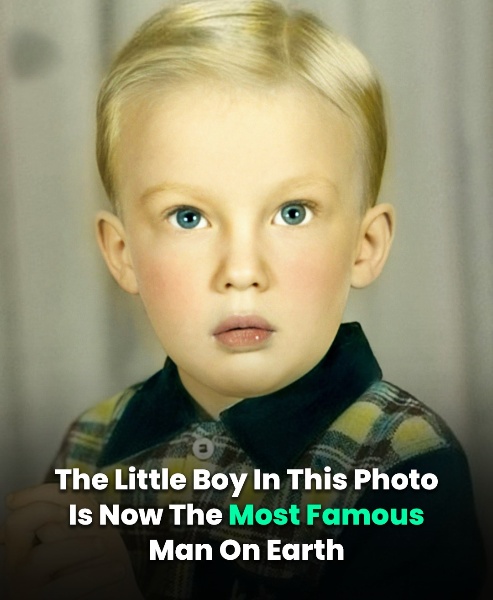
    The photograph looks ordinary at first glance—a pale-haired toddler, no more than three or four, sitting still the way children rarely do unless someone is holding a camera and begging them not to move. His wide eyes drift just past the lens, soft and dreamy, the kind of expression that makes parents say, “Look how innocent he was back then.” There’s nothing dramatic in the image: no hint of the life ahead, no clue to the personality that would one day dominate headlines, business magazines, political debates, and millions of conversations around the world.

    But the reason the photo exploded online wasn’t because of the childlike charm. It was because of who that little boy eventually became.

    When people first saw the picture, reactions ranged from shocked to amused to deeply conflicted. Some said the transformation from that sweet-faced child to the adult everyone knows today felt impossible. Others swore they could see the intensity in his eyes even then. Many simply didn’t believe it was him at all.

    To understand how that little boy became the man the world recognizes, you have to go back to the environment that shaped him.

    He was born into a household built on strict expectations and a drive for success. His father, a forceful and disciplined businessman, believed deeply in toughness—emotional, physical, and mental. In that home, weakness wasn’t encouraged. Vulnerability wasn’t rewarded. Strength, achievement, and control were the currency of approval. From the beginning, the boy learned that the world didn’t slow down for anyone. You pushed forward or you were left behind.

    Family members and childhood acquaintances later described his upbringing as structured, competitive, and demanding. Praise didn’t come easily. Mistakes weren’t things to learn from—they were things to erase or overcome instantly. In a family where progress was the expectation, the young boy quickly internalized the idea that success wasn’t optional; it was necessary.

    But his mother’s influence was a different story. A warm, elegant woman, she fell seriously ill at times during his youth, and those health struggles left a deeper imprint than people realize. When a child sees a parent suffer, it alters something inside them. It affects how they see vulnerability, relationships, and dependence. For him, it may have planted the early belief that showing fear or softness brought danger. Love, for him, was deeply intertwined with loss.

    By the time he reached thirteen, that restless energy—combined with a growing tendency to push boundaries—made his parents decide to enroll him in the New York Military Academy. For many kids, a military school would feel like punishment. But for him, it was a place where structure, hierarchy, and ambition were crystallized.

    Former classmates often recalled that he had presence—even then. He wasn’t just another student marching in formation. He liked winning. He liked leading. He liked setting himself apart from everyone else, whether through sports, competition, or simple confidence. The academy didn’t soften him; it sharpened him.

    That environment hammered traits into him that would later define his public persona: resilience bordering on stubbornness, the instinct to dominate, the refusal to admit defeat, the drive to stand out no matter the cost. Leadership came naturally, but so did confrontation. He didn’t shy away from conflict; he leaned into it.

    After school, the boy stepped into adulthood with the same determination that had been drilled into him since childhood. He entered the world of real estate and business, fields where competitiveness wasn’t just encouraged—it was mandatory. And he thrived in the spotlight. He built an empire with his name stamped on skyscrapers, hotels, casinos, golf courses—monuments to ambition and branding.

    Then came television. With The Apprentice, he didn’t just host a show; he built a persona—a larger-than-life businessman with sharp edges, bold statements, and a flair for drama. And the nation watched. Millions tuned in every week. The boy in the picture had grown into a man who captured attention wherever he went.

    Of course, the chapter everyone recognizes came next: politics.

    Whether you admired him, feared him, or simply observed him with curiosity, there was no ignoring him. His rise to the presidency was one of the most talked-about, polarizing, and unprecedented political shifts in modern history. Supporters praised his bluntness and refusal to fit the mold. Critics challenged nearly every move he made. Public opinion split sharply, and conversations about him dominated the news for years.

    Love him or hate him, the impact was real, undeniable, global.

    That little boy from the photograph grew into Donald J. Trump.

    A man discussed in boardrooms, living rooms, classrooms, newspapers, podcasts, and debates. A man whose decisions influenced economies, international relationships, political movements, and entire ideological landscapes. A man shaped by discipline, ambition, family pressure, personal tragedy, and a relentless hunger to rise above everyone around him.

    The viral photo felt surreal to many because it forced people to confront the gap between innocence and eventual influence. Looking at the little blond child with wide eyes, it was hard to connect him with the figure who would become one of the most scrutinized and complex public personalities of the twenty-first century.

    But that’s the truth about childhood photos—they freeze a moment in time, long before a life reveals what it’s capable of becoming. They show the version of us untouched by the things that will eventually define us.

    People reacted the way they did because the contrast was stark. The boy looked gentle, almost fragile, unaware of the immense weight his name would one day carry. The man he became is anything but fragile. Controversial, influential, charismatic to some, divisive to others—yes. But fragile? Never.

    The journey from that child to the global figure known today is a study in ambition, environment, personality, and fate intertwining in ways no one could’ve predicted from a single snapshot.

    And that’s why the photo struck such a nerve. It didn’t just reveal who he used to be—it reminded people that every world-shaping figure, no matter how powerful or controversial, started as nothing more than a child in a moment of stillness, waiting for life to unfold.

  • Trump Deploys US Marines to – See More!

    Trump Deploys US Marines to – See More!

    The U.S. military confirmed a move that immediately set off alarms across the country: 200 U.S. Marines were being sent to Florida to support Immigration and Customs Enforcement. The decision dropped into the news cycle like a grenade, sparking confusion, outrage, and debate before the ink on the announcement was even dry.

    The deployment didn’t look anything like the conventional military operations Americans are used to seeing. There were no reports of combat roles, no suggestion of armed patrols, and no indication that Marines would be enforcing immigration law on the ground. Instead, the Pentagon emphasized—almost to the point of over-explaining—that the Marines would perform only logistical and administrative tasks inside ICE detention centers.

    Their assignment was simple on paper: assist with transportation coordination, facility organization, paperwork backlogs, and operational support in the background. No arrests. No raids. No weapons pointed at detainees. And absolutely no direct involvement in law enforcement.

    But the imagery alone—military uniforms walking through ICE facilities—was enough to trigger emotional reactions. For many Americans, it brought to mind scenes of militarized immigration enforcement they’d always feared might one day become reality.

    Florida was the first state to receive forces under this new plan, but the deployment was part of a broader strategy targeting high-tension regions like Texas and Louisiana. These states had been under enormous strain due to surging immigration pressures, political battles over border policies, and growing tensions between state and federal leadership. ICE facilities were overflowing. Administrative teams were exhausted. And the federal government seemed intent on tightening its grip on border and immigration operations.

    Still, the question remained: why the Marines?

    Military analysts speculated about manpower shortages, logistical failures, or simply political messaging. Others insisted the move revealed more than the government wanted to admit—that ICE lacked the internal capacity to manage the volume of detainees and was quietly leaning on the military to fill the gaps.

    From Washington, the official explanation was clean and controlled: temporary support, strictly administrative, meant to keep ICE employees from being overwhelmed. But on the ground, the story felt more complicated.

    Community leaders in Florida reported an immediate shift in tone. Immigrant advocacy groups described fear rising among undocumented families who already avoided hospitals, schools, and public areas. Seeing military personnel near detention centers—regardless of their assigned duties—only amplified their panic. Rumors tore through neighborhoods faster than facts could reach them: Marines helping ICE? What next? Patrols? Checkpoints?

    Local politicians split sharply. Some called the move necessary, arguing the immigration system had reached a breaking point and needed reinforcement. Others condemned it as an unnecessary escalation—military involvement, they said, even in a support role, blurred dangerous lines.

    The outrage spread fast online, fueled by images of Marines in uniform entering ICE facilities. Even though the photos didn’t show conflict or arrests, the symbolism was enough to ignite national debate. Comment sections flooded with arguments about federal authority, border security, immigrants’ rights, and the appropriateness of military involvement in civilian matters.

    Inside the military, the deployment wasn’t universally embraced either. Some Marines questioned why they were being pulled into domestic operations that seemed far from traditional missions. Retired officers warned that such roles risked eroding the long-standing separation between military and civilian law enforcement. Meanwhile, others argued that logistical support had always been part of the military’s toolbox, citing natural disasters, evacuations, and humanitarian missions.

    Still, this deployment wasn’t like hurricane relief or wildfire support. This one carried political weight. And everyone knew it.

    At ICE facilities, staff members reportedly reacted with mixed emotions. Some were relieved to have reinforcements to help with crushing workloads. Others worried the presence of military personnel might create more tension with detainees and attract unwanted media attention.

    Florida officials tried to maintain calm, emphasizing that Marines wouldn’t be interacting directly with detainees. But public trust in immigration systems had eroded long before this deployment, and reassurance didn’t travel as fast as fear.

    As the Marines settled into their assignments, the controversy continued to grow—especially in states slated to receive support next. Advocates pointed to historical warnings about the militarization of immigration policy. Opponents countered that the system was buckling and needed all the help it could get. And somewhere between those opposing forces, the Marines became symbols in a political fight far bigger than their actual mission.

    What made this deployment so explosive wasn’t the action itself—it was everything it represented. It raised questions about how far the government was willing to go to bolster immigration enforcement. It highlighted the political fractures between states and Washington. And it showed just how tense the conversation around immigration had become across the country.

    The Pentagon insisted the mission was temporary. ICE leadership echoed that claim. But the public wasn’t convinced. Once military boots step into civilian territory, people worry about what might come next.

    And in Florida, Louisiana, and Texas, many residents—immigrant and non-immigrant alike—watched closely, wondering if this was the beginning of a larger shift in how the United States handles its immigration challenges.

    For now, the Marines are pushing papers instead of boundaries, organizing supply shipments instead of detaining migrants. Their presence is administrative, not aggressive.

    But the debate their deployment sparked is anything but quiet.

    In a political climate already stretched thin, even a non-combat mission can ignite national conversation. And as critics and supporters battle it out across news networks and social platforms, the Marines keep working behind the scenes—performing a role that was never meant to be dramatic, yet has become one of the most controversial federal decisions of the year.

  • SOTD – These are the signs that he is cr! – See more!

    SOTD – These are the signs that he is cr! – See more!

    It’s easy to get lost in overthinking when you’re trying to figure out whether a man cares about you the way you care about him. People overanalyze messages, reread conversations, dissect tone, and stress over every tiny interaction. But the truth is simple: when a man is genuinely interested, his behavior gives him away. His actions reveal far more than anything he might try to say—or hide. And if you pay attention to the right signs, the picture becomes clearer than you’d ever expect.

    One of the clearest signals is consistency. A man who’s genuinely drawn to you won’t fade in and out depending on his mood or convenience. He’ll show up—not once, not occasionally, but continuously. He checks in because he wants to. He remembers details because they matter to him. If you mentioned a stressful meeting at work or an ache in your leg or a plan you were excited about, he doesn’t forget. It sticks with him, because you stick with him. People naturally prioritize the things and the people they value. His consistency is his way of saying, “I’m here, and I’m paying attention.”

    You’ll notice how he communicates differently with you compared to everyone else. He might text you good morning, ask how your day is going, or send you something that reminded him of you. These aren’t random acts—they’re quiet invitations, ways of keeping a connection alive. And as small as they seem, they’re often stronger indicators than grand romantic gestures. Anyone can show up big once; a man who cares shows up regularly.

    Another subtle but powerful sign appears in group settings. Watch the difference between how he acts around you when others are present versus when it’s just the two of you. Men who are truly invested often can’t help but shift their attention toward the person they care about. When you speak, he listens. Not the half-distracted kind of listening people do when they’re just being polite—but the focused, intentionally engaged kind. His body language opens toward you. His eyes track you even when he’s pretending they’re not. If something funny happens, he glances at you first to see whether you’re laughing. If the room is crowded, he keeps an eye on where you are.

    He wants to make sure you’re comfortable, included, and at ease. It might be the way he pulls out a chair for you, how he positions himself near you without thinking, or even how his mood lifts the moment you walk into the room. These things aren’t accidental. They come from instinct, from interest, from affection he may not yet know how to express.

    And then there are the small acts of consideration—the ones that seem like nothing on the surface but say everything underneath. He sends you the restaurant you mentioned weeks ago because he remembers you wanted to try it. He grabs an extra coffee because he knows you like the one with the cinnamon on top. He offers help before you even realize you need it. He pays attention not because he feels obligated, but because he genuinely wants to lighten your load. The way he observes your preferences, your moods, your reactions—it’s all part of the quiet devotion that surfaces when a man starts to fall for someone.

    But the real test happens in moments of vulnerability. It’s easy for someone to act charming when things are smooth, when life is easy, and when no one is asking anything of them. The truth comes out when challenges arrive—when you’re stressed, when you’re sad, when you’re overwhelmed or hurting. A man who is truly “crazy about you” doesn’t disappear when things get complicated. He steps closer. He listens when your voice shakes. He comforts without judgment. He stays patient even when you struggle to express yourself. He doesn’t run from the uncomfortable parts of connection; he anchors himself and chooses to stay.

    Men don’t always verbalize emotions the way women do. Sometimes they don’t have the language for it, or they worry about saying the wrong thing, or they’re afraid of appearing too vulnerable. But they express it anyway—through presence, reliability, and effort. When a man shows up consistently in both the light and the dark moments, you’re seeing his genuine feelings in their rawest form.

    And then there’s the shift in his priorities. Without announcing it, he begins to include you in his plans. Not just for the weekend but further out. He imagines you beside him at events, vacations, dinners, or family gatherings. You’ll notice he asks your opinions about things more often. He values your perspective. He wants you to feel like his life isn’t just something you visit—it’s something you belong in.

    He’ll also let his guard down. Maybe not all at once, but piece by piece. He tells you about his fears, his past mistakes, the things he wishes he’d done differently. He shares his goals, his frustrations, the moments that shaped him. Men don’t open those doors unless they trust someone deeply. When he lets you see the unfiltered parts of himself, it’s because he feels safe with you—and safety is one of the strongest signs of emotional attachment.

    Another major indicator is how he responds to your boundaries. A man who truly cares doesn’t push past what you’re comfortable with. He listens. He respects your pace. He values the connection enough not to jeopardize it. He chooses patience over pressure. He doesn’t need to rush intimacy or demand answers before you’re ready. He wants a real bond, not a hurried one.

    And perhaps the most telling sign of all: he shows genuine joy in your happiness. He celebrates your wins, supports your ambitions, and encourages your growth—even when it has nothing to do with him. His affection isn’t self-serving; it’s a desire to see you thrive.

    So if you’re trying to figure out whether a man is truly “crazy about you,” pay attention to the quiet details. Look at how he shows up, how he listens, how he behaves when the world isn’t watching. Look at whether his efforts match his words. Look at how he supports you when life gets messy.

    Love rarely begins with dramatic declarations. It starts with consistent kindness, genuine presence, and a man who chooses you in the ways that matter long before he says the words out loud.

    Those gestures, patterns, and decisions tell the real story—often more honestly than he ever could.

  • Breaking – Prayers for Clint Eastwood! See More!

    Breaking – Prayers for Clint Eastwood! See More!

    It is with a heavy, aching sense of loss that news has spread of Christina Sandera’s passing at just 61 years old. For more than a decade, she was not only Clint Eastwood’s partner but also his quiet source of companionship, stability, and warmth. Their relationship was never loud or flashy. It wasn’t crafted for cameras or headlines. It was real—built on time, shared routines, and the kind of steady affection that becomes its own sanctuary.

    Their story began back in 2014 at Mission Ranch, Clint’s hotel and restaurant in Carmel-by-the-Sea. Christina worked there as a hostess, and something about her presence—her calmness, her ease around people, her grounded way of moving through the world—caught Clint’s attention. What started as a simple connection grew naturally into something deeper. Over the next ten years, the two built a partnership marked by privacy, mutual respect, and the kind of companionship that doesn’t need constant explanation. They were often seen walking together, enjoying quiet evenings, or spending time at the ranch, where their relationship first took root.

    Christina’s passing leaves a devastating silence in Clint’s life. In a rare public statement, he described her as a lovely, caring woman whose absence creates a void that words cannot fill. Known for keeping his personal life closely guarded, Clint has chosen to grieve privately. Through his representative, he made it clear that he will not be sharing additional details regarding Christina’s death. It is his way of protecting the woman he loved and the life they shared away from the public’s relentless curiosity.

    Clint Eastwood’s life has been marked by great professional success, but his personal life has been complicated, full, and deeply human. He has loved, married, divorced, and raised a remarkable number of children across several relationships. His first marriage to Maggie Johnson lasted 34 years, spanning from 1953 to 1987—a lifetime by Hollywood standards. After that came his marriage to television journalist Dina Ruiz from 1996 to 2004. Both relationships shaped him, leaving their own legacies of family, growth, and history.

    Alongside his marriages, Clint had significant relationships with actresses like Sondra Locke and Frances Fisher, partnerships that unfolded under the eyes of the world. Each chapter of his romantic life added new layers to his story, inevitably tangled with the demands of fame, a relentless career, and the complexity of human connection.

    But with Christina, the tone seemed different. Softer. Older, wiser, and more grounded. Their decade together represented a quieter version of Clint Eastwood—a man choosing simplicity over spectacle, peace over publicity. In his later years, that kind of relationship becomes rare and incredibly precious.

    Those close to Clint say Christina brought comfort and ease into his world. She wasn’t interested in the spotlight. She preferred small gatherings, long conversations, and living life at a slower, more meaningful pace. She blended into Clint’s world seamlessly, not because she faded but because she fit. And for a man who had spent decades juggling fame, expectations, and complicated relationships, that kind of presence was something priceless.

    Her death, therefore, isn’t just another sad headline attached to a celebrity’s name. It’s a genuine heartbreak for a man who, at this stage in life, understood more clearly than ever the weight of losing someone you love. Losing a partner later in life hits differently. You don’t just lose the person—you lose routines, shared memories, the everyday comfort of knowing someone is by your side. You lose the future you were quietly building together, even if that future was meant to unfold slowly, gently, and far from the public eye.

    Christina Sandera will be remembered not for fame, but for the life she shared with Clint—a life built on companionship, understanding, and authenticity. In the often-chaotic world of Hollywood, she offered him a rare and grounding calm.

    The grief surrounding her passing has rippled beyond Clint’s immediate circle. Fans, longtime followers of Clint’s career, and even people who simply admired the quiet strength of their relationship have sent messages of sympathy. It’s clear that Christina touched many lives simply by being who she was: a steady presence in the life of a man known for his intensity and ambition.

    As Clint Eastwood faces this loss, he does so in the way that suits him best—privately, quietly, with dignity. He has weathered many storms in his lifetime. He has lived through decades of public scrutiny, personal triumphs, Hollywood successes, and profound heartbreaks. But losing a partner whom he cherished in his later years is a pain that cuts in a particular, unforgettable way.

    The prayers being offered for Clint are not just for a celebrity figure—they’re for a man who has loved deeply, lost deeply, and must now navigate another chapter of life without the woman who brought peace into his world.

    Christina Sandera’s memory will live on not through headlines or fame, but through the impact she had on the people who knew her and the quiet joy she brought to Clint Eastwood’s final act of life.

    May her memory be a blessing.

  • The Untold Story Behind Tongue Piercings! History, Meaning, Misconceptions, and the Modern Identity Behind the Trend

    The Untold Story Behind Tongue Piercings! History, Meaning, Misconceptions, and the Modern Identity Behind the Trend

    Tongue piercings have long stirred curiosity, debate, and instant assumptions. For some people, the sight of one sparks fascination. For others, it brings confusion, judgment, or questions they’re too embarrassed to ask out loud. Many see the piercing and immediately attach meanings that come from stereotypes rather than truth. But behind this small piece of jewelry is a story much older—and much deeper—than most people realize. The history, symbolism, and modern identity tied to tongue piercings reveal far more than a simple fashion choice.

    Before tongue piercings became part of contemporary self-expression, they existed in ancient civilizations with carefully shaped cultural traditions. These cultures didn’t view piercings as rebellion or aesthetics. They saw them as powerful symbols of strength, spirituality, and connection. Understanding these beginnings gives modern wearers a sense of lineage they may not even know they’re carrying.

    Ancient Mesoamerican civilizations such as the Maya and Aztecs used tongue piercings during sacred rituals. These ceremonies honored gods, marked spiritual openings, and represented personal sacrifice. When participants pierced their tongues, it wasn’t for decoration—it was an offering. Pain and blood were considered meaningful contributions, proof of devotion and inner resilience. In these communities, individuals who underwent tongue piercing rituals were seen as brave, disciplined, and spiritually attuned.

    Evidence from other regions shows similar patterns. Certain tribes, spiritual leaders, and warriors wore tongue piercings as symbols of responsibility, readiness for battle, and connection to the divine. Across cultures, willingly enduring pain marked a person as strong. It signaled that they belonged to something larger than themselves.

    This reminds us that the tongue piercing didn’t begin as a trend. It began as a badge of courage.

    As time passed and global cultures shifted, the meanings behind body modifications also changed. Ancient rituals faded, but the idea of piercing as a symbol of identity and personal meaning survived. By the late 20th century, piercings re-emerged with a new flavor, carried by counterculture movements, alternative fashion, and communities focused on self-expression and individuality. The tongue piercing became part of this transformation.

    People began choosing the piercing not because of communal tradition, but because of personal symbolism. Some wanted a bold aesthetic. Some wanted a quiet symbol of independence. Others simply liked the way it looked. While motivations varied, the essence remained the same: it took confidence, commitment, and a willingness to embrace something unconventional.

    As this form of self-expression became more visible, myths and assumptions began circulating. People projected ideas onto wearers without asking about the real meaning behind their choices. Stereotypes spread widely, often ignoring the long cultural history and the depth of personal expression tied to the piercing.

    But those who chose tongue piercings continued defining their own meanings—often proving those stereotypes wrong simply by living confidently and authentically.

    Today, the symbolism behind a tongue piercing is deeply personal. Some see it as a declaration of confidence. Getting a tongue piercing requires facing pain and embracing something bold. For many, it becomes a private reminder of strength or a celebration of individuality. Because the piercing isn’t always visible, it gives the wearer a sense of owning something meaningful without needing to explain it to just anyone.

    Others choose the piercing as a statement of independence. In a world built around expectations, a tongue piercing can signify the decision to define one’s identity on one’s own terms. It’s not about pleasing or shocking others—it’s about claiming autonomy over one’s body and style.

    Aesthetics also play a big role. Some wearers simply enjoy the look, the subtle shine, or the way it enhances their personal style. They see their bodies as canvases and choose piercings as part of their creative expression.

    There are also people who view the piercing as a quiet form of rebellion—not harsh or angry, but rooted in self-exploration. It’s a symbol of stepping outside the norm just enough to feel free.

    All of these reasons point toward positive themes: individuality, empowerment, and authenticity.

    The deeper truth is that a tongue piercing often symbolizes a willingness to be different. Wearers know the piercing isn’t universally accepted or understood. Choosing it anyway reflects a bold kind of self-trust. They embrace their preferences without needing approval. That quiet boldness stays with them long after the initial pain fades.

    The piercing also highlights self-expression. People who choose it usually value emotional honesty, identity exploration, and a sense of belonging to themselves. They’re comfortable shaping their own appearance and defining their own meaning.

    And in an echo of the ancient past, the act still requires courage and resilience. Choosing to endure discomfort for the sake of expression ties modern wearers to those who once pierced their tongues for ritualistic strength. While the motivations differ, the courage remains similar.

    Unfortunately, misconceptions still surround tongue piercings. Many people judge quickly, relying on rumors rather than facts. Some misunderstand the wearer’s intentions. Others assume meanings that have no connection to the wearer’s reality. These misunderstandings form easily because few people know the piercing’s historical significance or take time to question their assumptions.

    The impact is clear: modern wearers are often misjudged, not because the piercing is negative, but because people fail to understand its true symbolism.

    But those who wear tongue piercings generally know exactly why they chose them—and that is where the true meaning lies. They tend to be confident, independent thinkers. They trust their own voice more than outside opinions. They appreciate authenticity and see their body as an extension of their identity.

    Ultimately, the tongue piercing endures because it remains a powerful symbol of courage, identity, and self-definition. Its history reaches back thousands of years. Its personal significance continues to evolve today. Whether worn for confidence, aesthetics, independence, or quiet rebellion, the piercing reflects someone choosing to live truthfully.

    The real story behind the tongue piercing is simple: it’s a symbol of authenticity. It represents the courage to be oneself, to embrace individuality, and to live with confidence. It’s more than a trend. More than jewelry. More than people assume.

    For many, it’s a reminder to live boldly—and unapologetically—no matter who’s watching.

  • I am a Single Mom of Two Young Kids – Chores Kept Getting Done Overnight, and Then I Finally Saw It with My Own Eyes

    I am a Single Mom of Two Young Kids – Chores Kept Getting Done Overnight, and Then I Finally Saw It with My Own Eyes

    I’m a 40-year-old single mom with two little kids—Jeremy, five, and Sophie, three—and most days feel like I’m sprinting from the moment my eyes open. Their father walked out three weeks after Sophie was born, leaving me with two babies, overdue bills, a broken marriage, and no time to even process what had happened. You learn quickly who you are when the dust settles and the house falls quiet. There’s no one else to hand the blame to, no one else to pick up the pieces. It’s all you.

    I work from home as a freelance accountant. It’s not glamorous, but it keeps a roof over our heads and gives me the flexibility to be on kid duty 24/7. My days are a constant blur of conference calls interrupted by arguments over whose turn it is with the red truck, spilled juice, tears, snacks, and a mountain of laundry that seems to multiply on its own. By bedtime, I’m usually one minor inconvenience away from collapsing on the couch in defeat.

    One Monday night, after finishing a quarterly report at almost one in the morning, I looked at my kitchen—dishes piled high, crumbs everywhere, sticky floor from Sophie’s chocolate milk—and told myself I’d deal with it tomorrow. I could barely keep my eyes open. Every bone in my body wanted sleep more than sanity.

    When I walked into the kitchen the next morning, I froze. The dishes were washed and neatly stacked. The counters gleamed. The floor was spotless. It was like I’d walked into someone else’s house. For a minute, I genuinely wondered if exhaustion had finally pushed me into hallucinations.

    I asked Jeremy if he’d cleaned it. He laughed like it was the funniest thing he’d ever heard. “Mommy, I can’t even reach the sink.” Okay. Fair.

    I tried convincing myself I’d cleaned while half asleep, but deep down, I knew I hadn’t. I could barely handle brushing my teeth before bed, never mind scrubbing a kitchen like a commercial cleaning crew.

    Two days later, I opened the fridge and felt the world tilt. Someone had bought groceries. Eggs, bread, apples—everything I’d run out of and kept forgetting to replace. My parents live three states away, my neighbors aren’t the let-themselves-in kind, and I’m the only one with a key.

    Then more things started happening. The trash went out on its own. The sticky stains on the table disappeared. My coffee maker was cleaned and ready to go, filter already placed. I felt myself unraveling. Stress? Sleep deprivation? Early-onset insanity?

    I couldn’t afford cameras, so I decided to wait.

    Last night, once the kids were asleep, I hid behind the couch with a blanket, determined to stay awake no matter how ridiculous I felt.

    At 2:47 a.m., I heard it—the unmistakable click of the back door opening.

    My whole body tensed. Footsteps followed. Slow. Intentional. A man’s silhouette moved through the hallway, broad-shouldered and tall. I gripped the couch cushions like they could protect me from whatever was about to happen.

    He walked into the kitchen, opened the fridge, and the light illuminated his profile.

    When he turned, the light hit his face fully—and the breath punched out of my lungs.

    It was Luke.

    My ex-husband.

    For a few seconds, we just stared at each other, both frozen in shock. He looked like a ghost standing there holding the half-empty jug of milk.

    “Luke?” I whispered.

    He flinched. “I… didn’t want to wake the kids.”

    “How did you get in? You shouldn’t even have a key.”

    “You never changed the locks.”

    My heart pounded louder. “So you just broke into my house in the middle of the night to… what? Do chores?”

    “I came one night to talk,” he said quietly. “But you were asleep. I panicked. I didn’t know if you’d even want to see me. So I cleaned instead. It felt like… something I could fix.”

    “Fix?” I snapped. “You left us. You walked out on a newborn and a toddler. And now you’re stocking my fridge at 3 a.m. like that makes it better?”

    “I know,” he said, voice cracking. “I know it’s insane. But I didn’t know how else to start.”

    He looked older. Tired. Worn down in a way I’d never seen.

    “When I left,” he continued, “my business was collapsing. Debt everywhere. I was drowning and didn’t know how to tell you. Watching you with the baby… I felt like the biggest failure. I thought leaving would give you a chance at a better life without me dragging you under.”

    It was a bizarre mix of fury, grief, and disbelief twisting inside me.

    “I hit rock bottom,” he said. “Hard. I lost more than I ever expected. But I met someone at a therapy group—a widower named Peter—who convinced me life wasn’t finished, that I could still fix things. That I could come back if I was willing to do the work.”

    He talked for hours—about therapy, recovery, shame, regret. Part of me hated him for showing up like this. Part of me remembered the young man I married. The one who used to bring home sunflowers just because.

    Before he left, he promised he’d return “in the daylight this time.”

    And he did.

    This morning, he showed up with cookies and toys for the kids. He knocked. Like a normal human. When I told the kids he was their dad, they stared at him like he’d stepped out of a storybook. But within minutes, he was on the floor helping Jeremy build a Lego rocket ship, and Sophie was offering him her stuffed bunny.

    Kids forgive faster than adults ever can.

    He drove them to school. Helped with homework. Did the dishes—while I stood in the doorway, arms crossed, still unsure of everything.

    We’re not trying to recreate the past. That version of us is gone. Shattered. But maybe—maybe—we can build something new. Something steadier. Something that doesn’t ignore the damage but grows around it.

    I don’t know where this leads. I don’t know if it ends in healing or heartbreak. But the kids have their dad again. I have help. And Luke has a chance to be the man he should’ve been years ago.

    It’s messy. Confusing. Emotional. And real.

    For now, all I can do is take it one day at a time—and see what we can salvage from the life we almost lost.

  • Qanon Shaman Files $40 Trillion Lawsuit Against Trump!

    Qanon Shaman Files $40 Trillion Lawsuit Against Trump!

    Jacob Chansley—best known across the world as the “QAnon Shaman”—has resurfaced in the national spotlight with a lawsuit that is as staggering in scale as it is bizarre in its construction. Filed in Arizona, the 26-page document is written as a single, uninterrupted paragraph, reading more like a manifesto than a legal brief. And at the center of this chaotic filing sits one extraordinary demand: $40 trillion in damages.

    Chansley, who became infamous after the January 6 Capitol riot for his horned helmet, face paint, and spear-topped flagpole, now claims he is the rightful leader of a new “constitutional republic.” His lawsuit names a wide, almost surreal list of defendants—Donald Trump, the U.S. Federal Reserve, Israel, Elon Musk’s X Corp, and several federal agencies among them. No corner of power seems spared, and the allegations he lays out stretch far beyond anything remotely verifiable.

    Instead of a traditional breakdown of grievances, the lawsuit outlines an economic wish list. According to Chansley, the $40 trillion he seeks should be distributed in three parts: $38 trillion to erase government debt entirely, $1 trillion for national rebuilding, and another $1 trillion as compensation for his personal suffering. In effect, he is attempting to recast the entire financial structure of the United States through a single civil filing—one that no legal expert expects to survive even the earliest stages of review.

    But the numbers are only part of the strangeness. Chansley also alleges that the National Security Agency impersonated actress Michelle Rodriguez online in order to deceive him. He claims Donald Trump himself emailed him personally after the January 6 riot. He suggests shadowy actors manipulated his life from behind the scenes. None of these claims are supported by evidence. Court observers say the filing is so chaotic and disorganized that it is unclear whether a judge will even consider it a functional legal complaint.

    This lawsuit marks yet another dramatic shift in Chansley’s erratic relationship with Donald Trump. After his role in the January 6 insurrection, Chansley was sentenced to 41 months in federal prison. For a time, he blamed Trump for abandoning him and other rioters. Later, when he received a presidential pardon in 2025, he expressed gratitude and loyalty again. And yet in recent months, he has turned sharply against Trump, calling him a “fraud” in online posts. The lawsuit reflects this latest phase: Trump listed as a defendant alongside governments and institutions, treated as one more actor in a vast conspiracy.

    Legal analysts who have reviewed the filing have been blunt in their assessments. Words like “baseless,” “delusional,” and “legally incoherent” have been used repeatedly. The structure alone—twenty-six pages without paragraphs, section breaks, or supporting citations—virtually guarantees that the court will question whether it meets even minimal legal requirements. Before anything else, the judge must decide whether the court even has jurisdiction and whether the complaint counts as a viable legal argument.

    Then there’s the matter of the defendants. Trump. The Federal Reserve. Elon Musk’s corporation. A foreign government. Multiple U.S. agencies. These entities are not typically sued together under a single umbrella, nor can they be compelled to answer claims that lack factual grounding. Some may not respond at all. Others may file motions to dismiss immediately. And if the court determines that the complaint does not meet legal standards, it may be rejected outright without ever reaching the defendants.

    The lawsuit’s timing is also notable. Chansley’s public presence has grown again in the years since his release, as he tries to reshape his image from the costumed symbol of January 6 to a self-proclaimed political philosopher and spokesman for “patriotic renewal.” This filing may be another attempt to inject himself into the national conversation, using shock value and spectacle to regain attention.

    Still, beneath the theatrics, the details of the lawsuit raise uncomfortable questions about Chansley’s mental and emotional state. His filing blends political jargon with conspiracy rhetoric, personal grievances with grandiose visions of national transformation. It is difficult to determine how much is performance and how much is genuine belief. For many who watched the events of January 6 unfold, Chansley became an icon of the extreme, conspiratorial fringe. This lawsuit reinforces that image, showing that his worldview has not moderated with time—it has intensified.

    For legal scholars, the case now becomes a test of process. The court must evaluate whether it can proceed at all. If it is dismissed, as most expect, Chansley may attempt to appeal or file additional claims. If it is allowed to move forward even slightly, it could force responses from powerful institutions—responses that might further fuel the narrative Chansley is attempting to build.

    Meanwhile, the public watches with a familiar mix of shock, frustration, and dark amusement. The man once photographed shirtless in the Senate chamber now seeks trillions of dollars and claims fraudulent digital impersonation by government agencies and Hollywood actresses. The lawsuit reads like a symbol of something deeper—a reflection of the paranoia, political volatility, and distrust that have taken hold in parts of the country.

    Whatever happens next, this filing ensures one thing: Jacob Chansley, the “QAnon Shaman,” has no intention of fading quietly into the background. Whether the courts entertain his lawsuit or shut it down swiftly, the spectacle of it has already reignited debate about extremism, accountability, and the lingering aftershocks of January 6.

    And as the case now sits in the hands of the court, legal experts agree on one point: the outcome is almost certain, but the noise surrounding it is far from over.

  • I Discovered the Real Reason My Son Was Struggling After Moving in With His Dad!

    I Discovered the Real Reason My Son Was Struggling After Moving in With His Dad!

    When Mason chose to move in with his father after the divorce, I did what every mother hopes she can do—I put my own hurt aside and let him go. He wanted that connection, that second chance at a bond he felt slipping away. I told myself it was the right thing, even if it stung. And in those early weeks, I believed I’d made peace with it.

    He sent me late-night photos of pancake batter disasters, videos of burnt waffles, and selfies with that goofy grin of his. It looked like he was settling in. I clung to those moments, convincing myself he was happy. That his father was stepping up. That the loneliness I felt in the quiet house was just part of the process.

    But slowly, things shifted.

    The calls became shorter. Then rare. Then nonexistent.

    His texts went from full sentences to one-word replies. Then to nothing at all.

    When his teachers reached out—concerned about missing assignments, withdrawn behavior, and sudden lateness—I felt a knot tighten in my chest. Mason was responsible. Mason was engaged. This wasn’t him. Something deeper was happening, something no teacher could see from the front of a classroom and no text could reveal.

    I tried checking in gently. Asking how he was doing, how school was, how things were with his dad. But his answers felt rehearsed, as if he were reading from a script he didn’t believe. The spark in his voice was gone.

    One rainy afternoon, I couldn’t stand guessing anymore. I drove to his school and waited. I didn’t tell him I was coming. I just needed to see him.

    When he stepped outside and spotted my car, I immediately recognized the change. His shoulders sagged as though he were carrying something too heavy for a kid his age. His eyes were exhausted, not the tired-from-homework kind, but the tired-from life kind.

    He climbed into the car, shut the door, and for a moment he avoided my gaze.

    “What’s going on, honey?” I asked quietly.

    He broke.

    Not dramatically, not with sobs—just broke. The truth came out slowly, like he’d been holding it back for so long he no longer knew how to speak without fear.

    His father had been struggling—financially, emotionally, everything. Mason had been coming home to empty cabinets and nights alone. His dad was working late, then later, sometimes not coming home until morning. There were days when the lights flickered off, and Mason pretended it didn’t bother him. He’d been warming canned soup for dinner, stretching what little food they had, making excuses at school so no one knew.

    And the worst part? He thought he had to protect us both. He didn’t want to shame his father. He didn’t want to worry me. He didn’t want to feel like a problem.

    “I didn’t want to make trouble,” he whispered.

    Hearing that nearly broke me. My son had been drowning in silence to keep adults comfortable.

    That night, I brought him home. No debates. No weighing options. No guilt. Just safety.

    He fell asleep on the couch before dinner was even ready, curled up like he hadn’t rested properly in weeks. That deep, heavy sleep kids fall into when they finally feel protected again. When the fear loosens its grip.

    Over the next days, I rebuilt his world piece by piece.

    Warm meals on a schedule. A room that welcomed him back without question. Long talks when he wanted them, quiet companionship when he didn’t. I placed little notes on his door—“Proud of you,” “You’re stronger than you think,” “I’m here”—because he needed reminders everywhere, not just in conversation.

    We started therapy together. We formed a new routine that didn’t rely on him pretending everything was fine.

    Slowly, the color came back.

    He rejoined his robotics club. Dug out his old sketchbook. Started leaving his shoes in the middle of the hallway again, something I used to scold him for but now secretly loved, because it meant he felt at home.

    He laughed again, really laughed—head tilted back, eyes bright, no tension hiding behind his smile.

    His teachers noticed it too. At the end of the school year, they awarded him “Most Resilient Student.” When he walked off the stage, he found me in the crowd and his whole face lit up. That moment told me everything. Healing wasn’t instant, but it was real.

    Now Mason lives with me full-time. Our house feels alive again—music playing from his room, half-finished projects scattered across his desk, doodles taped to his wall with messages he writes to himself: “Keep going,” “You’re doing great,” “You matter.”

    He jokes about my outdated phone, begs for neon hair dye, and isn’t afraid to tell me when he needs help. That, more than anything, tells me he’s okay.

    And I learned something I should’ve known from the beginning: letting your child go isn’t always love. Sometimes real love means stepping back in the moment they can’t ask for rescue. Sometimes love means listening to the quiet signs no one else notices.

    Mason needed stability. He needed presence. He needed someone to notice when silence was actually a cry for help.

    I’m grateful every day that I heard him—even when he didn’t have the words to speak.

  • President Donald Trump Gives Direct 5-Word Answer To Whether $2,000 Checks He Promised To Almost Everyone In America Will Arrive Before Christmas

    President Donald Trump Gives Direct 5-Word Answer To Whether $2,000 Checks He Promised To Almost Everyone In America Will Arrive Before Christmas

    President Donald Trump’s latest economic pitch has stirred up another round of national debate — this time over a proposed “tariff dividend,” a one-time $2,000 payment he says would go to what he calls “moderate-income earners.” The idea has ricocheted across social media with the usual mix of excitement, confusion, and flat-out misinformation. But when pressed directly on whether Americans would see these checks before Christmas, Trump gave a blunt five-word answer that shut the door on any holiday hopes: “It’ll be next year sometime.”

    That’s the reality. Interesting idea or not, no one is getting a $2,000 check in 2025.

    The concept behind the “tariff dividend” is straightforward on paper. Instead of funding stimulus payments through increased federal spending — the way pandemic-era checks worked — Trump says the government could use revenue collected from tariffs on imported goods. According to him, the U.S. has taken in “hundreds of millions of dollars” from tariff policy, money he believes could be split between reducing national debt and providing a financial boost to millions of households.

    In theory, it sounds like a clever workaround: avoid new spending, avoid new debt, return tariff money directly to the taxpayers. But as always, the math tells the real story, and the math is where this proposal starts wobbling.

    Economists across the board have pointed out the glaring numbers problem. Tariff revenue collected by the federal government — as of late 2025 — sits around $195 billion. That’s total. Not annual. Not earmarked for uses. Total. And if you run the numbers on even a limited payout, the gap becomes obvious. If eligibility cuts off at roughly $100,000 in annual income, financial analysts estimate that about 150 million adults would qualify. Multiply that by $2,000 and you’re staring at a $300 billion price tag. That’s already more than all existing tariff revenue combined, before anyone even debates logistics or political feasibility.

    Supporters of the idea point to Treasury projections that estimate as much as $3 trillion in tariff revenue could accumulate over the next decade. But projections are just that — projections. Trade disputes, market changes, supply chain shifts, and global economic friction can punch holes in even the most confident estimates. Banking on future tariff money to fund current checks is the kind of move economists describe politely as “optimistic” and privately as “delusional.”

    Still, Trump has been clear about who the payments would target: middle- and lower-income families, not high earners. While no official thresholds have been outlined, the categories are generally defined this way:

    • Lower-income: under $55,820
    • Middle-income: $55,820–$167,460
    • High-income: above $167,460

    If the plan mirrors anything from his previous administration, the cutoff might look similar to the pandemic stimulus rounds, which phased out at $75,000 for individuals and $150,000 for married couples. But without legislation, all of this amounts to educated guessing.

    And legislation is the one thing this proposal does not have.

    There’s no bill. No congressional approval. No Treasury framework. No infrastructure to deliver anything. Right now, the “tariff dividend” exists only in speeches, interviews, and campaign talking points. When Trump was asked directly — no wiggle room, no vague phrasing — whether the money would reach Americans before Christmas, he didn’t spin or stall. He simply said it wouldn’t. If anything happens, it will be sometime next year, likely edging toward the 2026 midterms, when political timing becomes just as important as economic strategy.

    That gap between promise and policy has fueled speculation, conspiracy theories, and misleading viral posts claiming early sign-ups, pre-approval portals, and “priority lists” for the checks. The truth is simpler: there is absolutely nothing to apply for because the program does not exist yet. Any website claiming otherwise is a scam.

    The broader debate here is less about the mechanics of tariffs and more about public trust. Americans have heard versions of this promise before — relief checks, tax credits, rebates, refunds, rebates funded by savings, and now dividends funded by tariffs. Politicians across the spectrum know how deeply people crave financial breathing room. A plan like this taps into that desire quickly and effectively. But until it becomes law, it’s a possibility, not a payment.

    Whether a tariff-funded check is even realistic depends on several unresolved questions. Would returning tariff revenue to households impact consumer prices? Tariffs often push costs upward, so critics argue the check might recycle money people already paid through higher-priced goods. Others worry that continuing aggressive tariff strategies could strain global trade relationships. Supporters counter that a dividend could soften the impact of tariffs while strengthening domestic industry, creating a new model for redistribution that doesn’t rely on deficit spending.

    The truth lies somewhere between ambition and arithmetic, and right now, the arithmetic isn’t close.

    Still, the idea reveals something significant about the current political moment. Americans are hungry for economic policies that feel direct and personal. They want relief that bypasses bureaucracy and lands in their bank account in a way they can actually feel. Whether tariff dividends can deliver that — or whether they’re simply another campaign-season promise — remains to be seen.

    For now, all anyone can say with certainty is what Trump already admitted: no one should expect a $2,000 check in 2025. The holidays will come and go without any economic surprise wrapped in the mail. Anything beyond that will depend on Congress, on the budget, on future revenue, and on whether this concept survives beyond speeches and makes it into actual legislation.

    Until that happens, the “tariff dividend” remains exactly what it is — an idea waiting for a political path, a budget, and a law to give it teeth.