Blog

  • Every night I woke up with the feeling that our cat was carefully watching me and my husband, and it felt frightening!

    Every night I woke up with the feeling that our cat was carefully watching me and my husband, and it felt frightening!

    Domestic life is often defined by the quiet rhythms of our pets—the soft patter of paws on hardwood, the rhythmic purring at the foot of the bed, and the gentle companionship that requires no words. Our cat, Luna, had always been the embodiment of this tranquility. She was a poised, intelligent creature who seemed to value her sleep as much as we valued ours. For years, she had occupied a small, plush bed by the bedroom wall, a silent guardian who never stirred until the sun hit the floorboards. However, a subtle shift began to occur in the dead of night, transforming the sanctuary of our bedroom into a space of mounting unease.

    It began as a prickle on the back of my neck, that primal instinct that tells you that you are no longer alone in your subconsciousness. I would drift into a deep sleep, only to be yanked back to the surface by the sensation of an intense, unblinking gaze. The first time it happened, I brushed it off as a half-dream. But the second and third times, I forced my eyes open. There, silhouetted against the pale moonlight filtering through the blinds, was Luna. She wasn’t curled in her bed; she was sitting upright on the edge of my pillow, her golden eyes wide and fixed on us with a frightening intensity. In the pitch black, she looked less like a domestic pet and more like a gargoyle carved from shadow.

    During the daylight hours, Luna remained the cat we had always known. She was affectionate, she ate with her usual feline gusto, and she napped in her favorite sunbeam. But as soon as the lights went out, her demeanor shifted. She became a nocturnal sentinel, watching us with a focus that felt almost predatory. The frequency of these “staring sessions” increased until I found myself dreading the night. My imagination, fueled by late-night horror tropes, began to wander toward the supernatural. Was she sensing something in the house that we couldn’t see? Was she protecting us, or was she waiting for something?

    Concerned for her well-being—and my own sanity—I took her to the veterinarian. I described the behavior: the sudden insomnia, the fixed staring, the eerie stillness. The vet performed a comprehensive exam, checked her vitals, and even looked for signs of neurological distress. “She’s perfectly healthy,” the doctor concluded with a shrug. “It could be stress, or perhaps she’s just bored. Cats are crepuscular, after all. Just keep an eye on her and see if you can identify a trigger.”

    The advice was practical, but it presented a logistical challenge: how does one observe a cat’s behavior while one is unconscious? To solve the mystery, I purchased a high-definition night-vision camera and mounted it discretely on the dresser, angled to capture the entire expanse of our king-sized bed. That night, I went to sleep with a mixture of trepidation and curiosity, wondering if the lens would capture a ghost or merely a bored tabby.

    The next morning, I sat at the kitchen table with my laptop, a cup of coffee in hand, and hit play on the recorded footage. At first, the video was uneventful—just the slow, rhythmic rising and falling of the blankets as my husband and I settled into sleep. But around 2:00 AM, the drama began. Luna rose from her bed with a slow, deliberate grace. She didn’t stretch or yawn; she moved with a specific mission. She hopped onto the mattress, treading lightly so as not to wake us, and took up her position.

    I watched, frozen, as she sat inches from my husband’s face. For nearly forty-five minutes, she didn’t move a muscle. She simply stared at him, her head tilted slightly as if she were analyzing a complex mathematical equation. The footage was haunting; the night-vision gave her eyes a ghostly glow, and the silence of the room made her stillness feel heavy. Then, the mystery reached its climax.

    My husband, a man known for his ability to rouse the dead with his snoring, let out a particularly loud, vibrating rumble. On the video, Luna didn’t flinch. Instead, she let out a tiny, irritated flick of her tail. She waited for the next snore. As soon as his breathing hitched and a second thunderous sound began to emerge, Luna acted. She reached out a single, velvet-furred paw and placed it firmly—and with surprising precision—directly over my husband’s open mouth.

    She held it there, exerting just enough pressure to stifle the noise without cutting off his air. She looked like a librarian shushing a boisterous patron. My husband let out a muffled grunt in his sleep and rolled onto his side, the snoring silenced by the change in position. Luna remained in place for a few seconds, seemingly evaluating whether the “repair” was permanent. Once satisfied that the room was quiet again, she retracted her paw, hopped down from the bed, and returned to her own cushion, where she promptly curled up and fell into a deep, peaceful sleep.

    I sat in the kitchen, the silence of the morning broken only by my own sudden, hysterical laughter. The “creepy” behavior wasn’t a sign of a haunting, nor was it a feline mid-life crisis. It was a tactical intervention. Our cat, a creature who clearly prized her REM cycle above all else, had grown tired of the acoustic assault of my husband’s sleep apnea. She wasn’t watching us out of malice or mystery; she was waiting for the exact moment the noise started so she could implement her custom-designed “silence protocol.”

    The realization transformed the way we viewed our midnight sentinel. What I had perceived as a frightening intrusion was actually a form of feline engineering. Luna had identified a problem—the snoring—and experimented until she found a solution that worked. She had become the self-appointed peacekeeper of the master bedroom, ensuring that the environment remained conducive to her own rest, even if it meant risking a “reckless rescue” of her own sleep.

    Now, we no longer feel a sense of dread when we see her shadow at the foot of the bed. In fact, my husband has started wearing nasal strips in an attempt to alleviate the burden on our four-legged enforcer. We’ve realized that the bond between humans and pets is often more complex and communicative than we give it credit for. Luna wasn’t just a passive observer of our lives; she was an active participant in our domestic harmony, albeit one with a very firm “hands-on” approach to conflict resolution.

    In the end, the camera revealed a truth far more charming than the horror stories I had concocted. It reminded us that every “creepy” behavior often has a perfectly logical—if slightly eccentric—explanation when viewed through the eyes of a cat. Our bedroom is still being watched every night, but we sleep better knowing that the guardian on duty isn’t interested in our souls; she’s just interested in a little bit of peace and quiet.

  • Reese Witherspoon shares Christmas photo with her daughter Ava Phillippe and everyone says the same thing!

    Reese Witherspoon shares Christmas photo with her daughter Ava Phillippe and everyone says the same thing!

    In the glittering ecosystem of Hollywood, where personas are meticulously crafted and appearances are often fleeting, the enduring narrative of Reese Witherspoon and her daughter, Ava Phillippe, continues to captivate the public imagination. It is a story not just of celebrity, but of a genetic legacy so striking that it has become a recurring cultural phenomenon. Every time the mother-daughter duo appears in a frame together, the digital world erupts in a predictable yet genuine chorus of disbelief. The latest Christmas portrait shared by the Legally Blonde star has once again ignited this conversation, proving that some biological mirrors are so clear they challenge our very perception of time.

    The journey began in September 1999, a pivotal year for Witherspoon both professionally and personally. At the height of her early fame, she and her then-husband, Ryan Phillippe, welcomed their first child into the world. The choice of the name “Ava” was a deliberate nod to Old Hollywood strength and elegance. As Witherspoon famously recounted during an interview with Jay Leno, the moniker was inspired by the legendary Ava Gardner. To Reese, Gardner represented a unique kind of feminine power—the only woman with enough poise and grit to “break” Frank Sinatra. It was a name chosen to instill a sense of class and resilience in her daughter from day one.

    However, the early years of motherhood were far from a cinematic dream. Witherspoon has been remarkably transparent about the isolation and exhaustion she felt as a young mother in the late nineties. Despite the external trappings of success, she initially attempted to navigate the grueling realities of a newborn without a significant support system. The sleepless nights and the relentless demands of a first baby took a visible toll on her health and well-being. She later confessed to People Magazine that she had to learn a difficult lesson early on: motherhood, especially under the relentless glare of the spotlight, is not a solo endeavor. This period of struggle formed the bedrock of her advocacy for maternal support, as she realized that even with financial security, the emotional and physical labor of raising a child requires a community.

    Fast forward twenty-six years, and that baby has transformed into a woman who is the living embodiment of her mother’s youthful prime. Ava Phillippe has not only inherited her mother’s iconic features—the heart-shaped face, the piercing blue eyes, and the unmistakable chin—but she has also inherited her creative drive. After studying at the prestigious UC Berkeley, Ava began carving out her own niche in the entertainment industry. Rather than riding solely on the coattails of her famous parents, she has been diligent in building her own résumé. In 2024, she joined the cast of the television series Doctor Odyssey, and more recently, she appeared in the project Ransom Canyon. While she is forging her own path, the visual comparisons to her mother remain the most persistent headline of her public life.

    The latest holiday photo, shared on December 21, 2025, served as the ultimate catalyst for the “twin” narrative. In the image, Reese and Ava stand side-by-side, bathed in the warm glow of Christmas lights, their smiles perfectly synchronized. The reaction from fans was instantaneous and reached a fever pitch of hyperbole. Social media users expressed a sense of genuine confusion, with one fan famously quipping that “Reese Witherspoon’s kid looks more like Reese Witherspoon than Reese Witherspoon looked when Reese Witherspoon was a young Reese Witherspoon!” The sentiment, though humorous, highlights the uncanny nature of their resemblance. It is as if the actress has mastered a form of biological time travel, presenting a version of her younger self to the world in real-time.

    This phenomenon of the “Witherspoon Clone” is not a new development, but it seems to intensify as Ava matures. During Paris Fashion Week last January, the pair were photographed in a Parisian café, both sporting chic, matching black outfits. The imagery was so symmetrical that the term “clones” began trending almost immediately. Observers noted that while they can technically tell the two apart, the differences are so subtle that they feel more like variations of a single theme rather than two distinct individuals. For society, there is something deeply comforting and fascinating about this level of maternal mirroring; it represents a tangible link between generations, a literal “mini-me” brought to life.

    Beyond the aesthetics, the bond between Reese and Ava appears to be one of genuine friendship and mutual respect. They are frequently seen attending high-fashion events, traveling together, and supporting each other’s professional milestones. For Witherspoon, seeing her daughter navigate the complexities of her twenties with such poise is perhaps her greatest pride. She has transitioned from the overwhelmed young mother of 1999 to a mentor and confidante, guiding Ava through an industry that can be notoriously difficult for the children of legends.

    The public’s obsession with their resemblance also speaks to a broader fascination with the passage of time in Hollywood. When we look at Ava, we are reminded of the Reese Witherspoon who first charmed us in Cruel Intentions or Election. It allows the audience to revisit a sense of nostalgia while celebrating the woman Witherspoon has become—a powerhouse producer, an Oscar winner, and a media mogul. Ava represents the continuation of that legacy, a fresh chapter in a story that the public has been reading for over three decades.

    Ultimately, the Christmas photo of 2025 is more than just a holiday greeting; it is a testament to a successful transition of power and grace. Whether they are viewed as twins, clones, or simply a remarkably similar mother and daughter, the connection between Reese Witherspoon and Ava Phillippe remains one of Hollywood’s most heartwarming and visually stunning narratives. As Ava continues to develop her own voice in acting and art, she does so with the ultimate safety net: a mother who has already walked the path and who happens to be her perfect reflection. The “joy of life” that Reese often speaks of is clearly visible in these shared moments, proving that while fame is fleeting, family—and the incredible genes that come with it—is forever.

  • 20 Minutes ago in Chicago, Michelle Obama was confirmed as! See more

    20 Minutes ago in Chicago, Michelle Obama was confirmed as! See more

    In the quiet, frost-tipped landscape of Christmas Day 2025, the city of Chicago has become the epicenter of an intense global fascination. The Obama Presidential Center, a sprawling 19.3-acre campus currently rising from the historic soil of Jackson Park, served as the backdrop for a moment that has effectively brought the national conversation to a standstill. Just twenty minutes ago, Michelle Obama—a figure whose influence transcends the traditional boundaries of a former First Lady—arrived at the center’s construction site for what was initially described as a routine update. However, the atmosphere surrounding her arrival suggests something far more profound. Witnesses at the scene describe a palpable sense of gravity, an emotional resonance that felt less like a bureaucratic briefing and more like the unveiling of a new chapter in the American story.

    The optics of the event were immediately striking. Michelle Obama arrived not just as a global icon, but as a member of a united family, accompanied by her husband, former President Barack Obama. Observers noted that the typically composed former President appeared visibly moved, his demeanor suggesting a deep, personal significance to the day’s proceedings. As the family entered the Museum Building—the 225-foot centerpiece of the campus that has recently reached its final structural height—the usual hum of construction was replaced by a heavy, expectant silence.1 For a city that raised Michelle Robinson and gave Barack Obama his start as a community organizer, the location carries a weight that no other venue could match.2 The Center is intended to be a “vibrant hub” for the community, but today, it felt like the staging ground for a revelation that could ripple far beyond the South Side.+1

    Political analysts and insiders are currently working in a feverish state of speculation, attempting to parse the meaning behind this unannounced gathering. The timing is particularly resonant; as the nation navigates the complexities of a pivotal 2025 political landscape, any movement from the Obamas is scrutinized for its broader implications. While the former First Lady has consistently maintained a focus on philanthropy, girls’ education, and the health of the community through the Girls Opportunity Alliance and the Obama Foundation, there has always been a persistent, underlying question about her potential return to a more direct role in national service. Her “moral authority” remains one of the most potent forces in modern discourse, and a major announcement from her has the capacity to shift the national mood in an instant.

    The scene inside the Forum Building, which houses the Elie Wiesel Auditorium, was described by staff as a flurry of activity. Technical crews were seen testing high-grade audiovisual equipment, and foundational leaders were observed conferring with top-tier political advisors. This convergence of philanthropic and political minds suggests that whatever news is forthcoming, it is designed for maximum impact and immediate broadcast. The Obama Presidential Center is more than just a museum; it is a repository of their shared legacy and a blueprint for their future ambitions.3 With its upcoming library branch, recording studios, and community gardens, it represents a new model for a post-presidency—one that is deeply engaged with the local population while remaining globally focused.4

    As the major television networks interrupt their holiday programming and social media feeds become saturated with theories, the world is reminded of a fundamental truth: when Michelle Obama chooses to speak, the country listens with a rare, undivided attention. Whether this announcement involves a new, massive civic initiative, a deeper dive into international leadership, or a surprising shift in her public role, the sense of importance is undeniable. The presence of her family adds a layer of intimacy to the event, suggesting that the news is as much about their personal journey as it is about their public service.

    The Chicago winter, often harsh and unforgiving, seemed to pause for this moment. The Jackson Park site, once a point of contention and legal battles, has become a symbol of progress and investment in a community that has often been overlooked. By choosing this site for such a significant moment, the Obamas are reinforcing their commitment to the idea of “place” as a cornerstone of identity. Michelle Obama’s legacy is already being woven into the very fabric of the Center—from the sledding hill added at her specific request to the galleries that will display her historic gowns and tell the story of her advocacy.5 Today’s events seem to suggest that the story is far from over; in fact, it may be entering its most influential phase yet.

    As the documents are finalized and the cameras are positioned, the anticipation in Washington, D.C., is as thick as the snow in Chicago. The nature of the revelation remains one of the most tightly guarded secrets in recent memory, protected by a team known for its discipline and discretion. However, the “shockwaves” mentioned by early observers are already being felt. In a year defined by rapid change and uncertainty, the voice of a leader like Michelle Obama offers a sense of stability and direction that many are eager to follow. The eyes of the world remain fixed on the South Side, waiting for the words that will undoubtedly shape the political and social discussions for the weeks and months to come.

  • Cremation and Faith! What Scripture Says, and What Truly Matters After Death!

    Cremation and Faith! What Scripture Says, and What Truly Matters After Death!

    In the quiet chambers of the human heart, few subjects elicit as much solemn reflection as the final disposition of the physical body. As we navigate the complexities of the 21st century, the shift toward cremation has moved from a peripheral alternative to a mainstream choice, driven by urban density, economic considerations, and shifting cultural sensibilities. Yet, for the person of faith, this choice is never merely a matter of logistics. It is a decision fraught with spiritual weight, prompting believers to ask: Does the flame diminish the hope of the soul? Does the choice of the urn over the casket signal a departure from the sacred traditions of the past? The conversation surrounding cremation is ultimately a journey into the heart of scripture, the power of symbolism, and the indestructible nature of divine promise.

    Historically, the Judeo-Christian tradition has been deeply anchored in the practice of burial. From the earliest accounts in the Old Testament, the act of “laying to rest” was portrayed as an essential gesture of dignity and covenantal hope. Abraham purchased a cave for Sarah’s burial; Joseph gave specific instructions that his bones be carried back to the Promised Land; and the New Testament reaches its dramatic zenith with the burial of Jesus in a borrowed tomb. This consistent biblical pattern has shaped a theological preference for interment, where the body is viewed as a seed planted in the earth, awaiting the dawn of a final resurrection. The imagery is powerful: just as a seed must be buried to eventually sprout into new life, the believer’s body is returned to the soil in anticipation of a future, glorified existence.

    This preference for burial is also rooted in the biblical anthropology that views the human body not as a mere vessel to be discarded, but as a temple of the Holy Spirit. In the eyes of many traditionalists, burial maintains the integrity of the human form, honoring the physical self that God created and redeemed. The language of “returning to dust” found in Genesis is often invoked to describe a natural, time-honored return to the elements—a slow dissolution that mirrors the gentle passing of time. For generations, the cemetery has served as a “sleeping place” (the literal meaning of the word koimeterion), a silent testimony to the belief that death is not a permanent state but a temporary slumber.

    However, as cremation becomes an increasingly practical reality for many families, theologians and believers alike have returned to the scriptures to find a broader perspective. A central tenet of the Christian faith is the absolute sovereignty of God over the physical world. If the Creator is capable of fashioning the universe out of nothing (ex nihilo), then the state of the physical remains at the time of resurrection cannot be a barrier to His power. History is replete with martyrs who were consumed by fire, sailors lost to the crushing depths of the sea, and saints whose remains were scattered by the winds of war or natural disaster. Faith asserts that these souls are no less secure in the hands of the Almighty. The promise of restoration is not contingent upon the preservation of every molecule of biological matter, but upon the creative word of God.

    From this perspective, the method of returning to “dust” becomes a secondary concern to the state of the soul. Whether the body undergoes a slow oxidation in the earth over decades or a rapid oxidation through the heat of the flame in an hour, the chemical result is identical. The focus shifts from the biological process to the spiritual intention. For many modern families, cremation is chosen not out of a lack of faith, but out of a desire for stewardship, simplicity, or to accommodate the realities of a globalized world where family members are scattered across continents. When the intention is rooted in respect and the preservation of memory, many faith communities now view cremation as a permissible path that does not infringe upon the core doctrines of the faith.

    The guiding principle for most religious leaders today is the concept of dignitas. Regardless of whether the final destination is a plot of earth or a niche in a columbarium, the process must be characterized by reverence. The body is a narrative of a life lived, a physical history of joys, sorrows, and service. Therefore, the treatment of remains is an act of worship. Churches often encourage families to avoid viewing cremation as a “disposal,” but rather as a sacred transition. This is why many choose to hold a funeral service with the body present before cremation, or a memorial service where the ashes (cremains) are treated with the same liturgical respect as a casket.

    Furthermore, the conversation around cremation allows believers to confront a profound spiritual truth: our ultimate hope is not anchored in the ground, but in the heavens. The physical body, as we know it, is subject to decay—it is, as the Apostle Paul described, a “tent” that is eventually folded away. The transition from this world to the next is a move from the temporary to the eternal. By releasing the physical form through cremation, some find a powerful symbol of the soul’s liberation, a literal “ashes to ashes” that emphasizes the transience of our earthly life and the permanence of our spiritual home.

    Ultimately, the choice between burial and cremation is a matter of conscience, culture, and conviction. It is a decision that should be made in the light of prayer and with a deep understanding of one’s own theological foundations. While tradition provides a beautiful and time-tested map through burial, the grace of faith provides a wide horizon that encompasses the flame. The lasting assurance for the believer is that nothing—neither height nor depth, nor life nor death, nor the manner in which we return to the elements—can separate us from the love of the Creator.

    As we look toward the future, the sanctuary of the cemetery and the quiet of the columbarium will continue to stand as monuments to our love and our longing. Whether we mark a spot of earth or keep a vessel of memory, we do so with the same enduring hope. We are a people who believe that life is changed, not ended. In the end, the dust—whether gathered by time or by fire—is merely the dust of a workshop where a master craftsman is preparing to make all things new. The physical remains are but the signature of a story that God has promised to continue in a kingdom where death is no more, and where the “many” will find their ultimate rest.

  • Biker Kept Visiting My Comatose Daughter Every Day For 6 Months And I Had No Idea Who He Was!

    Biker Kept Visiting My Comatose Daughter Every Day For 6 Months And I Had No Idea Who He Was!

    The sterile, rhythmic beeping of the intensive care unit had become the soundtrack to my life. For six months, I had lived within the four walls of room 412, watching the rise and fall of my seventeen-year-old daughter Emma’s chest. A drunk driver had shattered her world five minutes from our front door, leaving her in a persistent vegetative state that the doctors whispered might be permanent. In that half-year of shadows, I thought I knew every nurse, every technician, and every shift change. But there was one constant I couldn’t explain: the biker.

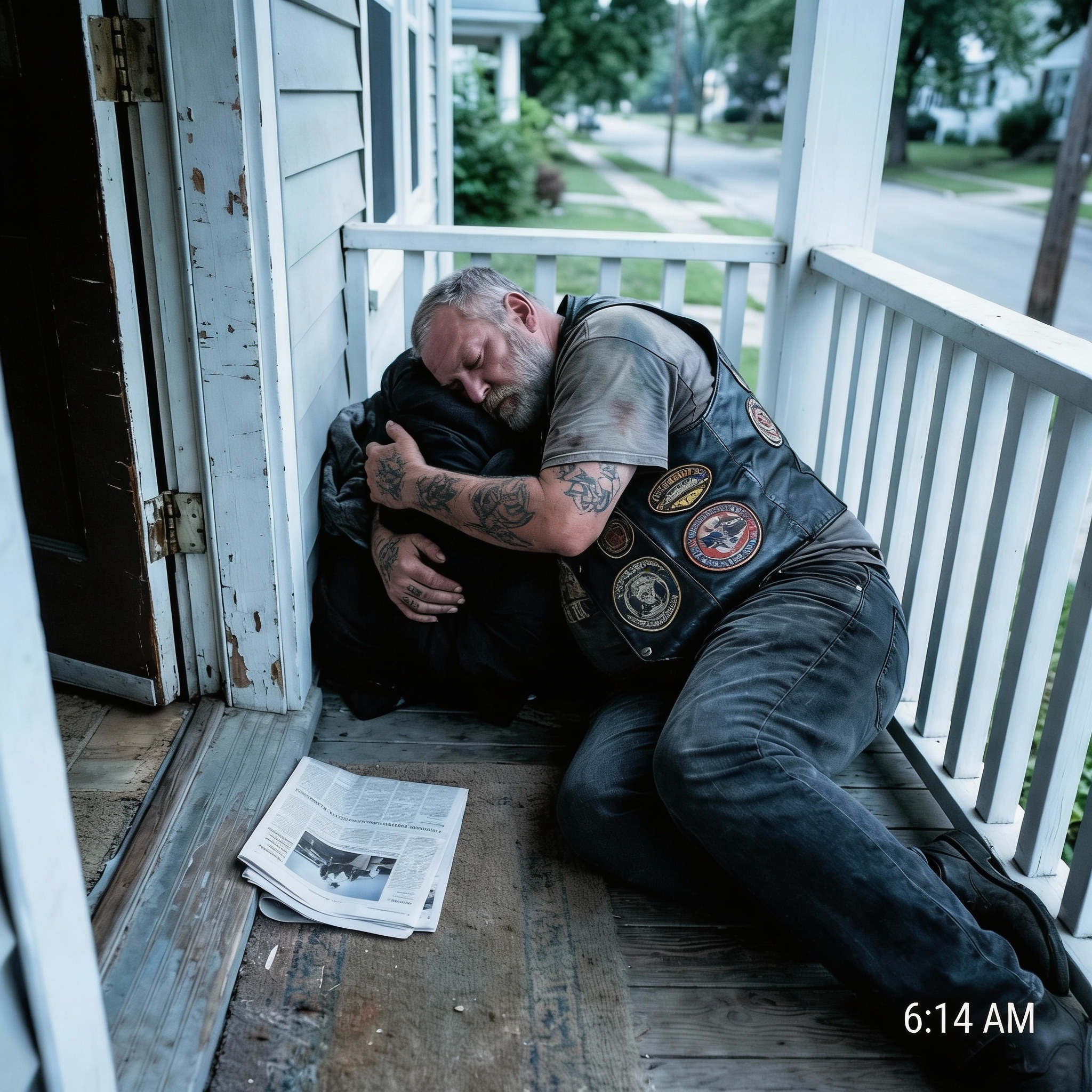
    Every afternoon at exactly 3:00 PM, the heavy swinging doors of the ward would announce his arrival. He was a massive man with a salt-and-pepper beard that reached his chest and a worn leather vest adorned with patches I didn’t understand. He looked like he belonged on a dusty highway, not in a sanitized neurological ward. Yet, the nurses treated him like a saint. They called him Thomas, brought him fresh coffee, and stepped aside as he took his place in the chair beside Emma’s bed. For exactly sixty minutes, he would hold her hand in his calloused palm, his head bowed in a silence so profound it felt like a prayer.

    I had spent months too paralyzed by grief to confront him. I assumed he was a distant relative of her father’s or perhaps a misguided soul from the bookstore where she worked. But by April, my curiosity turned into a sharp, protective desperation. On a Tuesday defined by the smell of floor wax and rain, I blocked his exit.

    “Who are you?” I demanded, my voice cracking after months of disuse. “Why are you here every single day? You aren’t family. I don’t know you.”

    Thomas stopped, his boots heavy on the linoleum. He didn’t look offended; he looked exhausted, as if he carried the weight of the hospital building on his broad shoulders. He gently placed a bouquet of yellow daisies—Emma’s favorite, though I had never mentioned it—on her bedside table.

    “Ma’am,” he said, his voice a low rumble. “My name is Thomas Reeves. And I’m the reason your daughter is still breathing.”

    My heart plummeted into my stomach. My first thought was that he was the driver, but he quickly raised his hands to settle my rising panic. He explained that he wasn’t the coward who had hit her; he was the one who had stayed. He had been riding home from a club meeting when the collision happened right in front of him. While the perpetrator sped away into the night, Thomas had ditched his bike and run toward the smoking wreckage.

    He told me how he had broken the glass with his own arm, reaching into the twisted metal to find Emma’s pulse. She had been fading, her eyes wide with a terror no child should ever know. In those fleeting moments before the sirens grew loud, she had gripped his hand and whispered a single, heartbreaking plea: “Please don’t leave me. Don’t let me die alone.”

    “I made her a promise,” Thomas whispered, looking at Emma’s pale face. “I told her I wouldn’t leave. I told her I’d be right here until she was okay. I’m just a man of my word, ma’am. I couldn’t walk away from that promise just because the ambulance arrived.”

    As I sank into a chair, the gravity of his devotion hit me. He hadn’t just been visiting a stranger; he had been honoring a pact made in the shadow of death. But as we spoke, the deeper truth emerged. Thomas wasn’t just there for Emma; he was there for Emily, the sixteen-year-old daughter he had lost to a car accident twenty-three years prior. He hadn’t been there when Emily died. He hadn’t been able to hold her hand or tell her he loved her one last time. For over two decades, he had carried that silence like a stone in his chest. When he saw Emma trapped in that car, he saw a second chance to be the father the universe had prevented him from being all those years ago.

    From that afternoon on, the wall between us vanished. Thomas and his wife, Marie, became the pillars I didn’t know I needed. They brought me soup when I forgot to eat and sat with Emma so I could walk outside and remember what fresh air felt like. Soon, the hallway outside room 412 became a regular meeting spot for the Guardians Motorcycle Club. These large, tattooed men in leather vests brought books, flowers, and an unwavering presence. They told me that Emma was their “sister” now, and the Guardians didn’t abandon family.

    One evening, while the hospital was shrouded in the velvet quiet of midnight, I sat alone with Emma. I leaned close to her ear and told her about Thomas. I told her about the man who had kept his promise for six months, about his daughter Emily, and about the yellow daisies that arrived every week. “He’s waiting for you, Emma,” I whispered. “We all are. But he needs to tell you that you made it.”

    In the silence that followed, I felt a spark. It was a microscopic twitch in her index finger, a sudden, electric pressure against my palm. I screamed for a nurse, my voice echoing down the hall.

    The recovery was a grueling marathon of white-knuckle physical therapy and frustrating speech exercises, but Emma was a fighter. When she finally gained enough strength to speak, her first words weren’t for me. They were for the man in the leather vest. She looked at Thomas, her eyes clearing for the first time since the accident, and whispered, “I remember your voice. You didn’t leave.”

    Thomas, a man who looked like he could move mountains, collapsed into his chair and wept. The debt of twenty-three years was finally paid in full.

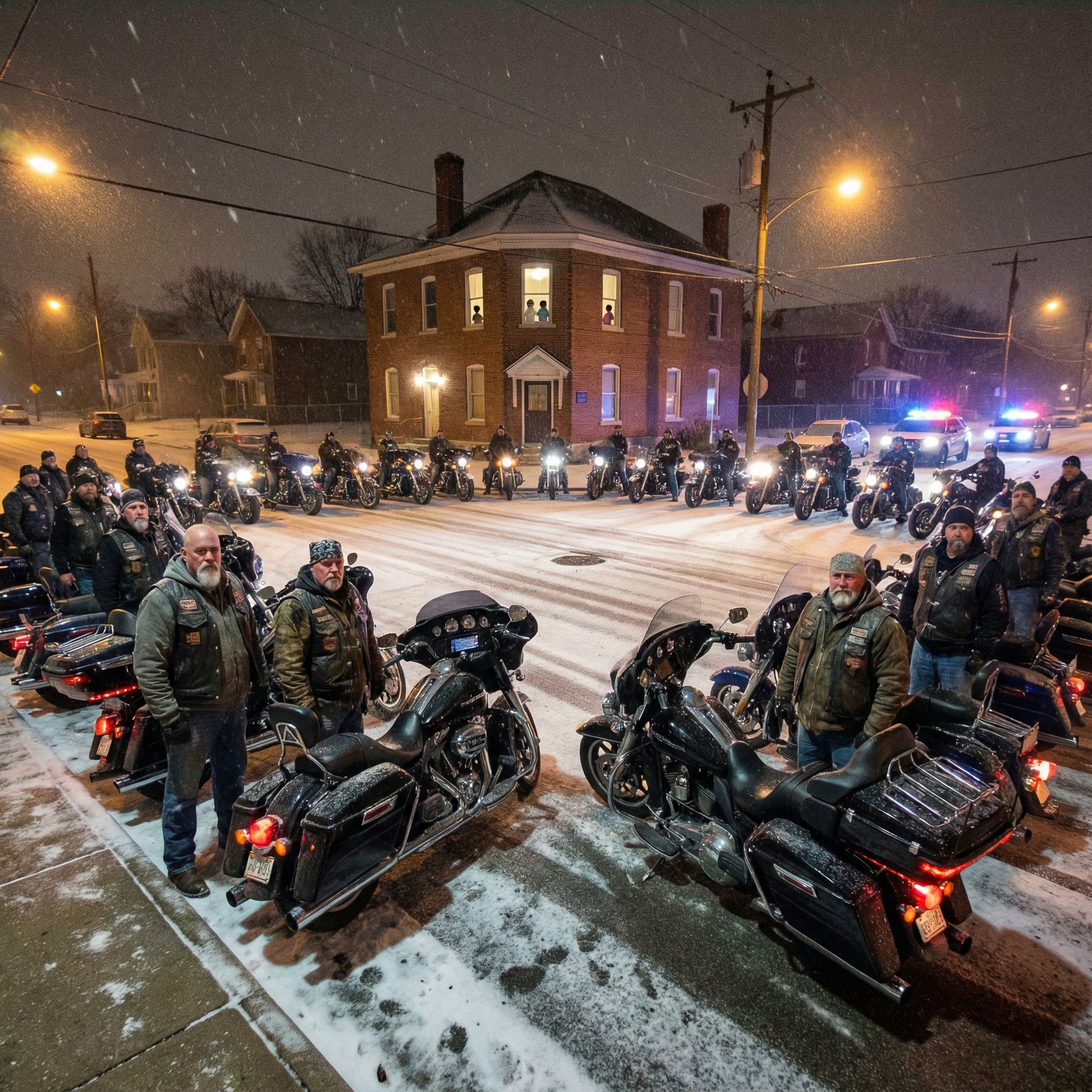
    The day Emma was discharged, the hospital parking lot looked like a scene from a film. Forty-seven motorcycles stood in a gleaming, chrome line, their engines idling in a low, respectful hum. The Guardians had formed an honor guard, creating a path of leather and steel for Emma to walk through. She was shaky on her feet, leaning on a walker, but she moved with a dignity that brought tears to the eyes of every veteran biker in attendance.

    At the end of the line, Thomas stood holding a vintage leather jacket. It was Emily’s jacket, kept in pristine condition for over two decades. As he draped it over Emma’s shoulders, he didn’t just give her a piece of clothing; he gave her a legacy. “Welcome to the family, sweetheart,” he told her. “You’re a Guardian now.”

    Two years have passed since that day. Emma is now a thriving college student, dedicating her life to education and volunteering at the local library, finally finishing the stories she feared she’d never tell. Thomas is her grandfather in every way that matters, the man who taught her to ride and the man who sits in the front row of every milestone she achieves.

    The biker who visited my daughter every day for six months started as a mystery, but he ended up being our miracle. He proved that family isn’t just about blood; it’s about the promises we keep when the world is at its darkest. Some angels don’t have wings—they have Harleys, leather vests, and the courage to never let go.

  • We have lost a legend, It is with heavy hearts that we share the news of this stars tragic passing

    We have lost a legend, It is with heavy hearts that we share the news of this stars tragic passing

    The streets of Manhattan are paved with millions of stories, but few possessed the iridescent glow and iron-willed grit of the woman the world came to know as Tanqueray. Stephanie Johnson, born Aquila Stephanie Springle, was a living bridge between the vanished, smoke-filled nightclubs of mid-century New York and the hyper-connected digital age of the 21st century. Her passing on October 11, 2025, at the age of 81, marks the end of an era for a specific kind of urban folklore—one defined by rhinestones, mob bosses, and an uncompromising refusal to be anything other than a headliner.

    Her life began far from the neon lights of Chelsea, in the strict religious and impoverished environment of Albany, New York, in 1944. The early chapters of her biography were marked by the kind of hardship that would break a lesser spirit: she was cast out of her home as a pregnant teenager and faced a brief period of incarceration. These “gritty beginnings,” as she called them, became the forge in which her survival instinct was tempered. When she finally fled to Manhattan, she wasn’t just looking for a new home; she was looking for a new identity.

    In the 1960s and ’70s, Stephanie reinvented herself as “Tanqueray,” a name that would eventually become synonymous with the golden age of New York burlesque. She was a self-made artist in the truest sense, hand-stitching her own costumes—intricate ensembles of beads and feathers—that allowed her to command the after-hours circuit. Her career was a masterclass in navigation; she moved seamlessly through the city’s diverse and often dangerous subcultures, from the burgeoning drag and fetish scenes to the shadowy, mob-run establishments of the era. She famously recalled being “the only Black girl making white girl money” in those rooms, a feat she achieved through a combination of undeniable talent and sharp street smarts. To survive the “shady bosses,” she even learned to speak Italian behind the curtain, reading the room with the precision of a seasoned diplomat.

    For decades, Tanqueray remained a “downtown legend,” a woman whose history was etched into the memories of Chelsea locals who caught glimpses of her iconic style. However, her second act began in 2019, when a chance encounter with Brandon Stanton, the creator of Humans of New York, catapulted her into global consciousness. Spotted on a sidewalk wearing a vibrant red patchwork coat with fur trim, Stephanie began to talk, and the world stopped to listen. What followed was a 33-part serialized storytelling event that captivated millions.

    The appeal of Tanqueray’s viral fame wasn’t just the “X-rated” nature of her memories—though those were undeniably colorful—it was the profound, unvarnished honesty of her narration. She spoke of the fashion, the hustle, and the deep emotional cost of survival with a timing that rivaled the great comedians. Her voice resonated so deeply with the public that a GoFundMe campaign launched to assist with her medical expenses raised over $2.5 million, a staggering testament to the impact of her story. In 2022, her memoir, Tanqueray, became a bestseller, cementing her status as a literary voice for the voiceless.

    Despite the sharp edges and the bravado she presented to the world, those closest to her, including Stanton, noted a surprising softness. She was a woman of dualities: a burlesque star who could navigate a mob club with ease, yet a person who slept with a teddy bear until her final days. This vulnerability was the “in-between part” of her life that she often shielded from the spotlight. She once remarked that she hoped for a highlight reel of her life in the afterlife, but “just the funny parts,” fearing that the reality of the struggle would bring even the Creator to tears.

    Stephanie Johnson understood the currency of presence. She wasn’t just a survivor of the “New York cinema” life; she was its director. Neighbors in Chelsea recalled her as a constant, charismatic presence, whether she was shopping at Eataly or traversing Grand Central Terminal. She turned her hard-won experiences into a form of combustible performance art, proving that charisma and craft could remake a life even in its ninth decade.

    Her legacy is one of bridge-building. She connected the struggles of a Black woman in the mid-century North with the digital empathy of the 21st century. She showed a generation of young artists that being a “working artist” often means being a “working survivor” first. She refused to be edited down by society’s expectations of age, race, or profession. Instead, she leaned into the sparkle, using her rhinestones to catch the light even in the city’s darkest corners.

    The outpouring of grief following her stroke and subsequent passing has been immense. From the fans who followed her every post on Humans of New York to the neighbors who shared brief, unforgettable anecdotes of her wit, the consensus is clear: Stephanie “Tanqueray” Johnson was a folk hero of the highest order. She was a reminder that the most indelible stars are often the ones who have lived through the most shadow.

    As the lights dim on the stage she once inhabited, her voice remains preserved in her bestseller and the digital archives that brought her to the world. She taught us that a great story is the ultimate weapon against oblivion. In the end, Tanqueray didn’t just survive New York; she conquered it, leaving behind a legacy of survival, style, and a storyteller’s heart that will continue to inspire anyone who finds themselves trying to write a different script for their own life.

  • I Was a School Bus Driver When I Found a 6-Year-Old Boy Walking Alone at Night, 13 Years Later, a Woman Came to Take Him Away!

    I Was a School Bus Driver When I Found a 6-Year-Old Boy Walking Alone at Night, 13 Years Later, a Woman Came to Take Him Away!

    In the deep, biting chill of a December night, just days before the world would pause for Christmas, my life took a turn I could never have anticipated. At twenty-five, I was a school bus driver—a job that felt like a placeholder, something to pay the rent while I figured out the rest of my existence. I was driving an empty bus back to the depot, the heater humming a low, rattling tune against the frost on the windows, when a flash of movement caught my eye.

    Under the sickly, flickering glow of a lone streetlight stood a small figure. He was perhaps six years old, bundled in a jacket that had seen better days and a backpack that looked far too heavy for his slight frame. He clutched a tattered stuffed bunny to his chest as if it were a shield against the world. He wasn’t playing; he was moving with a frantic, desperate purpose. I hissed the bus to a stop, the air brakes sighing in the silence of the empty road.

    When I opened the doors, the cold rushed in, and the boy looked up with eyes that had seen far too much for someone so young. “My mom died today,” he whispered. His voice was flat, devoid of the hysterics one might expect, as if he had already reached the end of his emotional rope. He explained that people—strangers in suits—had tried to take him away, so he had run out the back door.

    I sat him in the front seat, draped my own jacket over his shivering shoulders, and promised him he was safe. His name was Gabriel. As I waited for dispatch to coordinate with social services, I watched him curl into a ball around that stuffed bunny. He didn’t cry; he simply stared into the middle distance, his spirit seemingly miles away.

    The trauma of that night forged an immediate, unbreakable bond. I followed him into the foster care system, visiting him the very next day. When he saw me, he didn’t just smile—he ran to me as if I were a piece of land in a rising tide. The truth of his situation was bleak: his mother had died of an aneurysm at work, and there was no extended family to claim him.

    But there was a deeper reason why I couldn’t let him go. Gabriel reminded me of my twin brother, whom I had lost to a river current when we were children. For decades, I had carried the guilt of not being fast enough to grab my brother’s hand. In Gabriel’s eyes, I saw a second chance. I saw a way to finally “get it right.” I filed the adoption papers with a frantic intensity, and before the new year had fully taken hold, Gabriel was officially my son.

    The thirteen years that followed were a blur of hard work and quiet victories. I drove the bus by day and a taxi by night, eventually saving enough to start a small car-rental business. I was always exhausted, always chasing the next bill, but I took immense pride in the fact that Gabriel never lacked for anything. He was the center of my universe, the reason I worked eighteen-hour days. I thought I knew everything about him. I thought our bond was built on a foundation of absolute transparency.

    That illusion shattered on an ordinary Tuesday evening. I came home early to find Gabriel sitting on the couch, his face buried in his hands. Next to him sat a woman in professional attire—Patricia, a school counselor I had never met. The air in the room felt heavy, charged with a secret that had finally reached its breaking point.

    “Dad, I have to go,” Gabriel said, his voice thick with tears. “I love you, but I can’t stay here anymore.”

    My heart felt as though it were being squeezed by a cold hand. I turned on Patricia, demanding to know what she had told my son. She looked at me with a mixture of pity and resolve. “You’ve been living a lie for thirteen years, Marcus,” she said quietly. “And Gabriel has been the one maintaining it.”

    She opened a folder and spread a series of papers across the coffee table. They were letters from teachers, academic awards, and invitations to prestigious summer programs—all of which Gabriel had hidden from me. For years, he had been the top student in his class. He had been offered opportunities to travel, to lead debate teams, and to attend elite camps. He had declined every single one of them.

    “Why?” I asked, my voice barely a whisper.

    Gabriel finally looked at me, his eyes red and swollen. “Because I saw how you looked at me, Dad. I saw how much you feared losing me. Every time I thought about leaving for a program or a camp, I pictured you alone in this house, and I knew it would break you. I couldn’t betray you by growing up and moving away.”

    The realization hit me like a physical blow. In my desperation to protect him from the “currents” that had taken my brother, I had inadvertently built a cage around him. My love hadn’t just been a shield; it had been an anchor, holding him back from the very life he was meant to lead. He had spent his entire adolescence managing my trauma instead of pursuing his own dreams.

    Patricia reached into the folder and pulled out a final document. “Last month, Gabriel was awarded a full scholarship to Stanford University. Everything is covered—tuition, housing, books. He was going to turn it down. I told him that if he didn’t tell you the truth, I would.”

    The room was silent. I looked at the boy I had found on the side of the road—the boy who was now a man of incredible intellect and even greater compassion. I realized that my greatest mistake wasn’t in adopting him, but in failing to see that he was strong enough to navigate the world without me. By clutching him so tightly, I was repeating the very tragedy I had tried to avoid: I was losing the real Gabriel to a version of him that existed only to keep me comfortable.

    I crossed the room and pulled him into a fierce embrace. “You’re going,” I told him, my tears wetting his hair. “You’re going to Stanford, and you’re going to be the man you were meant to be. Don’t you dare worry about me. I found my way to you on a dark road thirteen years ago; I can find my way through a quiet house now.”

    He broke then, the thirteen years of careful, guarded secrecy dissolving into a sob of pure relief. In that moment, the lie we had both been living—the lie that he was fragile and that I was the only thing keeping him whole—was finally over.

    As the months passed and we prepared for his departure, the atmosphere in our home shifted. The air felt lighter. We talked more, laughed more, and finally began to discuss the future without the shadow of fear looming over us. I realized that letting him go wasn’t an act of loss; it was the ultimate act of fatherhood.

    When I finally dropped him off, seeing him walk toward his future with that same backpack—now filled with books instead of a stuffed bunny—I felt a profound sense of peace. I hadn’t lost a brother, and I hadn’t lost a son. I had gained the privilege of watching a life unfold in its own brilliant way. Love, I finally understood, isn’t about holding on until your knuckles turn white. It’s about having the courage to open your hand and watch them fly.

  • BRIDE BOUGHT US EXPENSIVE BRIDESMAIDS DRESSES FOR HER WEDDING!

    BRIDE BOUGHT US EXPENSIVE BRIDESMAIDS DRESSES FOR HER WEDDING!

    In the meticulous world of wedding planning, there is an unspoken contract between a bride and her bridal party. It is a pact built on the foundation of shared history, mutual support, and the understanding that while the day belongs to the couple, the burden of the celebration should be balanced with grace. When my best friend, Emily, asked us to stand by her side as bridesmaids, we accepted with the kind of wide-eyed enthusiasm that usually precedes a monumental event. We envisioned a day of seamless elegance—a romantic tableau of pastel silks, heartfelt vows, and the kind of effortless joy that looks so perfect in a leather-bound photo album. We never expected that the day would dissolve into a surreal lesson on the intersection of greed, karma, and the true cost of a frosted ego.

    The morning of the wedding was a masterpiece of orchestrated chaos. The bridal suite was a sanctuary of hairspray and champagne, with Emily at the center of it all, glowing with the frantic energy of a woman who had spent eighteen months perfecting every detail. She had insisted on selecting our dresses herself, choosing an intricate lacework design in custom pastel shades that she claimed were essential to the “visual narrative” of the ceremony. When she handed them to us, we were awestruck. They were breathtakingly beautiful, shimmering under the soft light of the suite, though notably specific to her theme. They were “one-day” dresses—exquisite, but so tied to Emily’s aesthetic that they would never see the inside of a restaurant or a gala again. We wore them proudly, assuming they were her gift to the women who had spent months helping her navigate caterers and floral arrangements.

    The ceremony itself was a triumph of romance. As Emily met her groom, James, at the altar, there wasn’t a dry eye in the house. Their vows were poignant, promising a future of unwavering support and shared dreams. During those moments, it felt as though the world had tilted into a state of perfection. The reception followed with an explosion of music and laughter, and for several hours, we were swept up in the magic of the celebration. But as the night progressed, the air in the room underwent a sudden, chilling shift.

    During a lull in the dancing, Emily gathered the five of us into a quiet corner of the hall. She was still radiant, but her smile had taken on a sharp, transactional edge. Without a hint of irony, she dropped a bombshell that left us reeling. “Ladies,” she began, her voice casual yet firm, “I wanted to make sure we handled the dress situation tonight. Each of your gowns cost $1,200. I’ll need you all to reimburse me before the honeymoon. How would you like to handle the transfer? I have my banking app ready.”

    The silence that followed was heavy and suffocating. We stared at one another, the shimmering silk of the $1,200 dresses suddenly feeling like lead against our skin. None of us had been consulted on the price; none of us had budgeted for a four-figure expense on a dress we had no say in choosing. The mood of the evening plummeted. We were caught in that agonizing space between wanting to support our friend and feeling deeply exploited. Just as we were reaching for our phones in a stunned, begrudging silence, the universe decided to intervene in the most spectacular fashion imaginable.

    A sudden commotion erupted from the entrance of the ballroom. The heavy double doors swung open, and the music faltered as the guests turned to witness a sight that was both terrifying and absurd. It was the wedding cake—or rather, a sugary monolith that had seemingly been designed for a royal banquet rather than a boutique wedding. It was a towering, multi-tiered monstrosity, weighing upwards of fifty kilograms and draped in enough gold-leaf frosting to reflect the chandeliers. It didn’t just arrive; it loomed.

    As the catering staff struggled to wheel the massive structure toward the center of the room, the table intended to hold it groaned under the weight. Emily’s face, which had been pinched with financial expectation moments before, turned a ghostly shade of white. She hadn’t just miscalculated the cost of our dresses; she had apparently suffered a catastrophic lapse in judgment—or a decimal point error—when ordering the centerpiece of her dessert hour. The bill for such a masterpiece was clearly astronomical, far exceeding the “bridesmaid tax” she had tried to levy just minutes earlier.

    Karma had arrived in the form of five hundred pounds of sponge and buttercream. The panic in Emily’s eyes was unmistakable as she realized that the “reimbursements” she was demanding wouldn’t even cover a fraction of the unexpected debt she had just wheeled into the room. The day was spiraling out of her control, and for a moment, the bride looked utterly defeated by her own extravagance.

    It was in this moment of comical chaos that the true nature of our friendship was tested. We could have walked away. We could have let her drown in the sea of frosting she had created. But as we looked at Emily—now a small, trembling figure in a sea of gold-leafed sugar—our frustration melted into a strange kind of pity. Despite her earlier greed, she was still our friend, and she was clearly drowning.

    In a display of grace that she perhaps didn’t deserve but desperately needed, we stepped forward. We didn’t mention the $1,200 dresses. Instead, we banded together, pooling our collective resources and working with the venue manager to handle the logistical nightmare of the over-ordered cake. We turned the disaster into a joke, laughing with the guests as we distributed massive slabs of cake to everyone in the building, and then some. We showed her that the strength of a bridal party isn’t found in the price of the attire, but in the willingness to catch the bride when she falls—even if she’s falling into a giant cake.

    By the time Emily and James shared their final dance of the evening, the tension had evaporated. The lesson, however, remained. Emily’s attempt to offload her expenses onto her friends had been met with a divine correction, proving that whenever one tries to put a price tag on loyalty, life has a way of balancing the books.

    Looking back, that wedding became a legendary story in our circle, not for the romance or the lacework, but for the moment we realized that friendship is about resilience. It taught Emily a hard lesson in humility, and it taught us that while life is unpredictable and sometimes unfairly expensive, a sense of humor and a solid group of friends can make even the most bitter pill—or the most oversized cake—easy to swallow. We walked away that night with a little less money in our accounts, perhaps, but with an unbreakable bond and a story that reminded us all: never demand a reimbursement when the universe is watching.

  • FAREWELL AT HOME! EMMA HEMING TEARFUL DECISION ABOUT BRUCE WILLIS STUNS THE WORLD

    FAREWELL AT HOME! EMMA HEMING TEARFUL DECISION ABOUT BRUCE WILLIS STUNS THE WORLD

    The journey of a family facing the relentless progression of frontotemporal dementia is a narrative of profound transformation, moving from the vibrancy of public life into the quiet, sacred spaces of private devotion. For the family of Bruce Willis, this journey reached a poignant turning point recently as his wife, Emma Heming Willis, shared a deeply personal update regarding the legendary actor’s care. In a move that has resonated with fans and caregivers across the globe, the family made the heart-wrenching decision to transition the 70-year-old actor into a specialized care facility near their home. This decision, while difficult, represents a courageous pivot toward a focus on dignity, professional support, and the preservation of the family unit’s emotional well-being.

    Emma Heming Willis, who has become a vocal and tireless advocate for dementia awareness, spoke candidly during an ABC special about the weight of this transition. At 47, she has navigated the complexities of being a primary caregiver while simultaneously mothering their two young daughters, Mabel and Evelyn.1 She described the move as one of the hardest decisions she has ever faced, a sentiment that reflects the agonizing conflict many families feel when they realize that home care, no matter how loving, may no longer meet the clinical and safety needs of a loved one with a degenerative condition. However, Emma’s perspective is anchored in a deep understanding of her husband’s character. She emphasized that Bruce, always a protector and a devoted father, would have wanted this environment for his family. The decision was not an abandonment, but an act of profound love designed to ensure that his final years are defined by comfort rather than the strain of medical management.

    Frontotemporal dementia (FTD) is a cruel thief of personality and communication, often striking earlier in life than other forms of dementia.2 Since the Willis family first shared Bruce’s diagnosis with the world, they have been remarkably transparent about the toll it takes. By moving him to a facility that is geographically close to their residence, the family has ensured that his presence remains a constant in their lives while easing the logistical and emotional burden of 24-hour medical supervision. This proximity allows for daily visits, maintaining the “love and connection” that Emma identifies as their primary mission. The facility offers a sanctuary where professional staff can manage the unpredictable symptoms of FTD, allowing Emma and the children to step back from the roles of nurses and monitors to simply be a wife and daughters.

    The impact on their children, 13-year-old Mabel and 11-year-old Evelyn, has been at the forefront of this choice. Emma’s primary motivation was to create a space where the girls could continue to build happy memories with their father without the shadow of the disease’s more harrowing aspects dominating their home life. Children of parents with young-onset dementia face a unique set of challenges, often maturing quickly as they witness the decline of a hero. By moving Bruce to a dedicated care home, the family home remains a place of relative normalcy and safety, while their visits to see him become intentional periods of connection. Emma’s focus is on the quality of time spent together—reading, listening to music, or simply sitting in silence—rather than the stress of the physical caregiving tasks that can often consume the energy of a household.

    This transition also highlights the broader reality of the “Sandwich Generation” and the specific pressures on caregivers. Emma has been open about the “caregiver’s grief,” a process of mourning someone who is still physically present but whose essence is slipping away. Her tearful admission on national television served as a powerful validation for millions of others in similar positions. It challenged the stigma often associated with professional care facilities, reframing the move not as a failure of the family, but as a strategic choice for the safety and dignity of the patient. In this new setting, Bruce is surrounded by a team trained to handle the specific neurological challenges of FTD, ensuring that he receives the highest standard of palliative care in an environment designed for his specific needs.

    The global reaction to this news has been a mixture of sorrow and immense respect. Bruce Willis has been a titan of the silver screen for decades, embodying strength, humor, and resilience.3 To see him in this vulnerable state is a reminder of the fragility of the human condition. Yet, the narrative provided by Emma and the rest of the Willis-Moore blended family—including Demi Moore and Bruce’s older daughters, Rumer, Scout, and Tallulah—is one of incredible unity. They have modeled a modern, compassionate approach to family crisis, showing that love can expand to include ex-spouses, new partners, and professional caregivers in a singular circle of protection around the person who is suffering.

    As Bruce approaches his eighth decade, his legacy is being rewritten from one of cinematic action to one of human vulnerability and familial strength. The “safety, comfort, and dignity” Emma spoke of are the pillars of this new chapter. In the care facility, the environment is controlled to reduce the agitation and confusion often associated with dementia, providing a peaceful backdrop for the visits that remain the highlight of his days. The family’s transparency serves as a beacon for FTD research and advocacy, bringing much-needed attention to a condition that is frequently misdiagnosed or misunderstood.4

    Ultimately, this story is not just about the decline of a Hollywood icon; it is about the endurance of the human spirit and the evolution of love. Emma Heming Willis’s decision was stunned the world because it was so raw and honest. It stripped away the glamour of celebrity to reveal a woman trying to do right by her husband and her children under the most difficult circumstances imaginable. By choosing a path that prioritizes Bruce’s well-being and the children’s emotional health, she is ensuring that the Willis family’s story ends not in tragedy, but in a testament to the power of connection. They are teaching a global audience that when a cure is not possible, care is the greatest gift one can give. The focus remains on the present moment—the shared glances, the touch of a hand, and the enduring bond that even dementia cannot fully erase. Bruce Willis is safe, he is loved, and he is surrounded by a family that has chosen to walk this long goodbye with grace and unwavering devotion.

  • I Was Going To Abandon My Burned Baby Until A Biker I Never Met Held Him And Said 6 Words!

    I Was Going To Abandon My Burned Baby Until A Biker I Never Met Held Him And Said 6 Words!

    The sterile, clinical scent of the hospital had become a suffocating weight, a sensory trigger that reminded me of my greatest failure every time I drew breath. My three-year-old son, Lucas, was unrecognizable. Where there had once been soft cheeks and a quick, dimpled smile, there was now a landscape of thick bandages, weeping skin, and the structural wreckage of third-degree burns. Every time I stepped into his room, I felt my spirit fracture. The guilt was not a quiet hum; it was a deafening roar that told me I was no longer fit to be his mother.

    The nightmare had begun on a Tuesday at 3:00 AM, the kind of hour where the world is supposed to be silent and safe. An electrical fault in the apartment below ours had turned our building into a tinderbox. By the time the alarms shrieked, the hallway was a tunnel of orange fury and black soot. My husband, Marcus, acted with the instinctive precision of a protector, grabbing our five-year-old daughter, Emma, and charging through the smoke. I grabbed Lucas, pulling his small, warm body against mine. But as we reached the threshold, the world collapsed. A support beam, wreathed in flames, thundered down from the ceiling. In that split second of primal, blinding terror, I did the unthinkable. To shield my own face from the searing heat, I let go. I dropped my son directly into the fire.

    Those thirty seconds defined the end of my life as I knew it. A firefighter eventually breached the window and pulled us from the inferno, but for Lucas, the damage was done. He had been engulfed for nearly half a minute—an eternity for a child’s fragile skin. Marcus and Emma escaped with minor injuries, and while my hands were scorched from a belated attempt to reach back into the flames, Lucas was the one paying the ultimate price. He was burned over sixty percent of his body.

    The weeks that followed were a blur of medically induced comas, skin grafts, and the constant, rhythmic beeping of monitors. When the doctors finally brought him back to consciousness, the silence of the coma was replaced by a sound far worse: his screaming. He screamed from the agony of his healing nerves, but he also screamed from the confusion of his new reality. He saw the way people looked at him—the pity, the horror, the averted eyes. Most devastatingly, he saw that look in me. I tried to mask it, but children possess a terrifying intuition. One afternoon, his voice muffled by the gauze covering his jaw, he asked, “Mommy, why do you look scared of me? Am I a monster now?”

    That question was the final blow. I fled the room, collapsing in the hallway in a fit of hyperventilation. I couldn’t do it. I was convinced that my presence was a poison to him, a constant reminder of the mother who had dropped him to save herself. I began to withdraw, visiting less and less, convinced that I was doing him a favor by staying away. I told myself he needed the professionals, not a coward who couldn’t bear to look at the consequences of her own panic. Five weeks passed, and the distance between us became a canyon.

    Everything changed on an ordinary Tuesday when Marcus returned from the hospital with a look of stunned disbelief. He told me a stranger had visited Lucas—a man in his seventies, a biker clad in worn leather and covered in tattoos. This man had simply walked into the room and asked to hold our son. I was defensive and fearful, but Marcus quieted me. He said the nurses had watched them; the man had sat for two hours, cradling Lucas with a comfort and ease that I had been unable to provide. Most importantly, Lucas had laughed.

    Driven by a mixture of jealousy, suspicion, and a desperate need for answers, I went to the hospital the next day. I stopped at the doorway of Lucas’s room and froze. There sat the biker—a man named Robert Sullivan—with my son curled in his lap. Robert was telling a story about a rabbit and a motorcycle, his gravelly voice filled with a warmth that seemed to fill the sterile room. When he looked up and saw me, he didn’t offer a judgment. He simply said six words that pierced through my defensive shell: “You must be his mama.”

    In that moment, I felt like an imposter. I walked in, trembling, and asked why he was there. Robert didn’t answer with a lecture; instead, he removed his bandana. The left side of his head was a map of ancient, silvered scars—burns from a house fire sixty-two years ago. He told me his story: how his own mother couldn’t bear to look at him, how she had eventually abandoned him because her own guilt was a weight she couldn’t carry. He had spent half a century believing he was a monster, not realizing that his mother hadn’t run from his face—she had run from her own reflection in his eyes.

    “She thought I’d be better off without a mother who felt guilty every time she looked at me,” Robert said softly, his hand resting on Lucas’s bandaged head. “She was wrong. I needed her every single day. Her leaving broke me worse than any fire ever could.”

    I broke down then, admitting the truth I had buried: that I had dropped him. I expected Robert to recoil, but he didn’t. He told me that Lucas didn’t need a perfect mother; he needed a mother who showed up. He needed to know that he was loved not in spite of his scars, but through them. When Lucas reached out his small, bandaged hand and whispered, “I don’t want you to go away, Mommy,” the wall I had built out of shame finally crumbled. I took my son from Robert’s arms and held him, promising him—and myself—that I would never run again.

    Robert became a fixture in our lives over the next few months. He was there for every surgery and every painful dressing change. He reframed Lucas’s identity, teaching him that he wasn’t a victim, but a “little warrior” whose scars were marks of a battle won. Robert had been visiting burn units for thirty years, ensuring that no child felt the isolation he had endured as a boy. He gave Lucas a vision of a future—a life where he could grow old, ride a motorcycle, and be a person of substance and joy regardless of his appearance.

    When Lucas was finally discharged, Robert didn’t disappear. He became our “honorary grandpa,” a role we eventually made legal. Today, two years later, Lucas is a thriving five-year-old. His face is different, yes, and the world still stares, but he moves through that world with a confidence that was forged in the fire and tempered by Robert’s wisdom. Every Sunday, Robert joins us for dinner, his leather vest a symbol of the protection and strength he brought into our lives.

    I realize now that I was on the verge of repeating a cycle of trauma that would have haunted Lucas forever. I was ready to abandon him because I couldn’t forgive myself. But a stranger who had lived through the same hell walked in and reminded me that love is not the absence of pain; it is the courage to stay present within it. Robert Sullivan saved my son, but in many ways, he saved me too. He taught me that family isn’t defined by the mistakes we make in the dark, but by the way we hold each other when we finally step back into the light.