Blog

  • Waking Up Between 3 am and 5 am? Here is What May Be Causing It!

    Waking Up Between 3 am and 5 am? Here is What May Be Causing It!

    Most people think of sleep as a single smooth stretch of rest, but anyone who’s ever found themselves suddenly wide awake between 3:00 a.m. and 5:00 a.m. knows it isn’t always that simple. You go to bed at a normal hour, maybe even exhausted, yet your eyes snap open in the dead quiet of early morning. The room feels different. Your thoughts feel louder. And when sleep refuses to return, the following day carries the weight of whatever jolted you awake.

    It’s a more common experience than most people realize, and it often leaves people wondering if something deeper is going on. Interestingly, both ancient traditions and modern research point to this early-morning window as a uniquely sensitive period for the human body and mind.

    Long before scientists studied circadian rhythms, cultures around the world gave a name to those dark, lonely hours. Swedish folklore calls it “the hour of the wolf,” a phrase describing the moment just before dawn when people feel most vulnerable—when anxieties flare, the night feels heaviest, and the brain seems more exposed. Literature, religion, and folklore repeat the same theme: this window of time amplifies emotions and inner conflict. People noticed centuries ago that waking during this period felt different, even if they couldn’t explain why.

    Today, science offers a grounded explanation. Between roughly 3:00 a.m. and 5:00 a.m., the human body dips into its lowest physiological point. Core temperature is at its minimum. Metabolism is at its slowest. Blood pressure drops. Breathing stabilizes into a deeper, quieter rhythm. Stress hormones are at their lowest level of the entire 24-hour cycle. In other words, your body is doing its heaviest repair work, operating at its most fragile state.

    Because everything is dialed down, even small disruptions can snap you awake. A drop in blood sugar, a shift in room temperature, dehydration, or even a distant noise can shake the system because the body doesn’t have the energy reserves at that hour to buffer the disturbance.

    But there’s another layer. When someone is carrying stress—emotional, physical, or mental—the early-morning hours magnify it. During this time, the logical, alert part of the brain is still “asleep,” while the emotional centers are more active. That’s why you may wake with racing thoughts, sudden worries, or a sense that something is wrong even if your life is perfectly stable. The brain interprets stress differently when the body is at its lowest energy point. Problems feel sharper. Emotions feel heavier. And because the world is silent and dark, there’s nothing to distract you from your own mind.

    For people going through grief, anxiety, burnout, or unresolved conflicts, this window often becomes a recurring wake-up call. The body treats stress like a potential threat—so it rouses you from the deepest sleep stage, even if the danger is entirely internal.

    Of course, not everyone wakes up due to emotional strain. Sometimes, the explanation is far more practical. Drinking too little water during the day, consuming caffeine too late, scrolling on a bright phone screen before bed, or sleeping in a stuffy environment can all disrupt the sleep cycle precisely during those fragile early hours. Poor sleep hygiene doesn’t always show itself at midnight—it often breaks down the moment your body tries to shift into its most restorative phase.

    Some people even wake because of habits they don’t recognize as disruptive—eating too close to bedtime, inconsistent sleep schedules, or exposure to blue light late at night. These behaviors interfere with melatonin, the hormone that regulates sleep, making your internal clock hit turbulence right when it should be gliding smoothly.

    Still, for many, waking at 3–5 a.m. isn’t random. It’s a signal. The body often uses this window to communicate that something—physically or emotionally—is out of alignment. Instead of seeing it as a strange or mystical event, it helps to interpret it as feedback.

    If the cause is physical, the solution may be simple: more hydration, earlier dinners, less screen time, a cooler room, or more consistent sleep habits.

    If the cause is emotional, the awareness can become a starting point for change.

    Stress buried under routines you barely notice. Anxiety you keep pushing through the day without addressing. Decisions you’ve postponed. Feelings you’ve ignored because you’re too busy to deal with them. These things tend to resurface when the mind is unguarded—when the world is quiet, and the body can no longer numb itself with productivity or distraction.

    That doesn’t mean something is wrong with you. It means your body is trying to be heard.

    For people who sleep soundly through the night, the 3–5 a.m. window is just another phase of the sleep cycle doing its job—deep restoration, memory processing, cellular repair. For those who wake during that time, it may be a sign that something in their system—emotional, environmental, or physiological—needs attention.

    The reassuring truth is that these awakenings don’t need to become a long-term pattern. Small changes can make a meaningful difference: a consistent sleep routine, calming pre-bed rituals, lower evening lights, limiting stimulants, staying hydrated, and managing stress in ways that actually release it, rather than simply suppressing it.

    Understanding this early-morning phenomenon replaces fear with insight. Instead of wondering whether something mysterious or alarming is happening, you gain a clearer picture of how your body works—and how sensitive it becomes during its deepest repair cycle.

    The next time you find yourself awake at 3:30 a.m., staring at the ceiling, don’t panic. Don’t assume the worst. Instead, see it as a moment of awareness—a message from your body that something deserves a closer look.

    Because once you understand what’s behind these awakenings, you’re no longer at the mercy of them. You can support your body, adjust your habits, improve your sleep environment, address your stress, and, over time, restore the uninterrupted rest you deserve.

    Waking between 3 and 5 a.m. isn’t a mystery. It’s information. And with the right changes, it’s absolutely something you can overcome.


  • Breaking – Rest in peace Jessica Joven dies after undergoing a, See more!

    Breaking – Rest in peace Jessica Joven dies after undergoing a, See more!

    The city was settling into its usual late-afternoon rhythm when everything changed. At around 5:30 p.m., on a busy stretch of Fifth Street, a burst of gunfire shattered the ordinary noise of vendors, commuters, and families heading home. Within seconds, chaos rippled through the crowd. People ducked behind cars, ran into nearby shops, and screamed for their loved ones. And in the center of that confusion was a young woman who never should have been anywhere near danger.

    Her name was Mariana Gómez. Twenty years old. Hopeful. Determined. She had been walking down the street carrying a folder with her résumé tucked neatly inside—on her way to submit it, looking for a chance at steady work to support her family. She wasn’t involved in crime. She wasn’t part of any dispute. She was simply in the wrong place at the wrong moment.

    According to early reports, the gunfire erupted when a group of armed men launched an attack on a local merchant believed to be their intended target. Witnesses say the attackers approached quickly, firing without hesitation. The merchant, a 45-year-old father of two who ran a small business in the area, was struck multiple times and died instantly. For him, it was the violent end to a threat he may have sensed coming.

    For Mariana, it was something far crueller—a stray bullet that pierced her abdomen as she tried desperately to take cover behind a cement pillar. Bystanders rushed to her aid, calling emergency services, pressing cloth to her wound, whispering to her to hold on. She was taken to a medical center within minutes, but her injuries were too severe. Doctors fought to stabilize her, but the damage was irreversible. She died shortly after arriving.

    Two lives gone. One targeted, one innocent. Another reminder that gun violence rarely confines itself to the world of those who cause it. It spills outward—into families, onto sidewalks, across communities—claiming people who had nothing to do with the bullets that took them.

    Police units patrolling nearby heard the shots and responded immediately. While most of the attackers fled through side streets, officers chased down one suspect—a 17-year-old boy reportedly carrying a firearm. Initial investigations revealed he had prior offenses, including illegal possession of weapons and an attempted homicide charge. Authorities believe he was directly involved in the attack that killed both the merchant and Mariana.

    Colonel Jorge Medina, commander of the Metropolitan Police, addressed the media shortly afterward. His statement was heavy, his tone bleak.

    “This is a tragic event that affects us all. The young woman had no connection to the intended victim; she was an innocent bystander. Thanks to quick action by our officers, a minor involved in this violent act was detained. He will face charges of aggravated homicide and illegal possession of a firearm.”

    The suspect has been placed under the jurisdiction of the Children and Adolescents Prosecutor’s Office. Prosecutors are expected to pursue serious charges—charges that reflect the weight of two lives lost in a single burst of violence.

    Meanwhile, Mariana’s family is shattered. Her mother, barely able to speak through her grief, described how her daughter had left home hopeful that afternoon—quietly excited about the possibility of a job and the stability it might bring. “She just wanted to help us,” her mother said. “She was doing everything right. And they took her from us for nothing.”

    Neighbors and residents of Fifth Street echoed the family’s heartbreak. Many say the area has become increasingly dangerous over the past year. Extortion, gang disputes, and violent confrontations have crept into daily life, leaving shop owners anxious and families reluctant to walk the streets after dark. Several business owners admitted they’ve been threatened repeatedly for protection money. Others have stopped opening during certain hours.

    The incident has reignited the community’s plea for stronger police presence, functioning security cameras, and a coordinated strategy to curb gang violence. For months, small protests and petitions have urged city officials to take action. Now, after Mariana’s death, those calls have grown louder—and more urgent.

    Civil organizations are pushing harder than ever, demanding investment in preventative programs, targeted interventions in high-risk neighborhoods, and meaningful gun-control efforts that don’t just address the symptoms but attack the root causes fueling these violent cycles.

    But for Mariana’s family, reforms and political promises bring little comfort right now. Their focus is on honoring her, grieving her, and holding onto the version of her that existed before tragedy rewrote her story. She wasn’t a statistic. She wasn’t a headline. She was a daughter, a friend, a young woman with goals, potential, and years still ahead of her.

    Her wake will be held Tuesday at the Santa Cruz Funeral Home in the San Vicente neighborhood. Friends, classmates, coworkers from her short-term jobs, and neighbors who watched her grow up are expected to gather, offering prayers, flowers, and memories. Many will arrive with the same disbelief expressed by the community at large—how an errand as simple as delivering a résumé could end beneath a stranger’s bullet.

    As the investigation continues, Mariana’s name joins the growing list of innocent victims who have paid for a crisis they never created. Her death is another reminder that violence doesn’t stay confined to criminal circles. It spills into everyday life, tears apart families, and steals futures that had barely begun.

    And unless something changes, unless leaders respond with more than statements and condolences, she won’t be the last.

  • Prayers Needed for Trump, White House on High Alert!

    Prayers Needed for Trump, White House on High Alert!

    The hammer didn’t just fall—it crashed down with the force of a political earthquake.

    Late Wednesday evening, federal prosecutors unveiled a sweeping indictment against former President Jonathan Crest, a man once hailed as a populist hero and feared as a master manipulator. Now, he stood accused of orchestrating a labyrinth of schemes aimed at clinging to power after losing reelection—charges that prosecutors say “strike at the core of democratic integrity.”

    The headlines went nuclear within minutes. Conspiracy to defraud the United States. Obstruction of an official proceeding. Coordinated efforts to pressure state officials. A plot, prosecutors allege, to undermine millions of legitimate votes. For a nation already exhausted by years of division, this indictment landed like a live wire.

    The 87-page document didn’t rely on ambiguity. Its tone was sharp, almost surgical, tracing the path of a president who refused to accept defeat and instead reached for every lever of influence he still controlled. Texts, calls, clandestine meetings, and public messaging campaigns formed a picture of a leader convinced that losing wasn’t an option—and that democracy was flexible enough to bend around his ambitions.

    Interesting For You

    What shook the political world wasn’t just the severity of the charges, but the clarity of the narrative: prosecutors allege Crest knowingly stoked chaos, pushed false claims, and weaponized public trust to cast doubt on an election he had lost. At the center of it all were his closest advisers—some already cooperating, some already indicted, and some, according to the document, “acting at the direction of the former president.”

    Crest’s allies scrambled to respond. By midnight, statements were flying across social media: “witch hunt,” “political persecution,” “government overreach.” His legal team called the indictment “a desperate stunt by an establishment terrified of Crest’s return to power.” His most loyal supporters echoed the sentiment, flooding feeds with declarations that he was the victim of a system rigged against him from day one.

    But even among his supporters, there was a tremor—quiet, but noticeable. These charges weren’t about misfiled papers or technical violations. They were accusations of using presidential power to attack the very system that granted him that power. It wasn’t just a legal battle anymore; it was a reckoning.

    Legal analysts immediately started dissecting the charges. Conspiracy to defraud the government carries serious penalties. Obstruction alone could mean years in prison. But the most explosive count was the alleged plot to violate citizens’ rights—an echo of laws originally designed to combat political intimidation in the 19th century. The symbolism wasn’t lost on anyone.

    This trial wouldn’t simply decide whether Jonathan Crest was guilty. It would determine how far a president could go before the guardrails of democracy gave way. Could a leader attempt to cling to office through pressure campaigns and misinformation—and walk away untouched? Or would the justice system prove that no office, no legacy, no influence places a person above the law?

    As the country braced itself, the political class reacted with predictably sharp divisions.

    Supporters claimed the indictment was designed to derail Crest’s comeback campaign, arguing that prosecutors were extensions of a political machine terrified of losing control. Critics countered that the charges were the inevitable consequence of a man who pushed every boundary until one finally pushed back.

    But beneath the partisan noise, there was a collective unease. If the allegations were true, they revealed a truth America had avoided confronting: democracy isn’t broken by force alone. It can be eroded slowly, steadily, through influence, misinformation, and the willingness of powerful figures to gamble with the stability of the system itself.

    In the weeks leading up to the indictment, insiders leaked that investigators had gathered testimony from inner-circle operatives—people who had been in the room when Crest issued late-night directives, people who had watched him tear through briefing notes, people who had heard him say, more than once, “Losing is not an option.” Some of those individuals, the indictment suggested, would testify against him.

    The flashpoint moment in the document described tension in the hours before Congress convened to certify the election results. Prosecutors allege that Crest “repeatedly encouraged actions that would delay or disrupt the proceedings,” all while knowing he had no factual basis to contest the outcome. The indictment stops short of tying him to the violence that followed, but it paints a clear picture of a president willing to fuel public outrage to achieve a political end.

    Crest’s team dismissed the narrative outright. “This is fiction masquerading as prosecution,” his lead attorney said at a press conference. “President Crest acted within his rights, within the bounds of the Constitution, and within the interests of the American people. This case will collapse under its own absurdity.”

    But as reporters peppered him with questions, the attorney’s confidence seemed thinner than the statements implied.

    Interesting For You

    Beyond the legal drama lies a deeper, more uncomfortable question: what happens if a former president is convicted of trying to undermine the very system he swore to protect? And what happens if he isn’t?

    America now faces a test that goes far beyond any individual—Crest included. A test of accountability. A test of institutional courage. A test of whether the ideals written into the Constitution can withstand pressure from those who once held the power to shape them.

    The trial is expected to be long, contentious, and unavoidable. Every filing, every hearing, every witness will be dissected on screens, in articles, and around dinner tables. And when the verdict eventually comes, it won’t just define Jonathan Crest’s future—it will signal something far bigger about the country’s.

    Whether the system is strong enough to restrain a former leader, or whether power—even when misused—can outlast the safeguards built to contain it.

    In the end, the case is not simply about one man’s actions.

    It’s about what a democracy can endure—and what it refuses to ignore.

  • Trump FINALLY SNAPS after Mamdani

    Trump FINALLY SNAPS after Mamdani

    For years, the ruling party believed they could weaponize the scandal of billionaire predator Victor Ellison to crush their greatest political enemy. They were certain that, once unsealed, the files would scorch the opposition, discredit their populist firebrand, and bury his comeback in a grave of associations, flight logs, and whispered rumors. They pushed for transparency with theatrical confidence, convinced they were holding a grenade that would only explode outward.

    They were wrong.

    The grenade exploded in their hands.

    The long-awaited document release arrived with a thud, and instead of destroying former president Calder Trent, it ricocheted straight back into the center of the Democratic Unity Party—an elite network of donors, strategists, influencers, and lawmakers who had sworn they barely knew Ellison at all.

    Within hours, panic began replacing smugness. For the first time in a decade, Trent’s enemies weren’t crafting the narrative—they were scrambling to survive it.

    What the documents revealed wasn’t just hypocrisy. It was rot.

    The emails—thousands of them—painted a portrait of Ellison not as a shadowy outsider but as a persistent presence woven through powerful social circles. Private strategy dinners. Friendly favors. Introductions tied to fundraisers. Casual, almost flippant exchanges about “getting access” and “keeping things warm.”

    None of these messages involved Trent.

    But they implicated people who had spent years insisting they were the moral guardians of the republic.

    Their golden boy, Darian Hale, had been the party’s polished future—disciplined, articulate, a man sold as the antidote to chaos. But now his messages with Ellison’s aides were plastered across the news: requests for meetings, subtle praise, soft lobbying for support. Nothing illegal, but devastatingly human. And politically radioactive.

    What shocked the public most wasn’t the contact—it was the tone. Hale’s words didn’t sound like the voice of a man cautiously navigating an uncomfortable figure. They sounded like someone courting influence, someone enjoying the access, someone who understood exactly how valuable a billionaire’s endorsement could be.

    Even worse? The dates.

    Many of these conversations occurred after Ellison’s first conviction—after the world already knew the kind of man he was.

    Hale had spent years positioning himself as a crusader for justice. Now, his denials rang hollow, like a man insisting he’d been fooled by a con artist everyone already recognized as a threat.

    Interesting For You

    Inside party headquarters, the mood shifted from confidence to dread. Staffers who once mocked Trent for “living on borrowed time” were suddenly watching their own leadership unravel.

    The strategy to “entangle” Trent with Ellison had been deliberate. They believed that, through enough speculation and repetition, the public would connect the two—despite no evidence. It worked for a while, at least among the faithful.

    But the released documents told a different story entirely.

    Not a single message tied Trent to Ellison. Not a donation. Not a meeting. Not a flight. Nothing.

    Instead, the revelations showed that Ellison’s social influence crossed ideological lines, but the heaviest footprints were concentrated on the party that claimed moral superiority.

    The silence from party leadership spoke volumes. Their planned press conference—originally scheduled to trumpet the political fallout for Trent—was abruptly canceled. Aides whispered about “restructuring our response,” which was code for: we didn’t expect this, and we have no idea how to spin it.

    Trent, meanwhile, did what he always did—used the chaos like oxygen.

    At a rally just hours after the documents dropped, he stood at the podium, grinning like a man who had finally been handed the weapon long denied to him. The crowd roared before he even opened his mouth.

    “They said I was the problem,” Trent began, his voice dropping low for dramatic effect. “They said I had something to hide. But you know what? Turns out the people screaming the loudest were hiding the most.”

    The crowd detonated.

    He paced the stage, feeding on the energy.

    “While they were pointing fingers at me,” he said, “they were standing shoulder to shoulder with a monster. And now the truth is out—and they’re terrified.”

    Pundits rushed to dismiss Trent’s speech as opportunistic, but privately they admitted something painful: the scandal had slipped out of their control.

    This wasn’t a partisan attack anymore. It was a metastasizing credibility crisis.

    Interesting For You

    The revelation didn’t stop at Hale. Smaller names—consultants, fundraisers, regional leaders—were exposed through emails and donation logs. Some messages were mundane. Others were deeply uncomfortable to read. None of them reflected well on a party that had cultivated an image of ethical purity.

    By the weekend, internal polling leaked from campaign advisers showed a sharp drop in trust among independent voters. The party’s moral messaging—once its backbone—was fractured. Not broken yet, but creaking under the weight of its own contradictions.

    The irony was brutal: Their plan to sink Trent using Ellison had instead strengthened him. For years, he claimed the establishment was corrupt, two-faced, and manipulative. Now, whether fair or not, the public saw evidence that fit his narrative perfectly.

    And the party saw something they hadn’t expected—fear.

    Not fear of Trent.

    Fear of losing control of their own story.

    The cleanup effort began immediately: emergency meetings, legal consultations, hastily drafted statements promising “full transparency” and “internal review.” But everyone knew the truth—this wasn’t going away. Not soon. Maybe not ever.

    Their attempt to weaponize the scandal had backfired because they assumed the truth would cut only one way. They never imagined the blade might swing toward them.

    In the end, the scandal didn’t destroy Trent.

    It destroyed the illusion that his enemies were untouchable.

    It exposed a political class that believed it could dance close to the fire without getting burned—only to learn the flames didn’t care about party lines, polling numbers, or perfectly crafted speeches.

    And as the smoke settled, one reality hung over the capital like a storm cloud:

    They had set the trap.

    But they were the ones who fell into it.

  • BREAKING NEWS! CELINE DION HEARTBREAKING DETAILS!

    BREAKING NEWS! CELINE DION HEARTBREAKING DETAILS!

    The news broke just after sunrise, the kind of headline that makes the world go still for a moment. A legendary performer, adored across continents, was facing a battle far more devastating than anything she had ever confronted onstage.

    For decades, Elena Devereaux had been the voice that soothed heartbreak, carried nations through grief, and turned even the quietest rooms into concert halls. Her performances were more than shows — they were experiences. People didn’t just listen to Elena. They lived inside her voice.

    But now, that voice — once powerful enough to silence arenas — was being threatened by a condition so merciless it shook even her closest circle.

    The first whispers came from her older sister, Mariette, who had always served as Elena’s anchor. During an interview meant to celebrate a charity project, Mariette couldn’t hide the worry etched into her face. She spoke with careful words, but they trembled with truth.

    “Her spirit is strong,” she said. “But her body… it’s not listening to her the way it used to. She’s losing control of her muscles. And she doesn’t deserve any of this.”

    For fans around the world, it was the first glimpse into a struggle Elena had kept private for months. The news spread instantly, but the details remained painfully sparse. Only her family understood how rapidly things had changed — and how fiercely Elena had tried to hide the decline.

    Behind closed doors, the woman known for superhuman discipline was fighting to hold onto the most essential parts of herself.

    For most of her career, Elena had been unstoppable. She rehearsed when she was sick, performed through storms, danced through injuries, and recorded albums on no sleep. Her work ethic was legendary — the stuff of documentaries and folklore. She always said the stage was her home, and she treated it with reverence.

    But when the symptoms started, even she couldn’t will her way past them.

    At first it was subtle — a tremor in her hand, a note she couldn’t sustain, a step that didn’t land with its usual precision. She ignored it, as performers often do. Then the tremors spread. Certain movements became unpredictable. Her legs stiffened without warning. Her fingers refused to follow choreography they’d known for years.

    There were days she woke up ready to sing… only for her body to betray her before she even reached the microphone.

    Doctors called it a rare neurological disorder characterized by progressive loss of voluntary muscle control. The kind of condition that doesn’t follow rules, doesn’t respond to determination, doesn’t care about plans, dreams, or world tours.

    Elena, a woman whose entire life was built on discipline and mastery of her craft, now faced an illness that stripped both away.

    Still, she refused despair.

    Her closest friends described how she insisted on practicing vocal warm-ups every day, even when the notes cracked. She kept a pair of performance heels by her bedside as motivation. She visited her empty rehearsal studio simply to breathe in the familiar scent of wood, metal, and dust — a place that had shaped her entire existence.

    “She still believes she’ll stand on that stage again,” Mariette said quietly. “But the truth is… the disease is relentless.”

    Those words hung in the air like a funeral bell.

    Elena’s fans, millions of them, responded not with anger or denial, but with an overwhelming wave of love — letters, digital tributes, videos of past concerts, stories of first dates, first dances, weddings, heartbreaks healed by her songs. Her music had woven itself into their lives. Now her struggle was weaving into theirs.

    But behind the scenes, the emotional toll on her family was staggering.

    Her twin sons, once shielded from the spotlight, had become her greatest protectors. They rearranged their schedules to be with her more often. They took turns accompanying her to medical appointments. They built a routine around her unpredictability — strengthening their home with patience, humor, and a kind of fierce devotion only children of a beloved mother could possess.

    Her team, once focused on tour logistics and studio sessions, now coordinated with specialists, therapists, and researchers. Her manager of thirty years admitted he often cried before meetings, terrified he might someday be asked to announce her retirement.

    And through all of this, Elena insisted she was not done.

    She recorded voice memos on days when her speech was clear. She wrote lyrics — dozens of them — about resilience, love, surrender, hope, and the fragile thread between the body and the soul. She made her sons promise to release them someday, even if she couldn’t sing them herself.

    One producer, who had worked with her since she was barely twenty, revealed that she had recently sat in a studio, eyes full of determination, whispering:

    “If my voice fails, let the music speak for me.”

    Even as control slipped from her grasp, she clung to the one thing no illness could touch — her ability to move people.

    And yet, the condition progressed.

    Every week brought new limitations. Her legs stiffened more frequently. Her hands spasmed unpredictably. Her breath control — the foundation of her iconic voice — wavered. Each symptom carried a cruel reminder: the body that once carried her through five-hour performances now struggled with the simplest tasks.

    Still, Elena refused pity.

    To her, the greatest tragedy wasn’t the illness. It was the idea of being remembered only for it.

    “I have given the world music for forty years,” she whispered to Mariette one night. “I don’t want the last chapter to be about what I lost. I want it to be about who I’ve always been.”

    The world heard those words only through her sister’s retelling, but they landed with the force of a vow.

    As of now, Elena continues treatment privately. Her family remains protective, her team cautious, her fans endlessly hopeful. Her future performances, if they happen, may look different. Her voice may change. Her body may continue to fight against her.

    But her legacy — that remains untouched.

    She built a career on discipline, heart, vulnerability, and brilliance. And while her illness may try to quiet her, it will never erase the millions she has lifted, comforted, and inspired.

    Some stars fade.

    Others burn so deeply into the world that even their silence feels like music.

    Elena Devereaux is the latter.

  • Is a Banana a Good Breakfast Choice? Here is What Experts Suggest

    Is a Banana a Good Breakfast Choice? Here is What Experts Suggest

    Most people reach for a banana in the morning without thinking twice. It’s quick, it’s sweet, it’s easy to carry, and it feels like a healthy choice — which, in many ways, it is. Bananas are loaded with potassium, magnesium, vitamin B6, and fiber, all wrapped in a peel you can toss on the way out the door. But whether a banana makes for a smart breakfast depends on more than the fruit itself. How your body handles it, what you pair it with, and what your mornings look like all matter more than most people realize.

    Bananas digest fast. That’s one of their strengths and, for some people, their biggest downside. The natural sugars in bananas break down quickly, giving you an immediate burst of energy. If you’re heading out for a workout or rushing into a demanding morning, that quick hit can feel like exactly what you need. The problem is what happens next. Because bananas don’t come with much protein or fat, the energy boost fades fast. What feels like a jolt at 7:00 a.m. can turn into a slump by 8:30. Some people find themselves hungry again almost immediately, reaching for whatever snack is closest, which can throw off the rest of the day.

    Pairing a banana with slower-digesting foods changes the entire experience. Yogurt, nut butter, eggs, oats — these keep the body steady instead of spiking and crashing. The banana gives the initial lift, and the protein or healthy fats keep you grounded. But when eaten alone, especially on an empty stomach, a banana may not give you the lasting fuel your morning actually needs.

    There’s another angle to eating bananas first thing: digestion. Bananas contain fiber — useful, healthy, necessary — but fiber on an empty system can be hit or miss. Some people feel great. Others feel bloated or notice their digestion kick into gear a little faster than they’d like. The magnesium content can have a similar effect. Most of the time this isn’t harmful, but it can be uncomfortable, especially for people with sensitive stomachs or certain digestive conditions.

    Magnesium also plays a role in muscle and nerve function, which is normally a good thing. But eating a banana as your only morning food may make that mineral hit your system a bit faster than you expect. It’s not dangerous for most people, but those dealing with specific medical concerns — especially involving electrolytes — may want to be a bit more intentional about how they start the day. A banana is healthy, but not universally ideal as the first and only thing you eat.

    And then there’s satiety — the feeling of fullness. Bananas do help with that for a short moment, thanks to their fiber, but the fullness doesn’t last. The body burns through a banana quickly, leaving you with a hollow feeling before the morning is even underway. For people trying to manage appetite, weight, or blood sugar, that short-lived fullness can actually work against them.

    Still, it’s not all warnings. Bananas come with proven benefits that make them genuinely useful parts of breakfast when used intentionally. The vitamin B6 content supports brain function, mood balance, and alertness. Many people notice a slight calming effect after eating a banana, a sense of starting the morning gently instead of stumbling into it. The natural sweetness satisfies cravings without the crash that comes from processed sugars. And from a practical perspective, bananas are one of the easiest “grab-and-go” foods ever made.

    The trick is understanding how your body reacts — and building around that.

    Someone with a busy, active morning might find bananas perfect as a pre-exercise snack. Someone who wakes up nauseated or with little appetite may appreciate the softness and mildness of the fruit. Someone who needs stable energy through a long workday, though, will likely benefit from pairing the banana rather than eating it alone.

    A bowl of oatmeal with sliced banana. Whole-grain toast with peanut butter and a banana on the side. Greek yogurt layered with banana, chia seeds, and nuts. These kinds of combinations turn a simple fruit into a full, balanced meal that supports focus, energy levels, digestion, and satiety. The banana becomes the highlight instead of the entire cast.

    Even the timing matters. Some people find bananas work better mid-morning rather than immediately after waking up. Others enjoy them as part of a smoothie blended with spinach, protein powder, nut milk, and seeds — a nutritional powerhouse that tastes like dessert.

    If you want to rely on bananas in the morning, the key is simply knowing your patterns. Do you crash fast? Pair the banana. Do you get stomach discomfort? Eat something before or with it. Do you need convenience above everything else? A banana still beats most quick alternatives.

    There’s no single rule that fits everyone. What experts consistently agree on is that bananas can absolutely be part of a healthy breakfast — just rarely as the only component of it. They offer important nutrients, natural energy, and a mood-friendly start to the day, but they work best alongside foods that offer what the banana lacks: protein, fat, and longer-lasting fuel.

    In the end, the question isn’t whether a banana is a “good” breakfast. The real question is whether it’s the right breakfast for you. For some people, it’s perfect. For others, it’s a starting point that needs support. Understanding your energy levels, your stomach, and your daily demands makes the difference between a breakfast that carries you through the morning and one that drops you flat before you’ve even settled into your day.

    Bananas are healthy, versatile, and undeniably useful — just don’t mistake them for a complete meal on their own. When paired well, they become exactly what breakfast should be: simple, nourishing, and steady enough to get you through whatever comes next.

  • 40-Year-Old Passed Away After Menst! Read more

    40-Year-Old Passed Away After Menst! Read more

    Ana was forty, healthy by all appearances, and the kind of woman everyone relied on. She worked long hours, took care of her family, and pushed through discomfort the way so many women are conditioned to do — quietly, without complaint. When her period arrived that month, she brushed off the pain the same way she always had. She had things to do, a schedule to keep, people counting on her. She didn’t have the “luxury” of slowing down for cramps.

    But this time, her body wasn’t sending routine signals. It was warning her that something was going very, very wrong.

    The pain hit harder than usual, sharp and sudden, radiating through her abdomen with a force that took her breath away. She paused, sat down, waited for it to pass. It didn’t. Still, she told herself it was fine — stress, hormones, maybe something she ate. She pushed through the day, clutching her side every so often when the cramps turned knife-like. When her partner suggested calling a doctor, she shook her head. “It’s just a bad cycle,” she insisted. “It’ll ease up.”

    That night, she barely slept. The pain came in waves, stronger than anything she’d felt before. She curled up on one side, then the other, trying to find a position that didn’t make her wince. Her body was trying to communicate, but she’d been taught her whole life to endure it quietly.

    By morning, she could barely stand.

    Her family rushed her to the hospital, but by then, her internal bleeding was severe. Doctors worked quickly, but the damage had advanced too far. A ruptured reproductive organ — something that could have been treated if caught early — had spiraled into a fatal emergency.

    Ana died within hours.

    The news shattered everyone who loved her, but it also shook many who heard her story. How could this happen to someone so young? How could something as common as menstrual pain mask a life-threatening condition? And why did she — like so many women — feel obligated to downplay her symptoms until it was too late?

    Her death pulled a hard truth into the light: women are still raised to normalize pain that should never be ignored.

    From the time girls first start menstruating, they’re told cramps are something to “deal with,” that discomfort is normal, that complaining means being dramatic. They hear adults say, “You’re fine,” “It’s just your period,” “Don’t make a fuss.” Those messages settle deep. By adulthood, many women push through symptoms that would send anyone else straight to urgent care if they appeared in any other context.

    Sharp abdominal pain? Probably cramps. Dizziness? Just hormones. Nausea? PMS. Exhaustion? Everyone feels tired. Bleeding between cycles? Stress.

    The result? Emergencies get dismissed until they become irreversible.

    Ana’s family struggled with the guilt that follows a tragedy like this. But the truth is, they responded the way society has conditioned everyone to respond: assume menstrual pain is harmless. Assume women are built to tolerate it. Assume complaints are exaggerations.

    Nothing about what happened to Ana was inevitable. What failed her was not a single person, but a culture that teaches women to push through medical red flags instead of honoring them.

    Doctors who examined her case later explained that sudden, extreme menstrual pain should never be ignored. Conditions like ovarian torsion, ruptured cysts, internal bleeding, fibroid degeneration, or severe infections can all present as “bad cramps.” The difference between survival and disaster often comes down to how quickly someone seeks help.

    But if women are trained to tolerate pain, and society is trained to dismiss it, those precious hours slip away.

    Ana’s story forces people to look in the mirror. How many times have women apologized for being in pain? How many times have their symptoms been brushed off by coworkers, partners, or even medical professionals? How many women are living with dangerous conditions because they believe what they feel is “normal”?

    Honoring Ana means refusing to accept that narrative any longer.

    It means teaching women — and men — that menstrual pain is not a blanket explanation for every abdominal symptom. Sudden, sharp, unfamiliar, or unbearable pain is not something to push through. It demands attention. It deserves urgency. And it must be taken seriously the first time it appears, not after someone loses consciousness or collapses from blood loss.

    It means reminding women they don’t owe anyone endurance at the cost of their health.

    It means believing women when they say something feels wrong.

    It means raising girls to listen to their bodies, not silence them.

    Ana’s life was full of plans. She had just signed up for a training program, hoping to shift into a job that offered better stability. She had saved up for a short vacation, something she hadn’t allowed herself in years. She was finally starting to put herself on her own priority list. All of that vanished in moments because she had been taught that her pain was something to tolerate instead of investigate.

    Her family now speaks openly about what happened, even though the grief is still raw. They want her story to be more than a tragedy — they want it to be a warning. A reminder that “just a period” can hide something dangerous. A message to women everywhere that ignoring your body doesn’t make you strong. Listening to it does.

    Ana didn’t get the chance to protect herself. But her story may help someone else recognize the signs she couldn’t.

    If you feel pain that is sudden, severe, or unlike anything you’ve experienced before — don’t wait. Don’t minimize it. Don’t push through it. Your body is trying to tell you something, and your life may depend on how quickly you respond.

    Ana deserved that chance. Every woman does.

  • SOTD – I Picked up My 5-Year-Old from Kindergarten When She Suddenly Said, Daddy, Why Did Not the New Daddy Pick Me up like He Usually Does?

    SOTD – I Picked up My 5-Year-Old from Kindergarten When She Suddenly Said, Daddy, Why Did Not the New Daddy Pick Me up like He Usually Does?

    I thought my marriage was solid. Ten years together, a daughter we adored, and a life built through long hours, shared sacrifices, and the belief that we were on the same team. Then one Thursday afternoon, my five-year-old asked a question that cracked everything open:

    “Daddy, why didn’t the new daddy pick me up today?”

    Those words didn’t just catch me off guard — they hollowed me out.

    But let me start where it began.

    I met Sophia at a friend’s birthday party a decade ago. She was the kind of woman who made a room feel smaller just by being in it — confident, bright, the center of gravity without even trying. I was an awkward IT guy who avoided parties unless someone dragged me there. Somehow, she ended up talking to me, and somehow, I managed not to embarrass myself. One conversation turned into a date. A year later, we were married by a quiet lake, both of us convinced we’d found our person.

    When our daughter Lizzy was born, everything shifted. Parenthood does that. Sleepless nights, endless bottles, diapers, feeding schedules — we were exhausted, but we were doing it together. She went back to her marketing job after six months, and I supported her completely. Our schedules didn’t match perfectly, but we made it work. She picked Lizzy up from kindergarten most days; I handled evenings when my hours ran late.

    It wasn’t a perfect marriage — whose is? — but there was nothing that made me question her loyalty. Not even once.

    Then came that Thursday.

    Sophia called during work, rushed and apologetic. “Big meeting with the executive team. I can’t get Lizzy. Can you pick her up?” No problem. I left the office early and drove straight to the school. Lizzy’s face lit up when she saw me — the kind of smile that makes the world stop spinning for a second.

    I helped her into her pink bear-print jacket and asked about her day. She chatted nonstop, happy and energetic. Then she dropped the bomb like it was nothing.

    “Daddy, why didn’t the new daddy pick me up like he usually does?”

    I froze. Completely.

    “What new daddy?” I asked quietly.

    She shrugged like I should’ve known. “The new daddy. He takes me to Mommy’s office. Sometimes we go for walks. We saw elephants at the zoo! And he comes to our house when you’re at work. He brings me cookies.”

    I kept my voice calm — for her. Inside, my world flipped upside down.

    She kept talking. “He asked me to call him Daddy, but I didn’t like it. So I call him the new daddy instead.”

    I managed to speak. “Well, today I came instead. That’s okay, right?”

    She nodded, happy as ever. Meanwhile, my pulse wouldn’t slow down.

    I made her dinner, helped with a puzzle, put her to bed — doing everything automatically while my mind tore itself apart.

    I didn’t confront Sophia that night. Not yet. I needed proof. Needed to know exactly what I was dealing with.

    The next day, I called in sick and parked outside Lizzy’s kindergarten. Sophia was supposed to pick her up at three.

    But at three, it wasn’t Sophia who arrived.

    It was Ben.

    Her secretary.

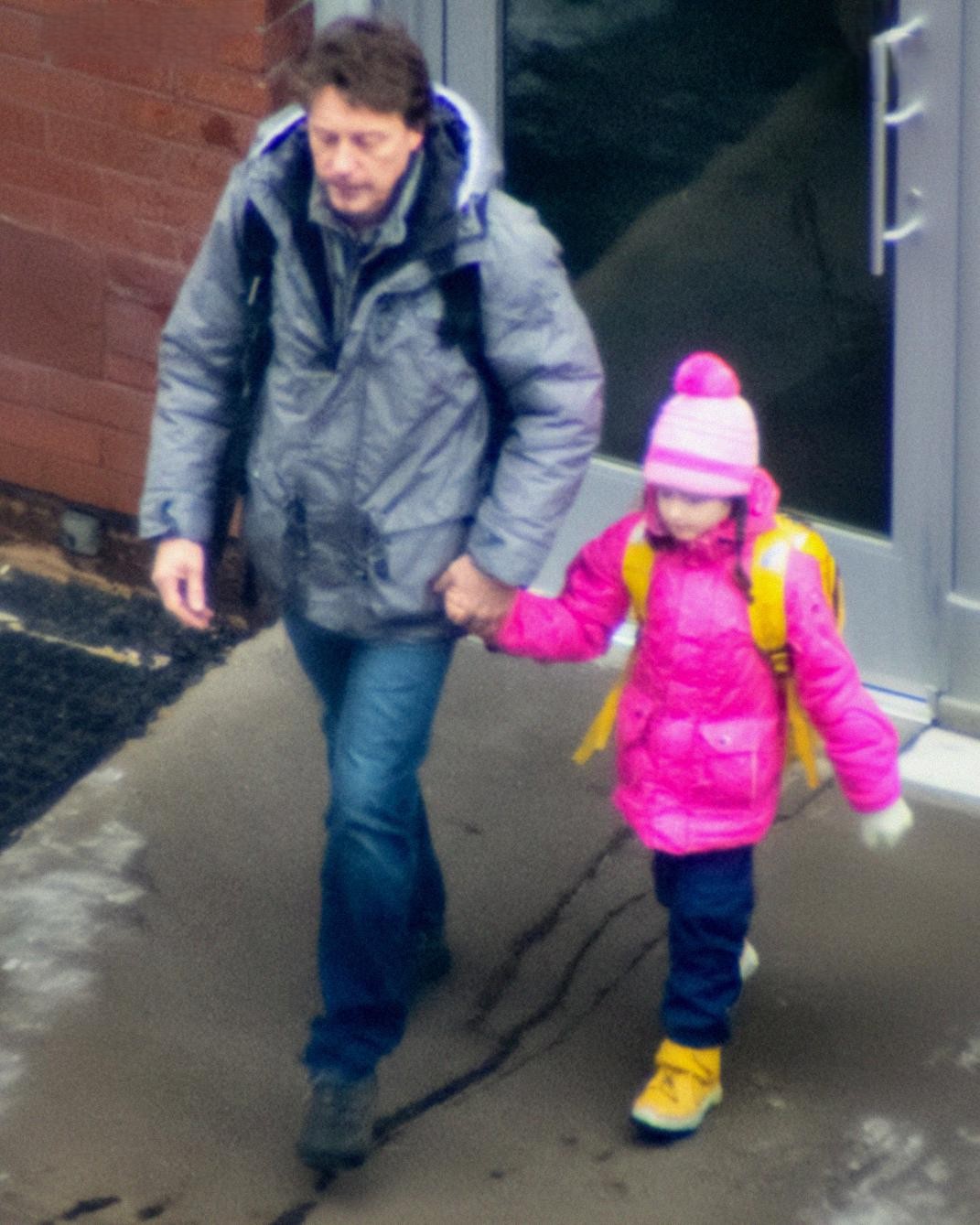
    A guy in his late twenties, fresh-faced, always smiling in the work event photos she showed me sometimes. I’d barely paid attention to him before. Now he was holding my daughter’s hand like he had a right to it.

    My stomach dropped. I took photos. Then I followed them — two cars back, steady, silent. They drove straight to Sophia’s office building. Ben took Lizzy inside.

    I gave them a few minutes, then went in through the main lobby. The building was quiet. That’s when I saw Lizzy sitting on a chair with her teddy bear, waiting patiently.

    “Daddy!” she said, smiling.

    I knelt beside her. “Where’s Mommy?”

    She pointed down the hall. “In there. With him.”

    I kissed her forehead. “Stay right here. I’ll be right back.”

    I walked toward the door she pointed to. My heart was pounding, but I wasn’t afraid. I was done wondering.

    I opened the door quietly and stepped inside.

    Sophia and Ben were kissing.

    It took them a full second to register I was there. The look on their faces said everything. No explanations needed.

    But I demanded one anyway.

    “What the hell are you doing with my wife?” I said, my voice low and steady. “And why is my daughter calling you her ‘new daddy’?”

    Ben stared at the floor. Coward.

    Sophia jumped into excuses — she “didn’t know Lizzy was calling him that,” she “didn’t mean for things to go this far,” she “felt overwhelmed,” she “loved me but made a mistake.”

    I’d heard enough.

    “You used our daughter as cover,” I said. “You let him take her. You let him into our home. You let her think he was replacing me.”

    She cried harder. “Josh, please — we can fix this.”

    “No.” I shook my head. “We’re done.”

    I walked out, grabbed Lizzy’s hand, and left without looking back. I didn’t trust myself to.

    The next morning, I hired a lawyer. Filed for divorce and full custody — immediately.

    The evidence was overwhelming. School footage showed Ben picking Lizzy up multiple times. Office cameras caught him and Sophia together. The courts didn’t like that one bit. Sophia lost primary custody, and visitation became supervised.

    Then came the fallout. Her company found out she’d been sleeping with a subordinate. Both she and Ben were fired within days. Not my doing — but I didn’t lose sleep over it.

    I spent nights crying silently once Lizzy was asleep. Grief mixed with rage. I’d loved Sophia. Trusted her. Built a life with her. And she blew it all up for someone who played house with my child behind my back.

    Now, my priority is Lizzy — and only Lizzy. I’ll raise her to know her worth, to be strong, to never tolerate someone who lies to her.

    Sophia still asks for forgiveness sometimes. Long messages. Apologies. Promises.

    I haven’t forgiven her.

    Maybe I never will.

    But for Lizzy’s sake, I keep things calm during visits. We sit at the same table. We talk about neutral things. We pretend, briefly, to still be a family. Because Lizzy deserves a childhood without bitterness.

    As for me? I don’t know if I’ll ever trust someone again. The idea of dating feels exhausting.

    But I know this: I trusted my instincts, and it saved my daughter from growing up inside a lie.

    If your child mentions something that doesn’t sit right — listen. If your gut tells you something’s off — pay attention. Lies rot in silence, but truth shows up in the smallest, most unexpected moments.

    Lizzy is smiling again. Laughing again. Sleeping peacefully.

    And that’s enough for now.

  • Why You Keep Waking Up Between 3 and 5 AM, The Real Science, Emotions, and Meaning Behind Early-Morning Awakenings

    Why You Keep Waking Up Between 3 and 5 AM, The Real Science, Emotions, and Meaning Behind Early-Morning Awakenings

    Waking up between 3 and 5 a.m. is one of the most common sleep interruptions adults report, yet it’s also one of the most misunderstood. People experience it as a jarring break in an otherwise peaceful night, a moment where the world feels too quiet, too still, too heavy. Some feel anxious. Some feel wide awake. Others stare at the ceiling wondering why their body betrays them every night at the same time. What most don’t realize is that this window has predictable biological, emotional, and psychological explanations — and understanding them can restore the deep sleep they’ve been missing.

    Sleep isn’t one long stretch of unconsciousness. It’s a cycle, a rhythm, a carefully choreographed series of stages your body moves through every night. Between 3 and 5 a.m., your system reaches its lowest physiological point. Your body temperature falls to its minimum. Your metabolism slows. Blood pressure drops. Everything in you is focused on restoration, repair, and conservation. This is the quietest moment your internal clock creates. That deep stillness, however, also makes you more sensitive. When the body is running at its lowest speed, even minor disruptions can pull you out of sleep. A shift in temperature. A distant noise. A dream that hits too close to home. A sudden spike in anxiety. The threshold for waking is thin.

    Another major player is cortisol — the hormone that wakes you up in the morning. Cortisol naturally starts rising before dawn to prepare you for the day. But if you’re stressed, overwhelmed, grieving, or burnt out, that rise can happen too early. Instead of a subtle slow climb, your body gets a hormonal jolt. Your heart rate jumps. Your mind snaps awake. You may not consciously feel worried, but your body does. It’s on alert. It thinks something needs your attention. And so you wake at 3:30 or 4:00 a.m. without knowing why.

    There’s also the role of REM sleep. The early morning hours contain some of the most emotionally intense dream cycles. During REM, your brain processes memory, stress, conflict, and emotional residue from the day. This is when the mind sorts through unresolved issues, filing away what you’re ready to release and pushing forward what still needs work. Wake up during this window and you might feel agitated, sad, or unsettled without remembering a single dream. That’s not mystery — that’s your brain doing maintenance.

    Emotionally, early-morning awakenings often reveal what people ignore during the day. Stress that’s pushed aside resurfaces when you’re no longer distracted. Anxiety you don’t acknowledge shows up as a pounding heart at 4 a.m. Grief you refuse to name becomes a weight on your chest when the rest of the world is silent. Your mind isn’t trying to punish you — it’s trying to process what you don’t give space to when you’re awake.

    It’s no coincidence that people going through major life changes wake up at these hours more often. Divorce. Breakups. Financial stress. Illness. Caregiving. Loneliness. Burnout. Even excitement — a new job, a new relationship, a major decision — can jolt you awake. The nervous system reacts to internal tension whether you consciously feel it or not. Between 3 and 5 a.m., that tension has room to breathe.

    Environment matters too. A warm bedroom can cause micro-awakenings when your body tries to cool itself. Dry air can interrupt breathing patterns. Blue light before bed suppresses melatonin and fractures sleep cycles. Heavy meals or alcohol in the evening force the digestive system into overdrive when it should be winding down. All of this increases the odds of waking at the most vulnerable point in your sleep cycle.

    But there’s another layer — the psychological meaning people attach to waking at this time. Across cultures and traditions, the hours before dawn have been treated as a reflective period, a moment when thoughts and emotions rise to the surface. Some people interpret these awakenings as a sign that their inner world is asking for attention. From a modern perspective, this lines up with what we know: when life moves too fast, when emotional buildup goes unaddressed, the mind uses the quietest time available to speak.

    The fix isn’t complicated, but it does require consistency. The first rule: don’t check the clock. The moment you do, your brain switches from resting to analyzing. That shift alone can keep you awake. Slow, deep breathing calms the cortisol spike. Mindfulness helps you acknowledge wandering thoughts without following them. Keeping lights dim prevents shutting down melatonin. If you can’t fall asleep after twenty minutes, journaling or stretching resets your nervous system without stimulating it.

    Long-term solutions center on stability. A consistent sleep schedule strengthens your circadian rhythm. Reducing caffeine after midday keeps your body from being forced awake by lingering stimulants. Exercising during the day lowers nighttime anxiety. Cooling your bedroom improves sleep depth. Disconnecting from screens before bed lets your brain wind down naturally. Creating emotional boundaries — refusing heavy conversations or stressful content late at night — protects your nervous system from late-evening activation.

    The deeper truth is this: waking up between 3 and 5 a.m. is rarely random. It’s a reflection of your biology and your emotional landscape working in tandem. Your body is signaling imbalance. Your mind is requesting space. If you listen instead of fighting it, those moments can become insight rather than frustration.

    In the end, the goal isn’t to eliminate every nighttime awakening — it’s to understand why they happen. When you do, the fear goes away. You stop viewing your body as an enemy. You stop seeing these wake-ups as punishment. Instead, you recognize them as communication — a message from your internal systems that something needs adjustment, comfort, or release.

    And here’s the good news: once you identify the cause, the body responds quickly. Stress hormones level out. Dreams become less intrusive. The circadian rhythm stabilizes. Emotional residue fades. Sleep becomes deeper, longer, and more peaceful.

    If you find yourself awake at 3 a.m., take a breath. Your body isn’t betraying you — it’s talking to you. And with the right habits, understanding, and care, those early mornings can shift from moments of frustration into stepping stones toward better sleep and a calmer mind.

  • Little-known mistakes and bloopers in The Rifleman!

    Little-known mistakes and bloopers in The Rifleman!

    For generations, The Rifleman has held a special place in the hearts of TV fans. Even sixty years after its debut, people still talk about the powerful father-son relationship at its center — the bond between Lucas McCain and his son Mark. In an era when television was still finding its voice, this Western became a fixture in countless American homes, offering stories built on courage, decency, and the values parents hoped their kids would actually learn from watching.

    The show wasn’t just entertainment; it was a weekly reminder of what integrity looked like. But behind its polished episodes lay a world of quirks, slip-ups, and lesser-known details that even dedicated viewers may have missed. Like most early Westerns, The Rifleman played fast and loose with historical accuracy. And honestly, that’s part of the charm. The heart of the show mattered far more than whether props or clothing matched the exact decade. Still, some of these bloopers and behind-the-scenes stories are too good not to share — and they reveal just how much personality and improvisation helped make the series legendary.

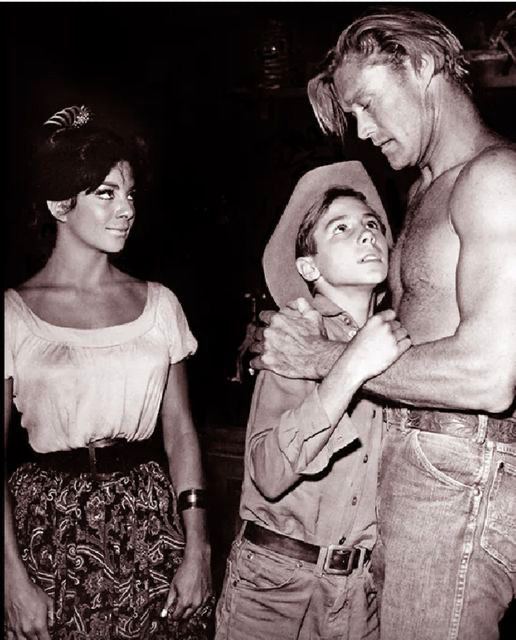
    One of the most amusing discoveries involves Lucas McCain’s wardrobe. Fans remember him as the rugged, straightforward cowboy hero, always ready with his rifle and a wise word for his son. But in the episode “End of a Young Gun,” there’s a quick moment where Chuck Connors, shirtless and repairing a wagon wheel, leans over just enough for viewers to catch the unmistakable “W” stitched onto the back pocket of his jeans. He’s wearing Wranglers — which didn’t exist in the 1880s. Those jeans wouldn’t be manufactured until the 1940s. In other words, Lucas McCain was unintentionally the best-dressed man of the Old West, half a century ahead of style trends.

    There are also moments of sweetness threaded through the show’s history, including the quiet appearances of Chuck Connors’ real-life family. In the episode “Tension,” viewers meet the widow and son of Sid Halpern, an old friend of the McCains. The boy, Toby, has only two lines — but what fans didn’t know is that he was played by Jeff Connors, Chuck’s own son. Jeff later went on to become a film editor and passed away in 2014, but his brief on-screen moment with his father remains a small, meaningful gem in the show’s legacy.

    Landing Chuck Connors for the role of Lucas McCain wasn’t a straightforward process, either. ABC originally offered a salary so modest that Connors turned them down. At the time, he made more money freelancing, and becoming the face of a weekly series didn’t look like a financial upgrade. But fate has a sense of humor. Producers took their kids to see Old Yeller, where Connors played a strong, compassionate father figure. When the children reacted emotionally to his performance, the producers reconsidered their offer. They came back with more money and, crucially, a five-percent ownership stake in the series — an unusually generous deal for a TV actor in the 1950s. With that, Connors signed on, and The Rifleman got its iconic lead.

    The rifle itself deserves its own chapter. The opening sequence of every episode is unforgettable: Connors firing off a rapid series of shots, the rifle spinning, cocking, and loading with incredible speed. Many assumed this was trick photography. It wasn’t. Connors, a former professional athlete, had the reflexes and coordination to make the movements look effortless. The production used two identical Winchester 1892 rifles — one primary, one backup — and they were customized for rapid firing. Even so, Connors’ athleticism did most of the work.

    Ironically, the series is set well before the Winchester 1892 existed. The show takes place in the 1870s and 1880s, making the appearance of this rifle a historical impossibility. But here’s the real twist: Lucas McCain’s rifle wasn’t just any Winchester — it was the same rifle used by John Wayne in the 1939 classic Stagecoach. Producer Arnold Levin later confirmed this, giving The Rifleman a direct line to one of the most celebrated Westerns in film history. It’s a connection that fans still talk about, tying the show to Hollywood’s larger Western mythos.

    Another fascinating detail sits quietly in the background of many episodes: the Madera Hotel. This building became one of North Fork’s most recognizable landmarks, appearing in crowd scenes, street shots, conversations, and confrontations. What most viewers never realized is that the Madera Hotel wasn’t always consistent. Because it was reused so often — sometimes with slight changes to its signage or structure — it accidentally became a running piece of continuity humor. Sharp-eyed fans have spotted furniture, wallpaper, and even staff members mysteriously shifting from one episode to another, all because the production reused sets to stay within budget. Far from detracting from the show, these repeats now feel like an endearing signature of classic TV production.

    And the historical inaccuracies? There were plenty. Guns that didn’t exist yet. Clothing from the wrong decade. Props that magically reappeared after being destroyed in earlier episodes. Even the geography of North Fork seemed to shift from time to time, with certain landmarks showing up in one season and disappearing in the next. But none of that mattered, because the emotional core was so strong. The show wasn’t pretending to be a documentary; it was telling stories about bravery, forgiveness, loyalty, and love — the things that never go out of style.

    More than anything, The Rifleman endured because of the chemistry between Chuck Connors and Johnny Crawford. Their father-son dynamic felt real, layered, and grounded in genuine affection. Crawford, who was only 12 when the show began, later said that Connors became a mentor to him, on and off screen. Their connection is what gave the show its soul, elevating it above other Westerns of the era. Each episode carried a subtle moral backbone, with Lucas teaching Mark lessons that parents across America hoped their own children absorbed.

    Looking back, the little mistakes — the Wranglers from the future, the anachronistic rifle, the recycled sets — don’t tarnish the show’s legacy. They make it more human. They reveal the constraints and creativity of making television in an era without digital editing, continuity teams, or massive budgets. And they highlight how much passion the cast and crew poured into every episode.

    Today, The Rifleman remains a timeless classic, not because it was perfect, but because it was heartfelt. It reminded viewers that strength doesn’t require cruelty, that raising a child takes patience and courage, and that doing the right thing often means standing alone. In a world that changes constantly, those values still resonate — and maybe that’s why fans keep returning to North Fork, eager to relive the stories, the lessons, and yes, even the bloopers that made the show unforgettable.