Blog

  • From Nervous to Accepted! My First Dinner With His Family

    From Nervous to Accepted! My First Dinner With His Family

    Last night was supposed to be simple — a nice dinner, a chance to make a good impression, nothing too dramatic. My boyfriend had finally decided it was time for me to meet his family, something I’d been both excited and terrified about. But nothing could have prepared me for the chaos, awkwardness, and shocking sweetness that unfolded the moment I stepped through their front door.

    We walked into a warm, cozy home that smelled like fresh bread and roasted vegetables. Soft music drifted from the living room, and for one fleeting moment, I thought, Okay, maybe this won’t be so bad. Then his parents appeared.

    His mom smiled — warm, gentle, welcoming. His dad, on the other hand, sized me up like a drill sergeant evaluating a new recruit. My boyfriend introduced me, and before I could even smile properly, he grinned and said, “Hope you brought your wallet. We’re starving.”

    My brain shut down. Completely froze. My heart dropped so hard I felt it in my knees. I must’ve looked like someone had just slapped me with a tax bill because his dad immediately stood up, put a hand on my shoulder, and said, “Don’t worry, sweetheart — we’re only teasing you.”

    The whole table burst out laughing. Even my boyfriend doubled over, squeezing my hand to reassure me they weren’t actually expecting me to pay for dinner I hadn’t even eaten yet. Their humor was… intense. Let’s call it that. Not mean, but sharp enough to make me question everything for a beat.

    Once the laughter died down and my heart started working again, his mom ushered us to our seats. She was eager to start dinner, chatting as she set down dishes she’d clearly spent hours preparing. Slowly, the tension in my shoulders loosened. The house felt lived-in in the best way — photos on every wall, mismatched dishes that somehow worked together, and the smell of something baking that tugged at memories I didn’t even know I had.

    As we ate, his parents launched into stories about his childhood — the kind he had conveniently never shared with me. Like the time he tried to cook pasta without water because he thought “boiling” meant “put it in a hot pan.” His dad reenacted the moment with theatrical flair, waving his fork like a conductor. His mom laughed so hard she had to wipe her eyes. My boyfriend stared at his plate, muttering, “It was one time” as if that fixed anything.

    Their laughter filled the room, and before I knew it, I was laughing too. Really laughing. The kind that shakes your stomach and erases the awkwardness of the first five minutes.

    Just as the mood settled into something warm and easy, his younger sister burst into the dining room carrying a tray stacked with desserts — brownies, cookies, something that looked like a hybrid between a cake and an experiment. She announced loudly, “I made all this to impress the girl who finally makes my brother clean his room!”

    Everyone cracked up again, including me. It felt like some giant wave of tension rolled off my shoulders and finally left the house.

    After dinner, we moved to the living room, where his dad pulled out an old photo album — the kind with faded pages and embarrassing fashion choices. My boyfriend groaned dramatically, flopping onto the couch like a martyr. But his family insisted.

    Those photos told a hundred stories: him as a toddler covered in spaghetti sauce, him dressed as a cowboy for Halloween, him crying because his sister stole his favorite toy. They flipped through the pages like they were flipping through seasons of their lives, each memory another layer of love wrapped in nostalgia and teasing.

    It was then I realized how deeply connected this family was. Yes, they teased relentlessly. Yes, their jokes were a bit sharper than I was used to. But the way they talked to each other, the easy rhythm of their conversations, the affectionate bickering — it all came from a place of love.

    His dad disappeared for a moment and returned with a small gift bag. My heart jumped into my throat again — after the wallet joke, I didn’t know what to expect. Inside the bag was a simple keychain engraved with their family name.

    “You’re welcome here anytime,” he said quietly, almost shyly. That single sentence hit harder than the joke earlier, harder than the stories, harder than anything I’d expected to feel in a stranger’s home.

    When it was finally time to leave, the night air felt crisp and refreshing. My boyfriend walked me to the car, still apologizing for his dad’s sense of humor. But the apology felt unnecessary. Everything that had happened — the awkward introduction, the laughter, the stories, the unexpected gift — it all fit together in a strange, charming way. It didn’t go how I thought it would, but it went the way it needed to.

    I told him it was fine. And for the first time that night, I meant it without hesitation.

    Families aren’t polished. They aren’t perfect. They have quirks, rituals, inside jokes you don’t understand at first. They tease each other because that’s how they show affection. They embarrass each other because it’s part of their language. And if you’re lucky — really lucky — they welcome you into all of that before you’ve even earned it.

    As we drove away, I held the little keychain in my hand and realized something simple and profound: I hadn’t just been a guest. I had been invited into a story that was still being written. A messy, funny, loud, loving story — one I hoped I would get to be a part of for a long time.

    By the time we reached home, the nerves I’d carried with me all day had finally vanished. In their place was something warmer. Something hopeful.

    Last night wasn’t just my first dinner with his family. It was the moment I realized I might truly belong.
  • Two Teenage Boys Helped a Lonely Old Man Living in a Shabby Trailer – One Day, They Got a Call from His Lawyer

    Two Teenage Boys Helped a Lonely Old Man Living in a Shabby Trailer – One Day, They Got a Call from His Lawyer

    Frede and Keaton had been inseparable since kindergarten — the kind of boys teachers quietly hoped the rest of the school would model themselves after. They were hardworking, humble, and kind in ways that didn’t demand attention. Sixteen years old, raised in families where money was always scarce, they still managed to give more than they ever had.

    Frede was the thoughtful one — soft-spoken, sharp-eyed, always willing to stay after school to help younger kids with homework, never accepting a cent for it. Keaton was the easygoing giant — tall, full of laughter, the kid who coached Little League on weekends instead of chasing varsity titles. Their families struggled, but their hearts never did. If anything, their difficult upbringings strengthened the way they moved through the world: steady, patient, aware of other people’s struggles.

    One Tuesday afternoon, as they walked home along the wooded back road behind Jefferson High, Keaton flicked a pebble and asked, “Think Coach will let us skip practice Friday?”

    Frede raised a brow. “For what?”

    “The community center needs help at the donation drive.”

    Frede grinned. “This is why we’re best friends.”

    They laughed and kept walking, the early autumn wind brushing through the trees. Leaves were just starting to turn when a thin, cracked voice drifted up from the slope beside them.

    “Help…”

    The boys froze. Then, without hesitation, Keaton dropped his bag and sprinted toward the sound. Frede was right behind him.

    At the bottom of the incline lay an old man, groceries spilled around him — cracked eggs in the dirt, milk soaking into the soil, a canvas bag torn open. He reached out weakly, eyes blinking against the sunlight.

    Keaton knelt. “Sir, can you hear me?”

    The old man swallowed hard. “Fell… dizzy spell. Name’s Bernard.” His voice was scarcely more than a whisper.

    Frede opened his water bottle and lifted Bernard’s head gently. “Sip slowly.”

    Bernard drank, coughed, then sighed, exhausted. “Been here… an hour maybe. Maybe longer.”

    “We’re calling an ambulance,” Keaton said, reaching for his phone.

    “No.” Bernard’s hand trembled as he waved it away. “No hospital. Just… get me home.”

    Frede retrieved Bernard’s cane from the dirt, placed it carefully in his palm. Keaton met Frede’s eyes — both boys silently agreeing.

    “We’re not leaving you here,” Keaton said. “We’ll walk you home.”

    Bernard tried to protest again, but his voice had no fight left in it. Frede slipped an arm under one elbow, Keaton under the other, lifting him with surprising gentleness. The man weighed almost nothing.

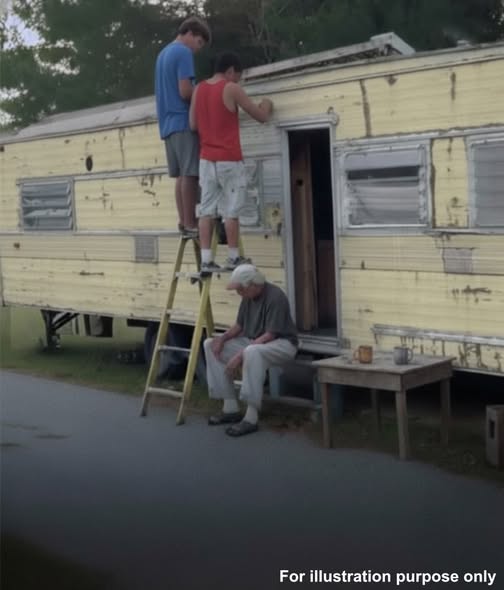
    Ten minutes later they reached Bernard’s home — if it could be called that. A trailer leaning tiredly on cinder blocks, windows patched with cardboard, roof held together with tarp and stubborn hope.

    “This is it,” Bernard murmured, cheeks flushed with embarrassment. He rummaged through his pockets, found his wallet, opened it. Empty. He looked around again, then limped inside and returned with a single apple, red and worn.

    “It’s all I have to give you,” he said.

    Neither boy moved to take it.

    “We didn’t help you for payment,” Frede said quietly.

    Bernard’s eyes filled instantly.

    They headed home that night unable to shake the image of the frail old man living alone in that collapsing trailer.

    The next afternoon, they came back — arms full of grocery bags, purchased with every dollar they’d saved from mowing lawns and washing cars. Bernard opened the door, saw the bags, and covered his mouth like he’d been struck.

    “Boys… why would you do this?”

    “Because you need it,” Keaton said simply.

    Bernard cried then, silently, shoulders shaking.

    Their visits became routine — twice a week, sometimes more. They brought food, repaired leaks, patched the roof, swept the yard. But gradually, Bernard became more than someone they helped. He became someone they listened to. Someone they learned from. Someone they loved.

    On warm afternoons, the three of them sat outside in mismatched chairs while Bernard shared lessons shaped by years of mistakes.

    “A good man does right when eyes are on him,” Bernard said one day, resting both hands on his cane. “A great man does right when nobody sees.” He looked at them both. “You boys? You’re on your way to being great.”

    Another time, while they worked on the roof, he called up, “Money doesn’t make you rich. People do. Love does.”

    Keaton laughed. “Pretty bold statement for someone living in a broken trailer, Mr. Bernard.”

    Bernard chuckled too, but the sound softened into something almost mournful. “Life teaches you, son. Usually through loss.”

    They grew closer with every visit. Bernard became the grandfather they’d never had — listening to their plans, encouraging their dreams of becoming teachers, reminding them that they mattered more than they realized.

    Then, one Tuesday in late spring, they knocked on his door.

    No answer.

    The door was unlocked. Inside, the trailer was cold. Still. Empty.

    They waited two hours. Searched the woods. Called until their voices went hoarse. Police had nothing. Hospitals had nothing. Days became weeks. Eventually, the case was closed.

    Bernard was simply… gone.

    Life dragged forward whether they wanted it to or not. They graduated. Turned eighteen. Their dreams of college dimmed under financial reality.

    Then one afternoon, Frede’s phone rang.

    “Good afternoon. This is Jeff, attorney for Bernard Langston. I need you and Keaton to come to my office.”

    The boys sat bewildered in the attorney’s office as Jeff folded his hands.

    “I’m sorry to tell you Bernard passed away two weeks ago. Peacefully, in his sleep.”

    Keaton’s breath caught.

    “He left this for you.” Jeff slid a sealed envelope forward.

    Frede opened it slowly.

    My dear Frede and Keaton,

    If you’re reading this, I’m gone. Forgive me for leaving without goodbye. I feared the truth would push you away.

    I lied to you from the beginning.

    Twenty years ago, I was Bernard Langston, CEO of HMR Industries. Wealthy beyond reason — mansion, cars, private staff, all of it. But none of them loved me. My children waited for my death. My wife stayed for the lifestyle. I was surrounded, yet completely alone.

    So I walked away. Disappeared. Bought that trailer and finally felt free — but still lonely.

    Until the day you found me.

    You helped me when you thought I had nothing. You showed up again and again. You fed me, repaired my home, and filled my days with laughter. You treated me like family.

    I didn’t tell you the truth because I was terrified you’d look at me differently. I valued your kindness more than anything money ever bought.

    You gave me the richest years of my life.

    Thank you for being the grandsons of my heart.

    All my love,
    Bernard

    Tears blurred the page before Frede even reached the end.

    “There’s one more thing,” Jeff said softly. He opened a folder. “Bernard left each of you $150,000 — specifically to help you become teachers.”

    Frede covered his face. Keaton whispered, “We never wanted his money.”

    “And that,” Jeff said, “is exactly why he wanted you to have it.”

    Three years later, they crossed the stage at State University, earning their teaching degrees. After the ceremony, Frede looked up at the sky.

    “I hope he sees us.”

    “He does,” Keaton said.

    They became the kind of teachers who noticed every child, who believed in quiet potential, who practiced the lessons Bernard taught them: that real wealth is measured in kindness, not money.

    And whenever they passed the old trailer — now swallowed by weeds — they slowed down, remembering the man who had lived there not because he was poor, but because he’d finally learned the value of love.

    Bernard’s final lesson echoed in everything they did:

    Great men aren’t remembered for what they keep, but for what they give.

  • Boy Begged Me Not To Tell His Mom About The Bruises Because She Already Cries Every Night!

    Boy Begged Me Not To Tell His Mom About The Bruises Because She Already Cries Every Night!

    I’ve been riding the same stretch of Rural Route 12 for more than twenty years, and in all that time I’d never seen a kid walking alone out there. It’s miles of nothing — just fields, fences, and the occasional pickup roaring by. So when I spotted a small figure shuffling along the gravel shoulder with his head down, I knew something was wrong before I even pulled over.

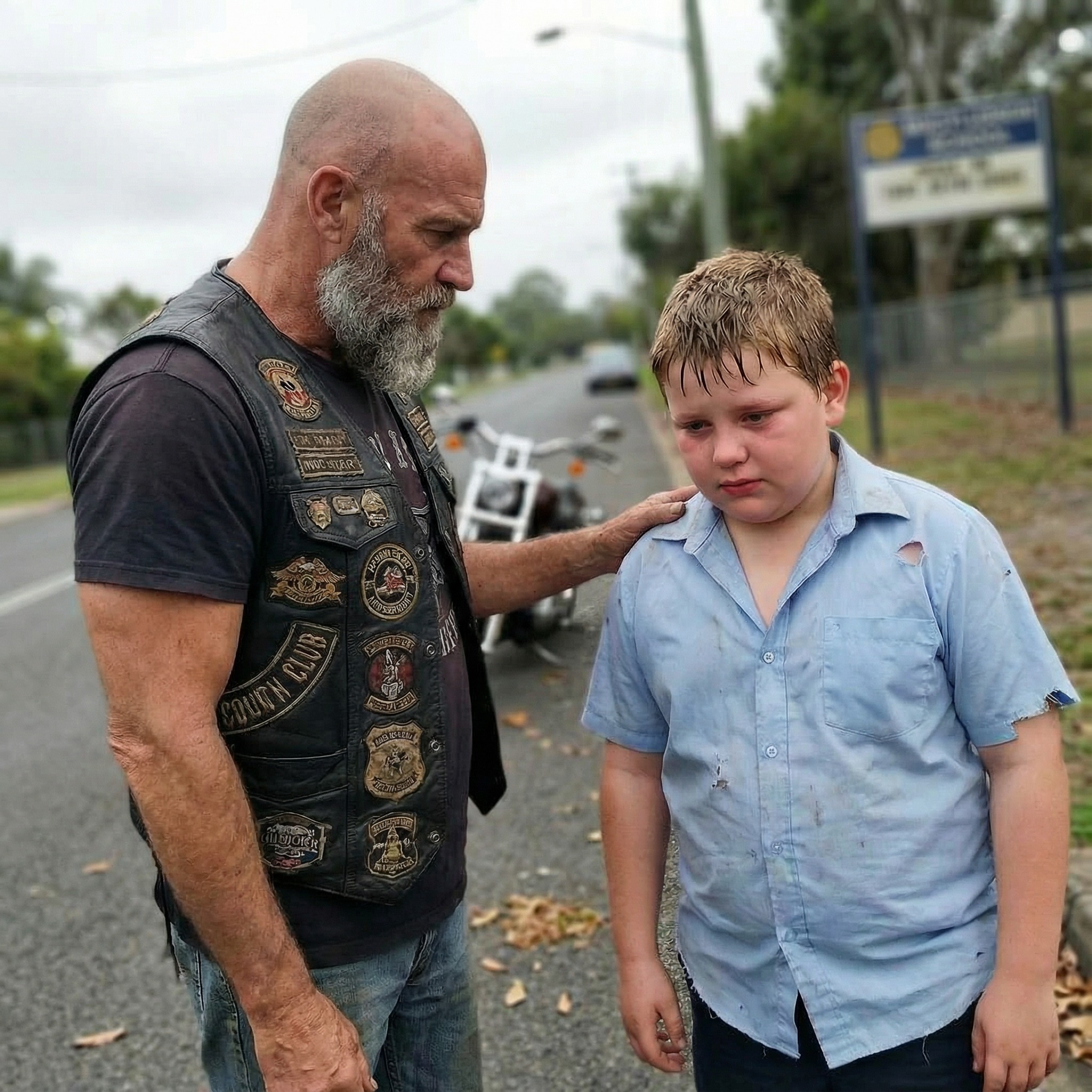
    I killed the engine on my Harley. The boy flinched the second he heard it, like he expected trouble. I’m a big man — bald, gray beard, leather vest covered in patches — not exactly the most comforting sight for a kid who already looked terrified. He took a step back as I approached, looking like he was deciding whether to run for it.

    “Hey, buddy,” I said softly. “You okay? You’re a long way from anything out here.”

    He didn’t answer. Kept staring at the ground like he was ashamed to be seen. That’s when I noticed the ripped shirt, the dirt ground into the fabric, the scraped knuckles. The kind of injuries kids don’t get from falling at recess.

    “What happened to you, son?” I crouched so I wasn’t towering over him.

    He shrugged. “Nothing.”

    “That doesn’t look like nothing. What’s your name?”

    “Ethan,” he whispered.

    “Where you headed, Ethan?”

    “Home.”

    “Where’s home?”

    He pointed down the road. “Four more miles.”

    Four miles. On foot. On a dangerous road. In that condition. My stomach knotted.

    “Did you miss the bus?”

    He shook his head. Then nodded. Then suddenly started crying — the quiet kind that comes from exhaustion, not drama.

    “They took my bus money,” he finally choked out. “Pushed me in the dirt. Said if I told anyone, tomorrow would be worse.”

    “Who did?” I asked.

    “Just kids.”

    “Kids from your school?”

    He nodded again, tears streaking the dirt on his cheeks.

    I sat in the grass next to him, giving him space. Didn’t touch him. Just let him cry until the tears slowed.

    “How long have they been doing this to you, Ethan?”

    “Since third grade,” he said. “I’m in fifth now.”

    Two years. Two years of this child taking beatings and hiding it.

    “Does your mom know?”

    That’s when everything in him cracked. He grabbed my arm, fingers digging in like he was drowning.

    “Please don’t tell her,” he begged. “She works two jobs. My dad left. She cries every night when she thinks I’m asleep. I don’t want to make it worse. Please don’t make her sadder.”

    Hearing a ten-year-old say that… it hits you somewhere deep. This boy was carrying burdens most adults can’t handle.

    I cleared my throat. “Ethan, my name’s Robert. I’ve been riding bikes longer than your parents have probably been alive. And I’ve learned something about bullies.”

    He looked up at me, eyes red and desperate.

    “They don’t stop on their own,” I said. “They stop when someone stronger makes them. And you trying to protect your mama — that’s brave. But it’s not working. Is it?”

    He shook his head slowly.

    “How about this,” I offered. “Let me give you a ride home. We’ll talk to your mom together. And then we’ll figure out how to make this stop for good.”

    “She’ll be upset.”

    “Maybe. But imagine how upset she’d be if something happened to you on this road. Or if those boys hurt you worse next time.”

    He thought about it for a long while, then whispered, “Okay.”

    I called his mom. Told her who I was. Told her he was safe. She started crying before I finished my sentence. Said she thought he was still at school.

    “I’ll bring him home,” I said. “I’ll stay with him until you get back.”

    I handed Ethan my spare helmet — too big, but better than nothing — and got him on the bike. At first his arms were locked tight around my waist in pure fear, but a mile in, I felt him relax. Lift his head. Look around. The wind cleared something heavy from his shoulders.

    By the time we reached his driveway — a small house needing paint and care — he didn’t want to get off.

    “That was amazing,” he said, eyes wide.

    “First motorcycle ride?”

    He nodded, smiling for the first time.

    We sat on the porch waiting for his mom. He told me about the bullying. How the boys taunted him about his clothes, his father leaving, his mother working at a diner.

    “They say she’s trash,” he whispered. “Because she’s a waitress.”

    “Your mom works two jobs to take care of you,” I said. “That makes her stronger than most people I know.”

    He nodded but looked defeated. “They won’t stop.”

    His mom pulled up half an hour later. She ran to him, collapsed around him, sobbing.

    “What happened? Why were you walking? Are you hurt?”

    Ethan looked at me again. I nodded.

    “Mom,” he said, voice shaking, “I need to tell you something.”

    And he did. Every brutal detail from third grade to today. His mom cried harder with every word, holding him like she feared he’d disappear.

    “Why didn’t you tell me?” she asked.

    “Because you’re tired,” Ethan said softly. “And you cry every night. I didn’t want to make you sadder.”

    She broke completely, burying him in her arms.

    After a few minutes, she turned to me. “Sir… thank you. I don’t know who you are, but thank you for bringing my baby home.”

    “My name’s Robert,” I said. “And if you’ll let me, I want to help.”

    “How?”

    “I’m part of a motorcycle club. We don’t break laws, but we protect kids. If you say yes, we’ll show up at his school. Walk him in. Walk him out. Make sure everyone sees he’s not alone.”

    She hesitated. “Would that… work?”

    “In my experience? Yes.”

    Ethan’s eyes lit up. “Mom, please? Can we try it?”

    She wiped her tears. “Is it safe?”

    “Ma’am,” I said, “you have my word.”

    She nodded. “Okay.”

    The next morning at 7 AM, five patched bikers rolled into that school parking lot. Full leather. Chrome shining. Engines rumbling like a storm. Parents stared. Teachers froze. Kids’ jaws dropped.

    We were there for one reason.

    Ethan.

    He stepped out of his mom’s car, eyes wide. “They all came?”

    “All of them wanted to.”

    We walked him to the front doors — five bikers flanking one small boy. His bullies were standing near the entrance. They stiffened when we passed, eyes darting like scared animals.

    At the door, I crouched again. “We’ll be here at three. Every day.”

    Ethan hugged me in front of everyone. “Thank you.”

    “Go learn something,” I said.

    The bullying stopped by day two.

    For three weeks we escorted him. The school complained once, but Ethan’s mom shut that down fast.

    After that, he didn’t need us every morning. Bullies avoid kids with a wall of protection behind them.

    He became confident. Made friends. Smiled more.

    I still take him for rides sometimes. He’s got his own helmet now. He and his mom have become family to the club. And last month he told me he wants to be a biker when he grows up.

    “You already are one,” I said. “You’ve got the heart for it.”

    He grinned that same bright grin I’d first seen after his Harley ride.

    “Thanks for stopping that day,” he said quietly.

    “Thanks for letting me,” I told him. “You reminded me why we do what we do.”

    Because real bikers don’t just ride.

    We protect the ones who can’t protect themselves.

    We stand between kids and the darkness.

    And now Ethan never walks alone.

    Not anymore.

  • Breaking – At 18, Barron Trump FINALLY Admits What We All Suspected!

    Breaking – At 18, Barron Trump FINALLY Admits What We All Suspected!

    Barron Trump has spent most of his life watched, discussed, and speculated about — yet almost never heard from. Born on March 20, 2006, in Manhattan, the only child of Melania and Donald Trump grew up in a world few people can imagine: Secret Service details in the hallway, cameras everywhere, and the pressure of carrying a famous last name long before he understood what fame even was. But behind all the noise, his upbringing was shaped far more by his mother than the public ever realized.

    Melania Trump was determined to keep Barron grounded. She shielded him from public chaos, insisting on a childhood rooted in manners, languages, schoolwork, and humility rather than attention. While the world imagined him surrounded by gold-plated excess, the reality was much quieter. He was raised with a strict focus on education, privacy, and character — Melania’s way of keeping him tethered to something real despite the privilege and scrutiny that came with being a Trump.

    Barron began his education at Columbia Grammar & Preparatory School in New York City, a place known for academic rigor and a demanding curriculum. When the family moved to Washington during Donald Trump’s presidency, Barron transferred to St. Andrew’s Episcopal School, becoming the first presidential child not to attend Sidwell Friends in decades. Later, he continued at Oxbridge Academy in Palm Beach, graduating in 2024. At every school, teachers described him similarly: intelligent, reserved, polite, and surprisingly unaffected by the attention surrounding him.

    Languages became one of his quiet strengths. With a Slovenian mother and exposure to international circles from the moment he was born, Barron grew up fluent in English and Slovenian, and comfortably conversational in French. Melania insisted he learn her language as a way to stay connected to her heritage, and it became one of the things mother and son bonded over most. Their relationship has always been unusually close — a partnership built on trust, privacy, and the shared understanding of what it feels like to stand slightly apart from the world.

    While he never seemed interested in the spotlight, Barron did develop passions of his own. Sports were at the top of the list. Tennis drew him in early — the discipline, the precision, the quiet intensity of the game suited him. Golf became a bridge between him and his father, who often took him to courses wherever they traveled. Those were their calm moments together, away from the noise, where Barron could simply be a son rather than a public figure. Football came later, especially during his time with DC United’s Youth Academy, where he pushed himself hard enough to impress coaches who had no idea who he was when he first showed up on the field.

    And then, of course, there’s his height. Barron has always stood out visually — literally. Year after year, photos circulated of him towering taller than anyone expected, until by adulthood he reached an astonishing 6’7”. The world talked endlessly about his height, but Barron himself never cared much. He didn’t chase attention for it, didn’t try to turn it into a personal brand. If anything, he was amused by it, treating it as just another quirk he had to grow into.

    His style drew similar fascination. People noticed the sneakers, the understated clothes, the quiet confidence. But what fascinated the public most was the contradiction: he looked like someone who could rule a runway, yet he walked through the world trying to blend in. He had no interest in the influencer aesthetic or attention-grabbing fashion. He gravitated toward comfort, simplicity, and anonymity. In a world that expected him to perform, Barron chose invisibility — a choice that made the public watch him even more.

    Despite growing up in one of the most polarizing political families in modern history, Barron stayed far from politics. He rarely appeared at rallies, almost never spoke publicly, and kept his inner world private. Maybe it was Melania’s influence, maybe it was personal choice, maybe a bit of both — but Barron resisted being shaped into a political symbol. He preferred being known for nothing rather than being known for the wrong thing.

    As he approached adulthood, he began stepping out more, but only on his own terms. When he finally addressed the public — calmly, confidently, and with a maturity beyond his years — he confirmed what many people had long suspected: beneath the name, beneath the height, beneath the headlines, Barron Trump was simply his own person. Not an echo of his father. Not a copy of his mother. Not a political pawn or a media spectacle. Just a thoughtful, multilingual, academically accomplished young man shaped by a unique childhood but not defined by it.

    He acknowledged what the world had long guessed — that he valued privacy, education, and genuine relationships far more than attention. That he’d been raised to stay grounded, to stay kind, and to stay aware of the privilege he had but never relied on. He admitted that growing up with so much scrutiny had made him cautious, observant, and selective about who he let close, but it also made him deeply appreciative of the normal moments he did get.

    At eighteen, Barron Trump stepped forward not with drama, not with scandal, not with theatrics, but with honesty. He confirmed that he had no intention of chasing fame or leveraging the family name for spotlight. He wanted something different — a life he could steer himself.

    And in that moment, the public finally saw him clearly.

    Not as the quiet kid in the background.

    Not as the towering teen the internet obsessed over.

    Not as a political heir or a curiosity.

    But as a young man who understood exactly who he was — and who he wasn’t.

    A young man shaped by privilege but anchored by humility.

    A young man raised in extraordinary circumstances who somehow managed to stay ordinary in the ways that mattered.

    A young man finally stepping into adulthood with clarity, calm, and a quiet strength that surprised people only because they hadn’t been paying attention.

    Barron Trump didn’t reveal anything scandalous or shocking.

    He simply revealed himself — and it was enough.

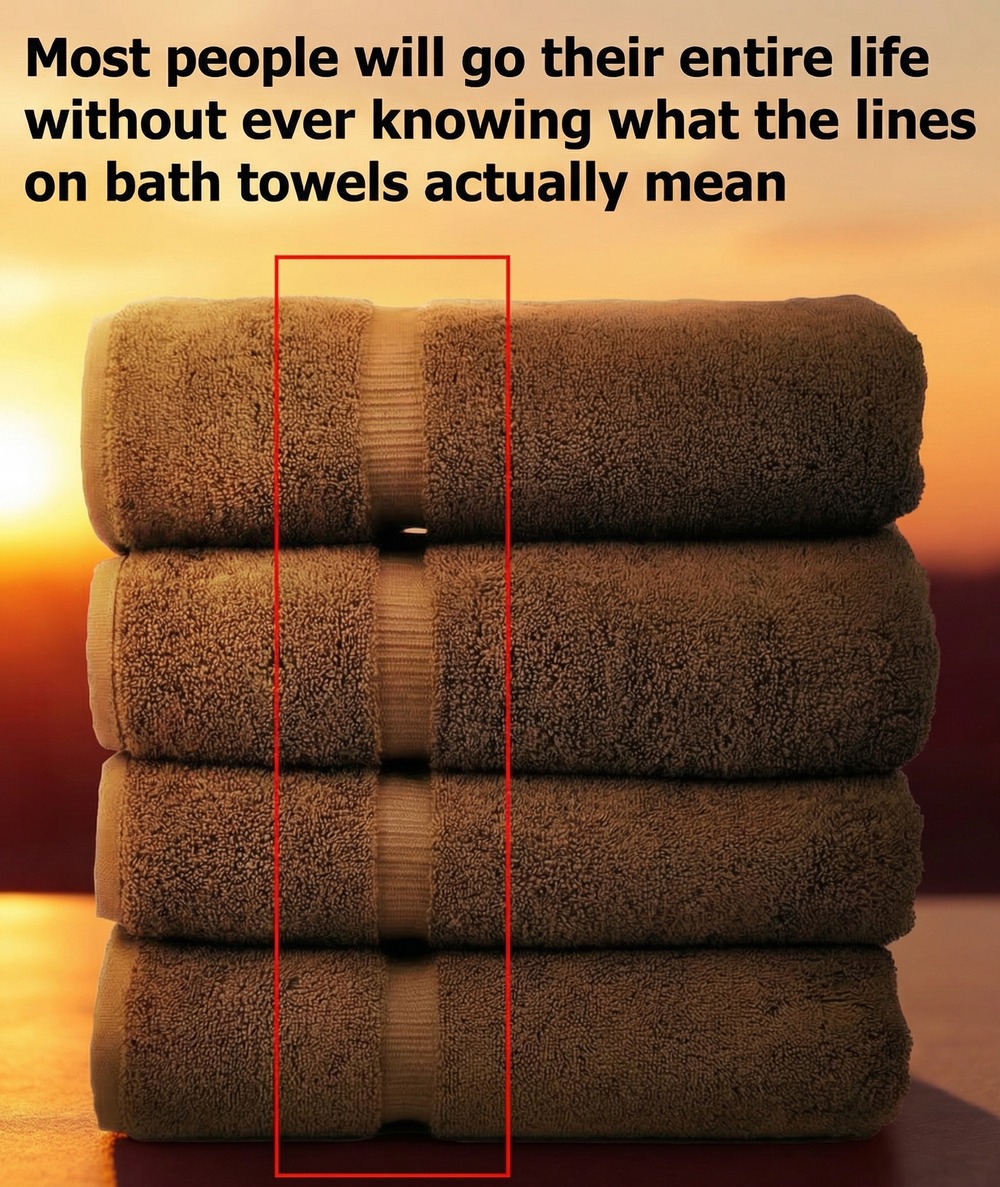
  • Why Bath Towels Are Essential in Every Home!

    Why Bath Towels Are Essential in Every Home!

    Bath towels might seem like one of those ordinary household items you barely think about — something you grab after a shower, toss on a hook, and move on with your day. But the truth is, towels play a much bigger role in daily life than most people realize. They’re woven into your morning routine, your comfort, your hygiene, and even the overall feel of your home. A well-made towel can turn a rushed shower into a moment of calm, while the wrong towel can leave you irritated, damp, and wishing you’d spent the extra few dollars.

    At their core, bath towels serve one essential purpose: drying the body efficiently and comfortably. But the right towel does more than remove moisture — it wraps you in warmth, absorbs quickly without becoming heavy, and adds a touch of comfort to the start or end of your day. Think of how a plush towel feels after a long bath, or how refreshing it is to reach for something soft instead of something scratchy. Towels are often the first thing your skin meets in the morning and the last thing it touches at night, so the quality genuinely matters.

    They’re also one of the easiest ways to elevate the look and feel of a bathroom. A fresh set of towels can completely change the atmosphere. New colors can brighten a space, while clean whites or neutrals can create a spa-like environment. Towels allow you to update the look of your bathroom without renovating anything — just swap in a different color or texture and instantly the vibe shifts. This makes them both functional and decorative, a combination that gives them more influence in your home than you’d expect.

    Beyond the bathroom, towels are some of the most versatile items in any household. They follow you to the gym, accompany you to beaches and pools, and get tossed into travel bags for weekend trips. A good towel is a quiet companion in countless parts of your life — drying off after workouts, lining picnic benches, cushioning car seats after a sudden rain, or wrapping around your shoulders when the weather catches you off guard. Their usefulness extends far beyond the shower, and anyone who has ever grabbed a towel in an emergency knows exactly how indispensable they can be.

    When choosing towels, understanding the different types available helps you select exactly what fits your lifestyle. Standard bath towels offer enough coverage for everyday use, while oversized bath sheets provide even more comfort and warmth. Hand towels are meant for drying hands quickly throughout the day, and washcloths help with face cleansing, exfoliating, or makeup removal. Beach towels are intentionally larger, often brightly patterned, and designed to handle sand, sun, and repeated use outdoors. Guest towels add a welcoming touch for visitors, signaling that your home is both thoughtful and well-prepared.

    Materials make a huge difference. Cotton remains the gold standard, especially long-staple varieties like Egyptian and Turkish cotton. These fibers create towels that are soft, absorbent, and durable — the kind that gets even better after a few washes. Bamboo towels offer a sustainable alternative; they’re naturally antimicrobial, gentle on the skin, and surprisingly absorbent. Microfiber towels are ultralight, fast-drying, and perfect for travel or workouts. These options each have strengths depending on your needs, and knowing what kind of towel matches your lifestyle ensures you’re getting comfort every time you reach for one.

    Another key factor is GSM — grams per square meter — which tells you how thick, heavy, and absorbent a towel will feel. Lower GSM towels, in the 300–400 range, are thin, lightweight, and dry quickly, making them ideal for gyms, camping trips, or travel bags. Mid-range towels, from 500–600 GSM, strike a balance between absorbency and drying time, making them the best choice for everyday home use. Towels above 700 GSM feel luxurious and plush — the kind you find in high-end spas or hotels. They absorb a tremendous amount of moisture, though they take longer to dry, something to consider based on your climate or bathroom ventilation.

    Weave matters too. Terry cloth, with its looped fibers, is designed for maximum absorption and is the most common choice for bath towels. Waffle weave towels are lighter, textured, and stylish, great for bathrooms that lean toward minimalist or Scandinavian design. Velour towels have a shaved surface on one side, making them ideal for printing vibrant designs, though they absorb slightly less than traditional terry. Each type offers a different tactile experience, and choosing the right one enhances both function and comfort.

    Caring for towels properly helps them stay soft, fresh, and absorbent. Always wash new towels before using them — this removes chemicals from manufacturing and improves the fibers’ ability to absorb water. Use detergent sparingly; too much can coat the fibers and make them stiff. Avoid fabric softeners, which leave a residue that interferes with absorption. Instead, add a little white vinegar during the rinse cycle from time to time to refresh and restore softness. Dry towels on low heat or air dry them when possible, and rotate them regularly to keep them fresh. Simple habits like these extend the life of your towels and keep them performing well.

    Towels also lend themselves to creativity beyond drying your skin. They can double as makeshift blankets, pet-care essentials, protective covers for furniture, or even eco-friendly gift wrapping. A towel folded neatly inside a basket stocked with soaps and lotions makes an easy, thoughtful housewarming gift. A stack of soft washcloths serves as reusable cleaning or makeup-removal cloths, reducing waste. Beach towels can become car seat protectors after rainy soccer games, and older towels can live on as cleaning cloths, paint rags, or padding for fragile items during a move.

    In short, bath towels quietly support countless areas of everyday life. With the right selection — thoughtful material, ideal weight, and a weave suited to your preferences — they become long-lasting essentials that elevate your daily routines. They add comfort, style, reliability, and even a touch of luxury where you least expect it.

    Treating yourself to quality towels isn’t about indulgence — it’s about enhancing the small moments that make up your day. And when something so simple can make that much of a difference, it earns its place as an essential part of every home.

  • Plus size is the new average! American women big and beautiful

    Plus size is the new average! American women big and beautiful

    For decades, American women were told—explicitly and implicitly—that beauty came in only one size: small. Anything outside that narrow frame was treated as a flaw to fix, hide, or apologize for. But the world has shifted. Social media, for all its chaos, has also given a microphone to the people long pushed to the margins. Women of every size, shape, and background have stepped into visibility, and that visibility has redefined the cultural average.

    Today, the typical American woman wears a size 16–18. That’s not a “specialty size.” That’s not an exception. That’s the center of the bell curve. And for millions of women who grew up believing they were abnormal, wrong, or less deserving because of their weight, this shift has been a relief. Suddenly, they see bodies like theirs in clothing ads, on Instagram, on TikTok, walking runways, starring in campaigns. The message is clear: you exist, you’re valid, you’re seen.

    This rise in representation matters. It reduces shame, softens the pressure that girls absorb from childhood, and pushes back against the decades of messaging that equated thinness with worth. When you see women who look like you thriving, dressing boldly, living loudly, it chips away at old internalized beliefs. Body positivity has done something powerful: it cracked open the door to self-acceptance.

    But tucked behind that progress is a quieter, more complicated truth—one that can’t be ignored just because it’s uncomfortable. America is facing record-high obesity rates. People are moving less. Digital lives are replacing physical ones. Ultra-processed food is everywhere, cheap and addictive. Stress is higher, sleep is worse, and long work hours leave little time for real movement or real meals.

    Body positivity changed culture, but it didn’t change biology. And biology doesn’t negotiate.

    Carrying too much weight can strain the heart, stress the liver, disrupt hormones, affect sleep, reduce mobility, and increase the risk of chronic illness. That isn’t judgment—it’s physiology. Pretending those risks don’t exist helps no one. But shaming people for their weight helps even less.

    So now America is straddling two realities:

    One is emotional — the need for dignity, respect, representation, and relief from the toxic standards that harmed so many for so long.

    The other is physical — the undeniable impact of a sedentary lifestyle, poor diet, and chronic stress on overall health.

    Reconciling these two truths is the real challenge of our time. The goal shouldn’t be to swing back to cruel thin-worship, nor to pretend weight has no health implications. The middle ground is where the truth lives: people deserve respect regardless of size, and people also deserve honest conversations about health that aren’t coated in shame or judgment.

    The new “average” size in America reflects far more than fashion trends. It speaks to the modern lifestyle—desk jobs, long commutes, endless screens, convenience food, and a culture built for efficiency, not well-being. The human body wasn’t designed for stillness, and yet stillness is what most days require. We’ve engineered physical labor out of our lives, then wondered why our bodies struggle.

    At the same time, body diversity has finally been acknowledged. Women no longer feel pressured to starve themselves into unrealistic shapes. Curves, rolls, softness, fullness—these are being celebrated, photographed, and worn with pride. For many, this transformation feels like freedom.

    But freedom means more than rejecting old pressures. It also means having the space to choose well-being — whatever that looks like for each individual.

    Maybe that means moving more.
    Maybe it means eating differently.
    Maybe it means addressing stress, sleep, or mental health.
    Maybe it means nothing more than learning to treat yourself with respect.

    Health doesn’t have a single look. Fitness doesn’t have a single shape. Strength comes in bodies of every size. What matters is how a person feels, how they move through the world, whether their lifestyle supports their future.

    Yet too often, conversations about weight become ideological battlegrounds — one side pushing perfection, the other pushing denial. Neither side leaves much room for honesty or compassion. And without both, progress is impossible.

    Being plus size is not a failure. It’s not a moral flaw. It’s not a deviation from the “norm.” It is the norm. Millions of women live in these bodies every day. They love, they work, they raise families, they succeed, they struggle, they thrive. Their bodies deserve clothing that fits, representation that reflects reality, and respect that should have been there all along.

    But health is not the enemy of acceptance, and acceptance is not the enemy of health. They can coexist. They must coexist.

    The body positivity movement opened an important door: allowing women to stop hating themselves long enough to care for themselves. When shame falls away, real self-care becomes possible. When representation normalizes larger bodies, women can stop hiding and start living. And when conversations about health are framed with empathy, people are far more likely to listen.

    The future isn’t about shrinking women back into the narrow boxes of past decades. It’s about expanding our understanding of beauty, while also expanding access to healthier lifestyles. It’s about acknowledging that a woman’s worth is not tied to her weight, and her health is not tied to her appearance alone.

    Being big doesn’t make you unworthy. Being smaller doesn’t make you superior. Bodies evolve, fluctuate, and reflect the realities of the lives they live. What matters is learning to live in a way that supports both physical well-being and emotional peace.

    Plus size may be the new average — but humanity, dignity, and health remain timeless.

  • My Nephew Stuffed Play-Doh Down My Toilet and Flooded Our Brand-New House – His Parents Refused to Pay, so I Taught Them a Lesson Myself

    My Nephew Stuffed Play-Doh Down My Toilet and Flooded Our Brand-New House – His Parents Refused to Pay, so I Taught Them a Lesson Myself

    I’m Ashley, 35, a middle school librarian married to Nick, a mechanic. We’ve spent most of our marriage clawing our way toward stability, saving every leftover dollar and sacrificing anything we could live without. For nearly ten years we lived in a cramped apartment with a heater that rattled like it was dying and neighbors who yelled at each other through paper walls. Every extra shift, every skipped vacation, every canceled dinner out went into one purpose — buying a home we could finally call ours.

    And we did it. It wasn’t glamorous, but it was perfect to us: a modest two-story with a porch, a patch of backyard, and the kind of quiet street where you can hear your kid’s bike tires humming in the evening. It needed work — nicotine-stained walls, ancient plumbing, floors worn down from decades of bad choices — but it had good bones, and it was ours.

    We gutted that place on weekends. Nick sold his old canoe, I parted with books I swore I’d keep forever, and we spent long nights arguing about paint colors and watching tutorial videos on everything from patching drywall to laying carpet. Dove White versus Eggshell became a five-day debate. But when it was done — when the last nail was hammered, the last wall dried, and our daughter Alice walked through the hallway humming — it felt like a miracle built with our own hands.

    A few weeks later, we invited Nick’s sister, Nora, her husband, Rick, and their 11-year-old son, Tommy, to see the place. Alice, our quiet and creative ten-year-old, wasn’t exactly close to her cousin, but she tried. Tommy was one of those kids who barrels through a room like he’s testing the structure of the house by force. The moment they arrived, he shot up the stairs like a tornado while his parents did nothing but sip wine at the doorway.

    The next morning we were headed to an amusement park. Sunscreen everywhere, snacks packed, car loaded — and then Tommy shouted he needed the bathroom. I pointed him to the downstairs guest bath and told him to hurry. Two minutes later he emerged, cheerful and suspiciously innocent.

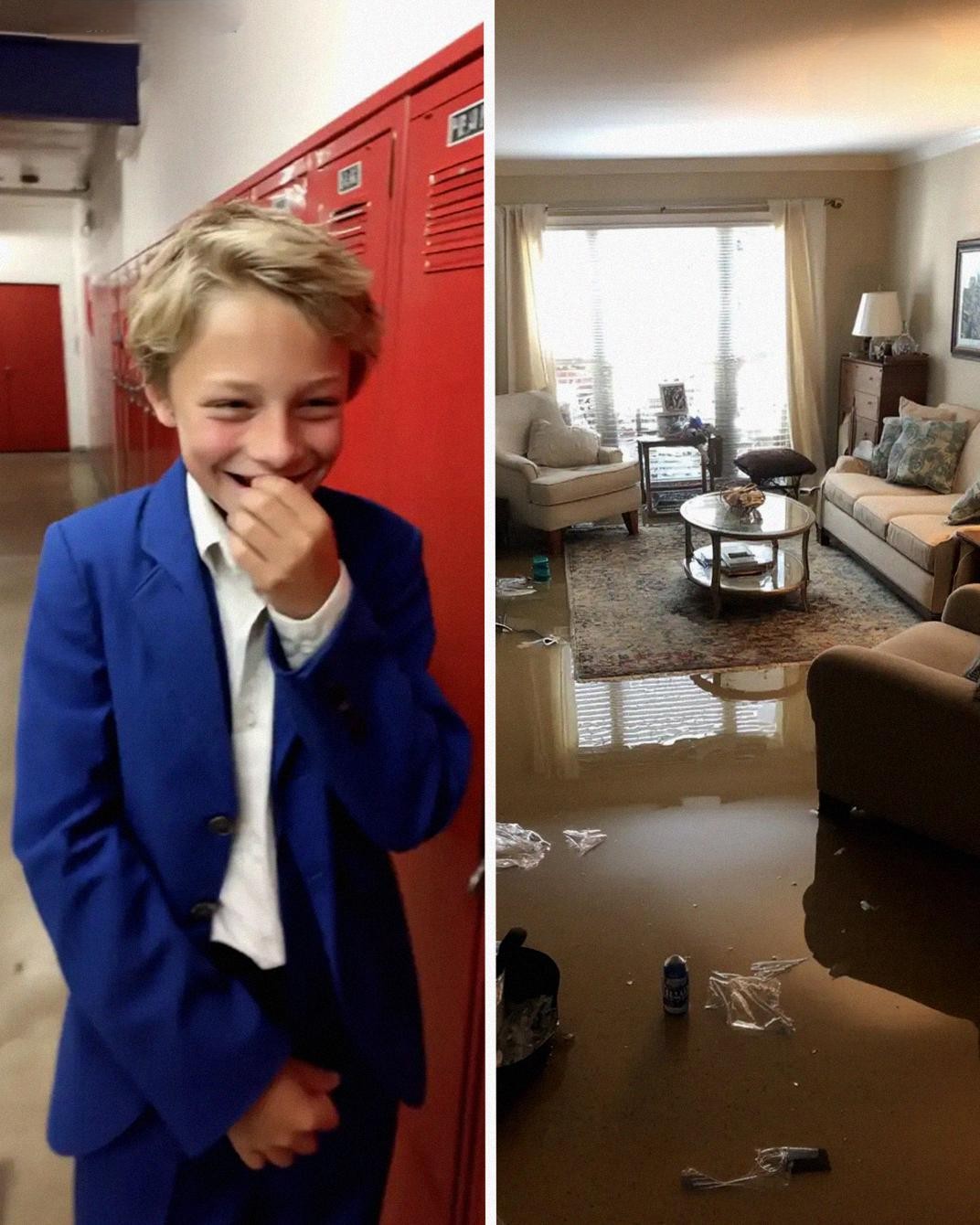
    We were gone for hours — roller coasters, overpriced lemonade, Rick melting down from sunburn — and stumbled into the house tired and ready to collapse. The moment my foot hit the living room floor, it splashed.

    Cold water. Everywhere. The carpet we had laid ourselves was soaked, boxes we hadn’t opened yet were ruined, and wallpaper bubbled like it was trying to peel itself off the wall.

    I ran to the guest bathroom. The toilet was overflowing relentlessly, the flush button jammed down, and inside the bowl was a swollen, half-dissolved mass of Play-Doh.

    My stomach dropped.

    The plumber came, shut off the water, unclogged the mess, and didn’t even try to sugarcoat it: someone had stuffed the Play-Doh in and forced it to flush nonstop. Hours of flooding. Thousands in damage.

    That night, we confronted them. I stayed calm as long as I could.

    “Tommy,” I said, “you were the last one in that bathroom.”

    His eyes filled with tears instantly. “It wasn’t me!”

    “The plumber found Play-Doh in the toilet.”

    Rick’s arms crossed. “Kids don’t always tell the truth. Maybe your plumbing was faulty.”

    Nick snapped. “Everything here is new. There was no issue until your kid went in there.”

    Nora didn’t budge. “We’re not paying you for your own home problems. We were guests.”

    “I’m asking for the plumber’s bill and part of the repair cost,” I said. “That’s it.”

    “Oh please,” she scoffed, grabbing her purse. “If your home floods this easily, that’s on you.”

    And they left. No apology. No accountability.

    For days, we pumped out water, peeled away ruined wallpaper, tossed out furniture we’d saved so long to buy, and tried not to come apart ourselves. The repairs were overwhelming. The betrayal was worse.

    A week later, Alice came home pale.

    “Mom… Tommy told kids at recess that he flooded our house on purpose.”

    My heart stopped.

    She swallowed. “He said his mom told him to because you ‘act better than them.’ He bragged about stuffing Play-Doh in the toilet.”

    It was like being slapped. I’d always known Nora had a petty streak, but this? Sabotaging our home out of spite?

    I didn’t explode. I didn’t call her. Instead, I told Alice calmly, “If he ever talks about it again and you feel safe, record it.”

    Two days later, she came home shaking. “Mom… I got it.”

    She handed me her phone. I pressed play.

    Tommy’s voice, arrogant and loud: “Yeah, I flooded their house. Stuffed Play-Doh in the toilet and held the button so it kept flushing. My mom said it’d be funny. She said Aunt Ashley thinks she’s better than us.”

    Laughter in the background.

    “Swear to God,” he said. “She told me right before we left.”

    I sat there, listening to it again and again, fury turning into something cold and steady.

    That night, I wrote a letter to Nora — short, calm, and final.

    Nora, I have a recording of Tommy admitting he flooded our house at your instruction. If you deny responsibility, I will file a lawsuit and subpoena the recording, photos of the damage, and the plumber’s report. Total amount owed: $22,000. Pay within five days or we handle this in court. —Ashley

    She called me screaming, claiming I threatened her child. I told her I’d see her in court. And I did.

    In the courtroom, the judge listened to the facts, the invoices, the photos. Then my attorney played the recording. Tommy slumped in his chair, and when the judge gently asked him what happened, he whispered the truth:

    “My mom told me to do it.”

    Nora tried to scold him into silence, but it was too late.

    The judge ruled in our favor. Full payment plus legal fees.

    Outside the courtroom, Nora hissed, “You think you won? You turned my son against me.”

    “No,” I said. “You did. I just stopped letting you lie about it.”

    Repairs took weeks, but the house finally returned to what it once was. Better, even — because now I knew exactly who belonged in it and who didn’t.

    We didn’t want revenge. We wanted honesty, respect, and a home safe from people who pretended to be family while actively undermining us.

    And sometimes the only way to cut out rot is to expose it to the light and let it die.

    Our house stands stronger now — and so do we.

  • SOTD – A Wedding Day That Healed Old Wounds!

    SOTD – A Wedding Day That Healed Old Wounds!

    On the morning of my daughter’s wedding, I woke up already carrying a knot of tension I’d been dragging around for more than ten years. Weddings are supposed to be soft, hopeful days where families set aside their nonsense long enough to celebrate something bigger than themselves. But I knew better than to expect that kind of miracle from my own history.

    I’d made one request—just one. I asked my ex-husband not to bring his wife. The same woman who had been woven into the unraveling of my marriage. The reason I’d spent years pulling myself back together. I didn’t yell, didn’t accuse, didn’t dredge up old wounds. I simply said it would be easier for me on a day already loaded with emotion.

    But when his car pulled up and he stepped out with her at his side—her manicured hand tucked around his arm like a trophy—I felt the old bitterness flare hot in my chest.

    “Where I go, my wife goes,” he said, as if it were something noble.

    For a moment, I forgot how to breathe. It wasn’t jealousy. It was the feeling of being dismissed, overridden, minimized—yet again. I forced a smile, said nothing, and told myself this day wasn’t about me or him or the wreckage we left behind. It was about my daughter. I swallowed every sharp retort and focused on keeping my voice calm whenever someone needed me.

    I made it almost to the ceremony. Almost.

    Twenty minutes before my daughter was supposed to walk down the aisle, a scream ripped through the building.

    My heart stopped. I ran.

    She stood there in the bridal suite, shaking, holding onto the remains of her bouquet. The floral tape had come undone. The petals were crushed into damp streaks on the floor. A section of lace near her hip was ripped. Her face was blotched from crying.

    Before I could even speak, she fell against me. “Mom,” she whispered, “I just want peace today. Please. I don’t care about the past. I don’t want fighting. I don’t want tension. I just want today to feel happy.”

    That was the moment everything inside me cracked. I’d spent a decade clutching anger like it was some sort of shield, convinced that letting go meant forgiving something unforgivable. But none of that mattered to her. She wasn’t carrying my resentment. She wasn’t interested in my battles. She just wanted a wedding. Her wedding. A day with no shadows.

    I held her while she cried, brushing her hair back, careful not to disturb her curls. And then something unexpected happened—something that knocked the wind out of me more than any argument ever could.

    My ex-husband’s wife stepped inside.

    Quietly. Slowly. Almost cautiously, like she was entering a sacred space.

    In her hands, she held a bouquet. My daughter’s bouquet—fixed. Reconstructed from spare flowers the décor team hadn’t used. The ribbon had been rewrapped, the stems retied, the crushed petals replaced.

    She didn’t explain. She didn’t apologize. She didn’t try to make herself look like a hero.

    She just held it out and said, “She deserves a beautiful day.”

    It wasn’t dramatic. It wasn’t dripping with guilt or justification. It was simple. Soft. Sincere.

    For years, I’d only seen her as the villain in my story. The woman who replaced me. The reason my marriage collapsed. I’d attached every insecurity, every heartbreak, every unanswered question to her face.

    But standing there, watching her quietly repair something broken—not for me, but for my daughter—I felt something shift. Not forgiveness, not instantly, but a loosening. A release. A realization that she hadn’t come to ruin anything. She was staying out of the way, respecting the moment, and doing her best to help when she saw a chance.

    I took the bouquet from her hands. “Thank you,” I said, and I meant it.

    She nodded once and stepped back, letting the moment belong to us.

    The ceremony began shortly after. When I saw my daughter walking down the aisle—dress repaired, bouquet restored, eyes clear and steady—I felt something in my chest unclench. She radiated joy. Real joy. Not the brittle kind people force when they’re pretending everything is fine. Real joy that came from knowing she was loved, protected, surrounded.

    At the reception, my ex-husband’s wife kept to the edges, blending into the background. She didn’t insert herself into photos, didn’t fight for attention, didn’t demand acknowledgment. She simply existed quietly, careful not to disturb anything.

    Later that evening, I approached her alone.

    “I want to thank you,” I told her. “Not just for the bouquet. For giving space today. For understanding what the day meant.”

    She didn’t smile triumphantly or make a self-satisfied remark. Instead, she looked surprised—almost relieved.

    “She’s your daughter,” she said. “This was your moment with her. I wasn’t going to take that.”

    It landed heavier than she probably meant it to. Because for years, I’d convinced myself that she wanted to take everything from me. But maybe she had never wanted that at all.

    Maybe I’d been carrying a story that wasn’t entirely true.

    When I watched my daughter dance later, laughing with her new husband, I realized something: letting go of bitterness doesn’t rewrite the past—it just stops it from choking the present.

    My daughter’s wedding didn’t magically heal everything, but it cracked open a door I’d slammed shut long ago. A door to something kinder, quieter, lighter.

    Sometimes we hold onto pain because we think it keeps us safe. But sometimes it just keeps us stuck.

    That day, I finally allowed myself to move.

    And somehow, in the middle of a wedding I thought might unravel, I found a version of peace I didn’t even know I was still searching for.

  • FEMA Boss Fired After Remarks To Congress!

    FEMA Boss Fired After Remarks To Congress!

    The storm outside Congress that morning wasn’t rain or wind — it was political. Cameron Hamilton, the newly ousted FEMA administrator, walked out of the Capitol building with the kind of stillness you only see in people who know they’ve just crossed a line they were never supposed to touch. Minutes earlier, he’d sat before a committee and said the one thing no one in the room wanted to hear: that dismantling or weakening FEMA would leave the country exposed in ways lawmakers refused to understand.

    Hamilton wasn’t a showman. He wasn’t a career politician polishing lines for the cameras. He was a field guy — the kind who’d spent years stepping through the ruins of burned towns and flooded neighborhoods long after the news vans packed up. He’d seen what a Category 5 looked like from ground zero. He’d stood on streets where the only thing left was the smell of smoke and the outlines of foundations that used to be homes. So when he warned Congress that gutting FEMA was “an existential threat to national safety,” he wasn’t defending his seat — he was stating a fact.

    But facts don’t always win.

    To his critics, Hamilton’s testimony was proof that he’d gone native, that he was clinging to an outdated, bloated agency that wasted money and played politics. They pointed to everything they could find to justify his removal: the controversial budget allocations under the previous administration, the reports claiming FEMA had funneled millions into hotel programs for undocumented immigrants, the narrative that American storm victims were getting crumbs while “outsiders” were living large on taxpayer dollars. Whether the claims were accurate didn’t matter. The story was too explosive, and the outrage had already been handed out like matches in a dry forest.

    Hours later, Hamilton was fired.

    He didn’t offer a dramatic speech. He didn’t lash out. He just nodded, accepted the decision, and walked out of the building he’d spent years trying to modernize. But the dismissal didn’t close the debate — it detonated it. Hamilton’s removal became a rallying cry for those who wanted FEMA gone entirely, absorbed into state agencies or dissolved into pieces. Their argument was simple: states know best, and Washington needed to step aside.

    But storms don’t care about state lines. Fire doesn’t stop at a border because the funding structure gets complicated. And Hamilton had spent half his career reminding people of that.

    The country was still reeling from disasters like Hurricane Helene — the kind of storm that rewrites maps and permanently reshapes coastlines. Entire regions were still rebuilding, roofs covered in blue tarps, neighborhoods full of families living in temporary trailers. The idea that local governments alone could cover the scale of destruction was fantasy. Some counties didn’t even have basic emergency teams, let alone the resources to coordinate massive relief efforts. FEMA existed to fill that gap — to mobilize planes, trucks, ships, soldiers, medical teams, money, shelter, and infrastructure at a scale no state could match.

    Hamilton’s warning to Congress hadn’t been a plea for job security. It was a blunt reminder that the country was walking into a future of megafires, inland hurricanes, 500-year floods happening every five years, and billion-dollar recovery operations happening so often they barely made national news anymore. Without a central coordinating body, disaster response would splinter into chaos.

    But that argument didn’t win the day.

    In the weeks following his firing, the political debate grew meaner. Some leaders insisted FEMA was hopelessly compromised, sabotaged by inefficiency and loaded with bad actors loyal to the previous administration. Others argued the opposite — that FEMA had been one of the last functioning federal systems holding the country together during its worst moments. Videos of Hamilton’s testimony circulated online, spliced between clips of devastated towns and angry citizens demanding accountability.

    One moment from that hearing kept resurfacing: Hamilton leaning into the microphone, his voice steady but tired. “When a wildfire jumps a ridge into the next county, or a hurricane wipes out three states in a night, local officials do not have the manpower or money to coordinate a response. They call us. Not because they like us. Not because they trust Washington. But because they have no one else who can mobilize what we can mobilize in hours. Remove FEMA, weaken FEMA, or starve FEMA, and you are removing the last nationwide safety net we have.”

    He paused. “And disasters are only getting bigger.”

    His critics called it fear-mongering. But to the mayors, firefighters, and emergency workers who’d dealt with Helene, it sounded like truth.

    Behind the scenes, FEMA staff scrambled to continue their work amid political uncertainty. Recovery teams in Helene’s impact zone were suddenly dealing with new rules, stalled funds, and a wave of confusion from families desperate for assistance that froze in bureaucratic limbo. State agencies tried to step in, but they were patching holes in a sinking ship.

    Hamilton stayed quiet publicly, but insiders said he was still advising local emergency teams unofficially. He didn’t campaign for sympathy. He didn’t run to the press to settle scores. He simply kept doing what he always did — helping the people on the ground who were drowning in problems bigger than their zip code.

    Meanwhile, lawmakers celebrated his removal as a victory against “big-government waste” and promised a leaner, state-driven approach to disasters. But as experts pointed out, cutting or decentralizing FEMA didn’t mean smaller government — it meant slower response times, fractured operations, and a return to the days when disaster relief depended on political favors and back-channel requests.

    Hamilton’s firing became a symbol of a deeper tension: the battle between ideology and reality. In theory, removing federal oversight gives states more autonomy. In practice, it leaves them alone against natural events that don’t negotiate, don’t shrink, and don’t care which party controls the budget.

    The next major disaster will be the real test. When the next massive storm barrels up the coast, or a wildfire tears through another region, or floodwaters swallow a town overnight, someone will have to answer the same question Hamilton asked in that hearing: who steps in when the scale is too big for anyone else?

    By firing him, the administration didn’t resolve the FEMA fight. It threw everyone into deeper uncertainty and raised the stakes for the next catastrophe — the one already forming somewhere out of sight, as all disasters do, waiting for its moment.

  • Prince Harry mocks Trump with brutal joke!

    Prince Harry mocks Trump with brutal joke!

    Prince Harry’s appearance on The Late Show had been booked as a harmless PR stop—banter, a few anecdotes, maybe a joke about California life. Nothing more. At least, that’s what the producers thought. But Harry had walked into the studio carrying something heavier than talking points. He’d been stewing for weeks, watching headlines pile up—rumors about his visa, thinly veiled threats tossed his way by politicians, and Trump’s casual mention that Harry “wouldn’t get protection” if leadership changed. It irritated him more than he cared to admit.

    So when Stephen Colbert launched into a playful bit about America’s obsession with the British royal family—crowns, palaces, pomp—Harry saw the opening. Colbert grinned at him. The audience leaned in. Harry raised his eyebrows, just enough. “Obsessed with royalty, are you?” Colbert teased.

    Harry let a beat stretch. Then he dropped the line with surgical precision:
    “Really? I heard you elected a king.”

    The joke detonated instantly. A roar shot through the room—not laughter, but a wave of boos mixed with gasps, sharp enough to slice the air. Colbert froze, then forced a smile as the audience adjusted to what had just happened.

    Harry sat back in his chair, unbothered. The look on his face wasn’t smug, but it was unmistakably deliberate. He hadn’t misspoken. He hadn’t stumbled into controversy. He had walked straight toward it.

    And that was the moment everything shifted.

    Because Harry wasn’t just poking fun at Donald Trump. He was stepping into the center of a fight that had been brewing ever since he and Meghan moved to the United States—a fight he’d previously dodged with polished diplomacy. But the walls had been closing in on him. Rumors about his immigration paperwork. Op-eds hinting he could be deported. Commentators calling him an ingrate. The former president himself claiming that Harry would not be granted protection under his administration.

    Harry had been quiet through all of it. But silence has limits.

    The audience reaction made something undeniable: people weren’t treating this like a celebrity quip. They heard a political attack—sharp, intentional, unmistakable. And no matter how many times Harry repeated that he was “no longer a working royal,” America wasn’t going to view him as an ordinary private citizen. Not after that line.

    Backstage, after the taping, the show’s staff buzzed like shaken hornets. A producer approached Harry cautiously.

    “You know that moment’s going viral in five minutes, right?”

    Harry shrugged. “So be it.”

    Because somewhere along the way, he’d grown tired of letting other people narrate his life. He was tired of watching his family dragged through the mud while he tried to take the high road. Trump had mocked him, mocked his wife, called him weak, suggested he should “pay for his own security like everyone else.” Harry had held his tongue then too.

    But a man can only swallow so much before he decides to spit something back.

    Within hours, Harry’s joke was everywhere—spliced into political commentary, late-night monologues, and social media debates. Supporters called it bold. Critics called it reckless. Royal watchers said it was a mistake. Political strategists called it foolish for someone who had chosen to build a life in the U.S.

    Trump’s team responded almost immediately, accusing Harry of ingratitude, disrespect, and “interfering in American political discourse.” Some went further, warning that if Trump returned to power, Harry’s “future in the United States would be reconsidered.” A not-so-subtle threat.

    If Harry had hoped the moment would blow over, he was disappointed.

    But privately, he didn’t regret it.

    Meghan, however, had questions.

    “You knew what you were doing,” she said that night, closing her laptop after seeing the headlines. “That wasn’t your usual humor.”

    Harry leaned against the counter, arms folded. “He’s threatened our safety. He’s mocked our marriage. He’s used us as props. At some point, I get to answer.”

    She studied him—really studied him. “I just want you to be sure this isn’t a fight that pulls us somewhere we can’t control.”

    Harry appreciated the concern, but he’d been living under the illusion of control for too long. He understood exactly what he’d done. He had stepped into the arena, knowingly, willingly, and he didn’t plan on backpedaling.

    Across the Atlantic, the reaction was just as intense. British tabloids called it embarrassing—yet beneath the noise, there was an odd satisfaction among some: Harry had finally shown sharpness, wit, spine. Cynics said he’d simply traded Palace politics for American ones. Loyalists said he should have stayed out of it entirely.

    But the truth—one only Meghan understood—was that Harry had never been indifferent to power. He’d grown up studying it, navigating it, suffering under it when the press turned cruel. He knew the cost of speaking out. He also knew the cost of staying silent.

    By the next morning, his words were being replayed on cable news in an endless loop. Commentators debated the implications: Should a British royal—working or not—mock a former U.S. president? Was it wise for a man currently living in California, raising American children, to provoke a possible future administration? Would this jeopardize his immigration status?

    None of that rattled Harry.

    What rattled him was realizing how quickly people expected him to back down. Expected him to apologize. Expected him to behave like the dutiful prince he had spent his life trying to outrun.

    He had become something else entirely—an exile, yes, but also a man with agency. A man who no longer lived under the crown, and therefore no longer owed deference to anyone.

    Trump, meanwhile, was sharpening his own sword. Within days, he brought up Harry’s remark at a rally, calling it “deeply disrespectful” and hinting—again—that “certain individuals abusing America’s generosity” would be “handled appropriately.”

    Harry wasn’t shocked. Trump did what Trump did. And Harry, for once, had done what Harry wanted to do.

    By the end of the week, one thing was clear: the line hadn’t been a joke. It had been a warning shot. A declaration. A line in the sand.

    Harry had stepped directly into the American political storm—not as a royal, not as a celebrity, but as a man who refused to be pushed around by power, no matter how loud it roared.

    Whether people saw him as brave, reckless, or foolish didn’t matter.

    He finally felt honest.

    And for the first time in a long time, Harry wasn’t running from a fight.

    He was choosing it.