Blog

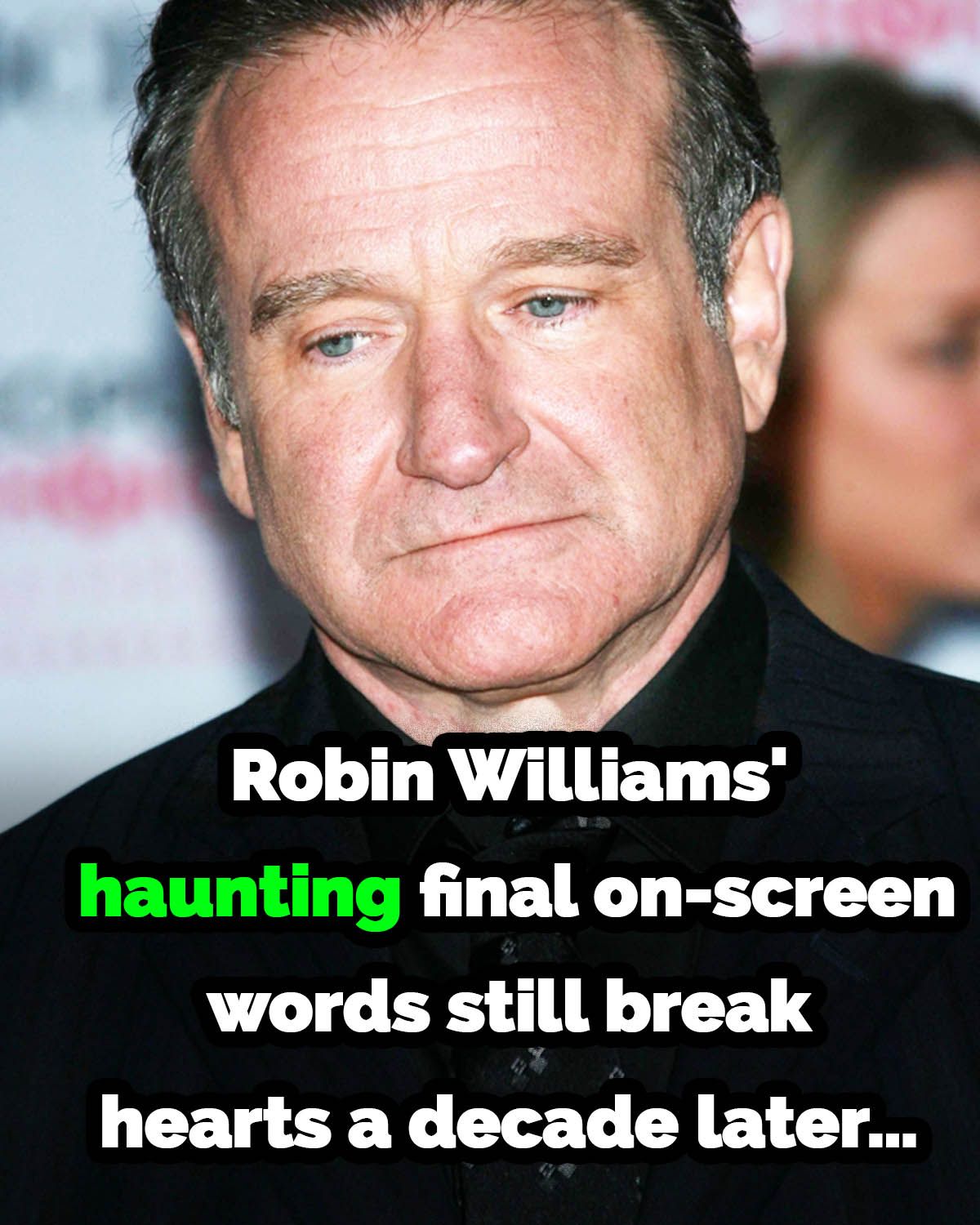
  • Robin Williams’ death in 2014 hit the world like a punch to the gut.

    Robin Williams’ death in 2014 hit the world like a punch to the gut.

    Robin Williams’ death in 2014 hit the world like a punch to the gut. For decades, he’d been the electric force behind some of the most memorable films ever made — Good Will Hunting, Dead Poets Society, Mrs. Doubtfire, Aladdin, the list goes on.

    He had that rare spark, the kind that felt endless and effortless. On screen, he was unstoppable. Off screen, he was warm, deeply thoughtful, and painfully human. So when news broke in August 2014 that he had taken his own life, it felt impossible. How could someone so full of light reach a place that dark?

    At first, people speculated — depression, addiction, burnout. The usual explanations tossed around when the public tries to make sense of tragedy. But the truth turned out to be far more complex, and far more devastating. After his autopsy, doctors discovered that he had been battling severe Lewy body dementia — an aggressive, destructive neurological disease that he never knew he had. His wife, Susan Schneider Williams, later shared what the doctors told her: his brain was full of Lewy bodies. Every region was being impacted.

    She said she didn’t even know what Lewy bodies were until they explained it, but once she understood, everything clicked. The confusion. The anxiety. The strange cognitive symptoms. The fear he couldn’t articulate. “The fact that something had infiltrated every part of my husband’s brain? That made perfect sense,” she said in an interview years later.

    Lewy body dementia is brutal. The National Institute on Aging describes it as a condition that affects thinking, movement, mood, and behavior — and it progresses fast. Dr. Bruce Miller, a leading neurologist at UCSF, said Williams’ case was one of the most aggressive he had ever seen. He even admitted he was amazed that the actor had managed to function at all. The man who had lifted millions with his humor was quietly fighting a war inside his own brain.

    In the HBO documentary Come Inside My Mind, there’s a moment that now feels chillingly prophetic. An old interview clip shows Robin being asked about his fears. He answers honestly: “I guess I fear my consciousness becoming, not just dull, but a rock. I couldn’t spark.” That line hits hard now. His internal spark — the quick wit, the mental fireworks — was exactly what the disease was attacking. And he felt it happening.

    Susan later said Robin used to tell her, “I just want to reboot my brain.” He knew something was wrong. He just had no idea how bad it was. She promised him they’d get to the bottom of it, not knowing the truth would only come after his death.

    For fans, one detail that continues to echo is his final onscreen line. Many assumed his last film moment was as Teddy Roosevelt in Night at the Museum: Secret of the Tomb, where he delivers the gentle, uplifting line: “Smile, my boy. It’s sunrise.” Given the circumstances, the line feels poetic, almost like a farewell. But that wasn’t actually his last piece of dialogue.

    His final live-action performance came in the film Boulevard, released after his death. His last line there is far more haunting — and far more revealing in hindsight. As reported by Parade, fans have called the words “hauntingly beautiful,” because they seem to unintentionally mirror the way his life ended.

    The line was simple: “I drove down a street one night. A street I didn’t know. It’s the way your life goes sometimes. I’ll drive down this one and another. And now, another.”

    Looking at it now, it feels like a man reflecting on paths, choices, and the places life forces you to go. It feels heavy — maybe too heavy — because once you know the truth about his illness, those words sound like someone who had been navigating unfamiliar mental territory for far too long.

    In interviews after his death, Susan Schneider Williams has worked relentlessly to bring awareness to Lewy body dementia. She’s spoken about how misunderstood it is, how often it gets misdiagnosed, and how families feel helpless watching their loved one change in ways they can’t explain. She said she wished the world understood that Robin wasn’t himself, not because he didn’t love life anymore, but because the disease took away the part of him that made life liveable.

    Lewy body dementia doesn’t just attack memory — it scrambles perception, disrupts thinking, and creates terrifying hallucinations. It strips away the ability to reason or trust your own mind. It is one of the cruelest neurological disorders there is. And Robin Williams had one of the worst cases doctors had ever seen.

    But Robin Williams wasn’t the disease. He wasn’t the tragedy. He wasn’t the heartbreaking ending. He was the joy he created. He was the unreal talent, the relentless kindness, the spark that lit up every room he walked into. He was the reason millions of people felt less alone. He was the voice that comforted children, the performer who could improvise entire scenes in one breath, the man who gave everything he had to make other people feel something.

    His work lives on because it came from a place of authenticity — a rare thing in entertainment. He didn’t perform to impress; he performed to connect. And that connection still holds.

    Fans still talk about him like he’s a friend they lost too soon. Clips of his interviews still make the rounds online. His best scenes still get shared by people who need a laugh or a lift. His legacy is not tragedy — it’s impact.

    And even though his last onscreen words weren’t intended as a message, they feel like one. Life is a series of streets we don’t always recognize, paths we didn’t expect to take. Some bright. Some dark. Some we choose. Some we never would have chosen. But we move forward anyway, one street after another.

    If you or someone you know is struggling, help exists. Call or text 988. Someone will answer. Someone will listen.

    Robin Williams may be walking down a different street now, but the world hasn’t forgotten him — not the man, not the art, not the heart.

    He made people feel. That’s the kind of immortality most artists only dream of.

    AndrewTate

  • A Secret Profile, a Silent Plan, and a New Beginning

    A Secret Profile, a Silent Plan, and a New Beginning

    I discovered my husband is on a dating site. I made a fake profile and flirted. He said,

    “My wife is dead. I’m looking for love!” I fell apart but didn’t confront him, I decided to plan my divorce quietly.

    But days later, I froze when he came and said, “You will never believe what happened today.” His voice was calm, almost too calm, but I stayed silent, waiting to see what he would reveal without giving away what I already knew.

    He sat beside me and explained that a coworker had warned him about scams and fake profiles online.

    He claimed he had made an account “out of curiosity,” insisting it was nothing serious.

    Hearing him speak, I realized he believed his own version of events, shaping the truth into something far less harmful than what he was really doing.

    I listened, not out of trust, but because I wanted to understand the person I had been married to for years — someone who clearly no longer respected the life we had built together.

    Over the next few days, I watched him with new eyes. His excuses, his sudden bursts of charm, and his unusual interest in his appearance all made sense

    . I stopped blaming myself and started thinking about my future. Instead of confronting him with anger,

    I began gathering my documents, securing my finances, and preparing to leave with dignity.

    Every quiet step I took felt like reclaiming a part of myself that I had ignored for too long.

    When I finally told him I wanted a divorce, he looked shocked, insisting he had done nothing wrong.

    But by then, I had made peace with my decision. I didn’t need apologies or explanations.

    I needed a fresh start — one built on honesty, respect, and self-worth. Walking away wasn’t easy, but it was the moment I chose myself, and that choice changed everything.

  • MOM AND DAD GAVE MY SISTER $100K FOR A HOME AND TOLD ME ONLY: “YOU’RE A FAILURE.” SO I CUT CONTACT. TWO YEARS LATER, MY SISTER DROVE BY MY PLACE AND CALLED DAD YELLING: “YOU NEED…”

    MOM AND DAD GAVE MY SISTER $100K FOR A HOME AND TOLD ME ONLY: “YOU’RE A FAILURE.” SO I CUT CONTACT. TWO YEARS LATER, MY SISTER DROVE BY MY PLACE AND CALLED DAD YELLING: “YOU NEED…”

    The House That Wasn’t Mine
    I was twenty-six when my parents told me I was the family failure.

    The words landed with practiced precision, like they’d rehearsed them long before that night.
    We were sitting around the old oak table — the same one that had witnessed every argument, every fragile truce. The overhead light buzzed softly. The smell of my mother’s meatloaf — once my childhood comfort — now turned my stomach.

    On the iPad screen in front of us, my sister Veronica smiled from her San Francisco apartment. Her hair perfect, her voice bright. Behind her, her fiancé laughed at something she’d said — a laugh that sounded like ease, like approval.

    Then came her announcement.
    “Marcus and I found a house in Marin County. It’s perfect — three bedrooms, garden, great schools. We just need a little help with the down payment.”
    She said it like she was asking for extra salt.
    “A hundred thousand should make it comfortable.”

    My father turned to my mother. They exchanged a look that said everything before a word was spoken.
    Then he said it: “Consider it done. We’ll wire it tomorrow.”

    The fork slipped from my hand.
    “You’re giving her a hundred thousand dollars?”

    Mom didn’t flinch. “We’re investing in her future.”

    “And I wasn’t worth an investment?”

    Dad’s eyes — gray and hard as metal — fixed on me.
    “You’ve accomplished nothing, Lina. Veronica’s earned our trust. You’re still… trying to figure things out.”

    There it was — the verdict, clean and final.

    I stood, trembling but clear.
    “Okay,” I said.

    Mom’s voice rose. “Sit down. We’re not done with dinner.”
    “I am,” I said, and walked out into the cold night air.

    That was the last time I saw them for two years.

    The Anatomy of Neglect
    Being the second daughter in the Martinez family meant growing up in someone else’s afterglow.
    Veronica — the golden one — walked early, spoke early, shone early.
    Dad filmed her volleyball games like she was destined for the Olympics.

    I drew instead — sketches, charcoal smudges, late nights bent over art club projects. Mom forgot to pick me up so often that Mrs. Chin, my art teacher, started driving me home herself.

    When Veronica turned sixteen, she got a new Honda Civic.
    For my birthday, it was Applebee’s and a fifty-dollar gift card.
    “Be grateful we remembered,” Mom said, half-laughing.

    It was always the same script: her triumphs, my invisibility.

    College made it official. Veronica → UCLA, full family send-off. Me → a state college three hours away.
    When I told them I’d been accepted, Dad didn’t even look up from his plate.
    “We’re not paying for that,” he said.

    “But you paid for Veronica!”
    “She earned UCLA. You picked the easy route.”

    “It’s still college,” I whispered.
    He looked at me, calm and cutting.
    “Veronica’s going places. You’re not.”

    So I signed every loan myself. Worked two jobs. Graduated with honors no one noticed.

    When pneumonia flattened me sophomore year, Dad said, “That’s what happens when you overextend.” Mom asked if I’d been taking vitamins.

    Mrs. Chin sent soup and a $500 check.
    Her note said, Not a loan. An investment in your future.
    I cried harder than I had from any fever.

    That day, I understood what family really meant.

    Learning to Survive
    Freelancing started as necessity, not choice.
    Clients disappeared mid-project. Payments came late — or not at all.
    I designed logos on my phone when my laptop broke.
    Every dinner with my parents was an autopsy of my “poor decisions.”

    But eventually, something hardened — not bitterness, but backbone.
    I stopped apologizing for my path.
    Stopped saying “just freelance.”
    Confidence became armor. And somewhere between pretending and persisting, it became real.

    The Break and the Rebuild
    After that dinner — the $100,000 dinner — I vanished.
    No calls. No birthdays. No guilt.

    At first, the silence felt wrong, like missing a limb. Then it started to feel like oxygen.

    When holidays came, I stayed home. Ate Thai takeout.
    When the guilt calls came, I pressed delete.

    I spent Thanksgiving with the Chins instead.
    Mrs. Chin told me stories about starting over in a new country with nothing but courage.
    “This,” I told her, “feels like family.”
    She smiled. “It is family. Yours was just misplaced.”

    So I poured my hurt into work.
    Learned UX design, motion graphics, brand strategy.
    Got hired full-time. Built savings.

    Patricia — now Mrs. Chin to everyone but me — helped me invest, plan, dream.

    My apartment was small but mine.
    Walls the color of clay and sunrise. My own art on every one.

    For the first time in my life, the space around me whispered, Home.

    Forty Acres of Solace
    When success finally came, it arrived quietly — like morning light slipping under a door.

    I bought forty acres in Sonoma County. Rolling hills. A creek. Oaks that looked like they’d seen centuries.
    The farmhouse was falling apart, but I saw what it could be.

    Weekends became labor. Sandpaper, paint, grit.
    When it was done, the light fell across the new floors like grace.

    The land wanted purpose. Lavender answered.

    Five acres at first, then bees, then goats.
    I named the farm Solace Ridge.

    The first harvest nearly broke me, but it healed something deeper.

    The Call from Nowhere
    It was a hot afternoon when my phone buzzed. Unknown number.
    Instinct told me to ignore it.
    Habit made me answer.

    “Lina,” my father’s voice said, brittle and unfamiliar, “we need to talk.”

    My chest tightened. “No, we really don’t.”

    He hesitated. “Your sister saw your place. Forty acres. A house. A business. Is that you?”

    I looked outside at the purple rows shimmering in the sun. “Why would that matter to you?”

    “She says it’s worth over two million,” he murmured. “How?”

    “Hard work,” I said. “The kind you said I wasn’t capable of.”

    Mom’s voice came faintly in the background. “Ask her if we can visit.”

    “No,” I said.

    “You can’t shut us out forever!” Dad snapped.

    “You did that yourselves.”

    Then Veronica’s voice — soft, guilty — “I’m sorry. I didn’t know.”
    “Yes, you did,” I said. “You just liked being the favorite.”

    The silence stretched.

    Finally, I said, “I built this life without you. And I’m keeping it that way.”
    Then I hung up.

    The Check
    Months later, a package arrived.
    Inside: a check for $100,000.
    And a note.

    We should have given you this for college. We’re sorry.

    It was the exact number that had once divided our family.

    It could have built me a store, cleared my debts, changed my business.

    Instead, I tore it to pieces.
    Sent it back with one line: You can’t buy forgiveness.

    Dr. Singh asked me later how it felt.
    “Expensive,” I said. “But right.”

    The Gate
    The next month, my father came himself.
    I watched his SUV crawl up the gravel road on my camera feed.
    He stood at the gate — smaller now, older, softer.

    “Lina, please. Five minutes.”

    “You had twenty-six years.”

    His voice broke. “I was wrong.”

    “I know,” I said. “And I forgive you. But forgiveness isn’t reunion. It’s release.”

    He nodded slowly. “I see.”
    And for once, I think he did.

    He turned, walked back to the car, and left.
    The gate stayed closed. So did I.

    The Harvest of Peace
    The next season bloomed brighter than any before.
    Revenue doubled. The farm thrived.
    Emma came back from college, grateful, glowing.
    “You changed my life,” she said.
    “No,” I told her. “You changed your own. I just gave you soil.”

    Chris and I built a guesthouse by the creek. He said, “You built all this from failure.”
    “Failure’s just compost,” I laughed. “Look what it grows.”

    The Visit
    They came again, one autumn morning.
    My parents. Veronica. Standing at the edge of the lavender rows, smaller than I remembered.

    “We’re proud of you,” Mom said softly.
    “You’re proud of the result,” I replied. “Not the journey.”

    Dad looked down. “We thought we were teaching you strength.”
    “You were teaching me absence,” I said. “I learned strength on my own.”

    When they asked to stay, I shook my head.
    “This is my sanctuary,” I said. “You’re not welcome here.”

    Chris found me afterward, eyes steady. “You okay?”
    “I’m free,” I said — and meant it.

    Full Circle
    Solace Ridge thrived.
    The lavender fields hummed with bees.
    Our wedding took place among the rows — guests tossing dried lavender instead of rice, the air fragrant with forgiveness and sunlight.

    Sometimes people ask if I ever speak to my family again.
    “No,” I say. “And that’s peace, not punishment.”

    They gave Veronica a hundred thousand dollars and called it an investment.
    They gave me nothing and called it tough love.
    But what they really gave me was the hunger to build something of my own — a life rooted in dignity, not approval.

    Now, when I walk through the lavender at dusk, the valley gold and quiet, I feel it — that stillness that once seemed impossible.

    I am exactly where I’m meant to be.
    This is my inheritance.
    This is my victory.

    Not proving them wrong —
    but proving myself right.

  • Beloved TV Star from a Classic Series Shows a Fresh Look at 68

    Beloved TV Star from a Classic Series Shows a Fresh Look at 68

    Many television fans from the ’90s and early 2000s remember an actor whose presence on screen was both memorable and engaging.

    Early in his career, he appeared in small film and TV roles that highlighted his natural intensity and distinctive style.

    Audiences quickly took notice of his talent, even before he secured the role that would change everything.

    His early performances set the foundation for a career marked by dedication, authenticity, and a unique on-screen charm.

    These beginnings helped him build a strong reputation long before fame arrived.

    His major breakthrough came when he was cast as a detective in an innovative police drama during the early 1990s.

    The series became a major success, praised by critics and loved by viewers across the country.

    His portrayal of a sharp, thoughtful investigator earned him widespread recognition and industry awards.

    After one season, he made the unexpected choice to leave the show due to creative and professional disagreements. Although the decision brought challenges, it ultimately shaped the next chapter of his career.

    Following this transition, he appeared in several film projects that didn’t reach the success many had hoped for, which made the period especially difficult. However, his persistence paid off when he returned to television in the early 2000s with a leading role in a hit crime-themed series.

    His character, known for a calm confidence and memorable catchphrases, became incredibly popular and helped define the show’s identity. The series remained on air for ten years,

    allowing him to connect with millions of viewers and reestablish his status as a television favorite. This long-running success became one of the most significant highlights of his career.

    David Caruso, born in 1956 in Queens, New York, has naturally changed in appearance since his peak television years, as all actors do over time. After stepping away from acting, he chose a quieter and more private lifestyle, focusing on personal interests outside the spotlight.

    Despite his absence from television, fans continue to appreciate the work he left behind.

    His career journey—from early struggles to a major comeback—remains a source of inspiration. Today, Caruso is remembered as a gifted performer whose contributions left a lasting mark on television history.

  • The Christmas Gift That Taught Me the True Meaning of Giving

    The Christmas Gift That Taught Me the True Meaning of Giving

    When I was eight, my class held a Christmas gift exchange, and everyone was excited.

    My family didn’t have much at the time, so buying a present wasn’t possible.

    Wanting to participate, I wrapped one of my dad’s old books in reused paper.

    I hoped my classmate would still appreciate the thought behind it. Her gift to me, however, was the newest Barbie doll of the season.

    When she opened my gift, her eyes filled with tears, and I felt embarrassed, thinking I had disappointed her.

    I didn’t know how to explain our situation without making anyone uncomfortable.

    The next day, her mother arrived at school looking calm but serious.

    She gently asked to speak with me in the hallway. My heart pounded as I wondered whether I had done something wrong.

    Instead, her mom knelt down and smiled warmly.

    She told me her daughter had cried not because she disliked my gift, but because she realized how much heart I had put into it.

    She explained that the book once belonged to someone I cared about, which made it more meaningful than any store-bought toy.

    Hearing that lifted a weight from my shoulders. I never expected that my small gesture would touch someone else that deeply.

    A week later, my classmate gave me a handwritten note saying my gift taught her the true spirit of giving.

    She wrote that kindness mattered more than price tags, and that she felt lucky to receive something with a story behind it.

    I kept that note for years because it reminded me of a beautiful lesson. Sometimes the simplest gifts carry the most love.

    And sometimes, what we give from the heart becomes a memory someone treasures forever.

  • The Hidden Stories Behind Shoes Hanging Above the Streets

    The Hidden Stories Behind Shoes Hanging Above the Streets

    The sight of shoes hanging from power lines is a familiar yet mysterious part of many neighborhoods.

    What may appear to be a playful or random act often carries cultural, social, or symbolic meaning

    . Through the years, this simple image has sparked curiosity and conversation among people of all ages.

    Some see it as a quirky urban tradition, while others view it as a form of personal expression. No matter the interpretation, it remains a fascinating feature of city life.

    The origins of this practice are unclear, with different communities offering their own stories. Some believe it began with students or friends marking an important milestone, such as finishing school or celebrating a special moment.

    Others think it may have started as a way to honor memories or recognize meaningful transitions. Over time, these stories created a sense of mystery and folklore. The shoes became symbols of change, growth, and letting go.

    In modern times, shoes on power lines appear for many reasons, including jokes among friends, celebrations, or even artistic expression.

    Some popular myths try to attach more serious meanings, but these interpretations are usually based on rumors rather than fact.

    What remains certain is that utilities discourage the practice because it can place stress on wires and create safety concerns.

    For this reason, many cities remove the shoes to protect both residents and workers.

    Safety and care for public spaces remain important priorities.

    In the end, this simple act reflects the creativity and diversity found in urban communities.

    Shoes hanging above the streets remind us that everyday objects can carry stories, traditions, and emotions.

    They invite people to look closer at the places they live and appreciate the layers of meaning within them.

    By understanding the many interpretations behind the shoes, we become more connected to our surroundings.

    It is a small reminder that every neighborhood holds a story waiting to be discovered.

  • How Helping a Stranger Transformed Our Perspective

    How Helping a Stranger Transformed Our Perspective

    My family has always been small, just me and my son, learning our way through life together.

    He’s grown up watching me work hard, and though he sometimes challenges me, I know he has a good heart.

    One afternoon, he quietly helped an elderly man at the grocery store who couldn’t see the total on the screen.

    My son paid for the man’s items without expecting thanks or attention. He never even mentioned it when he came home.

    The next morning, everything felt surprisingly calm until I heard several car doors close outside.

    When I opened the front door, I saw a group of neatly dressed people standing politely by a row of black SUVs. One of them gently held out a photo of my son and asked if he lived here. I nodded, unsure of what was happening or why they had come.

    Their expressions, however, were warm and reassuring.

    They explained that the elderly man my son had helped was actually a well-known philanthropist who preferred to remain private. He wanted to meet the young person who showed kindness without seeking recognition.

    The group invited us to a community center he supported, where programs helped families in need.

    My son listened quietly, realizing that his small act had inspired something unexpectedly wonderful. I could see pride slowly replace his usual restlessness.

    Later that afternoon, my son met the elderly gentleman, who thanked him with a heartfelt smile.

    He shared stories of how simple kindness can brighten lives in ways we may never see.

    My son promised to keep helping others whenever he could, even in small moments.

    As we returned home, he walked beside me a little taller than before. And I realized that sometimes, the greatest change begins with one quiet, genuine act of care.

  • A Thanksgiving Mix-Up That Taught Me Something Important

    A Thanksgiving Mix-Up That Taught Me Something Important

    My husband and I had spent days preparing to host both sides of our family for Thanksgiving.

    The evening was lively and full of warm conversations and homemade dishes.

    When the last guests left, I saw that the table had been completely cleared.

    Assuming my mother-in-law had kindly taken care of the cleanup, I felt relieved. I went to bed believing everything was settled.

    The next morning, I walked into the kitchen ready to enjoy some leftovers.

    When I opened the fridge, I noticed every container was empty and stacked neatly. Not a single piece of food from the night before was left.

    Confused, I wondered how everything had disappeared so quickly. My husband and I couldn’t figure out what had happened.

    Later, we called my mother-in-law just to check in. She happily explained that she had packed up all the food to share with the guests as they left.

    Each family believed the leftovers were meant for them, so they took them home gratefully.

    Her intention was not to take anything away from us but to make sure nothing went to waste.

    Hearing this helped us understand the situation clearly.

    In the end, the moment became a reminder of how important clear communication is.

    What first felt disappointing turned into a gentle lesson about different ways people show care.

    We chose not to hold onto frustration and instead appreciated her thoughtfulness. The next Thanksgiving, we planned ahead and labeled the leftovers for everyone.

    That simple change brought more harmony and understanding to our family gatherings.

  • I Refused to Take My Stepdaughter on Vacation — Then I Saw What She Did at 5 AM

    I Refused to Take My Stepdaughter on Vacation — Then I Saw What She Did at 5 AM

    My husband and I have kids from ex marriages. His daughter Lena, 15, struggles in school. Bad grades, no drive.

    Mine, Sophie, 16, is a top student. We planned a beach vacation. I said,

    ‘Lena stays home with tutors, she hadn’t earned the trip.’ My husband nodded.

    Next day, to our shock, we saw that Lena was already awake at 5 AM, sitting at the kitchen table surrounded by notebooks and textbooks — eyes red but determined.

    She jumped when she saw us and quickly shut her book as if ashamed. Before I could say anything, she whispered,

    “I know I’m not like Sophie… but I really want to go. I’ve been trying. I just don’t get things as fast.” There was no anger in her voice — just quiet disappointment in herself.

    That moment hit me hard. I had been measuring worth through performance, not effort or emotional struggle. Sophie later told me Lena had asked her for help the previous night and they studied together until 1 AM.

    Over the next few days, Lena didn’t stop. She studied with Sophie, attended tutoring willingly, even asked me if I could quiz her. The house felt different — lighter, hopeful.

    When her next test results came in, she didn’t ace it, but she passed for the first time in months. When she showed us the paper, her hands trembled like she was bracing herself for indifference or judgment.

    Instead, I hugged her.

    “You earned more than a trip,” I said. “You earned a chance… to believe in yourself again.”

    She cried quietly into my shoulder, and in that moment, I realized this wasn’t about grades or vacations.

    It was about a child who never felt like she belonged, now finally fighting to prove she did. We took the vacation as a family of four — not the “successful daughter and the struggling one,”

    but as two parents with two girls, each on her own journey. On the last night of the trip, Lena looked at the ocean and said softly, “I’m going to keep trying. Not for a trip… just for me.” That was the real victory.

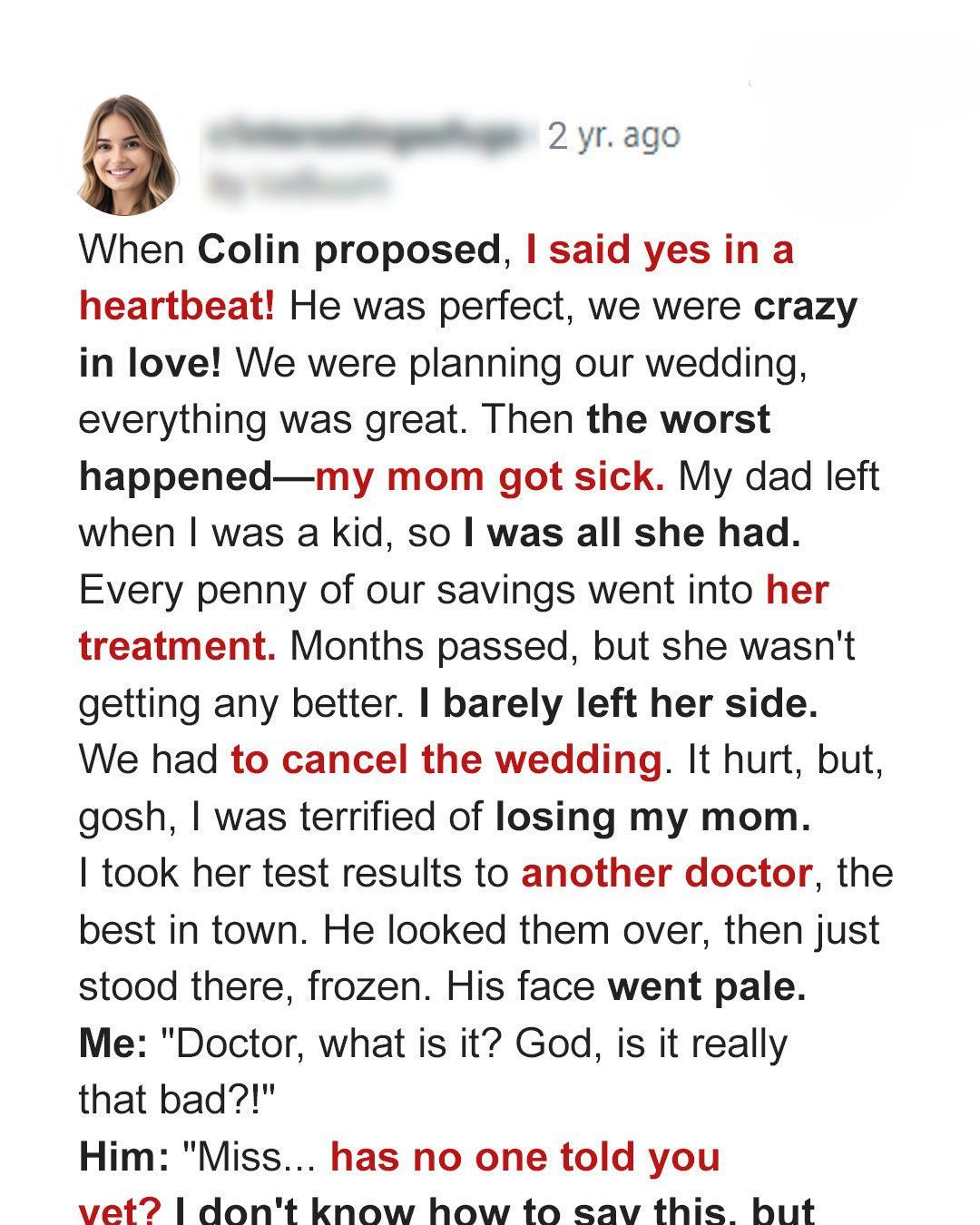
  • I Cancelled My Wedding to Save My Mom — What the Doctor Said Next Changed Everything

    I Cancelled My Wedding to Save My Mom — What the Doctor Said Next Changed Everything

    He was perfect, we were crazy in love! We were planning our wedding, everything was great.

    Then the worst happened—my mom got sick. My dad left when I was a kid, so I was all she had. Every penny of our savings went into her treatment.

    Months passed, but she wasn’t getting any better. I barely left her side. We had to cancel the wedding. It hurt, but gosh, I was terrified of losing my mom.

    I took her test results to another doctor, the best in town.

    He looked them over, then just stood there, frozen. His face went pale. Me: “Doctor, what is it? God, is it really that bad?!”

    Him: “Miss… has no one told you yet? I don’t know how to say this, but…” He paused, took a breath. “These results were mixed up. This file doesn’t belong to your mom.”

    I stared at him in disbelief as he pulled the correct report.

    My mom wasn’t terminal—she had a treatable condition and had already been showing signs of improvement that were overlooked due to the initial error. I burst into tears, this time not out of fear, but relief.

    Colin rushed to meet us at the hospital when I called. He held both me and my mom like we were the most important people in the world. “We’ll get through this,” he whispered.

    Months later, Mom made a full recovery. We didn’t rush back into wedding planning right away—we took time to breathe, heal, and appreciate life.

    When we finally did marry, it was in our backyard with only close family, including Mom smiling brighter than ever.

    Now, she volunteers at a patient support center, helping others stay hopeful.

    And me? I started a blog advocating for patient awareness and second opinions. Colin always says,

    “Our love wasn’t delayed—it was deepened.” And he’s right. What we went through didn’t break us. It made us stronger, more grateful, and closer than we’d ever imagined.