Blog

  • I Lived in a Shelter After My DIL Kicked Me Out When My Son Died, But She Had No Idea About His Secret

    I Lived in a Shelter After My DIL Kicked Me Out When My Son Died, But She Had No Idea About His Secret

    If you had told me ten years ago that I would spend my seventy-second year sleeping on a wire cot in a municipal shelter, clutching a handbag that contained the entirety of my worldly possessions, I would have poured you a fresh cup of coffee and laughed at the absurdity of it. I was Helen Harris. I had a home, a history, and a family. I believed in the unspoken contract of life: you work hard, you love deeply, and in return, your twilight years are spent in the warm glow of comfort and gratitude. But grief is a violent thing. It does not just take the people you love; it has a way of tearing down the structures that hold your life together, exposing the rot you never knew was there.

    My life before the shelter was defined by two men: my husband, George, and our son, Mark. George and I had built our existence in a sprawling, creaky house filled with the scent of baking bread and the echoes of Mark’s childhood footsteps. When George passed away from cancer, the silence he left behind was deafening. I tried to endure the solitude, but the house felt like a museum of a life that no longer existed. So, when Mark asked me to move into the city to live with him, his wife Laura, and my grandchildren, I said yes. I sold the family home—the place where I had measured my son’s height against the doorframe and nursed my husband in his final days—and I handed the proceeds over to Mark and Laura. It seemed like the logical, loving thing to do. We used the money to renovate their house, adding a new roof and expanding the kitchen. Mark held my hand as we picked out paint samples, promising me that we were building a home for all of us. I believed him.

    For a while, it was wonderful. I became the built-in babysitter, the laundry folder, the storyteller. The grandchildren, two bright-eyed tornadoes of energy, became my world. But Laura was different. She was a career woman, sharp-edged and perpetually stressed, and she viewed my presence not as a blessing, but as an intrusion. It started with small, passive-aggressive comments about my cooking or how I folded the towels, but it evolved into a icy resentment. She hated how the children ran to me for comfort instead of her. She hated that Mark and I would sit up late drinking tea and talking. I tried to shrink myself, to take up as little space as possible, but in a house filled with tension, even breathing feels like a transgression.

    Then came the Thursday that shattered everything. The phone rang while I was pulling banana bread from the oven. It was an officer. There had been an accident on the highway. A delivery truck, a patch of slick road, a split second of chaos. Mark was gone. The devastation was absolute. I didn’t just lose my son; I lost the buffer between myself and the world. I spent the days following the accident in a fugue state, trying to be strong for the children while my own heart lay in ruins. I didn’t notice that Laura had stopped grieving and started calculating.

    A week after the funeral, Laura sat me down. The air in the kitchen was stale, and she refused to meet my eyes. She told me it was time for a change. She said the house was too crowded, that she needed space to navigate her new life as a widow, and that it would be best if I moved out. I was stunned into silence. I reminded her that my money was in the walls of this house, that I had nowhere else to go. She didn’t care. She saw me as a relic of a husband she was trying to forget. The next morning, I woke to find my suitcases packed by the door. She had called a taxi. She didn’t even let me say goodbye to the grandchildren. As the taxi pulled away, the driver asked for a destination, and for the first time in my life, I had no answer. I whispered the address of the nearest women’s shelter.

    The shelter was a place of gray despair, smelling of industrial bleach and unwashed bodies. They assigned me a cot in a dormitory filled with the sounds of coughing and weeping. I was seventy-two, wearing my Sunday best, sitting on a thin mattress surrounded by strangers. I felt like a ghost. To keep from falling apart, I threw myself into the routine. I folded sheets, I served soup, I sewed buttons onto donated clothes. I tried to be useful because if I wasn’t useful, I was forced to acknowledge that I was homeless and alone.

    Three weeks into my stay, I was sitting by a rain-streaked window, mending a child’s sweater, when the heavy security doors opened. A man in a sharp suit walked in, looking entirely out of place among the mismatched furniture and weary faces. He spoke to the attendant, and then he turned toward me. It was David Collins, an old colleague of Mark’s. He had been a regular guest at our dinner table years ago, the man who always lost to Mark at chess.

    He approached me with a gentleness that made my throat tight. He explained that he had been looking for me for days. He had gone to the house, but Laura claimed she didn’t know where I was. It was only through a chain of acquaintances that he tracked me down. He sat on the edge of a plastic chair and opened his briefcase, pulling out a thick manila envelope. He told me that Mark had set up a private trust in my name years ago. Mark, who loved his wife but wasn’t blind to her nature, had worried about what would happen to me if he weren’t around to protect me. He had secretly funneled money into an account that Laura knew nothing about, with strict instructions that David was to deliver it to me personally in the event of his death.

    I held the papers in my trembling hands, the figures blurring through my tears. It was enough money to buy a house. It was enough to live with dignity for the rest of my life. But it was more than just currency; it was a message from the grave. My son had known. He had seen the vulnerability of my position, and he had ensured that I would never be discarded. David helped me out of the shelter that very day.

    Months later, I was settled in a small, charming cottage on the edge of town. I had a garden full of hydrangeas, a stray cat named Benny who slept on the porch, and a quiet peace that I had fought hard to win. The silence in my new home wasn’t lonely; it was tranquil. Then came the knock on the door.

    It was Laura. She looked years older, her sharp edges dulled by exhaustion. She stood in the rain, her umbrella dripping onto my welcome mat, and asked if she could come in. I let her enter. She looked around my cozy living room, her eyes landing on a framed photo of Mark. She told me that she had lost her job when her firm collapsed. She was struggling with the mortgage on the big house. She had only recently found the paperwork about the trust in an old box in the attic, and the realization of what Mark had done—and why he had done it—had broken her.

    She wept, apologizing for her cruelty, admitting that she had projected her anger at Mark’s death onto me. She realized too late that she had driven away the only other person who loved Mark as much as she did. I listened to her, sipping my tea. I didn’t feel the urge to scream, nor did I feel the urge to comfort her. I just felt a distant, calm pity. I told her I forgave her, not for her sake, but because I refused to carry the heavy stone of bitterness in my heart.

    When she left, walking back out into the rain to a life that was unraveling, I closed the door and locked it. I turned back to my warm living room, to the cat stretching on the rug, and to the legacy my son had left me. Laura had taken my house, but Mark had given me a home. And in that small, quiet cottage, I was finally, truly safe.


  • I opened my teenage daughters door! and stopped in shock at what she was doing

    I opened my teenage daughters door! and stopped in shock at what she was doing

    I have always worn my badge of “Modern, Trusting Parent” with a distinct sense of pride. In a world of tracking apps, constant text monitoring, and parents who hover over their children like anxiety-ridden helicopters, I consciously chose a different path. I wanted to be the mother who offered space, the one who understood that privacy is the currency of adolescence, and that trust is a two-way street paved with mutual respect. I told myself, and anyone who would listen, that my fourteen-year-old daughter and I had an understanding. She knew the rules, and I knew her heart. But theories are easy to maintain when they are hypothetical; they are much harder to hold onto on a rainy Sunday afternoon when the door to your daughter’s bedroom is firmly closed and a boy is inside.

    My daughter is fourteen, an age that feels like walking a tightrope between childhood innocence and the complex emotional landscape of young adulthood. Her boyfriend is the same age, a boy who, by all accounts, is the picture of teenage politeness. He is the kind of kid who remembers to take his sneakers off at the front door without being asked, lining them up neatly on the mat. He greets me with a shy but audible “Hello, Mrs. Roberts,” and he never forgets to thank me for the snacks I inevitably force upon them. He is gentle, soft-spoken, and surprisingly respectful. On paper, he is the dream first boyfriend. But the reptilian part of a mother’s brain doesn’t care about polite greetings or neatly aligned sneakers. It cares about hormones, impulse control, and the terrifying reality that fourteen-year-old judgment is not fully formed.

    It was a Sunday, their usual day to hang out. They had retreated to her room around one o’clock. At first, the sounds drifting down the hallway were comforting and innocuous—the bright bursts of laughter, the thud of a backpack hitting the floor, the animated chatter about school drama and viral videos. It was the soundtrack of normal friendship. I busied myself in the kitchen, wiping down counters that were already clean and reorganizing the spice rack for the third time that month, humming to myself to drown out the quiet nagging in the back of my mind.

    However, as the afternoon wore on, the atmosphere in the house shifted. The bright chatter faded, replaced by a silence that felt heavy and thick. The occasional laughter became softer, more muffled, transforming into low whispers that I couldn’t quite decipher from the living room. My imagination, usually a creative asset, suddenly turned into my worst enemy. I began to run through scenarios that grew increasingly panic-inducing. I remembered being fourteen. I remembered the intensity of first crushes, the way the world seemed to shrink until it was just you and one other person in a room. I remembered that “hanging out” could mean a thousand different things, and not all of them were things a mother wants to happen under her roof.

    I tried to reason with myself. She is a good kid, I thought. He is a nice boy. You are being paranoid. You are being the mother you promised you wouldn’t be. But the silence from down the hall was deafening. It taunted me. It whispered that I was being naive, that my “cool mom” approach was actually negligence. The internal struggle was visceral; my chest tightened, and my hearing seemed to sharpen, straining for any sound that would confirm my fears or put them to rest.

    After another twenty minutes of hushed tones, the suspense became physically unbearable. I convinced myself that I needed to intervene, not as a spy, but as a… concerned provider of refreshments. Yes, that was it. I would just offer them more cookies. It was a classic, justifiable parenting maneuver. I arranged a few chocolate chip cookies on a plate, used them as a shield, and began the long walk down the hallway.

    Every step felt like a betrayal of the trust I had worked so hard to build. The floorboards, usually silent, seemed to creak under the weight of my suspicion. As I approached the door, I paused, my ear hovering inches from the wood. The whispering was continuous, intense, and serious. My heart hammered against my ribs. I took a deep breath, steeled myself for whatever teenage awkwardness—or rebellion—I was about to walk in on, and pushed the door open. I didn’t knock. I told myself the plate of cookies made the intrusion acceptable, but deep down, I knew I was barging in.

    “Hey guys, I just thought you might want some…”

    The sentence died in my throat. I froze in the doorway, the plate of cookies trembling slightly in my hand. My eyes scanned the room, prepared for a scene of hastily separated bodies or flushed faces. Instead, the scene before me was so vastly different from my mental projection that it took my brain a moment to recalibrate.

    Soft, instrumental lo-fi beats were playing from a small speaker on her nightstand. The room was bathed in the warm afternoon light filtering through the blinds. And there they were, sitting cross-legged on the area rug, creating an island of academia in the center of the floor. They were surrounded by a chaotic fortress of open textbooks, spiral-bound notebooks, and a scattering of neon highlighters.

    My daughter was leaning forward, her brow furrowed in deep concentration, pointing the tip of a pencil at a complex diagram in a notebook. Her boyfriend was leaning in, not with romantic intent, but with the desperate focus of a student trying to grasp a difficult concept.

    “See,” my daughter was saying, her voice steady and authoritative, “if you isolate the variable here, the whole equation balances out. You have to carry the negative.”

    The boy nodded slowly, his eyes wide with realization. “Oh, I get it. I kept forgetting to flip the sign.”

    They were doing math. They weren’t sneaking around. They weren’t exploring the boundaries of teenage romance. They were tackling algebra. The “suspicious whispers” I had agonized over in the kitchen were simply the hushed tones of peer tutoring and the quiet frustration of solving quadratic equations. The plate of cookies I had brought earlier sat on her desk, completely untouched, forgotten in the face of impending exams.

    My daughter looked up at the sound of my voice, her expression shifting from intense focus to mild confusion. There was no guilt in her eyes, no panic, no scramble to cover up. She just looked like a kid interrupted in the middle of a study session.

    “Mom?” she asked, tilting her head. “Did you need something?”

    I stood there, feeling the heat rise in my cheeks. I felt incredibly small and foolish. The “Modern, Trusting Parent” had been replaced by a cliché—a snooping, suspicious mother who had let her own insecurities paint a sordid picture over a wholesome reality. I looked at the cookies in my hand, then at the untouched ones on the desk, and realized how transparent my excuse was.

    “I… I just wanted to see if you needed a refill,” I stammered, gesturing vaguely with the plate. “Or some milk. To go with the… studying.”

    “We’re good, Mom, thanks,” she said with a polite, dismissive smile, before turning immediately back to the notebook. “So, look at problem number four…”

    “Okay. I’ll let you get back to it,” I whispered.

    I backed out of the room and pulled the door closed, leaving it exactly as I had found it. I leaned back against the hallway wall and let out a long, shaky breath that was equal parts relief and shame. The relief was palpable—my daughter was responsible, focused, and safe. But the shame was a sharp sting. I had doubted her. I had let the cynical narrative of “what teenagers do” override the specific knowledge of who my daughter actually is.

    That afternoon was a humbling lesson in the complexities of parenting. We spend so much time worrying about the dangers of the world, about the corrupting influences of peers, that we sometimes forget to give our children credit for their own agency and goodness. We project our adult fears onto their developing lives. I realized then that the closed door wasn’t a barrier to hide secrets from me; it was a boundary they needed to focus, to learn, and to grow without an audience.

    I walked back to the kitchen, placed the cookies on the counter, and finally sat down. The silence from the bedroom no longer felt heavy or suspicious. It sounded like concentration. It sounded like friendship. It sounded like two kids helping each other navigate the confusing world of high school math. And as I sat there, I made a new vow to myself: the next time the door is closed and the whispers are low, I will listen to the better angels of my nature. I will trust the child I raised, rather than the fears I harbor. Sometimes, the most shocking thing behind a closed door is simply how much we have underestimated our own children.

  • Barron Trump has spent the past year trying to live like any other college freshman in New York City

    Barron Trump has spent the past year trying to live like any other college freshman in New York City

    Barron Trump has spent the past year trying to live like any other college freshman in New York City. At 19, he’s enrolled at NYU’s Stern School of Business, showing up to classes, keeping his head down, and doing his best to exist outside the political hurricane that has defined his entire life.

    But the Trump name doesn’t leave anyone alone for long. And this time, it’s dragging Barron straight into a fight he never signed up for.

    The backlash erupted after President Donald Trump — newly re-elected — ordered airstrikes on three nuclear sites in Iran on June 22. The move split the country down the middle. Supporters called it decisive action. Critics called it unilateral and unconstitutional. And then social media did what it does best: it turned fury into a personal crusade.

    This time, the target wasn’t Trump himself. It was his youngest son.

    Within hours of the airstrikes, posts began circulating demanding that Barron enlist in the U.S. Army. The message was blunt: if his father wants to send young Americans into another conflict, then one of his own kids should be the first in line.

    It didn’t take long for the commentary to escalate. “Don’t panic, MAGA,” one user wrote. “Not a single Trump male will be anywhere near the fighting. Barron already has preemptive fake bone spurs.” Another said, “If Trump wants war with Iran, great — enlist your son. Lead by example.”

    The criticism has old roots. Trump has praised the military at every turn, calling servicemen and women “the backbone of America.” But he never served himself. During the Vietnam War, he received multiple draft deferments, including one for bone spurs — a condition he said eventually “healed up” on its own and never required surgery. For many, the math never added up.

    Add in the fact that no Trump man for at least three generations has served in any branch of the armed forces, and you get the spark that set off the latest firestorm. The airstrikes poured gasoline on it.

    Those pushing the enlistment narrative argue it’s a matter of fairness. If the president is willing to commit troops to a dangerous operation halfway across the world, they say, then he should understand the stakes personally. Some even went so far as to propose a new rule: any president who initiates military action must have at least one son or daughter serve in active combat.

    “Barron should be in boot camp, not in a dorm at NYU,” said one viral post. “If politicians send kids to war, their own kids shouldn’t be exempt.”

    But here’s the reality: Barron Trump has shown zero interest in politics, the military, or public life. By all accounts he’s a quiet, smart, polite kid navigating college like everyone else his age — studying, meeting friends, adjusting to the workload. His mother, Melania Trump, has spent years enforcing strict privacy around his life, refusing to let him be used as a political prop, and shutting down rumors quickly and aggressively.

    That instinct kicked in hard earlier this year when a Facebook rumor claimed Barron had been rejected by Harvard, Columbia, and Stanford — supposedly for political reasons. The story spread everywhere until Snopes stepped in and confirmed it was nonsense. Barron hadn’t applied to any of those schools. Melania’s spokesperson followed up with an unequivocal denial, calling the claims “completely false.”

    Meanwhile, Trump’s relationship with major universities has only grown more hostile. Harvard has been a particular target of his anger as he accuses the school of failing to protect Jewish students during the Israel-Hamas campus protests. The president has openly threatened legal action and questioned federal funding for institutions he claims are “anti-American.”

    Against that backdrop, Barron choosing NYU — a respected but less politically charged campus — makes sense. People close to him say he prefers being anonymous, blending in, focusing on business classes rather than speeches or campaign rallies. Unlike Donald Jr. or Eric, who lean into politics with both feet, Barron avoids it entirely. No social media. No interviews. No appearances, aside from occasional family events.

    That’s part of why the current wave of online demands feels jarring. The anger isn’t really directed at Barron. It’s aimed squarely at his father — the choices he’s made, the wars he’s initiated, and the personal sacrifices he’s never had to make. To critics, Barron represents the insulated privilege of a political dynasty. To supporters, dragging him into the debate is tasteless and cruel.

    There’s a real ethical dilemma buried underneath the noise: Should the children of powerful leaders be shielded from the consequences of their parents’ decisions? Or should they carry some share of the responsibility, especially when those decisions send other people’s children into combat?

    It’s an old argument — one that resurfaces every time America edges closer to another conflict. But it has landed on the shoulders of a teenager who hasn’t made a single public political statement in his life.

    For now, Barron is doing what he always does: keeping his distance. He’s going to class, spending time with friends, and navigating New York City like any other 19-year-old trying to build a future. But the truth is harsh: as long as his father remains one of the most polarizing figures in the country, Barron will never fully escape the orbit of public scrutiny.

    He didn’t choose the spotlight. He didn’t choose the politics. But he’s living with the fallout anyway — because the Trump name never travels alone.

    And with the tension around the Iran strikes still simmering, the debate over Barron’s enlistment isn’t fading anytime soon. Whether fair or not, he has become yet another lightning rod in the never-ending storm surrounding his family.

    Whether he likes it or not, the country isn’t done talking about him.

  • Just as the music began, everyone turned to watch the flower girl — my stepdaughter, Amelia.

    Just as the music began, everyone turned to watch the flower girl — my stepdaughter, Amelia.

    But when her moment came, she was nowhere to be seen.

    The ceremony paused as we searched the venue, our hearts heavy with worry.

    Moments later, someone heard a faint sound coming from a nearby room. When we opened the door, there she was, holding her little flower basket, her eyes wide with confusion and tears.

    Amelia had been so excited for this day. Ever since her dad and I got engaged,

    she had dreamed of walking down the aisle, scattering petals like a princess from her storybooks.

    We had grown so close over the years — through bedtime stories, baking adventures, and quiet talks before bed.

    I wanted this day to be as magical for her as it was for us. But instead, something — or someone — had taken that joy away.

    When Amelia quietly explained what had happened, all eyes turned toward my sister-in-law, Melanie.

    She admitted she wanted her own daughter, Emma, to have the spotlight.

    Her words stung deeply — not just for me, but for the little girl who had waited so long for this moment. We gently asked her to leave so the day could continue peacefully.

    The room filled with quiet support for Amelia as we comforted her and helped her feel safe again.

    When the music started a second time,

    Amelia walked proudly down the aisle, petals floating around her like a promise fulfilled. Guests stood and clapped as she smiled through her tears,

    the bravest little flower girl anyone had ever seen. That moment reminded me what truly mattered — love, family, and the courage to protect it. Later that night, she whispered, “

    Remember when I was brave?” And I told her softly, “I always will.”

  • I went on a first date with a girl who insisted we eat at a high-end restaurant, even though I suggested something more casual.

    I went on a first date with a girl who insisted we eat at a high-end restaurant, even though I suggested something more casual.

    Once seated, she barely looked at me and immediately ordered a $25 appetizer, a $45 steak, and a $15 drink.

    While I asked her questions, she stayed glued to her phone, laughing and taking calls as if I wasn’t even there.

    I tried to stay polite, but it was clear she wasn’t interested in getting to know me. Instead, it felt like I was just sponsoring an expensive meal.

    The waitress noticed how uncomfortable I looked and how disengaged my date was.

    When my date stepped away to take another call, the waitress quietly leaned over and whispered,

    “If you’re not comfortable paying for all of this, I can split the bill or make separate checks before she comes back.”

    I felt relieved—almost rescued. I agreed, thanking her for understanding without judgment. When the bill came, it was already separated.

    My date returned just in time to see her total placed in front of her. She looked surprised and asked,

    “Aren’t you paying?” I calmly replied, “I’m happy to pay for my meal, but it seems like yours was more of a personal experience.”

    She didn’t argue, just quietly paid her part and left quickly afterward. The silence that followed was oddly peaceful.

    As I stood to leave, the waitress gave me a reassuring smile and said,

    “The right people will appreciate your company, not just your wallet.”

    I went home realizing a valuable truth: kindness and respect matter more than appearances or fancy settings. That night didn’t lead to romance—but it led to self-respect and the understanding that real connections can’t be ordered off a menu.

  • When I asked my in-laws to stay with my father for a week while my husband and I went on a short trip, I thought it would be simple.

    When I asked my in-laws to stay with my father for a week while my husband and I went on a short trip, I thought it would be simple. My dad didn’t need medical care—just company and someone nearby for safety. He’s quiet, gentle, and self-sufficient, the kind of man who enjoys his routines: morning tea by the window, reading in the afternoon, a walk at dusk. I figured my in-laws would keep him company, share some meals, maybe watch a movie or two. I couldn’t have been more wrong.

    What was supposed to be a peaceful arrangement turned into chaos within days. My father’s calm, orderly home was suddenly loud and disorganized. My mother-in-law rearranged his kitchen “for efficiency.” My father-in-law took over the living room, blasting sports commentary as if he were in a bar. They even criticized the way Dad kept his house—his old furniture, his vintage clock, and even his books. “This place feels like a museum,” my mother-in-law scoffed. “You really should get with the times.”

    Dad, being who he is, said nothing. He just smiled politely, offering them tea and space. But the breaking point came one evening when they crossed a line they couldn’t uncross. Over dinner, after a few glasses of wine, my father-in-law said, “You know, you don’t really need this big house anymore. You’d be better off in a nursing home.” My mother-in-law nodded in agreement. “It’s safer,” she added. “You’re too old to be living here alone. This place is wasted on you.”

    My father didn’t argue, didn’t even flinch. He simply smiled, set down his fork, and said quietly, “You might be right.” That was all. No anger. No sarcasm. Just calm acceptance. My in-laws looked smug, thinking they’d finally gotten through to him.

    The next morning, Dad asked them for help. “If you think I should move,” he said gently, “perhaps you could help me start packing. It’ll be easier with more hands.” Thrilled, they jumped at the chance. Finally, they thought, the old man was seeing reason. They spent the next two days boxing up his life—books, dishes, photo albums, keepsakes. My mother-in-law chattered excitedly about how “someone younger” could really bring life to the place. My father-in-law even joked about how the house might be perfect for them once Dad was “settled in his new home.”

    Dad thanked them sincerely at every turn. He even cooked dinner the second night to show his gratitude. “You’ve been a great help,” he said warmly. “I couldn’t have done this without you.”

    When I returned home a few days later, everything seemed normal. My father greeted me as always—peaceful, smiling, content. I noticed some boxes in the hallway but assumed he was doing some spring cleaning. He didn’t mention anything unusual, and I didn’t think to ask.

    Two days later, the doorbell rang. Standing outside were my in-laws, looking confused and anxious, each holding a suitcase. Behind them, a moving truck idled at the curb.

    “Is your dad here?” my mother-in-law asked, glancing past me into the house. “We, uh, thought he’d be ready.”

    Before I could even respond, my father appeared behind me, perfectly composed, holding a folder in his hand. “Oh, good,” he said with a warm smile. “You’re right on time.”

    My in-laws looked relieved—until Dad continued. “I wanted to thank you for helping me pack,” he said. “The movers are here to take everything to my new place. I sold the house yesterday. The new owners are moving in tomorrow.”

    Their jaws dropped. My father handed them a sheet of paper. “Don’t worry,” he said kindly. “Since you both love this house so much, I listed your names as references for the new tenants. They might need some help settling in.”

    For a moment, no one spoke. My father stood there, serene and unbothered, while my in-laws processed what had just happened. The realization hit them like a ton of bricks: they had packed themselves right out of their comfort. The house they’d criticized, rearranged, and half-claimed was no longer his to give—or theirs to judge.

    After they left—speechless and embarrassed—Dad and I sat together over tea. He looked amused but not spiteful. “I wasn’t angry,” he said softly. “They just needed a reminder that respect isn’t a one-way street.” He took a slow sip, eyes twinkling. “Sometimes people mistake kindness for weakness. I wanted them to understand that courtesy doesn’t mean surrender.”

    I was stunned. “You sold the house just like that?” I asked.

    He chuckled. “I’d been considering it for a while. The house is too big for one person, and I found a beautiful place at a senior community nearby. They have gardens, book clubs, and peace—the kind I like.”

    “But you didn’t tell me,” I said.

    He shrugged lightly. “You had enough on your plate. And I wanted to handle it my way.” Then he added, “They thought they were packing up my past. Turns out, they were packing up their assumptions.”

    That line stayed with me.

    Later, when I visited him in his new home, I saw just how happy he was. His new place was cozy, full of light, and surrounded by people his age who shared his pace and patience. He’d already started teaching a book discussion group and was helping plant herbs in the community garden.

    “I don’t miss the house,” he told me. “It served its purpose. Now it’s time for something quieter, simpler.” He smiled, then added, “Besides, watching their faces that day was worth the paperwork.”

    It wasn’t revenge—it was a lesson. A reminder that dignity doesn’t always need to raise its voice. My father didn’t argue, scold, or shame them. He simply let his actions speak for themselves. In the process, he showed what true strength looks like: calm, deliberate, and laced with wisdom.

    That week changed the way I saw him. I’d always known my father was patient, but I hadn’t realized just how powerful quiet resolve could be. He didn’t just stand up for himself; he taught everyone around him that respect can be asserted without anger.

    When people tell stories about standing up for themselves, they often focus on confrontation—on the loud, dramatic moments. But my father’s story was the opposite. His answer wasn’t loud. It was graceful, clever, and unforgettable.

    As we finished our tea, he looked out the window and said, “You know, people reveal themselves when they think they have power over someone. It’s a good thing to let them.”

    Then he smiled, that small, knowing smile that said he’d already moved on.

    That’s the thing about real wisdom—it doesn’t shout. It doesn’t argue. It waits. It lets truth catch up in its own time. And when it does, it doesn’t just settle the score—it restores balance.

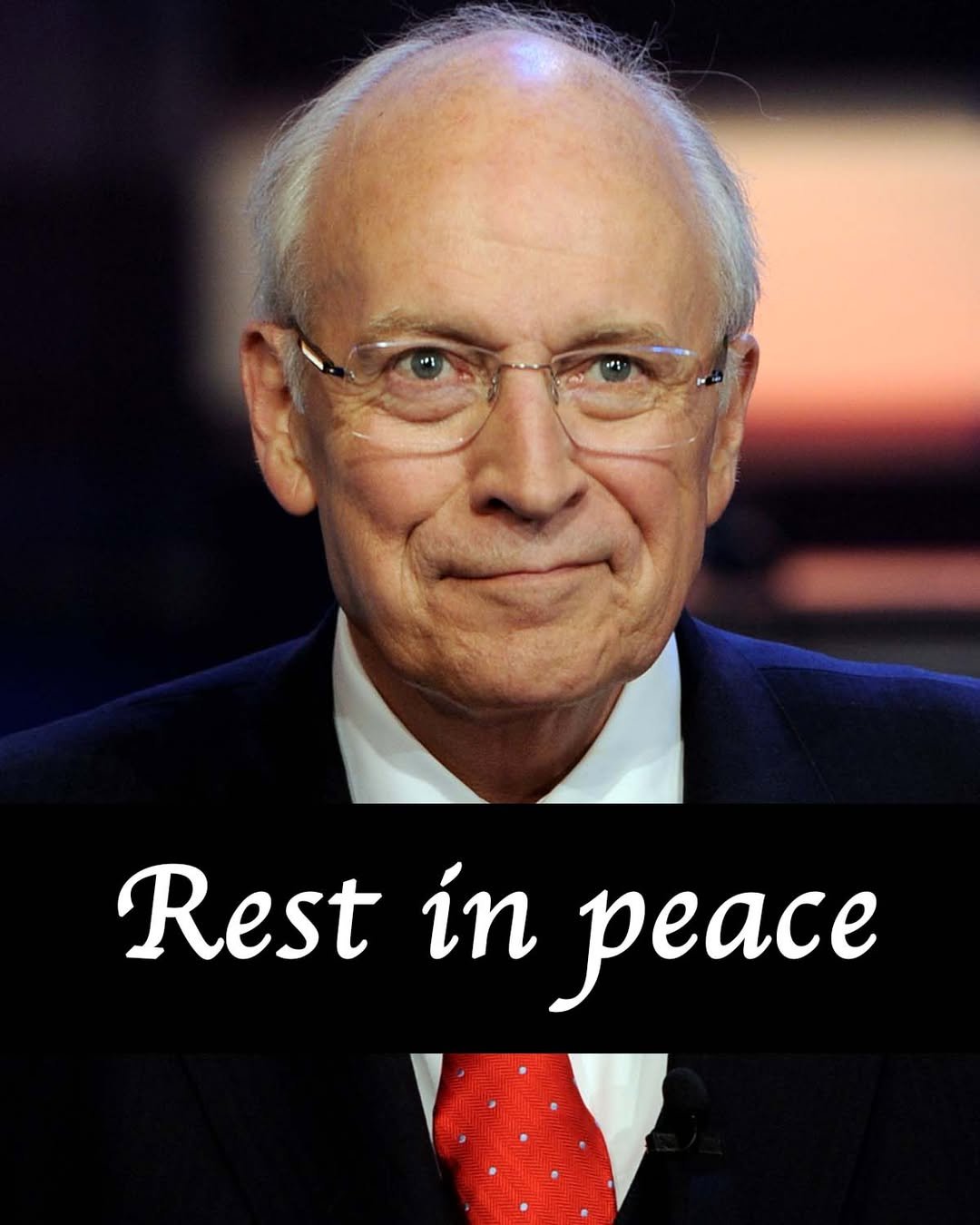
  • Former vice president Dick Cheney dies at 84!

    Former vice president Dick Cheney dies at 84!

    In the end, Richard Bruce Cheney’s story was one of contradictions — intellect and secrecy, patriotism and ruthlessness, conviction and controversy. Few American leaders wielded as much influence from behind the scenes, and fewer still left such a divided legacy.

    Born in Lincoln, Nebraska, and raised in Casper, Wyoming, Cheney rose from modest roots to become one of the most consequential — and polarizing — figures in modern U.S. politics. A consummate Washington insider, he shaped American defense and foreign policy across five decades, leaving an imprint that outlasted his time in office.

    He died at 84, surrounded by his family, following complications from long-standing heart disease. His family described him simply as a “beloved husband, father, and patriot,” but history will remember him as far more complicated — a man who viewed governance as a matter of willpower, strategy, and secrecy.

    The Early Architect
    Cheney’s political career began not in front of cameras but in back rooms. After earning his master’s degree in political science from the University of Wyoming, he served as a congressional aide before joining the Nixon administration. Under Gerald Ford, he became the youngest White House Chief of Staff in history, a post that showcased his tactical brilliance and cold efficiency.

    Even then, Cheney understood power differently than most politicians. To him, it wasn’t about personality or rhetoric — it was about structure. He often said, “The Constitution doesn’t prohibit a strong executive. It assumes one.” That philosophy defined every move he made thereafter.

    Elected to Congress in 1978, Cheney represented Wyoming for six terms. He was respected for his discipline, mastery of legislative detail, and unwavering conservative principles. But it was his appointment as Secretary of Defense under President George H.W. Bush that propelled him to global relevance.

    During the Gulf War, Cheney orchestrated a swift and devastating campaign that restored America’s confidence after years of uncertainty. His calm, analytical demeanor earned him the reputation of a strategist who viewed warfare as a calculated extension of policy — not politics.

    The Vice Presidency That Redefined Power
    When George W. Bush chose Cheney as his running mate in 2000, few understood the depth of that decision. Many assumed the seasoned bureaucrat would serve as a stabilizing elder statesman to a younger president. Instead, Cheney became the most powerful vice president in U.S. history.

    The terrorist attacks of September 11, 2001, transformed his role from adviser to architect. Cheney was central to crafting America’s response: the wars in Afghanistan and Iraq, the creation of the Department of Homeland Security, and the global expansion of surveillance and counterterrorism measures.

    To his allies, Cheney embodied resolve. To his critics, he symbolized overreach. He defended the use of “enhanced interrogation techniques” as essential tools of war — a stance that remains one of the most fiercely debated moral questions of the 21st century. He once said, “We have to work the dark side,” a line that followed him for the rest of his career.

    Through it all, Cheney was unrepentant. He believed that history, not opinion, would vindicate him. “I’d do it again in a heartbeat,” he told an interviewer years later. “My job was to keep the country safe, not to win popularity contests.”

    A Life Lived in Shadows and Strategy
    Cheney’s vice presidency blurred the boundaries of his office. He attended intelligence briefings, directed classified operations, and often bypassed traditional bureaucratic chains. His critics accused him of consolidating too much authority; his defenders argued that his foresight prevented greater catastrophe.

    When the Iraq War faltered, so did his standing with much of the public. Yet even in retreat, he maintained an almost scholarly detachment from scandal. He didn’t explain. He didn’t apologize. He calculated.

    After leaving office in 2009, Cheney largely withdrew from public view, focusing on writing, mentorship, and family. His memoir, In My Time, revealed little introspection but offered a masterclass in political maneuvering. He continued to shape Republican thought quietly, influencing policy debates long after his heart surgeries and health struggles confined him to a slower pace.

    The Personal and the Political
    Behind the political armor, those who knew Cheney described a dry wit, fierce loyalty, and surprising warmth toward friends and family. He adored hunting, fly-fishing, and the open spaces of Wyoming. His marriage to Lynne Cheney lasted more than six decades — a partnership as intellectual as it was personal.

    His daughters, Liz and Mary, both carried aspects of his legacy. Liz Cheney followed her father’s political path, becoming a leading Republican figure known for her principled defiance and constitutional focus. Mary, openly gay, challenged her father’s conservative peers to reconcile family values with compassion — a dynamic that softened some of his public edges late in life.

    Cheney’s health battles were almost mythic: five heart attacks, multiple surgeries, and a 2012 heart transplant that he once described as “borrowing time.” His resilience mirrored his political persona — relentless, calculating, impossible to dismiss.

    Legacy of a Reluctant Legend
    To admirers, Dick Cheney represented the last of a certain breed — pragmatic, decisive, and immune to the theater of modern politics. To detractors, he embodied the dangers of unchecked executive power and the moral compromises of endless war.

    History will likely place him somewhere between those extremes — as a man who understood the machinery of power better than anyone else but failed to see the emotional cost of its use.

    Even his fiercest critics admit that Cheney was never a fraud or a fool. He was exactly what he appeared to be: a strategist who valued results over rhetoric, stability over sympathy. Whether that made him indispensable or dangerous remains for future generations to decide.

    When asked late in life how he wanted to be remembered, Cheney offered a rare moment of simplicity. “I served my country the best way I knew how,” he said. “History will make its judgment. I’ve made mine.”

    As tributes and condemnations pour in, one truth remains: Dick Cheney changed how America wages war, how presidents wield power, and how history defines loyalty.

    He leaves behind his wife, Lynne; daughters Liz and Mary; and several grandchildren — and a nation still wrestling with the choices he helped shape.

    In the end, he lived as he governed — privately, precisely, and on his own terms.

  • The Vatican shakes! It came to light the se! see more

    The Vatican shakes! It came to light the se! see more

    When the first whispers reached Rome, they sounded like the usual Vatican gossip — unverified, unprovable, safely ignored. But by the time the bells rang for morning mass, something had cracked inside the walls of the world’s smallest state.

    A secret, buried deep in marble and ritual, had come to light.

    The discovery began not in a chapel, but in the sub-basement of the Apostolic Archive — a sealed corridor few outside the Curia even knew existed.

    The corridor, part of an old fire-proof vault built in the 19th century, was undergoing quiet renovation after humidity damaged part of the structure. A team of restorers, working under dim artificial light, broke through an old plaster partition and uncovered a narrow passage leading to a forgotten chamber.

    What they found inside changed everything.

    The chamber was no bigger than a single monk’s cell — stone walls, arched ceiling, air thick with dust and incense residue. On a pedestal in the center lay a wooden chest sealed with wax and three iron locks. Its hinges had rusted solid. The archivist in charge, Father Lorenzo Moretti, requested immediate authorization to open it. By midnight, the locks had been cut, and inside the chest they found hundreds of pages of vellum bound with cord — each marked with the papal seal of 1484.

    That date set off alarm bells.

    1484 was the year Pope Innocent VIII issued Summis desiderantes affectibus, the decree that sanctioned the Inquisition’s pursuit of witchcraft across Europe. But these documents were not copies of that decree. They appeared to be drafts, revisions — and letters. Personal correspondence between the pope, a group of astronomers in Bologna, and a Dominican mathematician whose name had been erased in every surviving record.

    The letters hinted at something heretical. They spoke of “a sign in the heavens,” of “the trembling of the firmament,” and of “truths too dangerous for faith.”

    When the discovery reached the Secretary of State, the chest and all associated materials were quietly removed from the archives. But silence in the Vatican is never absolute. Within days, digital copies had been leaked to a handful of insiders — and from there, to the outside world.

    The first journalist to receive the files was Sofia Rinaldi, a veteran Vatican correspondent for La Repubblica. “At first I thought it was a hoax,” she said later. “The handwriting, the phrasing — it all seemed too perfect, like something out of a conspiracy novel. But when I showed it to a medieval scholar, his face went white. He said, ‘If this is real, it rewrites a chapter of the Church’s own history.’”

    According to preliminary translations, the letters describe a celestial phenomenon witnessed in the winter of 1483 — a flare or explosion visible across southern Europe for three nights. The mathematician, whose erased name is referred to only as “The Friar,” claimed to have charted its trajectory and found that it aligned precisely with the position of the star that guided the Magi in the Gospel of Matthew. He called it Signum Revertens — the Returning Sign.

    The implication was clear: he believed the same star had appeared again.

    The correspondence between the pope and the Friar grows tense. Early letters are cautious, almost curious; later ones turn defensive, fearful. In one, the pope writes, “If what you say is true, the promise of the heavens repeats, and the Church’s authority must bend beneath it.” The Friar replies, “Not bend, Holy Father. Align.”

    Historians had long dismissed rumors of astronomical heresy within the Vatican as myth, but the tone of the letters feels authentic. Linguistic tests confirmed the parchment dates to the late 15th century. The ink composition matches known samples from the papal chancery.

    When La Repubblica published excerpts, the Vatican Press Office issued a brief statement calling the documents “historically interesting but inconclusive.” Behind the scenes, the Secretariat ordered all media inquiries redirected to the Archivist General. Privately, several cardinals urged that the chamber be resealed.

    But the damage was done. The phrase Signum Revertens went viral. Amateur astronomers scoured sky records from 1483, confirming reports of a bright transient object — possibly a supernova. Theories exploded online: that the Church had known for centuries of a recurring celestial event and suppressed it; that it symbolized renewal, or prophecy; that it proved nothing but humanity’s endless hunger for mystery.

    Inside the Vatican, tensions rose. Some officials argued the leak was part of a broader disinformation campaign aimed at destabilizing the Church. Others quietly admitted it raised profound theological questions. One Jesuit astronomer, speaking anonymously, said: “If these letters are authentic, they show that faith and science have always been at war and at peace in the same breath. The Church feared the stars not because they contradicted God, but because they mirrored Him too closely.”

    Within weeks, the Pope convened a closed symposium at Castel Gandolfo, bringing together historians, theologians, and astrophysicists. Nothing from those sessions has been made public. But attendees reported heated debate — and tears. One participant told a reporter afterward, “We argued all night about whether revelation belongs only to scripture or whether the universe itself can still speak.”

    By the end of the month, Vatican guards sealed the chamber again. The chest was moved to a secure vault, its contents reportedly digitized and classified under “Causa Specialis – No. 8824.”

    Officially, the Church maintains the discovery is being studied. Unofficially, those who handled the documents say something changed in the atmosphere of the city-state. “The walls felt thinner,” one archivist said. “As if Rome itself was listening.”

    Meanwhile, astronomers have detected a faint reappearance of the same light — a repeating pattern in the same quadrant of the sky recorded in 1483 and 1601. They’ve named it SN-Revertens, after the Friar’s lost term.

    The Vatican has not commented on the coincidence.

    Whether the letters are authentic, forged, or misunderstood, they’ve done something no scandal or doctrine in recent memory has managed: they’ve made people look up again.

    In the piazza outside St. Peter’s, pilgrims now gather after nightfall, staring toward the horizon where the constellation Draco curls above the rooftops. Tourists think they’re just sightseeing. Locals know better.

    “The Vatican shakes,” said one old priest who still remembers when Galileo’s telescope was on display here. “But maybe not from fear. Maybe from awakening.”

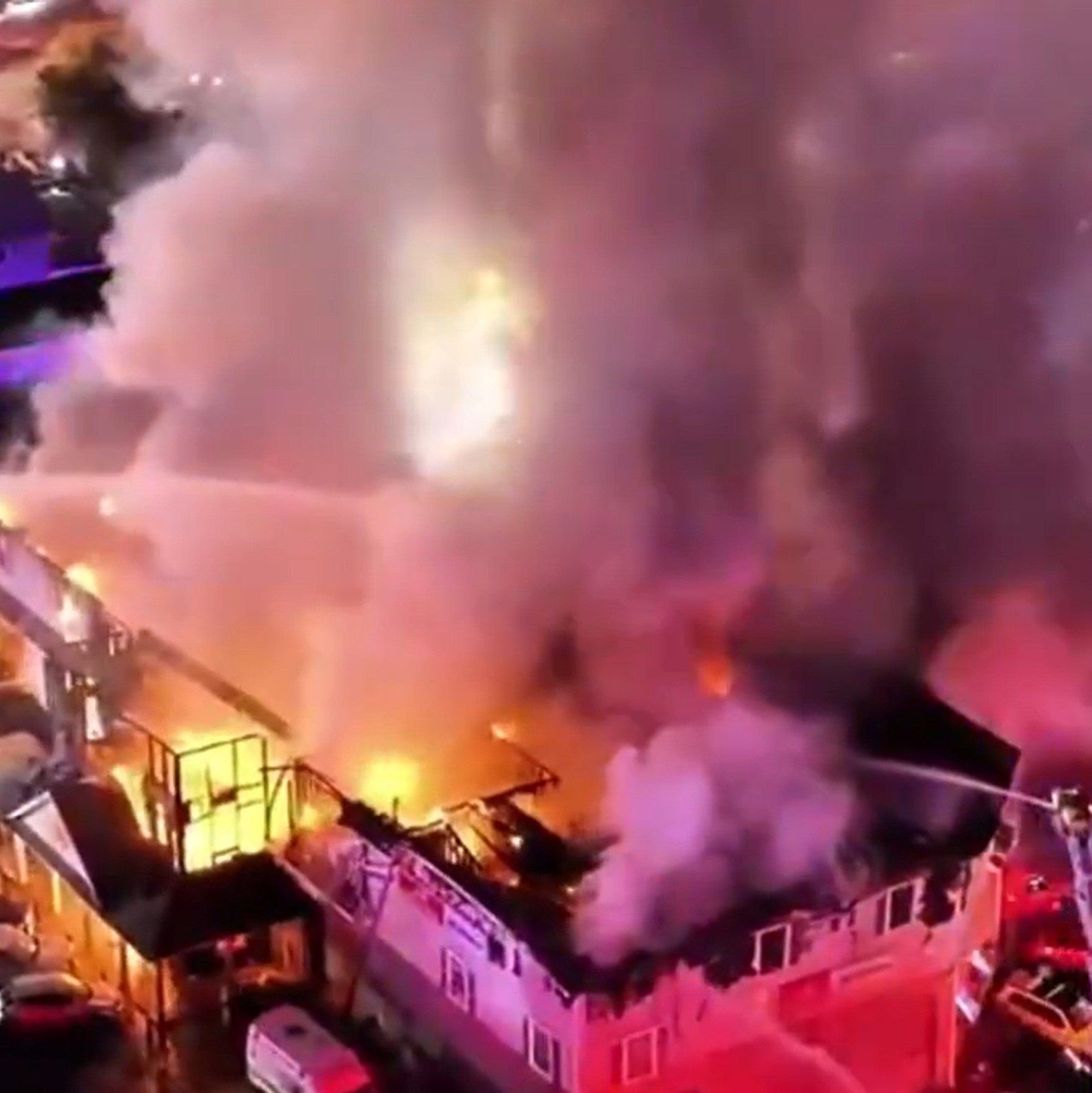
  • BREAKING NEWS Just hours ago, a tremendous fire broke out in! See more

    BREAKING NEWS Just hours ago, a tremendous fire broke out in! See more

    In the grey stillness of early Monday morning, the earth roared.

    A massive 7.7-magnitude earthquake ruptured beneath the borderlands of China and Myanmar, jolt­ing millions from sleep and plunging whole towns into chaos.

    The quake struck at a shallow depth, making the trembling all the more violent at the surface, and its epicentre lay in the rugged mountains between China’s Yunnan province and Myanmar’s northern Shan State. World Vision+2Wikipedia+2

    In the border city of Ruili in Yunnan, China, windows shattered and walls cracked. One survivor described the moment: “It felt like the earth was breathing,” he said.

    “Glass shattered everywhere. We ran outside without shoes.” Across the border, villagers in Shan State heard a sound they likened to thunder beneath the ground; then the world turned dark. Wikipedia

    Because the quake struck in the early hours, most families were asleep; the darkness amplified the terror. Entire neighbourhoods spilled into the streets, wrapped in blankets, bare­foot, clutching frightened children. In Yunnan, broken power lines and failing phone networks only added to the confusion as hospitals switched to emergency power and ambulances rushed in the injured. World Vision+1

    Already overwhelmed, medical staff in the worst-hit zones mobilised quickly. In Myanmar’s Mandalay and Sagaing regions, triage tents sprouted outside crumbling hospitals where floors buckled and ceilings fell. One doctor reported: “We’re beyond capacity. Every nurse, every volunteer is working.” World Vision+1

    The rugged terrain only compounded the crisis. Landslides blocked mountain roads, bridges were torn, and aftershocks kept rescuers on edge. For search teams, each rumble meant retreat; each crack in the mountain a new danger. “Every tremor forces us to pull back,” one rescue worker said. World Vision+1

    Early casualty figures were grim. While different sources reported varying numbers, hundreds were confirmed dead and thousands more injured across the region. In Myanmar alone, thousands of homes collapsed and entire communities were left in ruins. Wikipedia

    In China’s Yunnan province, officials recorded extensive damage even though the epicentre was across the border. In the city of Ruili, several homes collapsed, major roads cracked, and schools were damaged. The tremor’s impact stretched far beyond the immediate zone. Wikipedia+1

    Amid the destruction, moments of human compassion flickered through the debris. In one remote village, monks formed a human chain, carrying injured neighbours on makeshift stretchers to safer ground. In another, a family’s home became sanctuary overnight, accommodating more than thirty displaced neighbours until help arrived. A relief worker summarised it best: “People here don’t have much, but no one hesitated to help.”

    Social media became both lifeline and ledger of the disaster — hashtags like #MyanmarQuake and #BorderRelief carried messages of missing persons, requests for shelter, and donation appeals. Volunteers in neighbouring countries loaded up trucks with blankets, rice and water. Some drove through the night as sirens and tremors still echoed.

    For many survivors, recovery would stretch into months or years. The quake didn’t just destroy walls—it shattered infrastructure, uprooted livelihoods, and tested resilience. Authorities warned that full reconstruction would demand vast resources and international cooperation. China pledged emergency aid and search teams, while other neighbours offered humanitarian assistance. Reuters+1

    In the aftermath, the rubble told its own story: children’s toys half-buried, oil drums split, roof tiles sunken into the earth. Where homes once stood, open fields now lay scattered with broken timber and twisted metal. The dust hung heavy in the air.

    In the capital of Myanmar, Naypyidaw, entire apartment complexes collapsed as thousands of officials and workers sought refuge. In Thailand, a high-rise under construction in Bangkok collapsed in the distant tremors, killing bystanders and bringing into sharp relief how far the quake’s influence reached. AP News+1

    Each hour, the number of aftershocks climbed — some measured above magnitude 6.0. Researchers noted that the quake appeared to have ruptured a long section of the Sagaing Fault, a seismically active boundary similar in nature to California’s San Andreas. Le Monde.fr

    As dusk fell across the region, tents glowed under floodlights and helicopters alternated with generator thrum. Volunteers sang quietly, children slept on makeshift mats, and somewhere, a mother cradled her child, both of them alive when the day began in disaster.

    For those who had lost everything, survival itself felt like an achievement. One man stood among the ruins of his home and said quietly: “We have nothing left. But we are alive. We will rebuild.” The echo of his words held both sorrow and stubborn hope.

    Though the quake lasted only seconds, its impact will reverberate for generations— reshaping towns, lives and memories. In the weeks ahead, the world will switch its focus to recovery: clearing roads, restoring water systems, rebuilding homes, and helping survivors transform shock into new beginnings.

    And somewhere in the mountains and valleys of Yunnan, Shan and Sagaing, people will learn to live again among cracked walls and tilted tree trunks. They will remember that tremor not just as disaster, but as the moment their world changed direction.

  • MASSIVE ACCIDENT Just happened 33 people!

    MASSIVE ACCIDENT Just happened 33 people!

    Before dawn broke over northern Mexico, the hum of traffic along Highway 57 was interrupted by the sound of metal tearing and glass shattering.

    It was early Wednesday morning when tragedy struck near the Hermanas–Sabinas section at kilometer 68, a stretch of road known for sharp curves and unpredictable winds. A long-distance passenger bus, number 9132, traveling from

    Ciudad Acuña toward Gómez Palacio, Durango, lost control and overturned. By the time emergency responders reached the scene, the vehicle lay on its side, twisted and mangled, the air heavy with the smell of fuel and dust. Dozens of passengers had been asleep when the bus rolled.

    The crash left one person dead and several injured, including a young boy who clung to life as rescuers fought to free those trapped inside.

    Local residents, startled awake by the noise, were the first to arrive. One truck driver, José Ramos, said the bus had landed across both lanes. “People were screaming,” he recalled. “We broke windows with rocks to pull them out. It was chaos.” Rescue units from nearby towns—

    Sabinas, Monclova, and Piedras Negras—joined forces with the Red Cross and the Mexican Social Security Institute to stabilize victims.

    The most critical passengers were airlifted to hospitals in Monclova and Saltillo. Among them was a minor identified as Jairo, who suffered severe internal injuries and head trauma. Doctors at Clinic 7 of the IMSS said his next 48 hours would determine his survival.

    At least five others were hospitalized with fractures, deep cuts, and shock. Their names were withheld until families could be notified.

    Early investigations suggested the driver lost control on a downhill curve. Witnesses said the bus had been speeding moments before the crash. Rain had been falling since midnight, leaving the road slick. Combined with limited visibility and fatigue after hours of driving, the risk was high.

    Tire marks stretched over sixty meters before the rollover point—evidence of a desperate attempt to regain control. Officials confirmed the driver survived and was cooperating with authorities. Toxicology tests were pending, but there were no signs of intoxication. Mechanical failure, investigators said, could not be ruled out.

    For hours, the scene was a mix of confusion and determination. Flashing lights illuminated the wreckage while firefighters cut through twisted metal to reach the trapped. Helicopters thudded overhead. Volunteers handed out water, blankets, and words of comfort. Survivors sat on the shoulder of the road, dazed and silent, clutching bags and torn clothing. One woman, María, said she had been traveling to Torreón to visit family. “I was half-asleep when I felt the bus shake,” she said, her hands trembling. “People screamed. Then everything turned. I woke up upside down, bleeding. The boy behind me wasn’t moving.”

    As rescuers worked, word spread to nearby towns. Families began to call police stations and hospitals, desperate for information. Many of the passengers were workers returning home from the northern border. In Monclova, the waiting area at Clinic 7 filled quickly with relatives. Mothers prayed aloud, fathers paced, and strangers shared water bottles and updates. A local priest, Father Luis Ortega, came to comfort families. “These are the moments that test us,” he said quietly. “Tragedy brings pain, but also unity. People who were strangers this morning are now holding hands.”

    By midday, authorities confirmed one fatality: a woman who died at the scene. Forensic teams worked into the evening collecting evidence and clearing debris. The bus company, Autotransportes del Norte, issued a statement expressing condolences and promising full cooperation. “We deeply regret the tragic incident involving unit 9132,” the company said. “Our priority is the safety of our passengers and the support of the affected families.”

    Elsewhere in the region, another rollover had occurred just a day earlier near Raymundo Park in Lerdo, Durango, when a private vehicle struck a light fixture and overturned. Authorities began to question whether road conditions, visibility, or maintenance issues along these northern highways were contributing factors. The Ministry of Transportation ordered an immediate review of safety conditions along the Gómez Palacio–Cuencamé route, one of the busiest in the area.

    The bus accident quickly reignited public frustration over safety standards in Mexico’s long-distance transport system. Despite new regulations in recent years, many companies still operate with aging fleets and push drivers to meet punishing schedules. Labor advocates said fatigue and poor oversight were silent contributors in countless crashes that rarely made national headlines. “It’s not just bad luck,” said transit safety expert Hernán Morales. “It’s systemic. Drivers work shifts that stretch beyond legal limits. Roads are worn. Maintenance is inconsistent. Accidents like this are preventable.”

    For the victims’ families, though, those policy arguments meant little in the face of grief. Many had spent the entire day waiting for updates, clutching whatever news reporters could gather. Some had traveled hundreds of kilometers to identify relatives. Others simply refused to leave the hospitals, unwilling to let the story end in silence. “You never think it’ll be your bus,” one man said, standing outside the emergency wing. “Until it is.”

    By nightfall, Highway 57 was reopened to traffic. The wreckage was hauled away, leaving only shattered glass, tire fragments, and a few scattered belongings—a child’s shoe, a torn blanket, a plastic toy. Passing drivers slowed, staring briefly before continuing on. The rain had stopped, and the only sound left was the low hum of engines moving through the night.

    For the people who lived through it, the scene would not fade so easily. The survivors carried home bruises, broken bones, and memories they could not unsee: the screams, the darkness, the eerie stillness after the crash. And in a hospital room in Monclova, little Jairo remained hooked to machines, his small chest rising and falling under the watch of exhausted doctors and a mother whispering prayers beside his bed.

    Officials promised a full investigation, but those who knew the road well didn’t need one to understand its danger. They’d seen it before—the long drives, the tired eyes, the way a single second could separate the ordinary from the unthinkable. On Highway 57, tragedy had struck again, and another community was left to gather the pieces.

    By the following morning, flowers began to appear at the crash site. Truckers stopped briefly to place them on the guardrail. Someone tied a small white ribbon to a post. The traffic never slowed for long. Life moved on, but the silence that lingered over that stretch of road told its own story—a story of fragility, loss, and the haunting reminder that even the simplest journey can change everything in an instant.