Category: Uncategorized

  • A Woman Begged Me Not to Buy That Old Fridge — When I Looked Inside Days Later, I Finally Understood Why

    A Woman Begged Me Not to Buy That Old Fridge — When I Looked Inside Days Later, I Finally Understood Why

    When my old fridge broke, I scraped together every penny and bought a used one from a thrift store. A strange woman begged to buy it instead, but I got there first. Three days later, I found something hidden inside that made my heart pound.

    I’m 63 years old, and for the past four years, it’s been just me and my grandsons, Cullen and Joss. They’re eight-year-old twins with sticky hands, endless questions, and hearts big enough to warm the coldest day.

    Cullen and Joss’s parents, my daughter Avelyn and her husband Merrick, died in a car crash when the boys were only four. Since then, I’ve been both Grandma and Mom, doing my best to keep us going on a fixed income and more grit than money.

    People always say grandkids keep you young. I tell them grandkids keep you tired and running on coffee.

    Every dollar gets stretched thin. We buy cheap cereal, wear hand-me-down clothes, and make do with what we have. The fridge in my kitchen came with the house back in 1992, a big beige thing that rattled like an old truck every time it turned on. But it worked, and that was enough.

    Until last month, when things went wrong.

    It happened on a Sunday morning. I opened the fridge to pour milk for the boys’ cereal, and warm, sour air hit me in the face. The light was out, and the milk felt warm in my hand.

    Oh no, I thought.

    I unplugged it, waited ten minutes, and plugged it back in. Nothing. I said a quick prayer, turned the dial, and even kicked it. Still nothing.

    By noon, half our food was spoiled and in trash bags on the back porch.

    I sat at the kitchen table with my head in my hands while Cullen and Joss played with toy cars on the floor.

    “Grandma,” Joss said softly, putting his little hand on my arm. “Is the fridge broken?”

    I laughed, even though tears stung my eyes. “Looks like it, sweetie.”

    “Can we fix it?” Cullen asked, his serious brown eyes looking at me.

    “I don’t think so, honey.”

    We’d been saving about $180 for back-to-school clothes. Now it was fridge money, and it hurt thinking of the boys starting third grade in tight shoes.

    The next day, I packed Cullen and Joss into the car and drove to Briar’s Thrift, a dusty little appliance shop on the edge of town that smelled like oil and old coffee. Inside, rows of used fridges stood like old soldiers, tall and banged up.

    The owner, a round man with kind eyes and dirty hands, greeted us. His name was Halden, and I’d bought a washer from him two years ago.

    “What’re you looking for today, ma’am?” he asked, wiping his hands on a rag.

    “Something that keeps things cold,” I said, with a tired smile. “And costs less than my rent. Hope that’s not too much.”

    He laughed. “Alright. Let me show you what I have.”

    He took us to a corner where an old white fridge stood against the wall. It was dented on one side, missing a shelf, but the motor ran, and it felt cold inside.

    “One hundred twenty bucks,” Halden said. “She’s old, but she works. I tested her this morning.”

    I was about to say yes when I heard a sharp voice behind me.

    “I’ll take it.”

    I turned around fast.

    A woman stood there, maybe 70, tall and thin with a long gray braid over one shoulder. She wore a floral scarf, and her sharp blue eyes went between me and the fridge like she meant business.

    Halden held up a hand. “No, not this time, Phaedra. It’s hers.”

    The woman, Phaedra, frowned hard. “Please, Halden. I’ve been looking for a fridge just like this for months. It’s special to me.”

    “Special?” I said. “What’s so special about it? It’s just an old fridge.”

    She stared at me for a long time, her lips tight. Then she sighed, her shoulders dropping.

    “Never mind,” she said quietly. “Let her have it.”

    I didn’t know if I should feel bad or thankful. The boys pulled at my sleeves, and I could feel them getting antsy.

    Halden looked between us, not comfortable. “Tell you what, Fallon. I’ll deliver it to your place this afternoon. Free.”

    “That’s real kind, Halden. Thank you.”

    As we turned to leave, I caught Phaedra’s eyes again. She watched me with a look I couldn’t read. It wasn’t mad. It was more like sad.

    It gave me chills, but I shook it off and got the boys to the car.

    By evening, the fridge was in my kitchen, humming away. I filled it with what little we had left, and for that night, things felt okay. The boys loved having cold juice again.

    But the next morning, I heard a weird noise from the kitchen, like the fridge was coughing. When I opened the freezer, it stuck, and I had to pull hard to open it.

    “Great,” I muttered. “A haunted fridge.”

    By day three, the motor clunked loud enough to shake the kitchen, and the light flickered every time I opened the door.

    I was sure that woman at the shop, Phaedra, knew something was wrong. Maybe that’s why she wanted it so bad.

    By Thursday, I was mad. My money was gone, food was spoiling again, and the twins whined about popsicles that melted fast.

    “Fine,” I said, grabbing a screwdriver from the drawer. “Let’s see what’s wrong with you.”

    I pulled out the freezer drawer and started taking off the back panel. Something small and metal fell out with a clink.

    I bent down and picked it up.

    It was a tin box, old and rusty around the edges, sealed with old tape. And written on top in faded blue ink were words that made my heart jump: “If you found this, you were meant to.”

    My heart pounded hard. With shaky hands, I peeled off the tape and opened it. Inside was a folded envelope and a small velvet pouch, both old and worn.

    The envelope said, “To Phaedra or whoever fate picks instead.”

    I stared at the name. Phaedra. The woman from the store.

    I carefully opened the letter inside. The writing was shaky but pretty, in faded brown ink.

    “If you’re reading this, I didn’t get the fridge back in time. My husband built a secret spot in it during the war. He said every home needs a safe place for hope. Inside the pouch is what’s left of his hope. If you need it, use it. If not, give it to someone who does. — Mireya, 1954.”

    My hands shook so bad I almost dropped it. I opened the velvet pouch.

    Inside was a gold wedding ring, tarnished but pretty, and a small envelope labeled “Insurance papers” in the same writing.

    But when I opened that, something else fell out onto the table.

    It was a cashier’s check.

    I blinked, not getting it at first. Then I saw the numbers, and my breath stopped.

    The check was for $25,000, dated last month. And signed by Phaedra.

    I sat at the kitchen table, staring at it, frozen. The clock ticked loud in the quiet. In the living room, the boys laughed at cartoons, but it sounded far away.

    The check was real. I called the bank with shaky fingers, got transferred twice, and a woman said yes—it was from the Mireya Estate.

    It hit me hard.

    Phaedra, the woman at the store, must have been Mireya’s daughter. That fridge was her family’s. And she knew what was inside.

    But she let me buy it anyway.

    That night, I hardly slept. Every time I closed my eyes, I saw Phaedra’s sad face when she walked away.

    I couldn’t keep the money. It didn’t feel right. It felt like I’d taken something from a dying woman.

    So, the next morning, I loaded the boys in the car and drove back to Briar’s Thrift.

    Halden was in the back, fixing a dryer, and looked surprised to see me.

    “Fridge acting up already?” he asked, wiping his hands.

    “Not exactly,” I said. “Where can I find Phaedra? I need to talk to her.”

    Halden’s face changed fast. His smile went away, and he put down the rag. “Oh, honey. Phaedra passed away last week.”

    I couldn’t believe it.

    “She what?” I said.

    “She passed,” Halden said again.

    I stepped back, trying to take it in.

    “She was here just days before hospice,” Halden said softly, his eyes sad. “She was real set on that fridge. Said she wanted it to go somewhere it could help.”

    I stood there in that dusty shop, tears burning my eyes, unable to talk.

    A few days later, a letter came in the mail.

    No return address, just my name in neat writing. My hands shook as I opened it.

    Inside was a note on plain white paper.

    “Dear Fallon, I hope you found the gift. I told Mom she’d find someone who needed it more than me. She believed in signs—if it was meant for you, you’d cross paths. She was right. I’m Phaedra’s son, Keane. She told me about you and the twins before she went. Mom said you reminded her of herself, raising kids alone, doing what it takes. Keep the money. She wanted that. But if you can, pass it on. — Keane.”

    I cried until I couldn’t anymore, right there at the kitchen table where I found the check. Then I folded the note and stuck it behind a fridge magnet, next to a crayon drawing the boys made of a dinosaur eating ice cream.

    The check bought a good used car, Cullen’s asthma medicine for a year, and a savings account for the boys’ college. But we kept the old fridge. I couldn’t let it go, not after all this.

    It still hums at night, steady and quiet, like peace.

    Every so often, when someone from church is struggling—lost a job, behind on bills—I make them a casserole and hand it over with a quiet prayer.

    “This fridge has magic in it,” I tell the boys sometimes. “Real magic.”

    Because maybe that’s what kindness is. Something hidden, waiting quiet until someone who needs it opens the door and finds hope still inside.

  • Massive Overnight Fire Erupts in Utah County — Residents Capture Terrifying Scenes as Flames Light Up the Sky

    Massive Overnight Fire Erupts in Utah County — Residents Capture Terrifying Scenes as Flames Light Up the Sky

    It was a calm, uneventful night in Utah County — the kind of night where the only sound was the distant hum of cars on the highway and the soft wind moving through trees. Most homes were dark, families asleep, unaware of how dramatically their night was about to change.

    Shortly after midnight, a strange rumble echoed across several neighborhoods. Some residents later said it sounded like thunder; others thought it was construction machinery. But the noise persisted, growing into something deeper, heavier, more unsettling.

    A few minutes later, the sky suddenly lit up. A bright orange glow appeared on the horizon, rising quickly and reflecting off windows and parked cars. People stepped outside in confusion, unsure of what they were witnessing.


    As the glow intensified, smoke began to drift over rooftops. At first it was faint, a thin gray layer drifting across the air. But within seconds it thickened, rolling in heavy waves. Then the flames became visible — massive, violent flames that pierced the night sky like blazing towers of fire.

    Neighbors gasped as the flames shot higher and higher, engulfing the large structure in seconds. Some began recording, capturing footage that would later spread across social media. Even from far away, the heat was visible in the way the air shimmered and warped.

    The building, believed to be an industrial or storage facility, was quickly consumed. Windows burst outward from the intensity, sending shards of glass scattering into the street. Cracking noises echoed across the neighborhood as wooden beams snapped under the heat.

    Parents woke up their children, urging them to move away from the windows. Several families gathered outside, unsure whether to stay or flee. The sight was overwhelming — a wall of flames rising and falling like waves on a burning ocean.

    Sirens began to fill the air. First one. Then another. Then dozens.

    Fire trucks raced toward the scene from multiple county departments. Lights flashed against the smoke-filled sky, creating an eerie red-and-orange glow. Firefighters rushed to connect hoses, assess wind direction, and begin attacking the blaze from multiple angles.

    The wind, however, made the battle far more difficult. Strong gusts blew embers across the street, causing firefighters to split their efforts between containing the main fire and ensuring that nearby homes didn’t ignite.


    Residents stood behind police barricades, watching anxiously as sparks drifted around them like glowing snow. Some covered their faces with towels or shirts to block the smoke. Others held phones, capturing every moment in disbelief.

    Many described hearing explosions from inside the structure — possibly machinery, pressurized tanks, or electrical units failing under the extreme heat. Each explosion sent another plume of flame into the air, creating gasps from the crowd.

    Fire officials issued warnings over emergency radio channels, urging drivers to avoid the area entirely. Traffic was redirected as far as several miles away as additional crews arrived to support the overwhelmed responders.

    By 1:30 a.m., the building was fully engulfed. Flames poured out of the roof, swallowing metal beams and collapsing entire sections of walls. Large chunks of the structure fell inward, sending showers of sparks flying in every direction.

    The glow of the fire could be seen from cities miles away.

    People who lived far outside the immediate area reported stepping outside and seeing the orange sky. Some thought it was sunrise. Others assumed lightning had struck. But as news alerts began circulating, the reality became clear.

    Inside the emergency zone, firefighters worked tirelessly. Their silhouettes moved back and forth in front of the flames, illuminated by the intense light behind them. Their movements were precise, practiced, and relentless.


    Paramedics set up a medical area for anyone affected by smoke inhalation. Several residents were treated at the scene, though none required hospitalization. Firefighters rotated constantly, stepping back only long enough to catch their breath before returning to the front lines.

    At 2:00 a.m., a section of the building collapsed with a thunderous crash. The crowd behind the barricades jumped at the noise. Flames shot even higher, feeding on newly exposed materials. Firefighters quickly adjusted their strategy, attacking from a safer angle.

    More than 100 firefighters were eventually deployed. Their cooperation across departments was crucial. Without their coordinated response, the fire might have jumped to nearby homes, creating an even larger disaster.

    As the hours passed, conversations among residents shifted from shock to concern. Many wondered what the building contained. Others worried about toxic smoke. Some spoke quietly about how grateful they were that the fire hadn’t started earlier, when more people might have been inside.

    Around 3:00 a.m., the fire began to stabilize — not out, but weaker. Flames still burned inside the structure, but the towering fire columns had shrunk. Steam rose in thick clouds as water met the hot debris.

    Even then, firefighters refused to let their guard down. They circled the building from all sides, checking for flare-ups and aggressively cooling hotspots. Heavy machinery operators stood by, waiting for clearance to approach the crumbling walls.

    By 4:00 a.m., residents were finally allowed to return to their homes if they lived outside the immediate danger zone. But many stayed, unable to look away from the remains of the burning building.

    Dawn began to break. The first light of morning blended with the orange flicker of the fire, creating a haunting contrast between night and day. Smoke drifted across the sunrise like dark ribbons stretching across the sky.

    As more officials arrived, the investigation began — from a distance at first, because the scene was still too dangerous to enter. Investigators discussed causes: electrical malfunction, equipment failure, accidental ignition, or human involvement. Nothing could be confirmed.

    Structural engineers arrived to evaluate the building’s integrity. Every wall was unstable. Every beam was warped. The entire site was a maze of hazards.

    Residents, tired but unable to leave, spoke with reporters about the terror of the night. Many said they feared the fire would jump to their homes. Others described how their children cried at the loud noises and bright lights.


    One resident said, “I saw it collapse in front of my eyes. You just feel helpless. The firefighters… they’re heroes. They didn’t stop for even a second.”

    By 6:00 a.m., the fire was mostly contained, but not extinguished. Small pockets continued to burn beneath the debris. Firefighters would need hours more to fully secure the area.

    As the sun rose higher, the full scale of destruction became visible. What had been a large industrial building was now a skeleton of metal and ash. Thick smoke continued rising upward, slowly spreading across Utah County.

    Authorities announced that more information would be released later in the day after the site cooled enough to allow safe entry. They warned residents to avoid the area due to unstable debris, air quality concerns, and ongoing emergency operations.

    Cleanup crews prepared for a long day ahead. Roads remained closed. Police directed traffic. Fire chiefs coordinated shift rotations so exhausted firefighters could rest.

    Families began returning to their morning routines, but with a shaken awareness of how quickly life can shift from calm to crisis.

    The story of this massive fire is still unfolding — and investigators will spend days piecing together what happened, what failed, and what ignited such a violent blaze.

    What remains certain is this:

    In the face of a fire that lit up the night sky, Utah County stood together.
    Firefighters showed remarkable bravery.
    Residents supported each other.
    And an ordinary night became a reminder of how fragile and unpredictable life can be.

    It was a calm, uneventful night in Utah County — the kind of night where the only sound was the distant hum of cars on the highway and the soft wind moving through trees. Most homes were dark, families asleep, unaware of how dramatically their night was about to change.

    Shortly after midnight, a strange rumble echoed across several neighborhoods. Some residents later said it sounded like thunder; others thought it was construction machinery. But the noise persisted, growing into something deeper, heavier, more unsettling.

    A few minutes later, the sky suddenly lit up. A bright orange glow appeared on the horizon, rising quickly and reflecting off windows and parked cars. People stepped outside in confusion, unsure of what they were witnessing.


    As the glow intensified, smoke began to drift over rooftops. At first it was faint, a thin gray layer drifting across the air. But within seconds it thickened, rolling in heavy waves. Then the flames became visible — massive, violent flames that pierced the night sky like blazing towers of fire.

    Neighbors gasped as the flames shot higher and higher, engulfing the large structure in seconds. Some began recording, capturing footage that would later spread across social media. Even from far away, the heat was visible in the way the air shimmered and warped.

    The building, believed to be an industrial or storage facility, was quickly consumed. Windows burst outward from the intensity, sending shards of glass scattering into the street. Cracking noises echoed across the neighborhood as wooden beams snapped under the heat.

    Parents woke up their children, urging them to move away from the windows. Several families gathered outside, unsure whether to stay or flee. The sight was overwhelming — a wall of flames rising and falling like waves on a burning ocean.

    Sirens began to fill the air. First one. Then another. Then dozens.

    Fire trucks raced toward the scene from multiple county departments. Lights flashed against the smoke-filled sky, creating an eerie red-and-orange glow. Firefighters rushed to connect hoses, assess wind direction, and begin attacking the blaze from multiple angles.

    The wind, however, made the battle far more difficult. Strong gusts blew embers across the street, causing firefighters to split their efforts between containing the main fire and ensuring that nearby homes didn’t ignite.


    Residents stood behind police barricades, watching anxiously as sparks drifted around them like glowing snow. Some covered their faces with towels or shirts to block the smoke. Others held phones, capturing every moment in disbelief.

    Many described hearing explosions from inside the structure — possibly machinery, pressurized tanks, or electrical units failing under the extreme heat. Each explosion sent another plume of flame into the air, creating gasps from the crowd.

    Fire officials issued warnings over emergency radio channels, urging drivers to avoid the area entirely. Traffic was redirected as far as several miles away as additional crews arrived to support the overwhelmed responders.

    By 1:30 a.m., the building was fully engulfed. Flames poured out of the roof, swallowing metal beams and collapsing entire sections of walls. Large chunks of the structure fell inward, sending showers of sparks flying in every direction.

    The glow of the fire could be seen from cities miles away.

    People who lived far outside the immediate area reported stepping outside and seeing the orange sky. Some thought it was sunrise. Others assumed lightning had struck. But as news alerts began circulating, the reality became clear.

    Inside the emergency zone, firefighters worked tirelessly. Their silhouettes moved back and forth in front of the flames, illuminated by the intense light behind them. Their movements were precise, practiced, and relentless.


    Paramedics set up a medical area for anyone affected by smoke inhalation. Several residents were treated at the scene, though none required hospitalization. Firefighters rotated constantly, stepping back only long enough to catch their breath before returning to the front lines.

    At 2:00 a.m., a section of the building collapsed with a thunderous crash. The crowd behind the barricades jumped at the noise. Flames shot even higher, feeding on newly exposed materials. Firefighters quickly adjusted their strategy, attacking from a safer angle.

    More than 100 firefighters were eventually deployed. Their cooperation across departments was crucial. Without their coordinated response, the fire might have jumped to nearby homes, creating an even larger disaster.

    As the hours passed, conversations among residents shifted from shock to concern. Many wondered what the building contained. Others worried about toxic smoke. Some spoke quietly about how grateful they were that the fire hadn’t started earlier, when more people might have been inside.

    Around 3:00 a.m., the fire began to stabilize — not out, but weaker. Flames still burned inside the structure, but the towering fire columns had shrunk. Steam rose in thick clouds as water met the hot debris.

    Even then, firefighters refused to let their guard down. They circled the building from all sides, checking for flare-ups and aggressively cooling hotspots. Heavy machinery operators stood by, waiting for clearance to approach the crumbling walls.

    By 4:00 a.m., residents were finally allowed to return to their homes if they lived outside the immediate danger zone. But many stayed, unable to look away from the remains of the burning building.

    Dawn began to break. The first light of morning blended with the orange flicker of the fire, creating a haunting contrast between night and day. Smoke drifted across the sunrise like dark ribbons stretching across the sky.

    As more officials arrived, the investigation began — from a distance at first, because the scene was still too dangerous to enter. Investigators discussed causes: electrical malfunction, equipment failure, accidental ignition, or human involvement. Nothing could be confirmed.

    Structural engineers arrived to evaluate the building’s integrity. Every wall was unstable. Every beam was warped. The entire site was a maze of hazards.

    Residents, tired but unable to leave, spoke with reporters about the terror of the night. Many said they feared the fire would jump to their homes. Others described how their children cried at the loud noises and bright lights.


    One resident said, “I saw it collapse in front of my eyes. You just feel helpless. The firefighters… they’re heroes. They didn’t stop for even a second.”

    By 6:00 a.m., the fire was mostly contained, but not extinguished. Small pockets continued to burn beneath the debris. Firefighters would need hours more to fully secure the area.

    As the sun rose higher, the full scale of destruction became visible. What had been a large industrial building was now a skeleton of metal and ash. Thick smoke continued rising upward, slowly spreading across Utah County.

    Authorities announced that more information would be released later in the day after the site cooled enough to allow safe entry. They warned residents to avoid the area due to unstable debris, air quality concerns, and ongoing emergency operations.

    Cleanup crews prepared for a long day ahead. Roads remained closed. Police directed traffic. Fire chiefs coordinated shift rotations so exhausted firefighters could rest.

    Families began returning to their morning routines, but with a shaken awareness of how quickly life can shift from calm to crisis.

    The story of this massive fire is still unfolding — and investigators will spend days piecing together what happened, what failed, and what ignited such a violent blaze.

    What remains certain is this:

    In the face of a fire that lit up the night sky, Utah County stood together.
    Firefighters showed remarkable bravery.
    Residents supported each other.

  • My Husband and In-Laws Demanded a DNA Test for Our Son — I Said Yes, but on One Condition

    My Husband and In-Laws Demanded a DNA Test for Our Son — I Said Yes, but on One Condition

    I always knew my mother-in-law didn’t like me. She never hid it, even before I married her son. It wasn’t the dramatic, movie-style hatred where someone openly calls you names or throws insults—it was quieter, sharper. The kind that’s hidden beneath tight smiles and passive-aggressive compliments.

    When I was pregnant, she said things like, “You’re glowing, but pregnancy weight really changes a woman’s body, doesn’t it?” or “I just hope the baby looks like our side of the family.”

    At first, I brushed it off. I loved my husband, Caleb, and believed that our relationship was strong enough to handle a difficult mother-in-law. However, after our son, Oliver, was born, things took a turn I never expected.

    It started subtly. His family visited often—sometimes unannounced—and my mother-in-law would hover near the crib, staring at Oliver with a faint frown, as if she were studying him like a painting she couldn’t quite understand.

    One afternoon, when Oliver was about three months old, I overheard her whispering to Caleb in the kitchen.

    “He doesn’t look like you at all,” she said. “Are you sure she was faithful while you were away for work?”

    I froze. Caleb worked in another city for two months during my second trimester, and though we FaceTimed daily, the distance had been hard. But to even suggest I had been unfaithful? That felt like a knife in my chest.

    Caleb didn’t say much. I couldn’t hear his response clearly—just a soft, hesitant “Mom, stop.” But the fact that he didn’t defend me outright stayed with me.

    Over the next few weeks, the tension in our house grew thick. Caleb became quieter, distracted. Whenever I asked what was wrong, he’d shake his head and mutter, “It’s nothing.” But I could tell it wasn’t anything.

    Then one evening, after dinner, he finally said it.

    “Listen,” he began, staring at the floor. “Mom’s been saying things, and honestly, I just want to put it all to rest. She thinks Oliver doesn’t look like me.”

    I set my fork down, my pulse quickening. “And what do you think?”

    He hesitated. That silence hurt more than words ever could.

    “I just think,” he continued, “that doing a DNA test could clear everything up. Once the results come back, Mom will have to drop it. We can move on.”

    I stared at him in disbelief. “You want to do a DNA test on your own son because your mother told you to?”

    “It’s not like that,” he insisted. “It’s just to ease everyone’s minds.”

    Everyone’s minds. As if the peace of his family mattered more than my dignity.

    I felt heat rise in my cheeks. “Do you even realize what you’re asking me? What does it mean that you’d agree to this?”

    He sighed, rubbing his temples. “Please, it’s just a test. You have nothing to hide.”

    That night, I cried silently beside him in bed. I had nothing to hide—but I had everything to lose. Trust, respect, and the sense of partnership we’d built over five years of marriage—he was throwing it away because his mother couldn’t stand me.

    The next day, I called my best friend, Laura. When I told her what happened, she was livid.

    “Are you kidding me?” she snapped. “You gave birth to his child, and now he wants proof? That’s disgusting.”

    “I don’t want to destroy our marriage,” I said quietly. “But I can’t just let them treat me like I’m some liar.”

    “Then don’t,” she said. “If they want to play that game, make sure the rules are fair.”

    Her words stuck with me.

    That weekend, Caleb’s parents invited us for dinner. I knew what the topic would be before we even arrived. The moment we sat down, his mother started with her trademark sweet tone.

    “We just want what’s best for our family,” she said, passing me the breadbasket. “You understand, dear. Once we have proof, there’ll be no more questions.”

    I looked her straight in the eye. “Proof of what, exactly?”

    She smiled tightly. “That everything is as it should be.”

    I turned to Caleb. He looked uncomfortable but didn’t say a word.

    That’s when I decided how this would play out.

    “Fine,” I said calmly. “We’ll do the DNA test.”

    His mother blinked, clearly surprised that I’d agreed so easily. Caleb looked relieved—too relieved.

    “But,” I added, “I have one condition.”

    His mother’s smile faltered. “And what would that be?”

    “If we’re going to do a DNA test on Oliver,” I said evenly, “then I want Caleb to take one too. To confirm he’s his father’s son.”

    The room went dead silent.

    Caleb’s father coughed. His mother’s eyes widened, fury flashing beneath her polite facade. “What kind of ridiculous condition is that?”

    “Not ridiculous at all,” I replied. “If we’re questioning family bloodlines, let’s make sure everyone’s is in order.”

    Caleb gaped at me. “Are you serious?”

    “Completely,” I said. “I’ve been faithful. I know the truth. If your family wants scientific proof, we’ll get it—for everyone.”

    His mother sputtered, “You have no right—!”

    “Actually,” I interrupted, “I have every right. You’re accusing me of betraying my husband. That’s an accusation against my character. I’m simply making sure there’s no hypocrisy in this family test.”

    Caleb looked between us, torn. “Can we please not turn this into a circus?”

    “Then tell your mother to stop acting like a ringmaster,” I said, standing up. “You wanted a test? You have my condition. Take it or leave it.”

    We left early that night. The car ride home was quiet until Caleb finally said, “That was uncalled for.”

    “No,” I replied. “What’s uncalled for is letting your mother treat me like a stranger. You don’t get to demand proof of my loyalty without offering proof of yours.”

    For days, we barely spoke. He slept on the couch for two nights, saying he “needed space.” Meanwhile, his mother kept calling, pressuring him to convince me to “be reasonable.”

    Finally, Caleb agreed to my condition—reluctantly. “If that’s what it takes to end this drama, fine,” he said.

    A week later, we went to the clinic together. The technician explained the process, swabbed our cheeks, and labeled each sample carefully. I watched Caleb the whole time. He avoided my gaze.

    Two weeks later, the results came in. I told Caleb we should open them together with his parents since they were the ones who demanded the test. He agreed, albeit reluctantly.

    When we arrived at his parents’ house, his mother looked smug, confident she’d be vindicated. She practically snatched the envelope from my hands, opening it with shaking fingers.

    She read the first line aloud. “Probability of paternity: 99.999%.”

    Her smile faltered. Caleb looked up at me, a flicker of shame in his eyes. “So… Oliver is mine.”

    I folded my arms. “Yes, just as I said.”

    His mother’s expression darkened. “Well, I suppose we can put this unpleasantness behind us now.”

    “Not yet,” I said. “There’s one more result in that envelope.”

    She frowned. “What?”

    “The second test,” I reminded her. “Between Caleb and his father.”

    Her hands trembled as she turned to the next page. The silence that followed was deafening.

    Caleb’s father shifted in his seat, his face turning pale. His mother dropped the paper, her lips parting in horror.

    Caleb picked up the document, his eyes scanning the page. When he looked up, his face was ghostly.

    “It says there’s no biological relationship,” he said hoarsely. “Dad… you’re not my father?”

    No one spoke for a long time. I could feel my heart pounding in my chest. I hadn’t expected this. My condition had been symbolic—never in my wildest dreams did I think it would uncover this.

    His mother’s face crumpled. “Caleb, please—let me explain—”

    He stood abruptly. “Explain what, Mom? That you had an affair? That you’ve been accusing my wife of something you did?”

    Tears filled her eyes. “It was a mistake. I loved your father, but… things were complicated. I never thought it would come out.”

    Caleb’s father sat silently, staring at the floor, his hands clenched. The devastation in the room was suffocating.

    I wanted to feel vindicated, but instead, I just felt hollow. I had won the argument—but the cost was unbearable.

    Caleb turned to me, his voice shaking. “Did you know?”

    “Of course not,” I said softly. “I only wanted to show them how cruel they were being to me.”

    He nodded slowly, still in shock. “I need to go.”

    He walked out, slamming the door behind him. I followed him to the car, but he didn’t say a word the whole ride home.

    For days, the house felt different—quieter, heavier. He barely spoke, lost in thought. One night, I found him sitting alone in the nursery, staring at Oliver in his crib.

    “I spent my whole life trying to be like him,” he said quietly. “And now I find out he’s not even my dad.”

    I sat beside him. “You’re still the same person, Caleb. You’re still Oliver’s father. That hasn’t changed.”

    He looked at me, eyes filled with regret. “I should’ve trusted you.”

    “Yes,” I said softly. “You should have.”

    He nodded, tears welling up. “I’m so sorry.”

    It wasn’t easy to forgive him, but over time, I did. Not for his mother, not for anyone else—but for us. We went to counseling, rebuilt what had been broken piece by piece.

    His relationship with his parents changed completely. He rarely spoke to his mother after that, though she tried to reconcile. His father, though heartbroken, seemed almost relieved to finally know the truth.

    As for me, I learned something powerful that day: sometimes the truth has a way of finding its own path to the surface. I never had to defend myself again—because the people who once doubted me had destroyed their own credibility.

    Months later, as I watched Caleb playing with Oliver in the backyard, laughter echoing through the house, I realized that trust isn’t built on DNA—it’s built on faith, loyalty, and love.

    And while the test had shattered his family’s illusions, it had also stripped everything down to what truly mattered.

    We were still standing. Still a family. And this time, no one could question that

  • My Family Left Grandpa at the Hotel to Avoid Paying — They Didn’t Realize I Was the Wrong Grandson to Mess Withh

    My Family Left Grandpa at the Hotel to Avoid Paying — They Didn’t Realize I Was the Wrong Grandson to Mess Withh

    He was supposed to be honored, not abandoned. But my 74-year-old grandfather stood alone at checkout, holding a $12,000 bill he never agreed to. They thought he’d stay quiet—until I showed up.

    The front doors slid open. My shoes hit the tile. The air smelled like sunscreen and lobby flowers. Behind the counter, I saw him—my grandfather. Standing still, shoulders slumped, holding a thick piece of paper in both hands. It shook a little.

    “They told me it was their treat,” he said softly. “I didn’t want to cause trouble.”

    They thought he wouldn’t say anything. They didn’t count on me showing up.

    Two months earlier, Grandpa retired. He was 74. He’d worked 52 years as a machinist. Never missed a day unless he was sick, and even then he still called in to check on things.

    He was quiet. Old-school. The kind of man who fixed your broken shelf without being asked, then left a $20 bill on your counter “for lunch.”

    Every birthday, he showed up with a card and cash inside. He never forgot anyone. He always gave. Never asked for anything.

    My aunt—his daughter—said we needed to do something special. My cousin Ashley got excited.

    “Let’s take Grandpa somewhere nice,” she said. “Like a beach resort. Real luxury. Just once.”

    Everyone jumped on board. We were going to a seven-day, all-inclusive place on the coast. Ashley planned it all. She booked five rooms. She picked a suite with a private balcony just for Grandpa.

    “He deserves it,” she said. “He’s done everything for this family. It’s his turn to relax.”

    They told him not to worry about money.

    “It’s our treat, Grandpa,” Ashley said with a big smile.

    He hesitated. “You sure? I don’t want to be a burden.”

    “Don’t be silly,” she said. “You’re the reason we’re even here.”

    So he packed his one suitcase. Brought his fishing hat. Wore sandals for the first time in 10 years. And off they went.

    The photos started on day one. Poolside selfies. Fancy drinks. Room service. Hashtags like #FamilyFirst and #CelebratingTheKing.

    I couldn’t go until the last day. Work kept me in the city, but I booked a one-way flight. I was going to help Grandpa get home safe. He didn’t like airports. Said they made him feel lost.

    When I arrived, the sun was shining. Palm trees waved in the breeze. I stepped into the hotel with a smile.

    That smile vanished in seconds.

    Grandpa, alone. Bill in hand. Suitcase packed. Everyone else, gone.

    “They said it was all paid for,” I said, my voice shaking.

    He nodded slowly. “That’s what I thought too. But this morning, they all got ready to leave. Told me checkout was noon. Said they were headed to the airport.”

    He paused. “Ashley told me I just needed to go to the desk and sign something.”

    The invoice was broken down in detail. Room charges. Spa sessions. Cocktails. Boat rentals. Champagne. Every room was billed to the suite. His suite.

    “Why didn’t you call me?” I asked.

    He shrugged. “Didn’t want to bother you. I figured… I might have enough in savings.”

    His eyes went to the floor.

    “I just didn’t want to make a fuss,” he said. “The main thing is… they had fun.”

    I looked at him. Then I looked back at that bill. My hands curled into fists.

    “I’ll be right back,” I said.

    I stepped outside and pulled out my phone.

    I hit Ashley’s number. She picked up on the second ring.

    “Well hey, cousin!” she said, cheerful as ever.

    My voice was flat. “Why did you leave Grandpa with a $12,000 bill?”

    There was a pause. Then she laughed.

    “Are you serious right now?” I asked, already knowing I wasn’t going to like the answer.

    “Oh, come on,” she said. “He’s retired. He has savings. It’s not like he’s struggling.”

    I didn’t say anything.

    She kept going. “We figured he could treat us. He’s not supporting the family anymore. This was like… a thank-you trip. From him to us.”

    “You figured?” My voice got tight. “You figured it was okay to dump a twelve-thousand-dollar bill on a seventy-four-year-old man without asking?”

    “Don’t be so dramatic,” she said. “You know Grandpa. He’s happy just to see everyone together.”

    I stared out at the road in front of the hotel. My grip on the phone tightened. A valet wheeled someone else’s luggage past me. Laughter drifted from the pool.

    “Let me make this real clear,” I said. “He’s not the fool here. You are.”

    She scoffed. “Relax. If it’s that big of a deal, we’ll talk about it at Thanksgiving.”

    Click.

    I stood there for a second, breathing slow. I could hear Grandpa’s voice behind me, still trying to explain things to the front desk, still apologizing—for their mess.

    I turned and walked back inside.

    “Don’t worry,” I told Grandpa, loud enough for the staff to hear. “I’ve got this.”

    He looked nervous. “It’s a lot of money. I don’t want you to—”

    I held up a hand. “It’s handled.”

    I pulled out my card and paid the bill. All of it. The manager printed out a copy. As she slid it over, I said, “I’d like the itemized charges too. Per room.”

    She nodded. “Of course.”

    “I also want names, timestamps for each check-in and check-out, and copies of every signature.”

    She didn’t ask why. She just said, “I’ll email it all to you within the hour.”

    I turned back to Grandpa. He was holding his suitcase again, still looking unsure. His shoulders were stiff, like he was waiting to be scolded.

    “I’m taking you home,” I said. “But first, we’re getting a milkshake.”

    His smile was slow. “You always liked the chocolate ones.”

    That night, I called my lawyer, a friend from college. Real sharp. Doesn’t miss a detail.

    I explained everything. The hotel. The invoice. The abandonment.

    “Send me what you’ve got,” he said. “We’ll document everything.”

    By morning, I had:

    The full itemized bill with each cousin’s name linked to their room.

    Lobby security footage showing them checking out, bags in hand, not even a backward glance.

    Written statements from hotel staff confirming Grandpa was left behind and told he would be paying.

    We drafted letters.

    Formal, polite, but firm.

    “You are responsible for the charges listed below. Payment is expected within 14 days. If not received, I will pursue reimbursement in small claims court for fraud, financial abuse of a senior, and abandonment.”

    Each letter included a copy of the bill with their own charges highlighted in yellow.

    Ashley’s was the longest. Champagne upgrades. Couples massage. Sunset cruise.

    Then I sent out Venmo requests. Nothing mean. Just: “Your portion of Grandpa’s retirement trip. Due in 14 days.”

    No emoji. No smiley face. Just facts. Cold, clear, and undeniable.

    The first response came three days later. Ashley paid in full—no note, no apology, just a silent transfer with a bitter-looking emoji for a name. Then came her brother. Then my aunt. Each one paid. Slowly. Reluctantly.

    No one said “thank you.” A few tried to argue.

    “This is so over the top.”

    “You made it public.”

    “It was just a misunderstanding.”

    I didn’t respond. I let the paper trail speak. The Venmo notes stayed the same: “Your portion of Grandpa’s retirement trip.”

    By the end of the second week, the full $12,000 had come back. Every dollar but Grandpa’s. I told the lawyer to leave his portion out.

    He looked at me across the dinner table one night and said, “You shouldn’t have done that.”

    “I wanted to,” I said.

    He frowned. “But I could’ve paid. I have the savings.”

    “You shouldn’t have had to,” I said. “You deserved that vacation. The rest? Not your burden.”

    He looked down at his coffee. He didn’t say anything for a minute.

    Then he nodded once. “Alright. Thank you.”

    Thanksgiving came and went. No one called. No one invited us.

    Grandpa didn’t seem surprised.

    “I guess I finally see who they are,” he said one evening while we watched a western on TV. “And maybe that’s a good thing. I was blind for too long.”

    “You weren’t blind,” I said. “You were just kind.”

    He smiled and looked over. “Still are.”

    Now, he spends most of his time in the garden. Says it helps him think.

    We go out to lunch more often. Talk about everything and nothing. He tells stories about machines he built forty years ago. I listen every time like it’s the first.

    He’s lighter now. Freer. He laughs more. I think that trip, as awful as it was, gave him something he never had before: a clean break. A fresh start.

    And me? I don’t care if they ever speak to me again. Because if you think you can leave an old man holding your bill and walk away smiling… You’ve clearly never met his favorite grandson.

  • . What My Wife Finally Revealed About Our Wedding Rings

    . What My Wife Finally Revealed About Our Wedding Rings

    For years, I believed my wife simply didn’t care for jewelry.

    When we got engaged, she gently explained that she was allergic to metals, and I accepted it without question. I thought it made our relationship unique, free from traditional expectations.

    Everything felt honest and simple between us. Then one day, my mother-in-law gifted her a pair of gold earrings for her birthday.

    I watched my wife open the box with surprise and delight. She placed the earrings on immediately, smiling at her reflection.

    Confusion settled over me as I remembered her allergy story. I tried to understand it quietly, but the thought kept circling in my mind.

    Eventually, I gathered the courage to ask her.

    That evening, I gently said, “Why didn’t you ever want a ring from me?”

    Her face softened, and a quiet pause filled the room. She admitted it wasn’t an allergy at all, but something more personal. She had grown up seeing relationships measured by gifts instead of love. S

    he wanted us to be different—real, simple, intentional.

    Hearing this, my frustration faded into understanding.

    She had wanted our marriage to be based on connection rather than symbols. I realized the depth of her hope for us, and it brought us closer.

    Together, we talked openly about what mattered to each of us. In the end, we agreed that love,

    honesty, and shared meaning were the truest rings we could ever wear.

  • She Opened the Ring Box and Started Laughing — Here’s Why

    She Opened the Ring Box and Started Laughing — Here’s Why

    A friend’s boyfriend spent weeks preparing for the perfect proposal, hoping everything would feel meaningful.

    He asked everyone he trusted for advice, wanting the ring to reflect how much he cared.

    His mother suggested a beautiful and expensive design, believing it would suit his girlfriend perfectly.

    He bought it with confidence and planned the moment down to the smallest detail. By the time the big day arrived, he felt certain he had done everything right.

    When he finally handed her the small box, he expected nervous excitement.

    Instead, she opened it, paused, and then began to laugh in soft disbelief.

    Her reaction confused him, though she wasn’t being unkind at all. She explained that she had admired this exact ring for years and had once saved a photo of it.

    The coincidence felt so incredible that laughter was the only way she could express her surprise.

    As she held the ring, she admitted she had never told anyone about her quiet wish for that design.

    His mother had chosen it simply because she thought it looked elegant, not knowing its hidden meaning.

    The boyfriend realized the joy came not from the price but from the unexpected connection. The moment became even more special because it felt guided by something gentle and unseen.

    Their families later agreed that sometimes life arranges things more beautifully than we can plan.

    With happy tears, she said yes, grateful for a proposal that felt personal and full of heart.

    The boyfriend learned that love isn’t about creating perfection but about sincerity and shared moments that feel real.

    The couple began their engagement with a story they knew they would treasure forever. It reminded them that the best surprises often come from simple honesty and good intentions. And from that day on, the ring symbolized not just a promise, but a lovely twist of fate.

  • The Day My Daughter Came Back Home: How Our Broken Family Found Its Way Again

    The Day My Daughter Came Back Home: How Our Broken Family Found Its Way Again

    When I remarried, my daughter struggled to accept the changes in our family.

    She felt replaced, and her words created a distance I never wished for.

    My new wife tried her best to welcome her, but the tension kept growing.

    Out of concern for my wife during her pregnancy, I created space between them

    . That space slowly turned into years of silence none of us truly wanted.

    A decade later, my daughter had a little boy of her own, but she kept her distance.

    One day, she finally agreed to let me meet him.

    I spent the day with my grandson, getting to know his gentle personality.

    My daughter said she had to go to work, and I believed healing had begun. For the first time in years, I felt hope.

    Then my wife called me, her voice full of worry.

    She said someone was at the house looking for me, sounding unsettled. I rushed home, unsure what to expect.

    When I arrived, I saw my daughter sitting on the porch, holding her son close. She looked tired, as if carrying emotions she could no longer hide.

    She admitted she hadn’t gone to work at all—she had been scared.

    She feared I wouldn’t want her back in my life after so many years apart. She worried that opening her heart again might lead to disappointment.

    I sat beside her and reminded her there would always be a place for her. In that quiet moment, our family finally began to heal.

  • My Dad Took Credit for Paying for My Wedding During His Toast – but It Was My Stepfather Who Paid for Everything

    My Dad Took Credit for Paying for My Wedding During His Toast – but It Was My Stepfather Who Paid for Everything

    The reception room glowed the way late afternoon does when it forgets to end—amber lights strung like constellations across the ceiling, soft brass drifting over clinking glasses, the hum of people I loved gathered in one place.

    My husband was at the bar laughing with his college friends. My mom sat with her sisters, happy-crying and pretending she wasn’t. And at our table, Daniel—tie a little crooked, hands neat as ever—was folding his napkin into a perfect triangle, the same way he’d done at every noisy family dinner for the past twenty years.

    I had a short toast ready in my purse. Simple thank-yous. The biggest one saved for the man who made the entire day possible. I stood, reaching for the paper—then my biological father rose first, wine sloshing close to the rim.

    “Mind if I say a word?” he asked the room, loud enough to hush it. A few half-hearted claps. He lifted his glass higher, wobbling on his heels.

    “From the day she was born,” he announced, “I dreamed of giving her a beautiful wedding. And today, I made that happen. Because that’s what dads do.”

    The sentence hung in the air like a bad echo. My smile froze. The music, the lights, the laughter—all of it slid away, and I was six years old again on our kitchen linoleum while my mom held my face in both hands and told me it would be just us for a while. He had already left. No note, no explanation. Just a quiet that swallowed the house.

    He called sometimes after that. Twice a year, on a good year. Christmas if he remembered. My birthday if he didn’t forget. One year he mailed a check that bounced; the bank teller’s pity felt worse than the overdraft fee. He missed everything that mattered: my first recital (I was a sunflower), the science fair volcano that fizzled instead of erupting, the night I cried so hard my pillowcase was damp and my mom sat beside me, smoothing hair from my face until morning. He did show up on Facebook. “So proud of my girl!” he commented under my honor roll photo, as if the letters on the screen could make up for all the empty chairs.

    Daniel showed up in real life.

    He came into our lives when I was eight—a steady man with kind eyes and a deliberate way of speaking, like words weighed something. On his third date with my mom he brought a 500-piece puzzle and slid it across the table to me while she stirred a pot on the stove. “Edges first,” he said, as if we’d always been a team. We built the border together while tomato sauce bubbled and the apartment smelled like basil. “You’re good at this,” he told me. “You’re not bad,” I replied, trying hard not to smile.

    They married when I was ten. I didn’t call him Dad right away. Sometimes I tried it out when nobody else was home. He never asked for it, never corrected me when I didn’t. He just kept…showing up. When our soccer coach quit mid-season, he took over. He brought extra water bottles and a repair kit for broken cleats. He learned the names of every kid and said them like they mattered. He sat through every school play, even when all I did was sway my branches. When my panic spiked at prom and the room tilted and I couldn’t catch my breath, I slipped out to the lobby and called him with shaking fingers. “Stay put,” he said. “I’m on my way.” He arrived in jeans and an old T-shirt, rolled the windows down, and drove nowhere in particular until the air felt safe again.

    The summer before college, the tuition bill spiked. I stared at it at the kitchen table, numbers sliding into threat, and cried because the dream I’d fed for years suddenly looked like it might starve. My mom sat very still, pressing her lips together the way she did when she didn’t want me to see she was scared too. Daniel cleared his throat. “Let me figure something out.” He picked up a consulting job at night. He didn’t tell me until the payment hit his account. “Don’t thank me,” he said when I tried anyway. “You earned this.”

    So when I got engaged, I half expected him to offer to build an arch in the backyard and string lights himself. Instead, he waited until my mom stepped into the kitchen to refill the coffee and leaned his elbows on the table.

    “I want you to have the day you deserve,” he said. “Let me take care of it.”

    “It’s…a lot,” I said, because it was. Venues, food, flowers, the kind of bill you sign with held breath.

    He nodded. “You only do this once. It should feel like the thing you dreamed about.”

    He meant it. He paid for the dress I’d been too shy to admit was the one. For the venue with the barn that didn’t smell like a barn, the band that could play old standards without making them feel like a museum, the flowers that looked like June even though it was October. Every time I asked to chip in, he just squeezed my hand. “This is my gift.”

    When I asked if he’d walk me down the aisle, he paused long enough to show me he was thinking about me, not himself. “I’d be honored,” he said, low. “But if it will cause drama, I’ll step back. Your day. Your call.”

    The grace in that. The quiet dignity. Meanwhile, my biological father didn’t ask a single question about the date, the venue, the color of the napkins. When I texted him the time, he wrote back three days later: “Cool. Bringing someone. Hope that’s fine.”

    He arrived late—of course—with a woman none of us knew and a drink already started. He had a story for everything and a name to drop for everyone. Then he stood with his glass and claimed he’d given me the day of my dreams.

    Across the room, Daniel’s napkin had stopped being a triangle and become something wrung tight in his fist. He stared down at the tablecloth. My mother looked at her lap. My husband shifted, uncertain. The band faltered then kept playing under it all, as if music could smooth any edge.

    I slid my hand into my purse and touched the folded paper I’d written earlier. The tidy speech felt suddenly wrong—too small for what needed saying. So I left it there. I didn’t wait for the mic. I stood and let the truth find its way out.

    “Hi,” I said, louder than I meant to. The room turned.

    “Thank you for being here. For showing up—not just tonight, but for the long stretch of years that got us to tonight.” I took a breath. “There’s someone I need to thank properly.”

    Chairs creaked as people shifted to find me in the crowd. My throat tightened; I swallowed it down.

    “I want to thank the man who never missed a birthday. The man who stayed up late with tape and poster board helping me rescue a collapsing volcano. Who learned offside when nobody else wanted to coach a pack of nine-year-olds. Who worked extra hours so I could move into a dorm room that smelled like possibility. The man who never made a production of his love, but built a life out of it, one small steady brick at a time.”

    I looked at him. He lifted his eyes. In them, a hundred Wednesday night dinners and car rides with windows down and hardware store runs for things that held other things together.

    “Dad,” I said, because there was no reason to hedge, “this day was possible because of you. I love you. Thank you.”

    Daniel’s mouth trembled, and then he was crying openly, cheeks wet and unembarrassed. My mom laced her fingers through his, squeezing like a promise. Somewhere behind us, someone began clapping. It spread—soft at first, then sure. The band leader wiped his eyes and smiled at me over the keyboard.

    I walked to our table and wrapped my arms around Daniel. He stood slowly and folded me in, careful like he always was, as if he understood that my dress and my heart were made of delicate fabric. He didn’t say a word. He didn’t have to.

    Behind me, my biological father lowered his glass and stared at the liquid inside it as if it held a better version of the story. He didn’t stand again. He didn’t speak to me the rest of the night. I didn’t seek him out. The weight I’d carried—waiting to be claimed by someone who hadn’t done the work—slid off my shoulders without a sound.

    Later, when the last song ended and people were lining up for sparklers outside, Daniel found me near the doors. “You didn’t have to,” he murmured, half-smiling, still red-eyed.

    “I did,” I said. “You always have.”

    He nodded. “Then we’re even.”

    We both knew we weren’t—couldn’t be—but I let him keep that dignity too. Outside, my husband took my hand, and we walked through a tunnel of light held up by the people who had actually shown up, long before the fairy lights and the flowers. The night smelled like cold air and cake. Somewhere in the crowd, my mother laughed. Daniel’s steady silhouette was there, just beyond the glow, a quiet constant as we stepped into whatever came next.

  • A Small Gesture on a Busy Bus Became a Memory I’ll Carry Forever

    A Small Gesture on a Busy Bus Became a Memory I’ll Carry Forever

    The city was moving at its usual late-afternoon pace — horns in the distance, the hum of traffic, people trying to get home before the evening settled in. I climbed onto the bus with a hand resting on my belly, feeling the gentle kicks of the little life growing inside me. At seven months along, every movement felt like a quiet hello. I was tired, but also deeply grateful for this new chapter that was slowly unfolding.

    The bus was crowded, every seat taken, every aisle narrow with bags and bundled jackets. I found a seat near the middle and sank into it, enjoying the brief moment of stillness. When the next stop arrived, an elderly woman stepped aboard. She held her handbag close and paused to steady herself as she looked around for a place to sit.

    Without thinking, I stood and offered her my seat. It was the kind of gesture any of us would make, nothing dramatic or heroic. She looked startled at first — her eyebrows lifting as though kindness had caught her completely off guard — then she smiled warmly and settled into the seat with a soft sigh. I returned to standing, holding the rail above me, thinking the moment ended there.

    I had no idea it was the beginning of something I would remember for the rest of my life.

    A Quiet Connection

    As the bus rolled through traffic, I noticed that the elderly woman would glance at me from time to time. Her expression wasn’t one of curiosity or judgment. It was gentler, as if seeing me had tugged at some distant memory. There was a softness in her eyes that felt oddly familiar, though we had never met before.

    I didn’t say anything, and neither did she. But there was a sense — subtle, unspoken — that something about this moment was meaningful to her. I rested my palm on my belly, feeling the baby shift, and wondered what her story might be.

    When the bus slowed to her stop, she stood slowly, gathering her things with care. Before stepping off, she leaned slightly toward me and slipped something into the pocket of my coat. She didn’t explain. She simply whispered, “Take care of yourself, dear,” and stepped out into the evening air.

    The doors closed behind her, and I was left standing there, confused, curious, and oddly moved.

    A Locket and a Message From the Past

    When the bus pulled away from the stop, I reached into my pocket. My fingers touched something small and cool. I pulled out a delicate locket — old but well cared for, its metal smooth from years of being held.

    With careful hands, I opened it.

    Inside was a faded photograph of a young woman holding a baby, her smile wide and full of hope. Behind the photo, tucked neatly, was a tiny handwritten note. I unfolded the paper gently.

    “Thank you. Years ago, someone gave up their seat for me when I carried my child.”

    I sat down, overwhelmed. My eyes stung with tears as I traced the edges of the locket, imagining the woman she once was — young, expectant, grateful for a simple kindness during a moment when she needed it most. And now, decades later, she had passed that gratitude on to me.

    I didn’t know her full story. I didn’t need to. The connection was clear, as if her memory had reached across time to land in my hands.

    A Promise Made in a Moving Bus

    As the bus continued down the long, familiar route, I sat quietly with the locket resting in my palm. My heart felt fuller than when I had boarded. Her gesture reminded me that kindness never fades. It doesn’t disappear into the air. It settles into people, into moments, into memories, waiting for the right time to resurface.

    On that ride home, I made a promise to myself — that I would continue passing kindness forward, just as she had done. Not with grand gestures or dramatic acts, but with simple, human choices: a seat offered, a hand extended, a small reminder that we are all connected.

    Because compassion, once given, never stops moving. It just changes hands.

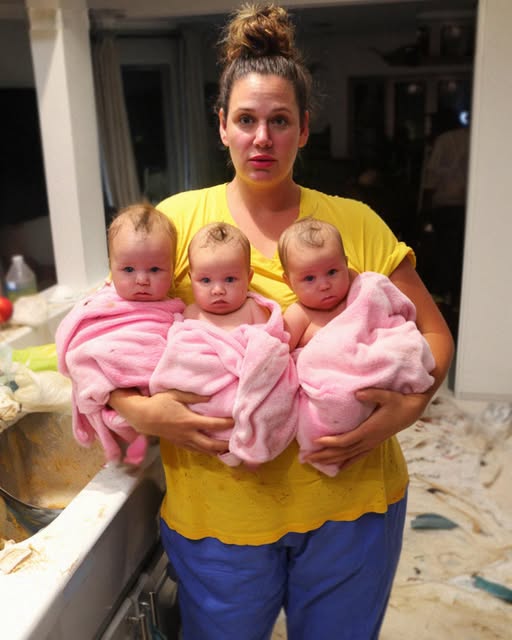
  • My Husband Said I Looked like a ‘Scarecrow’ After Giving Birth to Triplets – I Taught Him a Priceless Leson

    My Husband Said I Looked like a ‘Scarecrow’ After Giving Birth to Triplets – I Taught Him a Priceless Leson

    After giving birth to triplets, my husband called me a “scarecrow” and started an affair with his assistant. He thought I was too broken to fight back. He was wrong. What I did next made him pay a price he never saw coming and rebuilt me into someone he’d never recognize.

    I used to believe I’d found my forever person. The kind of man who made everything seem possible, lit up every room he walked into, and promised me the world. Ethan was all of that and more.

    For eight years, we built a life together. For five of those years, we were married. And for what felt like an eternity, we fought against infertility, month after disappointing month, until finally, I got pregnant… with triplets.

    Three babies on that ultrasound screen felt like a miracle. The doctor’s face when she told us was a mix of congratulations and concern, and I understood why the moment my body started changing. This wasn’t just pregnancy. This was survival mode from day one.

    My ankles swelled to the size of grapefruits. I couldn’t keep food down for weeks. By month five, I was on strict bed rest, watching my body transform into something I didn’t recognize.

    My skin stretched beyond what I thought possible. My reflection became a stranger’s face — puffy, exhausted, and barely holding on. But every kick, every flutter, and every uncomfortable night reminded me why I was doing this.

    When Noah, Grace, and Lily finally arrived, tiny and perfect and screaming, I held them and thought, “This is it. This is what love feels like.”

    Ethan was thrilled at first. He posted pictures online, accepted congratulations at work, and basked in the glory of being a new father of triplets. Everyone praised him for being a rock and such a supportive husband. Meanwhile, I lay in that hospital bed, stitched up and swollen, feeling like I’d been hit by a truck and put back together wrong.

    “You did amazing, babe,” he’d said, squeezing my hand. “You’re incredible.”

    I believed him. God, I believed every word.

    Three weeks after coming home, I was drowning. That’s the only word for it. Drowning in diapers, bottles, and crying that never seemed to stop. My body was still healing, sore, and bleeding.

    I wore the same two pairs of loose sweatpants because nothing else fit. My hair lived in a perpetual messy bun because washing it required time I didn’t have. Sleep was a luxury I’d forgotten existed.

    I was sitting on the couch that morning, nursing Noah while Grace slept beside me in her bassinet. Lily had just gone down after screaming for 40 minutes straight. My shirt was stained with spit-up. My eyes burned from exhaustion.

    I was trying to remember if I’d eaten anything that day when Ethan walked in. He was dressed for work in a crisp navy suit, smelling like that expensive cologne I used to love.

    He stopped in the doorway, looked me up and down, and his nose wrinkled slightly. “You look like a scarecrow.”

    The words hung there between us. For a second, I thought I’d heard him wrong.

    “Excuse me?”

    He shrugged, taking a sip of his coffee like he’d just commented on the weather. “I mean, you’ve really let yourself go. I know you just had kids, but damn, Claire. Maybe brush your hair or something? You look like a living, walking, and breathing scarecrow.”

    My throat went dry, and my hands trembled slightly as I adjusted Noah’s position. “Ethan, I had triplets. I barely have time to pee, let alone…”

    “Relax,” he said, laughing that light, dismissive laugh I was starting to hate. “It’s just a joke. You’re too sensitive lately.”

    He grabbed his briefcase and walked out, leaving me sitting there with our son in my arms and tears burning behind my eyes. I didn’t cry, though. I was too shocked, hurt, and exhausted to process what had just happened.

    But that wasn’t the end of it. That was just the beginning.

    Over the next few weeks, the comments kept coming. Little jabs disguised as concern or humor. “When do you think you’ll get your body back?” Ethan asked one night while I was folding tiny onesies.

    “Maybe you could try some yoga,” he suggested another time, eyeing my postpartum belly.

    “God, I miss the way you used to look,” he muttered once, so quietly I almost didn’t hear it.

    The man who’d once kissed every inch of my pregnant belly now recoiled if I left my shirt lifted while feeding. He couldn’t even look at me without disappointment clouding his eyes, as if I’d betrayed him by not bouncing back instantly.

    I started avoiding mirrors altogether. Not because I cared what I looked like, but because I couldn’t stand seeing what he saw… someone who wasn’t enough anymore.

    “Do you even hear yourself?” I asked him one night after he’d made another crack about my appearance.

    “What? I’m just being honest. You always said you wanted honesty in our marriage.”

    “Honesty isn’t cruelty, Ethan.”

    He rolled his eyes. “You’re being dramatic. I’m just encouraging you to take care of yourself again.”

    Months crawled by. Ethan started staying late at work, texting less, and coming home after the babies were already asleep.

    “I need space,” he’d say when I asked why he was never around. “It’s a lot, you know? Three kids. I need time to decompress.”

    Meanwhile, I was drowning deeper in bottles, diapers, and sleepless nights that blurred into exhausting days. My body ached constantly, but my heart hurt worse. The man I’d married was disappearing, replaced by someone cold, distant… and cruel.

    Then came the night that changed everything.

    I’d just put the babies down after an exhausting bedtime routine when I saw his phone lighting up on the kitchen counter. Ethan was in the shower, and normally I wouldn’t have looked. I’d never been the snooping type.

    But something made me walk over and pick it up.

    The message on the screen made my blood run cold:

    “You deserve someone who takes care of themselves, not a frumpy mom. 💋💋💋”

    The contact name was Vanessa with a lipstick emoji. His assistant. The woman he’d mentioned casually a few times, always in passing, always sounding so innocent.

    My hands shook as I stared at that screen. I could hear the shower running upstairs. Grace started to fuss in the nursery. But all I could focus on was that message.

    I didn’t confront my husband. Not yet. Instead, my instincts kicked in with a clarity I didn’t know I possessed. Ethan was too trusting and arrogant. He’d never put a password on his phone because he never thought I’d have a reason to look. I unlocked it with a swipe.

    The messages between him and Vanessa went back months, filled with flirty texts, complaints about me, and photos I couldn’t bear to look at too closely. My stomach turned as I scrolled, but I didn’t stop because I couldn’t stop.

    I opened my email on his phone and forwarded every single conversation to myself. Screenshots of texts. Call logs. Everything. Then I deleted the sent email from his phone, cleared the trash, and placed it back exactly where I’d found it.

    When he came downstairs 20 minutes later, hair still damp, I was feeding Lily like nothing had happened.

    “Everything okay?” he asked, grabbing a beer from the fridge.

    “Fine,” I said, not looking up. “Everything’s fine.”

    Over the next few weeks, I became someone I didn’t recognize, but in a good way this time. I joined a postpartum support group where other mothers understood what I was going through. My mom came to stay with us, helping with the babies so I could breathe again.

    I started walking every morning, just 15 minutes at first, then 30, then an hour. The fresh air gave me quiet and space to think.

    I began painting again, something I hadn’t done since before the wedding. My hands remembered the brushstrokes, the way colors blended and spoke their own language. I posted a few pieces online and sold them within days. It wasn’t about the money. It was about reclaiming something that was mine.

    Meanwhile, Ethan’s arrogance grew. He thought I was too broken, dependent, and exhausted to notice his late nights and vague explanations. He thought he’d won.

    He had no idea what was coming.

    One evening, I set his favorite dinner on the table — lasagna with extra cheese, garlic bread, and a bottle of red wine. I lit candles and put on a clean shirt. When he walked in and saw the setup, surprise flickered across his face.

    “What’s all this?”

    “I wanted to celebrate,” I said, smiling. “Us getting back on track.”

    He looked genuinely pleased as he sat down. We ate and drank. He started bragging about work, his new “team,” and how well things were going. I nodded along, asking questions while playing the role of the interested wife.

    “Ethan,” I said softly, setting down my fork. “Remember when you said I looked like a scarecrow?”

    His smile faltered. “Oh, come on. You’re not still mad about that…”

    “No,” I interrupted, standing up slowly. “I’m not mad. I actually wanted to thank you. You were right.”

    “What?”

    I walked to the drawer, pulled out a thick manila envelope, and dropped it on the table in front of him. His eyes went to it, then back to me.

    “Open it.”

    His hands shook slightly as he pulled out the printed screenshots of every text, photo, and flirty word he’d exchanged with Vanessa. The color drained from his face.

    “Claire, I… this isn’t what it looks like…”

    “It’s exactly what it looks like.”

    I reached into the drawer again and pulled out another set of papers. “Divorce papers,” I said calmly. “You’ll find your signature is already on record for the house. I made sure of that when we refinanced before the babies came. Funny what you’ll sign when you’re not paying attention. And since I’m the primary caregiver and you’re barely home, guess who’s getting full custody?”

    His jaw dropped. “You can’t do this.”

    “I already did.”

    “Claire, please. I made a mistake. I was stupid. I never meant…”

    “You never meant for me to find out,” I corrected. “There’s a difference.”

    I grabbed my keys and walked toward the nursery. Behind me, I could hear him standing up, his chair scraping against the floor.

    “Where are you going?”

    “To kiss my babies goodnight,” I said without turning around. “And then I’m going to sleep better than I have in months.”

    ***

    The aftermath unfolded exactly as it should have. Vanessa dumped Ethan the moment she realized he wasn’t the successful family man she’d imagined. His reputation at work crumbled after someone (anonymously, of course!) forwarded those inappropriate messages to HR.

    Following the divorce, he moved into a small apartment across town, paying child support and seeing the kids every other weekend when I allowed it.

    Meanwhile, something unexpected happened. My art, which I’d been posting online just to feel human again, started gaining attention.

    One piece in particular went viral, a painting I’d titled “The Scarecrow Mother.” It showed a woman made of stitched fabric and straw, holding three glowing hearts against her chest. People called it haunting, beautiful, and real.

    A local gallery reached out. They wanted to feature my work in a solo exhibition.

    The night of the opening, I stood in that gallery wearing a simple black dress, my hair brushed and styled, my smile genuine for the first time in what felt like years. The triplets were at home with my mom, sleeping peacefully. I’d fed them and kissed them before leaving, promising I’d be back soon.

    The gallery was packed. People I’d never met told me how my work moved them, and how they saw themselves in the stitched fabric and tired eyes of my scarecrow mother. I sold pieces, made connections, and felt alive.

    Halfway through the evening, I saw Ethan standing near the entrance, looking smaller somehow.

    He approached slowly, hands in his pockets. “Claire. You look incredible.”

    “Thank you,” I said politely. “I took your advice. I brushed my hair.”

    He tried to laugh, but it came out wrong. His eyes were wet. “I’m sorry. For everything. I was cruel. You didn’t deserve any of it.”

    “No,” I agreed quietly. “I didn’t. But I deserved better. And now I have it.”

    He opened his mouth like he wanted to say more, but nothing came out. After a moment, he nodded and walked away, disappearing into the crowd and out of my life.

    Later that night, after the gallery closed and everyone had gone home, I stood alone in front of “The Scarecrow Mother.” The lights made the paint shimmer, and the stitched figure looked almost alive.

    I thought about Ethan’s words that day on the couch: “You look like a scarecrow.” Words meant to break me, and make me feel small, worthless, and used up.

    But scarecrows don’t break. They bend in the wind, weather every storm, and stand in fields protecting what matters most. And they do it without complaint, recognition, or needing anyone’s approval.

    Sometimes the greatest revenge isn’t anger or destruction. It’s rebuilding yourself piece by piece until you become someone unrecognizable to those who once made you feel small. It’s standing tall when everyone expects you to fall. And it’s finding beauty in the broken places and turning pain into art.

    As I walked home to my babies that night, the cool air on my face, I whispered to myself, “You were right, Ethan. I’m a scarecrow. And I’ll stand tall no matter how hard the wind blows.”

    And to anyone reading this who’s ever been made to feel less than and torn down by someone who promised to build them up, remember this: You’re not what they say you are. You’re what you choose to become. And sometimes, the person who tries to break you ends up giving you exactly what you need to rebuild yourself stronger than ever before.