Category: General News

  • Little-known mistakes and bloopers in The Rifleman!

    Little-known mistakes and bloopers in The Rifleman!

    For generations, The Rifleman has held a special place in the hearts of TV fans. Even sixty years after its debut, people still talk about the powerful father-son relationship at its center — the bond between Lucas McCain and his son Mark. In an era when television was still finding its voice, this Western became a fixture in countless American homes, offering stories built on courage, decency, and the values parents hoped their kids would actually learn from watching.

    The show wasn’t just entertainment; it was a weekly reminder of what integrity looked like. But behind its polished episodes lay a world of quirks, slip-ups, and lesser-known details that even dedicated viewers may have missed. Like most early Westerns, The Rifleman played fast and loose with historical accuracy. And honestly, that’s part of the charm. The heart of the show mattered far more than whether props or clothing matched the exact decade. Still, some of these bloopers and behind-the-scenes stories are too good not to share — and they reveal just how much personality and improvisation helped make the series legendary.

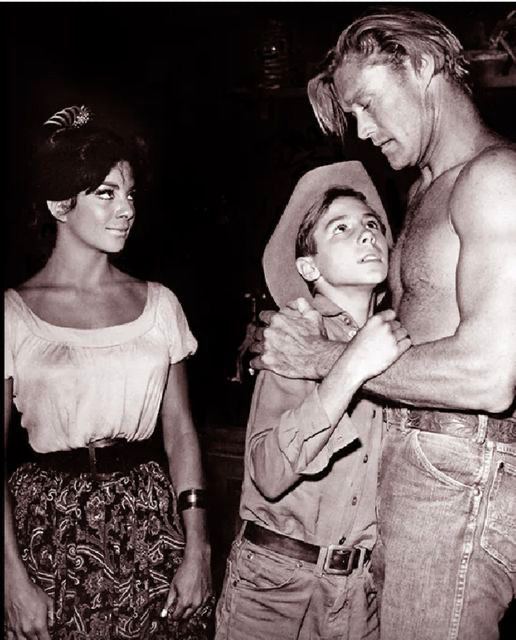
    One of the most amusing discoveries involves Lucas McCain’s wardrobe. Fans remember him as the rugged, straightforward cowboy hero, always ready with his rifle and a wise word for his son. But in the episode “End of a Young Gun,” there’s a quick moment where Chuck Connors, shirtless and repairing a wagon wheel, leans over just enough for viewers to catch the unmistakable “W” stitched onto the back pocket of his jeans. He’s wearing Wranglers — which didn’t exist in the 1880s. Those jeans wouldn’t be manufactured until the 1940s. In other words, Lucas McCain was unintentionally the best-dressed man of the Old West, half a century ahead of style trends.

    There are also moments of sweetness threaded through the show’s history, including the quiet appearances of Chuck Connors’ real-life family. In the episode “Tension,” viewers meet the widow and son of Sid Halpern, an old friend of the McCains. The boy, Toby, has only two lines — but what fans didn’t know is that he was played by Jeff Connors, Chuck’s own son. Jeff later went on to become a film editor and passed away in 2014, but his brief on-screen moment with his father remains a small, meaningful gem in the show’s legacy.

    Landing Chuck Connors for the role of Lucas McCain wasn’t a straightforward process, either. ABC originally offered a salary so modest that Connors turned them down. At the time, he made more money freelancing, and becoming the face of a weekly series didn’t look like a financial upgrade. But fate has a sense of humor. Producers took their kids to see Old Yeller, where Connors played a strong, compassionate father figure. When the children reacted emotionally to his performance, the producers reconsidered their offer. They came back with more money and, crucially, a five-percent ownership stake in the series — an unusually generous deal for a TV actor in the 1950s. With that, Connors signed on, and The Rifleman got its iconic lead.

    The rifle itself deserves its own chapter. The opening sequence of every episode is unforgettable: Connors firing off a rapid series of shots, the rifle spinning, cocking, and loading with incredible speed. Many assumed this was trick photography. It wasn’t. Connors, a former professional athlete, had the reflexes and coordination to make the movements look effortless. The production used two identical Winchester 1892 rifles — one primary, one backup — and they were customized for rapid firing. Even so, Connors’ athleticism did most of the work.

    Ironically, the series is set well before the Winchester 1892 existed. The show takes place in the 1870s and 1880s, making the appearance of this rifle a historical impossibility. But here’s the real twist: Lucas McCain’s rifle wasn’t just any Winchester — it was the same rifle used by John Wayne in the 1939 classic Stagecoach. Producer Arnold Levin later confirmed this, giving The Rifleman a direct line to one of the most celebrated Westerns in film history. It’s a connection that fans still talk about, tying the show to Hollywood’s larger Western mythos.

    Another fascinating detail sits quietly in the background of many episodes: the Madera Hotel. This building became one of North Fork’s most recognizable landmarks, appearing in crowd scenes, street shots, conversations, and confrontations. What most viewers never realized is that the Madera Hotel wasn’t always consistent. Because it was reused so often — sometimes with slight changes to its signage or structure — it accidentally became a running piece of continuity humor. Sharp-eyed fans have spotted furniture, wallpaper, and even staff members mysteriously shifting from one episode to another, all because the production reused sets to stay within budget. Far from detracting from the show, these repeats now feel like an endearing signature of classic TV production.

    And the historical inaccuracies? There were plenty. Guns that didn’t exist yet. Clothing from the wrong decade. Props that magically reappeared after being destroyed in earlier episodes. Even the geography of North Fork seemed to shift from time to time, with certain landmarks showing up in one season and disappearing in the next. But none of that mattered, because the emotional core was so strong. The show wasn’t pretending to be a documentary; it was telling stories about bravery, forgiveness, loyalty, and love — the things that never go out of style.

    More than anything, The Rifleman endured because of the chemistry between Chuck Connors and Johnny Crawford. Their father-son dynamic felt real, layered, and grounded in genuine affection. Crawford, who was only 12 when the show began, later said that Connors became a mentor to him, on and off screen. Their connection is what gave the show its soul, elevating it above other Westerns of the era. Each episode carried a subtle moral backbone, with Lucas teaching Mark lessons that parents across America hoped their own children absorbed.

    Looking back, the little mistakes — the Wranglers from the future, the anachronistic rifle, the recycled sets — don’t tarnish the show’s legacy. They make it more human. They reveal the constraints and creativity of making television in an era without digital editing, continuity teams, or massive budgets. And they highlight how much passion the cast and crew poured into every episode.

    Today, The Rifleman remains a timeless classic, not because it was perfect, but because it was heartfelt. It reminded viewers that strength doesn’t require cruelty, that raising a child takes patience and courage, and that doing the right thing often means standing alone. In a world that changes constantly, those values still resonate — and maybe that’s why fans keep returning to North Fork, eager to relive the stories, the lessons, and yes, even the bloopers that made the show unforgettable.

  • My Ex Wanted to Reconnect with Our Daughter – I Had to Understand His True Intentions

    My Ex Wanted to Reconnect with Our Daughter – I Had to Understand His True Intentions

    When my ex-husband, Leo, reached out saying he wanted to reconnect with our daughter, Lily, I felt something I hadn’t allowed myself to feel in years: hope. This was the man who had missed birthdays, school plays, doctor appointments, and every promise he ever made. Yet suddenly he wanted a weekend with her — “to make things right,” he said. Against my better judgment, a small part of me believed he might finally be ready to show up as her father.

    I packed Lily’s little backpack with all the things she loved: her soft yellow dress, her favorite snacks, her pajamas with the tiny stars on them, and the teddy bear she carries everywhere. As I helped her zip up her jacket, I remembered the first day she came into the world and how Leo cried while holding her. For one brief moment, we felt like a family with a future. I carried that memory with me, even when he didn’t deserve it.

    On Saturday, he sent me a picture of Lily smiling at the park. She looked happy — genuinely happy — and for a second, I let my guard down. Maybe this time he finally understood what fatherhood meant. Maybe he wasn’t all talk. Maybe I didn’t have to keep preparing her for disappointment.

    But by Sunday afternoon, that hope was shattered cleanly in half.

    My sister called, her voice tight with something between anger and disbelief. “You need to look at this right now,” she said. I opened the link she sent, and the world seemed to tip sideways.

    There was Leo on social media, beaming, champagne in hand.

    It was a wedding.

    His wedding.

    He had never mentioned he was getting married. Not in passing, not in conversation, not even as a warning. And there, standing beside him in a white chiffon dress and tiny flower crown, was Lily — our daughter — dressed as the flower girl. Smiling politely for photographers, surrounded by strangers, put on display like a prop in his carefully curated life.

    He didn’t ask my permission. He didn’t ask her if she felt comfortable. He didn’t tell me where she would be or who she would be with. He used our daughter as an accessory to his big moment.

    I grabbed my keys and drove straight to the venue listed on the post.

    When I found her, she wasn’t smiling at all. She was sitting alone on a wooden bench at the edge of the garden, her teddy bear pressed against her chest, her little legs swinging back and forth. She was trying hard not to cry, scanning every face that walked by, her mouth pulled tight in a brave, silent line.

    My heart clenched so hard it hurt.

    I knelt down and scooped her into my arms. She melted against me instantly, relief rushing out of her in a shaky breath. “Mommy,” she whispered, her voice trembling, “I didn’t know where you were.”

    “You’re safe,” I told her. “You’re going home with me now. You didn’t do anything wrong.” I held her tighter than I had in years.

    Leo walked toward us, smiling nervously like this was some small misunderstanding. “Hey,” he said softly, “I didn’t think you’d be upset. She had fun.”

    I didn’t shout. I didn’t make a scene. I didn’t give him the explosion he was bracing for.

    I looked him dead in the eyes and said, quietly but firmly, “You don’t use our daughter for photos, for guests, or for appearances. Not without her understanding, and not without my consent.”

    A few people nearby overheard. They looked from him to me, and their expressions made it clear they understood what he’d done. And what he hadn’t done.

    By the next morning, the wedding photos featuring Lily were gone from social media.

    That didn’t undo the damage, but it told me something important: he knew he had crossed a line.

    The truth was obvious now. His sudden desire to “reconnect” had nothing to do with Lily’s heart. It had everything to do with his image — the perfect father, the devoted man, the family tableau for his friends and followers. He wanted the picture, not the responsibility behind it.

    I won’t pretend I wasn’t furious. But beneath the anger was something deeper, something sharper: clarity.

    When I brought Lily home, she ran inside, pulled on her pajamas, and immediately went back to playing with her stuffed animals. She was safe. She was laughing again. She belonged in a world where her emotions mattered, where her comfort mattered, where she wasn’t used as decoration in someone else’s performance.

    As I watched her, I remembered what my job truly is. Being her mother means stepping into uncomfortable moments with steady hands. It means making decisions she doesn’t yet understand. It means protecting her not just from danger, but from people who should love her better.

    Leo will not have unsupervised visits again until he proves — consistently, not through pretty words — that he understands what parenthood really requires. Not the photo ops. Not the applause. Not the pretend version of fatherhood he performs when an audience is watching.

    Real love isn’t a prop. It isn’t a performance. It isn’t something you post for strangers to admire.

    Real love is presence. Real love is protection. Real love respects a child’s heart.

    And she will always, always have that from me.

    As for him? He has every opportunity to change. But this time, I’m not hoping for it. I’m not waiting for it. I’m not risking her well-being on a man who still treats fatherhood as something optional.

    If he wants to earn her trust, he’ll have to do it the same way she has learned to tie her shoes: slowly, consistently, one step at a time. Until then, she’s safe — and that is all that matters.

  • Kelly Ripa! Hospitalized in Critical Condition! See more

    Kelly Ripa! Hospitalized in Critical Condition! See more

    Beloved morning-show host Kara Ripley was rushed to the hospital early Thursday, leaving viewers stunned and colleagues shaken by the sudden turn of events. Ripley, known for her relentless energy, sharp humor, and nearly two decades on air, is now in critical condition, according to her family’s spokesperson. The news broke just after noon, rippling across social media and sending shockwaves through the entertainment world.

    Ripley built her entire career on consistency — the kind of presence people trust. She was the woman families woke up to, the voice that carried them through chaotic mornings, the smile that made the world feel manageable. She handled celebrity interviews, political debates, cooking segments, and off-the-rails live moments with a steadiness few could match. Her absence on Thursday morning immediately felt wrong. Viewers noticed. Producers scrambled. By lunchtime, rumors were flying. Hours later, her hospitalization was confirmed.

    What exactly happened is still unclear. Those close to her say she had been pushing herself relentlessly these past few months, juggling her show, a new production company, and an upcoming book release. Ripley was never shy about her obsession with staying busy — she wore it like armor, a way to outrun fear, discomfort, or anything that felt too still. But even the strongest engines burn out eventually. Some colleagues admitted privately they weren’t surprised something gave way. They were just hoping it wouldn’t be this.

    On Tuesday, during rehearsals, staff noticed Ripley rubbing her temples more often than usual. She brushed it off. “Just a long week,” she said, cracking a joke to lighten the concern. She powered through the segment, hit every cue, and walked off set with her usual precision. That was Ripley. Always “fine,” always moving forward, no matter what.

    Wednesday, she canceled an afternoon meeting — a rarity that made her assistant raise an eyebrow. “Just a migraine,” she texted. “I’ll sleep it off.” By Thursday morning, she wasn’t answering calls. When a team member stopped by her apartment out of concern, they found her unconscious. She was rushed by ambulance to St. Catherine’s Medical Center, where doctors spent hours stabilizing her. The hospital hasn’t released specifics. The family is asking for privacy. The silence, more than anything, has people worried.

    Ripley has always been a fighter. Born in a small town with a population barely large enough to fill a football stadium, she clawed her way into television with the kind of determination that borders on stubbornness. She interned for free, she worked overnight shifts, she carried equipment twice her size just to prove she could. She once said, “If someone tells me no, I hear ‘not yet.’” That line replayed across fan pages today like a mantra — a reminder of who she is, and why people are hoping she pulls through.

    Coworkers describe her as “the heartbeat of the show.” One longtime producer admitted, voice cracking, that mornings simply wouldn’t feel like mornings without her. Another described how Ripley brought breakfast for the crew every Friday without fail, no matter how exhausted she was or what chaos the week brought. “She gave more than she had,” he said. “Even when she shouldn’t.”

    Fans are gathering outside the hospital, leaving flowers, letters, candles — small offerings of support for a woman whose presence stitched together the fabric of their daily routines. Inside, her family is keeping vigil. A spokesperson released a brief statement: “Kara is receiving the best possible care. We ask for patience, sensitivity, and space as we navigate this difficult time.” It didn’t say much, but it said enough.

    This moment reveals something about how tightly the public holds Ripley. She’s not just a TV personality; she’s a constant. The world has changed around her — politics, culture, the sharp tilt of social media — but every morning, she was there. When life feels unsteady, people cling to the familiar. And Ripley was familiar. The kind of familiar that becomes personal.

    Doctors say the next 48 hours will be crucial. Her condition is stable but serious. The medical team is running tests, monitoring her closely, and doing everything they can. Friends close to her say she has an iron will, the kind that bulldozes through obstacles without hesitation. If anyone can claw their way back from something like this, it’s her.

    Meanwhile, networks are scrambling. Morning television doesn’t pause, not even for its brightest stars. Producers are lining up temporary hosts, shuffling schedules, and preparing statements. Still, there’s an unspoken understanding that nothing they do will feel quite right until Ripley is back — if she returns at all. The uncertainty hangs heavy.

    Ripley’s co-host, Daniel Hart, delivered a subdued message to viewers late Thursday afternoon. “Kara is more than a colleague,” he said. “She’s family. And right now, she needs time, care, and all the strength we can send her way.” His voice wavered as he spoke, something viewers aren’t used to seeing from him. It only drove home how serious the situation is.

    For now, the public waits — refreshing news feeds, scanning for updates, hoping for even a sliver of good news. Ripley spent her career delivering information with clarity and calm. Now everyone is wishing someone could give the same back to them. Uncertainty is a bitter taste. And waiting is its own kind of agony.

    But beneath the anxiety, there’s a thread of collective hope. People are rooting for her. Not because she’s famous, but because she showed up for them—every morning, without fail. Consistency matters. Heart matters. And she has both in abundance.

    Tonight, the lights in her hospital room glow softly against the cold December air. Machines hum steadily. Family sits nearby, exhausted but unwavering. Outside, the city moves on — cabs rushing, neon flickering, life happening. But for the thousands thinking of Ripley tonight, everything feels suspended, paused, holding its breath.

    She’s fought for everything she’s ever had. And now, everyone who watched her fight her way into their lives is holding hope that she’s got one more fight in her.

  • They sang THIS hit in 1958, When I hear it 60 years later? Oh, the memories

    They sang THIS hit in 1958, When I hear it 60 years later? Oh, the memories

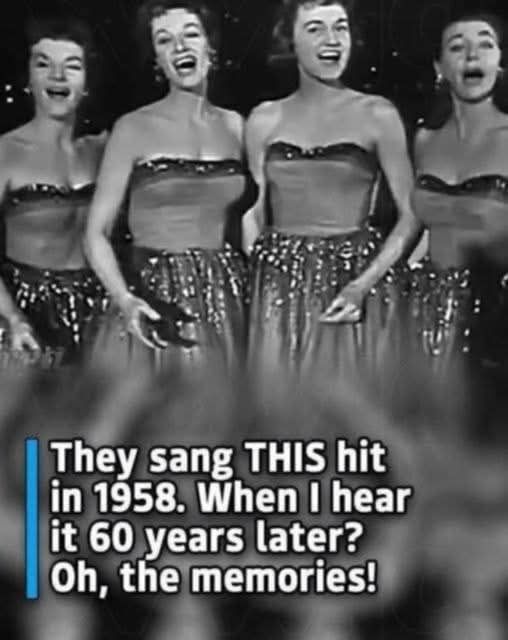
    There are certain songs that don’t just play — they unlock something. A room you forgot existed. A feeling you didn’t know you were still carrying. A doorway back to who you were before life pressed its weight on your shoulders. And for millions of Americans in the late 1950s, one song held that power more than almost any other: “Mr. Sandman.”

    It’s 1958. The country hums with quiet confidence under President Eisenhower. Colors look brighter, summers feel longer, and jukeboxes are the heartbeat of every diner. Rock & roll is clawing its way into the mainstream, but harmony groups still rule the airwaves. Enter the Chordettes — four young women from Sheboygan whose voices blended so perfectly they sounded like one instrument split into four tones.

    Janet, Alice, Lynn, and Jinny didn’t rely on theatrics. No wild costumes, no stage tricks, no screaming electric guitars. Just immaculate harmony and a sweetness so polished it felt effortless. Their performance style echoed the old barbershop quartets, but with a modern female confidence that made them unforgettable. And when they sang “Mr. Sandman,” the world listened.

    The first time people heard it on the radio, it felt like someone had bottled the innocence and thrill of a summer night and wrapped it in melody. But nothing compared to seeing them live. In one iconic television performance, the Chordettes stood under bright studio lights in long, elegant gowns that swung gently as they moved. They looked immaculate — graceful, poised, and completely in command of the stage before even singing a note.

    Then came the sound. Those unmistakable “bum-bum-bums” — rapid, crisp, perfectly in sync. Most assumed it was a vocal trick, a layering of voices, maybe even a bit of production magic. But no. Each “bum” was delivered by a different woman, one after another, weaving a rhythmic pattern so tight it felt impossible. They didn’t miss a beat. They never did. They made technical precision look like joy.

    Even if the lyrics were a touch bold for the era — asking Mr. Sandman for a handsome man to bring to bed — the Chordettes delivered them with a blend of innocence and playfulness that kept it firmly on the right side of charming. Everything about them radiated an era that felt proper on the surface, but quietly daring underneath. They understood timing. They understood showmanship. And they knew exactly how to wink at the audience without breaking the spell.

    One of the funniest elements of that particular performance was the special cut-in scene created just for live television. In the middle of their harmonies, the camera cut to “Mr. Sandman” himself — a young, handsome man answering their imaginary call. He appeared in soft lighting, smiling boyishly, as if he’d stepped right out of a dream the song had conjured. It was light, clever, and captured the playful heart of the piece without overshadowing the women or their voices. When the camera returned to the Chordettes, the audience was already half-swooning and half-laughing.

    Watching it now, decades later, you feel something deeper. You feel the world as it was before it grew cynical. Before everything had an edge. Before auto-tune and digital perfection. These women created magic using nothing but the raw instrument of their voices and the bond between them. And for anyone who lived through those years — or grew up listening to parents talk about them — hearing “Mr. Sandman” is like opening a time capsule.

    You remember drive-ins and milkshakes, radio hosts who spoke with warm voices, long car rides with windows down, and a country still learning who it wanted to become. You remember your mother humming while cooking dinner, your father tapping the steering wheel in rhythm, your grandparents slow-dancing in the living room as if time had stopped just for them. Music didn’t just entertain; it anchored memories.

    The Chordettes were part of that fabric. Their harmonies stitched themselves into weddings, school dances, summer carnivals, and quiet evenings in living rooms across America. They belonged to a generation that wasn’t in a rush — a generation that let songs breathe.

    Sixty years after that 1958 performance, the song hasn’t aged. Not really. It still triggers something immediate. You hear those first notes, and suddenly you’re somewhere else. Somewhere softer. Somewhere simpler. The world shrinks into a familiar warmth, and you realize that certain sounds never lose their grip on the heart.

    What made the Chordettes so captivating wasn’t just talent. It was chemistry. When they sang, they trusted one another completely. No voice overpowered the others. They rose and fell like a tide. They didn’t compete — they completed each other. That kind of harmony is rare, not just musically but in life.

    Today’s music is louder. Faster. Heavier. There’s nothing wrong with that — every generation deserves its own anthem. But every so often, when “Mr. Sandman” drifts through a speaker, the world seems to pause, even if just for three minutes. You remember that joy can be simple. That beauty doesn’t need spectacle. That four women from a small Wisconsin town once took a stage and, without pyrotechnics or production tricks, made history.

    Watching that old clip now, you notice details you missed as a kid. The way Lynn leans slightly toward the microphone. The way Alice lifts her eyebrows during a playful lyric. The way Janet mouths the rhythm even when she’s not singing. The way Jinny’s smile carries a quiet confidence — the kind born from knowing you’re part of something lasting.

    And lasting it was. Their voices kept echoing long after the performance ended. They still echo today. When you play the song, nostalgia isn’t just emotional — it’s physical. Your shoulders loosen. Your breath deepens. You remember pieces of yourself you didn’t realize were fading.

    In a world that moves too fast and forgets too easily, the Chordettes remain a reminder of how powerful simplicity can be. How unforgettable harmony is. How music — real music — outlives time.

    Sixty years later, “Mr. Sandman” doesn’t just bring a dream. It brings back a world. And for a moment, you get to live there again.

  • Rediscovering Confidence in the Smallest Moments!

    Rediscovering Confidence in the Smallest Moments!

    Rita had spent most of her life trying to make herself smaller. It wasn’t something she decided one day — it was something that formed slowly, almost invisibly, as the years piled on. She learned to move quietly, to choose the corner seat, to keep her opinions tucked inside like fragile paper notes that no one had asked to read. Her voice rarely reached full volume, and even when she spoke clearly, she somehow managed to sound like she was apologizing for taking up air. She wasn’t timid by nature; she had simply collected too many moments that taught her it was safer to shrink than to risk being judged or dismissed.

    People like Rita don’t lose confidence all at once — it fades in small pieces. A harsh comment here, a dismissive look there. Expectations, responsibilities, and disappointments stack together until they create a version of yourself that feels disconnected from who you once were. Rita had carried that weight for years, believing it was simply the way life had to feel.

    The shift began on an ordinary Wednesday, a day she expected to pass without anything notable. She had booked a simple salon appointment after realizing she had gone months without doing anything for herself. Her hair had grown uneven, brushing her shoulders in a way that irritated her every morning. She wasn’t looking for glamour — just maintenance, something neat and manageable.

    The salon was small, warm, and full of soft light. There was nothing intimidating about it. Still, when Rita walked in, she had the familiar instinct to step aside, to not disrupt the flow of people who seemed to know exactly where to stand and what to say. She gave her name in a quiet tone, unsure if anyone even heard her. But the stylist — a woman named Shafag with calm eyes and a gentle voice — looked up immediately and smiled like she had been expecting her.

    “Come sit,” she said. “Let’s talk about what you want today.”

    Rita opened her mouth to give the usual answer: “Oh, anything is fine.” But before she could, the stylist asked something different.

    “What makes you feel most like yourself?”

    The question stunned her. It wasn’t about fixing flaws or making drastic changes. It wasn’t even about appearance. It was about identity — the part she had been ignoring for years.

    Rita sat in the chair, staring at her reflection. She didn’t see confidence. She didn’t see certainty. She saw someone who had been surviving, not living. She hesitated, then finally admitted, “I don’t know anymore.”

    “That’s okay,” the stylist said. “We’ll find it.”

    There was no judgment in her voice, no impatience. Just warmth.

    As the appointment unfolded, something unexpected happened — something small, but powerful. The environment itself felt safe. Nobody rushed her. Nobody talked over her. No one demanded anything. The world outside quieted for a moment, and Rita felt like she could finally exhale after holding her breath for years.

    The simple act of having her hair washed felt strangely emotional. Warm water, careful hands, and the sound of gentle conversation created a space where she didn’t need to apologize for existing. As her hair was cut, shaped, and gently styled, she felt layers of tension she didn’t even realize she carried begin to loosen.

    Looking at herself in the mirror afterward, she didn’t see a dramatic makeover. The change was subtle — a soft frame around her face, a bit more movement in her hair, a touch more brightness in her eyes. But the real shift wasn’t physical.

    She saw someone she recognized. Someone she thought she had lost.

    When she stepped outside, she didn’t suddenly feel bold or unstoppable. She didn’t transform into a loud or fearless person. What she felt was quieter, steadier, and far more meaningful.

    She felt allowed — allowed to take up space, allowed to speak without apology, allowed to exist without shrinking herself to make others comfortable.

    Her shoulders relaxed. Her stride lengthened. Her gaze didn’t drop to the ground as it usually did. The world hadn’t changed, but something inside her had.

    Confidence doesn’t always arrive with fireworks. Sometimes it begins in quiet rooms where someone treats you with genuine attention. Sometimes it grows from a question that reminds you you’re human, not invisible. Sometimes it comes from small acts of care — a hand on your shoulder, a warm smile, a hairstyle shaped by someone who sees you as a person rather than a task.

    That day, Rita rediscovered a part of herself she thought was gone for good. She understood that reclaiming confidence doesn’t require perfection, bravery, or sudden transformation. It happens in moments when the world gives you space to breathe, and you finally accept that you deserve that space.

    As she walked home, the air felt lighter. She wasn’t trying to disappear. She wasn’t rehearsing apologies. She wasn’t shrinking. For the first time in a long while, she allowed herself to take up her own space — gently, naturally, and without shame.

    She realized that confidence doesn’t have to be loud. It can grow quietly, in small, steady ways. And sometimes all it takes is one kind person, one safe place, and one unexpected moment to remind you that you deserve to exist fully, without compromising your own presence.

    Rita didn’t become a different woman that day. She became herself again — and that was more than enough.

  • Father of My Baby Mocked Me for Picking $3 Buns for Dinner at the Grocery Store, Next Moment, My Future Was Rewritten

    Father of My Baby Mocked Me for Picking $3 Buns for Dinner at the Grocery Store, Next Moment, My Future Was Rewritten

    I thought I was building a life with the father of my baby — until a trip to the grocery store exposed a truth I could no longer ignore. What happened in front of a shelf of cheap bread rewrote my entire future.

    When I learned I was pregnant at 31, I was terrified and thrilled. Jack and I had been together almost two years. We spent late mornings talking about baby names and whether our kid would grow up with a dog, a cat, or both. He used to say things like, “Can’t wait to have a little one who looks like you,” and I believed him. I believed all of it.

    The night I told him I was pregnant, he hugged me like he meant it. “I’m ready to be a dad,” he whispered.

    But whatever man said those words vanished within weeks.

    He didn’t explode or cheat or walk out. He chipped away at me quietly — eye rolls instead of smiles, sighs instead of conversation, criticism instead of affection. Suddenly, everything I did irritated him. How I folded towels. How I washed dishes. How slow I moved. How “heavy” I breathed.

    Once, he actually said, “You’re breathing like you’re trying to inhale all the oxygen in the room.”
    He laughed. I didn’t.

    I blamed stress. His job was demanding — he was a junior executive trying to climb a corporate ladder packed with sharks. Now there was a baby on the way. Of course he was overwhelmed, right?

    But then money became his obsession. Every grocery run turned into an interrogation. He’d wave receipts in my face and demand explanations for brand-name items. Even dish soap. I switched to off-brand everything to avoid arguments.

    The man who once touched my belly each night stopped asking how I felt. Every meal I cooked was “too salty,” “too bland,” or “too greasy.” Every nap was “lazy.” When I said I felt dizzy, he rolled his eyes and muttered, “You’re not the first woman to be pregnant.”

    I stayed because I wanted my baby to have a father. I stayed because I thought love meant endurance. But the truth was simpler: I stayed because I was scared of starting over alone.

    Everything changed on a rainy Thursday.

    I was seven months pregnant when Jack came home irritated and told me we needed to grab groceries. I followed him through the aisles quietly. When we reached the bakery section, I grabbed a pack of whole-grain buns on sale for three dollars.

    He scoffed loudly.
    “Of course you pick the expensive ones. You think we’re made of money? Anything for the pregnant princess.”

    People turned to look. My cheeks burned.

    “They’re three dollars, Jack,” I whispered.

    He raised his voice — in public. “Probably got pregnant on purpose. A baby guarantees you’d be set for life, huh?”

    My hands shook so badly the buns slipped from my fingers, hit the floor, and burst open.

    Jack laughed.
    “You can’t even hold bread. How are you going to raise a baby?”

    And then—mid-laugh—he froze.
    Because someone was standing behind me.

    A man in a navy suit. Sharp, calm, the kind of man who radiated quiet authority.

    He knelt, gathered the scattered buns, placed them back into the torn bag, and stood.

    Then, in a tone smooth as steel, he addressed Jack by name:
    “Jack, I thought I paid you well enough for your child’s mother to afford a pack of three-dollar buns. Or am I mistaken?”

    Jack went white.

    “Mr. Cole—sir—I didn’t mean… it was just a joke.”

    Cole didn’t blink.
    “You publicly humiliate your pregnant partner over bread. I’d hate to imagine what you consider private behavior.”

    Jack stammered uselessly.

    Cole looked at me, and everything in his expression softened. “Are you alright?”

    I nodded, though my throat was tight. He walked me to checkout, paid for my groceries, and said something that stuck with me:

    “You don’t deserve that.”

    Jack raged all the way home, furious that I had “embarrassed him.” That night, I told him to pack his things and leave. For the first time in months, my voice didn’t shake. He stormed out, and I locked the door behind him, leaning against the wood as relief washed over me.

    Two months later, I gave birth to my daughter, Lilliana. She had my eyes and Jack’s stubborn chin, but her tiny hand wrapped around my finger wiped out every remaining fear. Jack never showed up or reached out. I didn’t miss him.

    When Lilliana was five months old, I went back to the same grocery store. I was comparing yogurt dates when someone behind me said:

    “Still buying the expensive buns?”

    I turned — and there he was. Cole. The man who had quietly defended me in the bakery aisle.

    We talked longer than two strangers should. He learned Jack had disappeared completely. I learned Jack had quit his job shortly after the incident. Cole frowned.

    “He doesn’t get to vanish from responsibility,” he said. “If you want help securing support for your daughter, I can make that happen.”

    He did. With his guidance, I filed for child support and won.

    Emails about court documents turned into coffee. Coffee turned into dinner. Dinner turned into nights where he sat on my living room floor building block towers with Lilliana, letting her knock them down repeatedly while she squealed.

    He never pushed. Never rushed. Never criticized. He just showed up — steadily, consistently, with a patience I didn’t know men were capable of.

    One evening, while Lilliana gnawed on a teething ring, Cole looked at me and said quietly:

    “I’d like to be around. For both of you. If you’ll have me.”

    My yes wasn’t loud. It didn’t need to be. It came from a place inside me that had finally healed enough to hope again.

    A year later, he proposed. Not with extravagance — just in our living room, while Lilliana banged a spoon against a toy pot, laughing. It was imperfect and chaotic and exactly right.

    I never imagined my life would pivot around a pack of $3 buns.
    But sometimes life doesn’t break you — it clears the path.
    Pushes out the wrong man so the right one can walk in.

    And sometimes, the man who sees you crying in a grocery aisle doesn’t just pick up your bread.

    He picks up your life — and hands you back a future you thought you’d lost.

  • In 1977 she saved burned baby, 38 yrs later she sees a photo on Facebook and freezes!

    In 1977 she saved burned baby, 38 yrs later she sees a photo on Facebook and freezes!

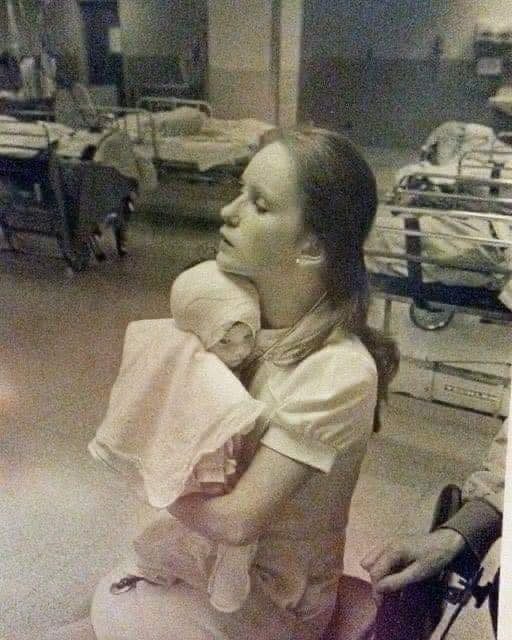
    For decades, Amanda Scarpinati kept one black-and-white photograph tucked away like a lifeline — a young nurse holding her, comforting her, protecting her. The picture was taken in 1977, in a New York hospital, after a moment that shattered Amanda’s infant world and reshaped the rest of her life. She was only three months old when she fell from a sofa into a hot-steam humidifier, suffering severe third-degree burns. The image captured her bandaged head resting against the shoulder of a nurse who cradled her as though she were the most precious thing in the world.

    Amanda grew up clinging to that photo. Whenever the pain, surgeries, or bullying became too much, she pulled it out. The nurse’s face was calm, compassionate, steady — a reminder that somebody had once looked at her with pure kindness. It became her anchor in a childhood marked by cruelty. Kids mocked her scars. Adults stared too long. Some avoided looking at her at all. In the chaos of being a burned, disfigured child in a world that didn’t know how to be gentle, that nurse’s small act of tenderness became her safe place.

    She didn’t know the woman’s name. She didn’t know her voice or her story. She only knew the warmth she’d radiated in that frozen moment. Over the years, that unknown nurse became something more than a memory — she became a guardian angel Amanda desperately wanted to find. She searched for twenty years, asking hospitals, reaching out to staff, chasing any lead that might reveal the woman who had held her in her darkest moment.

    Nothing worked.

    Finally, in frustration but not defeat, Amanda turned to social media. She posted the photos publicly with a simple plea: Help me find her. She explained the story, the accident, the surgeries, the isolation, the bullying — and the comfort she drew from a stranger who had cared for her before she ever knew how to care for herself. She ended it with: “Please share. You never know who it could reach.”

    The internet answered.

    Her post spread instantly, circulating across timelines and groups until it reached someone who recognized the face in the photo. A former nurse at Albany Medical Center messaged her the very next day. She knew exactly who the woman was: Susan Berger. She had worked alongside her in 1977. The baby in the picture wasn’t just another patient — Susan had remembered her. And, remarkably, she had saved the photos too.

    Susan had been only 21 years old, a brand-new nurse straight out of college, when she held Amanda in her arms that day. She remembered the accident, the little girl wrapped in gauze, the incredible calm that radiated from her despite the trauma she’d endured. Most babies cry or thrash after surgery, Susan said, but Amanda was almost serene. “She was just so trusting,” Susan recalled. “It was amazing.”

    That word — trusting — meant something different for Amanda. She had spent years relearning trust through pain, surgeries, and social cruelty. And here was a woman who remembered her not as a medical case but as a tiny human who’d leaned into her for comfort.

    Thirty-eight years after that photo was taken, the two finally met.

    The reunion was emotional in a way few moments in life ever are. Two women — one who saved a child, one who grew up searching for the person who made her feel safe — stood across from each other, bound by a moment neither had forgotten. Amanda cried as she thanked her. Susan embraced her with the same gentleness she had shown decades before. For Susan, it was a privilege. For Amanda, it was closure — the kind she had needed since she was a scarred little girl staring into a photograph of a stranger who made her feel seen.

    Not many nurses get to witness the long arc of their impact. They move through endless shifts, emergencies, surgeries, quiet nights and chaotic mornings, often never knowing the lives they’ve touched. Susan called herself lucky to be found, lucky that Amanda remembered her, lucky to be the face of every nurse who had cared for that injured infant.

    Amanda felt lucky too — lucky to have finally found the woman who showed her kindness before she even understood the word. Lucky to be able to say thank you. Lucky to rewrite a memory that had lived inside her for almost four decades.

    Stories like this remind us that compassion doesn’t dissolve over time. Sometimes it takes years — even a lifetime — to understand the impact a single kind gesture can have. One nurse held a burned infant in her arms in 1977, and that moment carried Amanda through years of pain, healing, and searching.

    And when she finally found the woman from that photograph, the world saw a truth we often forget: kindness may seem small in the moment, but to someone else, it can mean everything.

    If this story shows anything, it’s that nurses around the world quietly perform miracles — not always in operating rooms, not always with medical equipment, but with presence, patience, and compassion in moments when people need them most.

  • This photo is not edited, look closer and try not to gasp when you see it!

    This photo is not edited, look closer and try not to gasp when you see it!

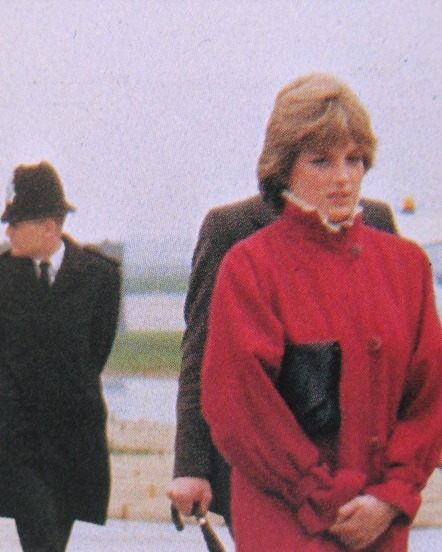
    Princess Diana’s story has always carried a raw, human truth beneath the glittering surface of royal fantasy. The world saw a fairytale unfolding in the early 1980s — a shy kindergarten teacher swept into the grandeur of monarchy, photographed, adored, celebrated. But behind those iconic images lived a young woman wrestling with heartbreak long before her wedding dress ever touched the aisle. One particular photograph from 1981, taken at Heathrow Airport, captures Diana crying as she says goodbye to Prince Charles before he departs on a royal tour. For years, the public viewed it as a tender, emotional moment between two lovers temporarily parting. But once the truth came forward, that picture became something entirely different — a window into the lonely reality Diana was already facing.

    That day wasn’t about missing him. It was about betrayal.

    Diana later revealed that shortly before Charles left for that trip, she overheard a phone call between him and Camilla Parker Bowles — a call filled with intimacy that had nothing to do with her. It confirmed what her instincts had been warning her about: there was someone else, and she had been standing on the outside of her own engagement. The tears the cameras captured weren’t the tears of a woman sad to say goodbye. They were the tears of a woman realizing she’d stepped into a life where she would always be competing with a shadow.

    In private recordings made for Andrew Morton’s groundbreaking book and later highlighted in the documentary Diana: In Her Own Words, she described her devastation with startling clarity. She was young, in love, and convinced she was stepping into a union built on mutual affection. Instead, she found herself entangled in a triangle that had been running long before she arrived.

    That heartbreak deepened when she discovered a bracelet Charles had commissioned for Camilla — a piece of jewelry he intended to give her just days before marrying Diana. For a bride-to-be, it wasn’t just a blow; it was a confirmation of her worst fear. She wasn’t the chosen one — she was the convenient one. The rage and grief she felt in that moment stayed with her, carving an invisible scar she’d carry for years.

    Even her attempt to confront her anxiety before the wedding led nowhere. After an unsettling lunch with Camilla — filled with implications, boundaries, and hints Diana couldn’t ignore — she went to her sisters, frantic, telling them she didn’t think she could go through with the wedding. Their answer was brutally realistic: “Your face is on the tea towels. It’s too late.” That was the world she was entering — one where her emotions, her doubts, even her heartbreak, mattered far less than the image being sold to the public.

    On her wedding day, the world saw a glittering princess, radiant and smiling. What they didn’t see was the woman who had spent the days before drowning in doubt, fear, and betrayal. That famous Heathrow photo, in hindsight, says everything the fairytale tried to hide. Behind the lace and jewels was someone already hurting, already ignored, already alone.

    Diana’s later candor about her struggles stunned the world. Her confrontation with Camilla, her public acknowledgment of the fractured marriage, and her iconic statement — “There were three of us in this marriage, so it was a bit crowded” — stripped away the fantasy the monarchy had tried so hard to preserve. She dared to expose the truth, not to hurt anyone, but to reclaim a narrative that had never been hers to control.

    Her death in 1997 turned her story into something almost mythic. Even now, decades later, images like that Heathrow photo hit differently. You don’t just see a crying woman — you see a cry for help the world wasn’t ready to understand at the time. You see a young bride stepping into a life that promised protection but delivered isolation. You see the beginning of a tragedy wrapped in royal silk.

    And yet, Diana’s legacy isn’t defined by the pain she endured — it’s defined by what she did despite it. Her empathy, her courage, her willingness to show her own wounds so others could feel less alone… those are the pieces of her story that turned her into more than a princess. They made her a symbol of authenticity in a world obsessed with perfection.

    Looking back, that unedited photo doesn’t just reveal a moment — it reveals the truth behind the illusion. A woman on the edge of a new life, already heartbroken, already aware of what the world didn’t know yet.

    And it reveals her strength too, because even in the middle of that heartbreak, she kept going. She stepped into the cameras, the duties, the expectations, and still managed to become someone unforgettable.

    Diana’s story remains a reminder that even the brightest public image can hide deep private pain — and that true courage is often found in the moments when no one is supposed to be looking.