Author: admin

  • The Night I Thought He Would Propose, He Played a Joke Instead, So I Gave Him One Back!

    The Night I Thought He Would Propose, He Played a Joke Instead, So I Gave Him One Back!

    For three years, I poured my life into Ryan with the kind of meticulous devotion that only someone building a forever home can muster. Ours wasn’t a whirlwind romance born of reckless impulse; it was a slow, deliberate construction. I was his sounding board during late-night work crises, his primary cheerleader through three job changes, and the person who meticulously mapped out a future for us that felt as solid as bedrock. I didn’t just love him; I invested in him. I believed that every compromise I made was a brick in the foundation of our eventual marriage.

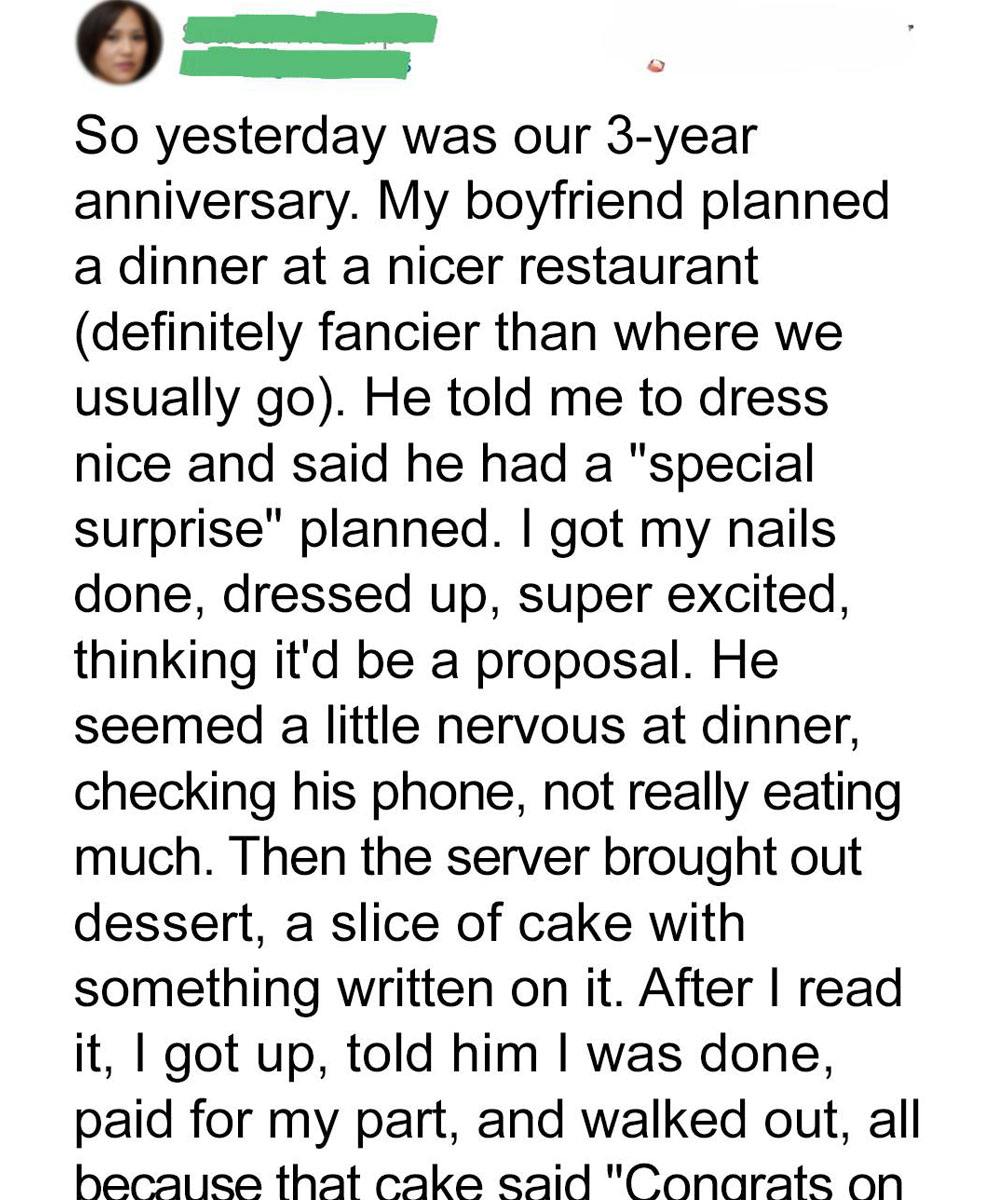
    When our third anniversary approached, the air between us seemed to vibrate with a new kind of gravity. Ryan had been acting differently—hushed phone calls, secretive smiles, and finally, a dinner reservation at The Gilded Oak, the kind of establishment where people go to make life-altering promises. When he told me, with a playful glint in his eye, that he had a “special surprise” planned for the evening, my heart did a slow, hopeful somersault.

    I spent three hours getting ready. I curled my hair into soft waves and had my nails done in a delicate, understated blush—the kind of color that looks perfect framed by a diamond. I chose an emerald green silk dress, the one Ryan always said made my eyes look like a forest in spring. As I looked in the mirror, I didn’t just see a woman going to dinner; I saw a woman on the precipice of her new life. I was ready to say “yes” before the question was even asked.

    The evening began like a dream. The restaurant was bathed in amber candlelight, and the scent of expensive lilies hung in the air. Ryan looked devastatingly handsome in a charcoal suit, his gaze lingering on me with an intensity that made my skin tingle. We talked about our favorite memories, the wine was exquisite, and with every passing course, my anticipation mounted. By the time the table was cleared for dessert, my pulse was a drumbeat in my ears. I saw the waiter approaching with a covered silver platter, and I instinctively straightened my posture, my hands trembling beneath the white linen tablecloth.

    The waiter set the plate down with a flourish. My eyes darted to the center, expecting a velvet box or a ring tucked into a fold of chocolate. Instead, I saw a pristine white plate drizzled in elegant dark chocolate script. It read: “Congrats on Your Promotion!”

    The air left my lungs as if I’d been struck. I stared at the words, waiting for the punchline, waiting for the plate to be whisked away and replaced with the real surprise. But the replacement never came.

    Ryan leaned back, a smug, self-satisfied grin spreading across his face. “Surprise, babe! I knew how much that role meant to you, so I figured we should celebrate the inevitability of it.”

    His words felt like shards of glass. Only two weeks prior, I had been passed over for the Senior Director position I had spent eighteen months preparing for. The promotion had gone to a man I had personally mentored, a man with half my experience. To make matters worse, the office gossip mills had informed me that the partners felt I was “distracted” by my personal life—specifically, that I was likely “about to settle down” and start a family, making me a “flight risk” for a leadership role.

    Ryan knew this. He had held me while I cried the night the news broke. He had listened to me vent about the systemic unfairness of it all. And yet, here he was, presenting me with a “promotion” dessert at our anniversary dinner.

    “I didn’t get the job, Ryan,” I said, my voice barely a whisper. “You know that.”

    “Oh, I know,” he said, waving a hand dismissively as he took a sip of wine. “But it’s about ‘manifesting,’ right? I’m just putting the energy out there. It’s a joke, honey. A way to lighten the mood so you aren’t so gloomy about it. Don’t be so sensitive.”

    In that moment, the scales fell from my eyes. The man sitting across from me didn’t see my pain as something to be comforted; he saw it as an inconvenience to be mocked. He wasn’t celebrating my success; he was trivializing my failure under the guise of “positive vibes.” The “joke” was a power play—a way to remind me that my professional ambitions were secondary to his entertainment.

    I didn’t scream. I didn’t make a scene. I felt a cold, crystalline clarity settle over me. I reached into my purse, pulled out my credit card, and signaled for the waiter. I paid for my half of the exorbitant meal, stood up, and looked at Ryan. He looked confused, his fork halfway to a mouthful of the “promotion” cake.

    “Manifest this,” I said quietly. Then, I walked out of the restaurant and into the cool night air, leaving him alone with the chocolate script of a lie.

    He didn’t call that night, likely waiting for me to apologize for “ruining” the evening. He didn’t call the next day, either. By the third day of silence, I realized that Ryan wasn’t just a man who made a bad joke; he was a man who felt comfortable in my discomfort. He was a man who thrived on being the one who could make me feel small. I decided then that if he wanted a joke, I would give him a masterpiece.

    A week later, I sent out an invitation for a “Surprise Celebration” at my apartment. I invited our mutual friends and a few of his closest buddies. Ryan, arrogant as ever, showed up with a smirk, clearly assuming I was throwing a party to win him back.

    The apartment was decked out in funeral-chic: black and gold streamers, dim lighting, and a massive banner across the living room that read: “Congrats on the Receding Hairline!”

    In the center of the room was an elaborate, tiered cake topped with a tiny plastic man clutching a toupee. The frosting read: “Manifesting the Baldness Early!”

    The room went silent as Ryan walked in. His face turned a deep, mottled red. He had always been incredibly vain about his thick, dark hair—it was the one thing he was most insecure about losing.

    “What is this?” he hissed, stepping toward me. “You think this is funny?”

    I tilted my head, mimicking the exact tone he had used at the restaurant. “Positive vibes, Ryan! I’m just putting the energy out there. It’s a joke, honey. Don’t be so sensitive.”

    The irony was a physical weight in the room. His friends, who had heard his boastful version of our anniversary disaster, began to snicker. They knew Ryan’s ego, and they knew exactly why I was doing this. The mockery he had directed at my career had been turned back onto his vanity, and he couldn’t handle the sting. He sputtered for a moment, unable to find a comeback that wouldn’t make him look like a hypocrite, and then he stormed out, slamming the door so hard the black balloons shivered.

    Most of the guests filtered out shortly after, the tension finally breaking into awkward departures. But one of Ryan’s oldest friends, Mark, stayed behind to help me clear the plates. He handed me a glass of water and looked at me with a sad, knowing smile. “You know,” he said softly, “we all thought he was being a jerk at dinner. He told us about the ‘promotion’ plate like it was the funniest thing in the world. You deserved a lot better than a guy who laughs at your setbacks.”

    I thanked him, and as the door closed behind the last guest, I sat in my quiet apartment. There was no ring on my finger. There was no “dream home” by the lake. But as I looked at the “Congrats” banner, I felt a lightness I hadn’t felt in years.

    For three years, I had been shrinking myself to fit into the spaces Ryan left for me. I had been accepting “jokes” that were actually insults and “support” that was actually control. I had been waiting for him to propose a future to me, never realizing that I held the power to propose a future to myself.

    Ryan never called to apologize, and I never reached out to bridge the gap. He stayed in his world of manifestation and mockery, and I stepped into a world of reality and self-respect. Losing him didn’t feel like a tragedy; it felt like an eviction of a ghost that had been haunting my potential.

    That night, I didn’t get a proposal from a man, but I made a commitment to a woman—the one staring back at me in the mirror. I promised her that she would never again be the punchline of someone else’s cruel joke. I said “yes” to my own worth, and for the first time in my life, I knew the engagement would last forever.


  • SOTD – This was the horse that devoured his du! See more

    SOTD – This was the horse that devoured his du! See more

    The morning had begun with the kind of frantic energy that usually precedes a milestone. I was halfway through my shift at the precinct when my phone buzzed on the desk, vibrating with an insistence that made my chest tighten before I even saw the caller ID. It was Lily, my five-year-old daughter. When I answered, I expected her usual cheerful babble about a drawing or a cartoon, but instead, I met a silence so heavy it felt cold.

    “Daddy,” she whispered, her voice sounding thin and frayed, like a thread about to snap. “My tummy hurts. It hurts really bad.”

    Parental instinct is a sharp, jagged thing. I didn’t wait to check out or notify my sergeant; I simply grabbed my keys and ran. The ten-minute drive home was a blur of near-misses and adrenaline. When I burst through the front door, I found Lily curled into a ball on the sofa, her small face pale and slick with sweat. But it was her stomach that stopped my heart. Under her thin pajama top, her midsection was distended—hard and swollen as if she had swallowed a small basketball.

    I scooped her up, her weight feeling terrifyingly light against my chest, and drove to the emergency room with the siren of my own heartbeat ringing in my ears. I kept telling her it would be okay, a lie that every parent tells when they are gripped by the absolute certainty that something is profoundly wrong.

    When we arrived, the triage nurse took one look at Lily’s abdomen and moved us to the front of the line. Within minutes, we were in a small, sterile room bathed in harsh fluorescent light. A young doctor with tired eyes entered, introduced himself as Dr. Aris, and began a physical examination. I watched his hands—steady, professional—as they pressed against Lily’s swollen belly. I saw the moment his expression shifted from clinical concern to something much darker.

    “We need an immediate ultrasound,” he said, his voice clipped. “Now.”

    They wheeled her away, leaving me to pace the small room. My mind raced through every possibility: a burst appendix, an internal blockage, some rare childhood illness I’d only read about in textbooks. I tried to stay calm, to remember my training as an officer, but in that moment, I wasn’t a cop. I was just a father watching his world crumble.

    An hour later, Dr. Aris returned. He wasn’t alone. Two uniformed officers from a neighboring precinct stood behind him. I felt a cold wave of confusion wash over me. I stood up, my hand instinctively reaching for where my badge would be if I weren’t in my civilian clothes.

    “Doctor? What’s going on? How is she?” I asked, my voice cracking.

    Dr. Aris didn’t look at me with sympathy. He looked at me with a mixture of disgust and cold fury. “I’ve seen a lot of things in this ER,” he said, holding up a printout from the ultrasound. “But this is a new low. I’ve already contacted Child Protective Services, and these officers are here to take you into custody.”

    I stared at him, paralyzed. “Custody? For what? My daughter is sick!”

    “Your daughter isn’t sick,” the doctor snapped, thrusting the ultrasound image toward me. “Look at this. Look at the density of the mass in her lower abdomen. That’s not a tumor, and it’s not an organ. Those are packets. Highly concentrated, plastic-wrapped packets of narcotics. You used your own five-year-old daughter as a drug mule.”

    The world tilted. I looked at the grainy black-and-white image, seeing the rhythmic, unnatural shapes nestled deep within my daughter’s body. I felt a surge of nausea so violent I had to lean against the wall. The officers moved in, their hands going for their handcuffs.

    “Wait!” I screamed, the realization hitting me like a physical blow. “I’m a cop! I’m with the 4th Precinct! Check my ID!”

    One of the officers paused, squinting at me. “I don’t care if you’re the Commissioner. If you put drugs in a kid—”

    “I didn’t!” I roared, the pieces finally clicking into place in the most horrific way imaginable. “I’ve been working an undercover narcotics sting for six months. My ex-wife… her new boyfriend… he’s one of the primary targets. I was supposed to pick Lily up yesterday, but they missed the drop-off. They said she was staying an extra night for a birthday party.”

    The room went silent. The officers looked at each other, the tension shifting from aggression to a frantic, sickening realization. I explained through ragged breaths that I had been investigating a ring that used “untraceable” couriers. I had never, in my darkest nightmares, imagined they would use my daughter.

    While the officers called my precinct to verify my identity, Lily was rushed into emergency surgery. The next four hours were a descent into a private hell. I sat in the waiting room, still flanked by guards, staring at my hands. I thought about the “birthday party” Lily had supposedly attended. I thought about her mother, the woman I once loved, and how she could have stood by and watched a man force-feed our daughter lethal amounts of cocaine.

    The surgeon finally emerged, his scrubs stained with blood. He looked exhausted but gave a small, weary nod. “We got them all out. One of the packets had started to leak—if you had arrived thirty minutes later, the toxicity would have been fatal. She’s stable, but she has a long road ahead.”

    The relief was so overwhelming I fell to my knees, sobbing into the industrial carpet. But the relief was short-lived, replaced by a cold, vengeful fire. With my identity confirmed and my sergeant on-site, the investigation turned into a manhunt.

    Within six hours, we had a tactical team at my ex-wife’s apartment. We found her boyfriend attempting to flee through a back window. When we searched the premises, we found the industrial-grade plastic and the heat-sealer they had used to prep the “shipments.” My ex-wife was sitting at the kitchen table, staring blankly at a half-eaten cake, her eyes vacant and glazed. She didn’t even fight when the cuffs went on.

    In the weeks that followed, the story became a national scandal, a grim reminder of the depths to which the drug trade can sink. But for me, the headlines didn’t matter. What mattered was the quiet afternoon in the recovery ward when Lily finally woke up.

    She looked at me, her eyes finally clear of the pain and the fog of medication. “Daddy,” she whispered.

    “I’m here, baby,” I said, taking her small hand in mine.

    “The bad man told me they were ‘magic beans’ for my birthday,” she said, a single tear rolling down her cheek. “But they didn’t feel like magic.”

    I stayed by her side for every minute of her recovery, sleeping in the uncomfortable hospital chair and holding her hand through the night. The doctor who had called the police on me eventually came by to apologize, but I told him there was no need. He had done exactly what he was supposed to do. He had seen a child in danger and he had acted to save her.

    I ended up leaving the force after that. I couldn’t look at a badge or a precinct without seeing those ultrasound images. I took Lily far away, to a quiet town near the coast where the air is clean and the people are kind. We have a small garden now, and sometimes we sit outside and watch the sunset. Lily still has a scar on her stomach, a thin silver line that reminds us of the day the world tried to break her. But when she laughs, the sound is full and bright, no longer thin, and I am reminded that even the most heartbreaking stories can find their way to a second chance. I am no longer an officer of the law; I am just a father, and that is the only title I ever truly wanted.

  • This SUVs Back Window Message Sparks Powerful Reactions!

    This SUVs Back Window Message Sparks Powerful Reactions!

    The highway is usually a place of anonymity, a streaming river of steel and glass where we coexist in a state of mutual indifference. We stare at taillights and license plates, our minds drifting through podcasts or mental to-do lists, rarely considering the interior lives of the strangers in the lanes beside us. Most people use their rear windows to broadcast trivialities: a stick-figure family, a university decal, or a faded “Baby on Board” sign. But on a sweltering Tuesday afternoon, amidst the rhythmic hum of interstate traffic, a mud-splattered black SUV turned a mundane commute into a site of profound public reckoning.

    The driver had bypassed the colorful stickers and the clever vanity plates. Instead, they had taken a white grease pencil and used the back window as a canvas for a manifesto of raw, jagged honesty. The message was written in a hurried, trembling hand, the letters large enough to be read from three car lengths back. It didn’t just demand attention; it commanded a silence that felt heavy enough to dampen the sound of the engines.

    “TO THE PERSON I GAVE TWENTY YEARS TO: YOU DIDN’T JUST BREAK OUR VOWS. YOU BROKE THE VERSION OF ME THAT BELIEVED IN PEOPLE. ENJOY THE SILENCE YOU TRADED EVERYTHING FOR.”

    As the SUV merged into the fast lane, a ripple effect traveled through the surrounding traffic. Drivers who were usually aggressive—the tailgaters and the lane-weavers—found themselves slowing down, maintaining a respectful distance as if the vehicle were a funeral procession or a fragile relic. There is something inherently startling about seeing private heartbreak dragged into the clinical glare of the public daylight. We are a society built on the polite concealment of our wounds, yet this driver had decided that the weight of their betrayal was too heavy to carry in secret.

    The brilliance of the message lay in its ambiguity and its universality. You didn’t need to know the driver’s name, their gender, or the specific details of the infidelity to feel the visceral throb of the wound. Twenty years. Two decades of shared grocery lists, folded laundry, late-night conversations, and built-in assumptions about the future—all evaporated into a few lines of white ink on a piece of tempered glass. It forced every person behind that SUV to hold a mirror up to their own lives. We looked at the message and then looked at our own passengers, or the empty seats beside us, and felt the sudden, terrifying fragility of our own loyalties.

    As the miles stretched on, the SUV became a focal point for a strange, silent community of commuters. In the cars following behind, you could see the shifts in body language. A woman in a silver sedan gripped her steering wheel a little tighter, her eyes fixed on the glass as if reading a prophecy. An older man in a pickup truck adjusted his rearview mirror, his expression softening into something resembling grief. We were all witnessing a person in the exact moment they decided that “moving on” required a public shedding of their old skin.

    The act was undeniably risky. In an era of viral outrage and digital mockery, broadcasting your deepest trauma to a thousand strangers is an act of radical vulnerability. It was a refusal to be a victim in the shadows. By writing those words, the driver was reclaiming the narrative of their life. They were saying: I am not ashamed of my hurt; you should be ashamed of the reason for it. It was a bold interrogation of the concept of loyalty. It asked everyone on that road a piercing question: What do you do when the person who was supposed to be your sanctuary becomes the person you need sanctuary from?

    There is a specific kind of pain that comes from a long-term betrayal. It isn’t just the loss of a partner; it is the retroactive poisoning of your own memories. When twenty years are revealed to be built on a foundation of deceit, you don’t just lose your future—you lose your past. You find yourself wandering through old photographs and mental archives, wondering which smiles were real and which promises were decoys. The driver’s message captured that erasure perfectly. The “silence” they mentioned wasn’t just the absence of noise in a house; it was the hollow, echoing void left behind when a life’s worth of trust is excavated in a single moment.

    As the sun began to dip toward the horizon, casting long, golden shadows across the asphalt, the SUV finally signaled for an exit. For a brief moment, the light hit the back window just right, making the white grease pencil glow with an almost ethereal intensity. It looked like a neon sign in the wilderness, a warning and a testament all at once.

    The vehicles that had been following it—the silver sedan, the pickup truck, the dozens of others who had shared that mile of road—continued straight. But the atmosphere had changed. The anonymity of the highway had been punctured. We were no longer just a collection of machines moving from point A to point B; we were a collection of stories, many of them held together by the same fragile threads of trust that had snapped for the driver of the black SUV.

    How many of us have wanted to do exactly what that driver did? How many of us have carried a secret so corrosive that we felt like we might explode if we didn’t scream it into the wind? We stay silent because we are told it is “dignified,” or because we fear the judgment of the world. But as the black SUV disappeared down the off-ramp, weaving into the local traffic of some unknown suburb, it left behind a powerful lesson in the necessity of truth.

    Sometimes, healing doesn’t begin in a therapist’s office or a quiet room. Sometimes, it begins on the I-95 at sixty-five miles per hour. It begins when you stop hiding the wreckage and start acknowledging that the crash happened. The driver may have been heading toward an empty house, but they were driving there with a lighter load. They had broadcast their pain, and in doing so, they had forced the world to acknowledge their existence.

    Long after the taillights of that SUV had faded into the dusk, the message remained etched in the minds of those who saw it. It served as a reminder that every car we pass is a vessel for a complicated, often painful journey. It reminded us that loyalty is not just a word, but a sacred debt—and that when that debt is defaulted upon, the fallout is rarely contained within the walls of a home. We drove on into the night, more aware of the people in the lanes beside us, wondering what messages we might write on our own windows if we only had the courage to be that honest.

  • 200 Bikers Surrounded Orphanage When The Sheriff Tried Evicting 23 Kids On Christmas Eve!

    200 Bikers Surrounded Orphanage When The Sheriff Tried Evicting 23 Kids On Christmas Eve!

    The cold air of Christmas Eve bit through my wool coat as I sat in the darkened interior of my sedan, watching the flashing blue lights of the sheriff’s cruisers. My name is Harold Matthews, and for twenty-two years, I have been a judge. My life has been defined by the rigid application of the law, a world of black robes, leather-bound statutes, and the heavy finality of a gavel. But that night, the weight of my own signature felt like a leaden stone in my chest. Three days prior, I had signed the eviction order for St. Catherine’s Children’s Home. The law was clear: the bank had foreclosed, the appeals were exhausted, and the property had to be vacated.

    I shouldn’t have been there. Judges are meant to be the architects of consequences, not the witnesses to them. Yet, some gnawing sense of guilt had driven me to this street corner to watch twenty-three children, aged four to seventeen, be ushered out into the winter night to be processed into the state’s overcrowded system. I watched as Sheriff Tom Bradley, a man I’d shared coffee with for a decade, clutched the paperwork with trembling hands. He was a man of duty, but even duty has its limits when it involves traumatizing orphans on the holiest night of the year.

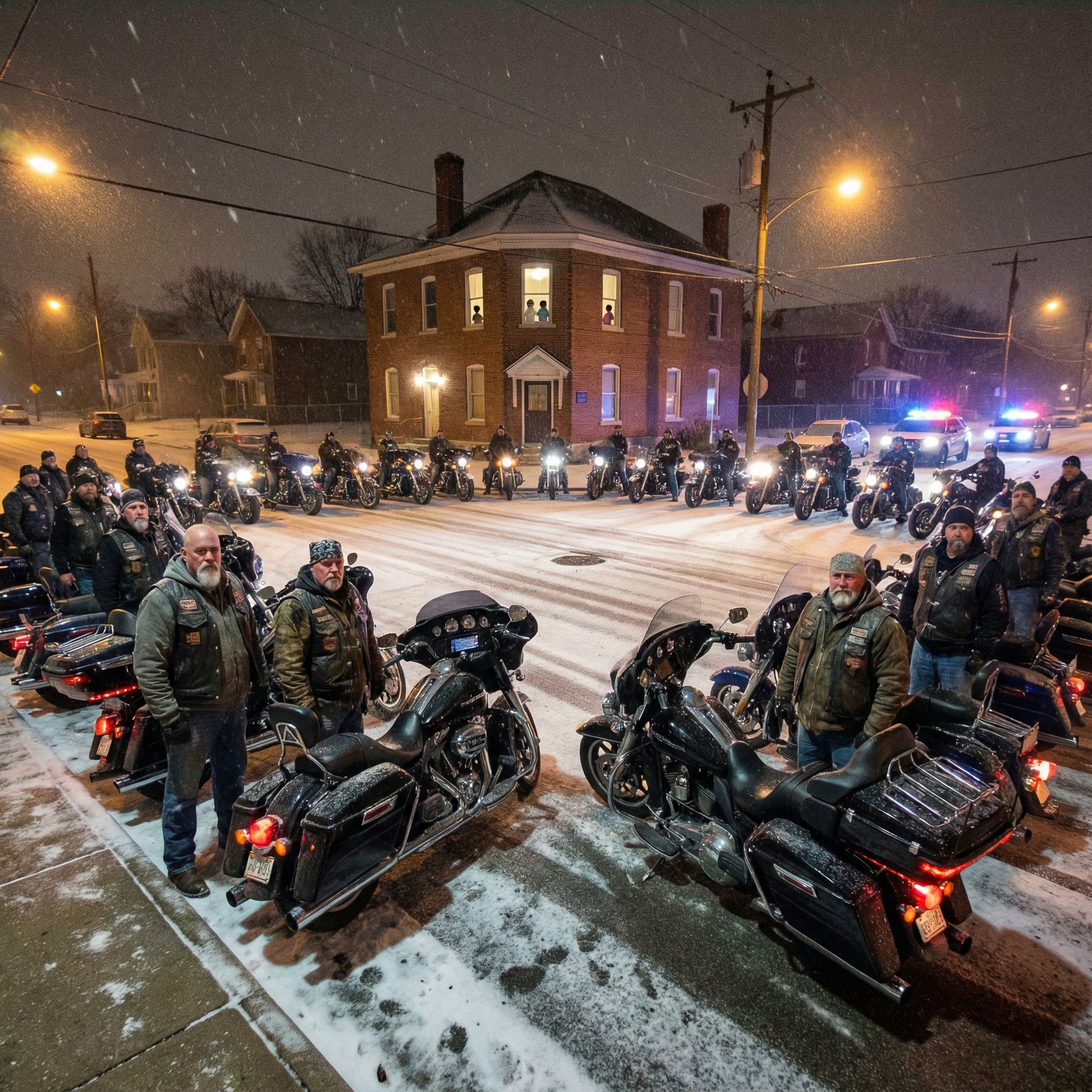
    Then, the ground began to vibrate. It started as a low, guttural thrum that I felt in my teeth before I heard it with my ears. From the north and south, a river of headlights began to pour down the narrow street. Motorcycles—hundreds of them—emerged from the darkness like a literal wall of iron and leather. They didn’t just arrive; they occupied. They formed a massive, concentric circle around the orphanage, their chrome reflecting the blue police lights in a kaleidoscope of defiance.

    The engines cut out in a synchronized roar, leaving a silence so profound it felt like the world had held its breath. A man dismounted from a massive touring bike and stepped into the light. He was a giant, his gray beard flowing over a leather vest adorned with military patches. This was Thomas Reeves, president of the Guardians MC.

    “Evening, Sheriff,” Thomas said, his voice a calm rumble. “We’re here to discuss the logistics of this eviction.”

    “There’s nothing to discuss, Tom,” Bradley replied, his voice thin against the sheer presence of the two hundred bikers. “I have a court order signed by Judge Matthews. These children have to leave.”

    Thomas tilted his head toward the orphanage windows. I followed his gaze and felt my heart shatter. Twenty-three small faces were pressed against the glass, their eyes wide with a mixture of terror and hope. “The law says they leave,” Thomas said. “But justice says they stay. It’s Christmas Eve, Sheriff. You want to move these kids? You’re going to have to move us first.”

    I sank lower in my seat, the heat in my car suddenly feeling suffocating. I was the man who had provided the legal ammunition for this standoff. My phone began to vibrate incessantly—the Mayor, the bank president, and finally, my wife, Helen.

    “Harold, are you seeing the news?” she demanded the moment I answered. “They’re talking about a riot at the orphanage. They say a judge signed an order to throw kids into the snow on Christmas. Tell me that wasn’t you.”

    “The law is the law, Helen,” I whispered, though the words tasted like ash.

    “Then the law is a cold, heartless thing,” she snapped, and for the first time in thirty-two years, she hung up on me.

    Outside, the situation was transforming. What should have been a scene of tactical tension was becoming a community vigil. Neighbors began to emerge from their homes with thermoses of cocoa. Store owners brought blankets. The news vans arrived, their satellite masts reaching up like accusing fingers. Thomas Reeves was now speaking to a reporter, his face etched with the weariness of a man who had seen too much war to let a different kind of tragedy happen at home.

    “The bank that’s doing this took billions in taxpayer bailouts,” Thomas told the cameras. “They got their grace. Why can’t they give these kids theirs? We aren’t moving. If the law wants to arrest two hundred veterans for protecting orphans, then let the world watch them do it.”

    The standoff lasted hours. Behind the scenes, the gears of power were grinding. The bank president, Richard Brennan, eventually arrived in a sleek black limo, looking like a man who had suddenly realized his brand was being immolated on live television. The exchange between him and Thomas was a masterclass in grassroots leverage. Thomas didn’t threaten violence; he threatened the one thing a banker fears more: a mass exodus of capital. He spoke of the combined accounts of every biker club in the state, a collective financial power that could cripple Brennan’s local branches.

    By 11:00 PM, the atmosphere shifted from confrontation to negotiation. Under the immense pressure of public scrutiny and the looming threat of a PR nightmare, Brennan folded. He agreed to restructure the debt and forgive half of it if the community could raise the rest. The crowd didn’t just cheer; they reached for their wallets. Pledges began to fly through the air like confetti—local businesses, churches, and individuals all vowing to bridge the gap.

    As the Sheriff announced the postponement of the eviction, the wall of bikers broke. Sister Margaret, the elderly nun who ran the home, stepped onto the porch and was promptly hoisted onto the shoulders of two burly men in leather. The children poured out of the front door, no longer afraid, running into the arms of the very men I had been taught to view as a social menace.

    I prepared to drive away, feeling like a ghost at my own funeral, when a sharp rap on my window made me jump. It was Thomas Reeves.

    “Judge Matthews,” he said as I rolled down the glass. “Sister Margaret recognized your car. She’s been praying for you to see what she sees.”

    “I was just doing my job, Mr. Reeves,” I said, my voice hollow.

    “Maybe,” Thomas replied, leaning his heavy arms on the door frame. “But tonight, the law failed and the people succeeded. Next time you pick up that pen, Harold, remember that a signature isn’t just ink. It’s a life. Justice doesn’t live in a book; it lives in the streets, in the homes, and in the way we treat the ones who can’t fight back.”

    He walked away before I could respond. I drove home through streets lined with Christmas lights, seeing the world through a fractured lens. A few days later, I met Thomas at a quiet diner. I didn’t go as a judge; I went as a man. I handed him a check for fifty thousand dollars—my entire personal retirement savings. It was an admission of guilt and a down payment on a new kind of life.

    A year has passed since that night. St. Catherine’s is no longer in debt; the community raised the funds in record time. I still sit on the bench, but I am a different jurist. I look for the “third way”—the mediation, the delay, the human solution that doesn’t appear in the standard legal templates. I learned that my robe is not a shield against the world’s pain, but a responsibility to mitigate it.

    Every Christmas Eve, I return to that street. I don’t sit in the shadows anymore. I stand on the porch with Sister Margaret and Thomas, watching the kids play in the yard of a house that stayed a home. I learned that while the law is a skeleton that holds society together, mercy is the heart that makes it beat. And sometimes, it takes two hundred men on motorcycles to remind a man in a black robe how to be human.

  • What I Found While Packing Changed Everything!

    What I Found While Packing Changed Everything!

    The cardboard boxes were piled high in the living room, a skeletal blueprint of the life Dan and I were supposed to start. We were days away from moving into our dream home—a lakeside cottage with a wrap-around porch and soil that promised a lush vegetable garden. But as I taped up the last of the kitchenware, a sharp, insistent tug in my right side made me double over. Dan, ever the optimist, insisted it was just a pulled muscle from the heavy lifting. I wanted to believe him, but by the third day, the dull ache had sharpened into a hot, rhythmic pulse.

    Against my own stubbornness, I drove to urgent care. The doctors threw around words like “appendicitis” and “strain,” but the CT scan told a different story. The nurse didn’t use the word “tumor” at first. She spoke in the clinical language of “masses” and “further investigation,” but the way she wouldn’t meet my eyes said everything. In that sterile room, the world I had been so carefully packing away suddenly felt like it was disintegrating.

    The diagnosis arrived a few days later: early-stage cancer. I remember sitting on the kitchen floor of our half-packed apartment, clutching a bundle of tea towels, and feeling the sheer weight of the silence. Dan found me there and didn’t offer platitudes. He simply sat on the linoleum and held me, his presence a silent anchor in a storm I hadn’t seen coming. We put the move on hold. The boxes stayed stacked like tombstone markers of our interrupted plans. Everything was on pause—except for the cells inside me and the terrifying speed of the medical machine.

    Treatment was a grueling gauntlet. Chemo stole my appetite and then my hair. When the first clumps began to clog the shower drain, Dan didn’t wait for me to mourn. He took a pair of clippers, shaved his own head, and then gently finished mine. He looked ridiculous bald—his ears stuck out more than I’d ever noticed—but he looked like the most beautiful man on earth to me in that moment. “We go through this together,” he whispered, a mantra that kept me upright when the nausea threatened to pull me under.

    During one particularly restless night, driven by a mix of steroid-induced insomnia and a deep, gnawing anxiety, I wandered into the guest room. It had become a graveyard for “miscellaneous” boxes—items we weren’t sure we needed but couldn’t throw away. I pulled a dusty bin toward me and began to sift through it, looking for any distraction. Near the bottom, tucked inside a faded manila folder, was a bundle of letters tied with a piece of frayed twine.

    The handwriting was unfamiliar, but the return address was a small town in Minnesota—my birthplace. The first letter was dated 1987, a year before I entered the world. It was addressed to Anne, my mother. I felt like a voyeur as I read the words of a man named Frank. He wrote with an aching, desperate tenderness, recounting weekends by a lake and the sound of my mother’s laugh. Then, in a letter dated just months before my birth, the words hit me like a physical blow: “I wish I could see our daughter just once. I wonder if she has your eyes.”

    My mother had always told me my father died in a car accident when I was an infant. There was no Frank in her stories. There was no Minnesota cabin. There was only a tidy, tragic lie that had stood for thirty years. I sat in the dark for hours, the letter trembling in my lap, realizing that the cancer in my body wasn’t the only thing that had been hidden from view.

    When I finally confronted my mother two weeks later, she didn’t deny it. The sight of the letters made her hands shake so violently she had to set her tea down. The truth came out in a jagged torrent. Frank was older, divorced, and from a background her family despised. Under immense pressure from her aunt, she had fled Minnesota, changed her narrative, and cut him out of our lives to “protect” me from the mess of a complicated family. She had traded the truth for a sense of safety, never realizing that secrets have a way of surfacing when you’re least prepared for them.

    The months that followed were a dual battle: one of the body and one of the soul. While the chemo dripped into my veins, I wrote a letter to the address on the envelope. I didn’t know if Frank was alive or if he would even want to hear from the daughter he’d never met. Three weeks later, a reply arrived. His handwriting was shaky with age, but his words were steady. He had never remarried; he had never stopped wondering. He sent a photograph—a grainy, light-leaked image of a younger him holding a bundled infant. Me. It was the missing piece of a puzzle I hadn’t realized was incomplete.

    By autumn, the miracle happened. My scans came back clean. The relief was more exhausting than the illness itself. Dan and I finally moved into the lake house, and the first thing I did was dig my fingers into the dirt to plant a garden. Life was beginning again, but it was a different life than the one I had originally planned.

    We eventually made the drive to Minnesota. Meeting Frank felt less like meeting a stranger and more like looking into a mirror I’d been avoiding. He was quiet, kind, and possessed the exact same shade of hazel eyes that stared back at me every morning. As we sat by the water, he told me stories of my mother as a young woman—not the cautious, overprotective person I knew, but a girl who was wild, vibrant, and deeply in love. Hearing those stories allowed me to finally forgive her. She hadn’t lied out of malice, but out of a fear that I now understood all too well.

    However, the universe had one final, breathtaking revelation in store. During our conversations, Frank mentioned he had a son from his first marriage, a half-brother I never knew existed named Allen. Allen was a doctor in the very city where I had received my treatment.

    I looked up his name and felt the air leave my lungs. Allen wasn’t just any doctor; he was the radiologist who had read my initial CT scan. I remembered the notes on my chart—the ones where a physician had circled a tiny, ambiguous shadow and insisted on a biopsy even though the urgent care doctor thought it was a simple muscle tear. That “extra mile” was the reason my cancer was caught at stage one instead of stage four.

    When I called Allen and explained who I was, there was a long, stunned silence on the other end of the line. He told me he wasn’t even scheduled to work that day; he had covered a shift for a colleague at the last minute. He had looked at my scan, seen a stranger’s name, and felt a gut instinct to look closer. He had saved my life before he even knew I shared his blood.

    I think back to that day of packing, the day the pain started. I used to think it was the beginning of the end. Now I know it was the beginning of the truth. We often view pain as an intruder, something to be silenced or pushed aside. But sometimes, pain is a messenger. It forces us to slow down, to open the boxes we’ve kept sealed, and to look at the shadows we’ve been taught to ignore. Healing didn’t just mean the absence of cancer; it meant the integration of my whole story. I found my father, I found a brother, and I found a version of my mother I could finally respect. Sometimes, life hides your greatest blessings inside your hardest moments. You just have to be brave enough to keep unpacking.

  • Michael J Fox shares heartbreaking update amid Parkinsons diagnosis!

    Michael J Fox shares heartbreaking update amid Parkinsons diagnosis!

    To many, Michael J. Fox is more than just a cinematic icon; he is a living testament to the resilience of the human spirit. For decades, he captivated audiences with his kinetic energy, his boyish charm, and a quick-silver wit that seemed to move faster than the DeLorean that made him a legend. But today, at 64 years old, the star of Back to the Future is navigating a reality far removed from the bright lights of Hollywood sets. While he remains a beacon of hope for millions, he has recently shared a series of deeply personal updates regarding his ongoing battle with Parkinson’s disease—insights that are as heartbreaking as they are profoundly inspiring.

    There is a specific kind of pang one feels when reflecting on Michael’s career—a quiet sadness for the stories left untold and the performances we will never see. For an actor whose craft was built on the agility of his body and the subtle, expressive shifts of his facial features, Parkinson’s is a particularly cruel thief. It is a condition that works to systematically strip away the very tools of the trade: the ability to command a gesture, to hold a steady gaze, or to deliver a line with the effortless physical comedic timing that was once his signature. Yet, despite the physical toll, Michael continues to shine. The “message” he receives every morning upon waking is one of challenge, but his response remains one of relentless determination and humor.

    In his most recent reflections, which coincide with the release of his new memoir, Future Boy, Michael has moved beyond the glossy veneer of celebrity to discuss the gritty, often exhausting reality of life with a degenerative neurological disorder. He speaks candidly about the “loss of expressiveness,” a phenomenon known in medical circles as facial masking. It is a symptom that robs a person of their ability to project emotion through their features, making them appear stoic or disinterested even when their mind is racing with joy or frustration. For someone who made us laugh and cry through the sheer vivacity of his presence, admitting to this loss is a vulnerable act of radical honesty.

    However, Michael’s journey is not a tragedy of silence, but a masterclass in adaptation. In Future Boy, he revisits the film that launched him into the stratosphere, using the lens of the past to examine the man he has become. He doesn’t look back with bitterness at the vibrant 29-year-old who first noticed a tremor in his pinky finger; instead, he looks back with a sense of wonder at the journey that followed. He acknowledges that while the disease has taken much, it has also provided a unique, albeit difficult, vantage point on what it means to be alive.

    The “heartbreaking update” he shares isn’t just about the physical decline—it’s about the mental and emotional fatigue that comes with being a symbol of a movement. For over twenty years, the Michael J. Fox Foundation has raised over $2 billion for Parkinson’s research, fundamentally altering the landscape of how we understand the disease. But Michael is quick to remind us that he is not a superhero. He is a father, a husband, and a man who gets tired. He talks about the fractures and the falls—physical accidents caused by balance issues that have led to broken bones and surgeries. He describes these moments as “the dark side” of the optimism he is so famous for, noting that it is impossible to be “on” all the time.

    Yet, even in these dark reflections, that signature Michael J. Fox humor flickers like a pilot light that refuses to go out. He speaks of his challenges with a self-deprecating wit that disarms the sorrow of his listeners. He has mastered the art of “the pivot,” finding ways to engage with the world that don’t rely on the physical grace of his youth. Whether it is through his writing, his public speaking, or his advocacy, he has found a new way to be expressive—one that transcends the tremors.

    Watching an actor we grew up with age under the weight of such a diagnosis is a communal experience of grief. We remember Marty McFly, Alex P. Keaton, and Mike Flaherty. We remember the way he moved through a scene like he was dancing on air. Seeing the stiffness in his gait now is a reminder of our own mortality and the fragility of the things we take for granted. But Michael doesn’t want our pity. He has stated repeatedly that he doesn’t view his life as a tragedy. To him, it is a problem to be solved, a mountain to be climbed, and a story that is still very much in the process of being written.

    His recent updates serve as a reminder that courage is not the absence of fear or pain, but the decision that something else is more important. For Michael, that “something else” is his family, his foundation, and the pursuit of a cure that he knows might not come in his lifetime, but will surely come because of his efforts. He wakes up every day and “gets the message” from his body, but he chooses to reply with a different message: one of persistence.

    As he reflects on the legacy of Back to the Future, Michael J. Fox reminds us that while we cannot change the past, and the future is often unpredictable, we have absolute agency over the present. His heartbreaking updates are tempered by a profound sense of gratitude. He is grateful for the decades of support, for the advancements in science, and for the ability to still make people smile, even if that smile looks a little different than it did in 1985.

    In the end, Michael’s story is not about what has been lost, but about what remains. What remains is a man of immense character, a thinker of great depth, and a human being who has taught us more about “future-proofing” our souls than any time-traveling car ever could. He continues to embody the determination that made him a household name, proving that while Parkinson’s might have changed the way he moves, it hasn’t changed where he’s going. He is still our “Future Boy,” leading us toward a world where the diseases that haunt us today are nothing more than footnotes in history.

  • King Charles Gives Kate Middleton Blessing To Do The One Thing He Never Let Diana Do!

    King Charles Gives Kate Middleton Blessing To Do The One Thing He Never Let Diana Do!

    The corridors of Buckingham Palace have long been haunted by the ghosts of eclipsing popularity. For decades, the central tension within the British monarchy was often found in the shadow cast by a spouse whose charisma outshone the crown itself. The most famous casualty of this dynamic was, of course, the late Princess Diana, whose radiant public persona famously sparked deep-seated jealousy in the then-Prince Charles. However, as the House of Windsor navigates the complexities of a modern era, King Charles III appears to have made a radical, peace-offering departure from his past. In a move that signals a profound evolution in his character and his reign, the King has reportedly given Kate Middleton his personal blessing to do the one thing he could never tolerate from Diana: to take center stage.1

    According to royal experts and palace insiders, King Charles has officially sanctioned the Princess of Wales to assume a leading public role, effectively granting her permission to “steal the limelight.” This is no small concession for a man whose early life was marred by the sting of being sidelined during his own royal tours. During the 1980s, the world watched as a young Charles grew increasingly resentful of the crowds that gathered not for the future King, but for the fashion and the flair of the Princess of Wales. Diana herself famously confirmed this friction in her 1995 Panorama interview, noting that her popularity caused significant strain within their marriage.

    Yet, as the crown has finally settled on his head, Charles seems to have realized that the survival of the institution depends on a shift in strategy. While previous reports suggested that there were lingering worries within the palace that Prince William and Kate’s surging popularity might overshadow the King and Queen Camilla, the reality of 2025 has brought a different perspective. Charles, now a seasoned monarch focused on legacy, appears to recognize that Catherine is not a threat to his authority, but rather the most powerful asset the monarchy possesses.

    Royal biographer Robert Jobson suggests that the King has reached a level of personal and professional maturity that allows him to embrace the limelight-stealing power of his daughter-in-law.2 Charles understands that for the monarchy to remain relevant in a rapidly changing world, it must bridge the gap between ancient tradition and modern celebrity. He acknowledges that while he holds the constitutional power, the natural focus of media interest and public adoration will inevitably gravitate toward the younger generation—the Wales family.

    This new dynamic was perhaps most visible during Kate’s surprise visit to the Chelsea Flower Show. While such an unannounced appearance might have once been viewed as a breach of royal protocol—upstaging the principal royals of the day—it was instead met with an implicit nod of approval from the King. It was a strategic masterstroke, ensuring that the monarchy remained at the forefront of the national conversation, regardless of who was wearing the crown at that particular moment.

    King Charles’s approval of Kate’s prominent role is deeply rooted in the pragmatic need for the monarchy to survive. The King is acutely aware that the institution must appeal to younger generations who have little connection to the rigid hierarchies of the past. William and Catherine have mastered this modern landscape, utilizing social media to share polished, cinematic updates and behind-the-scenes glimpses of their philanthropic work.3 Their approach is less about the distance of “the firm” and more about the accessibility of a modern family. By allowing Kate to lead, Charles is essentially future-proofing the throne, ensuring that the public remains emotionally invested in the people who will one day occupy it.

    Furthermore, this blessing reflects a shift in the internal family dynamics of the Windsors. Unlike the competitive atmosphere that defined the 1980s and 90s, the current relationship between the King and the Princess of Wales is one of mutual respect and shared burden. Kate has proven herself to be a steady, unflappable presence, navigating her role with a grace that has earned the King’s genuine affection.4 In many ways, she has become the bridge between the old guard and the new, a role that Diana was never permitted to fulfill.

    The King’s decision to let Kate occupy the spotlight also serves as a subtle act of redemption for his own past. By encouraging Catherine to shine, he is effectively breaking the cycle of jealousy that once tore his personal life apart. He is choosing to lead with wisdom rather than ego, prioritizing the stability of the crown over the vanity of the individual. It is a sign of a King who is comfortable in his own skin, secure enough in his position to allow others to bask in the glow of public adulation without feeling diminished by it.

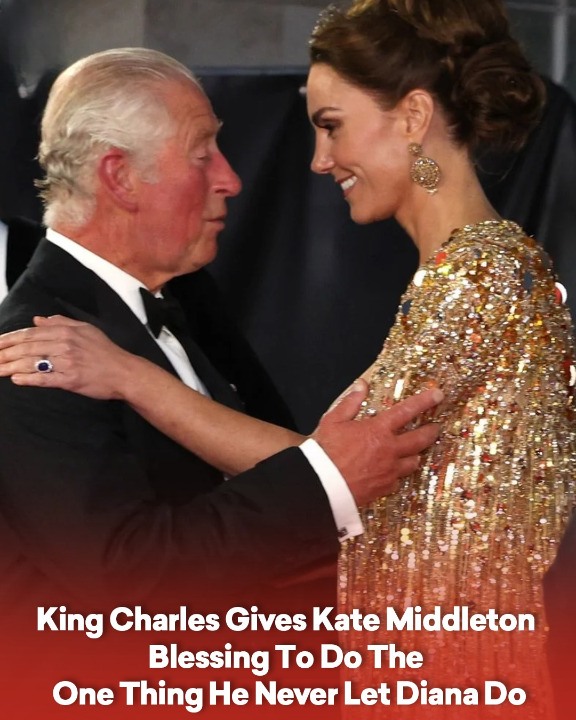
    As we look toward the future of the British monarchy, the image of King Charles giving Kate Middleton his blessing marks a pivotal turning point. It is a transition from an era of competition to an era of collaboration. The “limelight,” once a source of bitter contention, has now become a shared tool for the preservation of the House of Windsor. The King wears the crown, but he has entrusted the Princess of Wales with the heart of the people—a partnership that may very well be the key to the monarchy’s longevity.

    In the end, Charles has learned a lesson that took decades to master: the sun does not lose its light by allowing the moon to shine. By giving Kate his blessing to be the face of the modern monarchy, he has ensured that when the time eventually comes for William to ascend the throne, he will do so with a consort who has already been welcomed and embraced by the world. It is a gift of grace, a legacy of foresight, and a quiet acknowledgement that the greatest strength of a leader is knowing when to let someone else lead the way.

  • From Childhood to Rock Legend! Can You Guess This Music Icon?

    From Childhood to Rock Legend! Can You Guess This Music Icon?

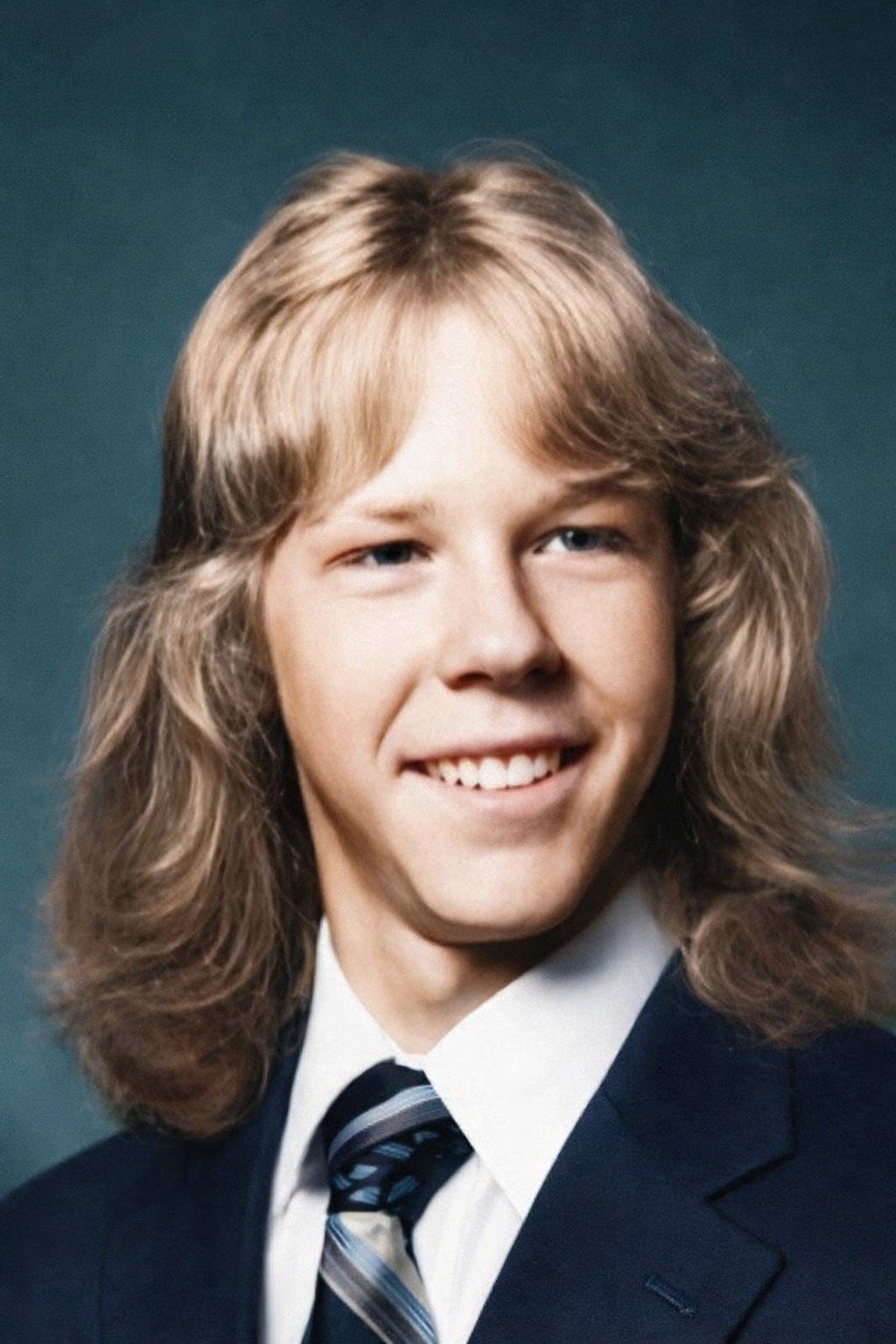
    The story of James Hetfield is not merely a chronicle of rock and roll excess or the ascent of a global brand; it is a profound narrative of survival, the alchemy of pain, and the relentless pursuit of authenticity. Long before he was the towering frontman of Metallica, the “Godfather of Thrash” was a young boy in Downey, California, navigating a childhood defined by a rigid, isolating reality. Raised in a household governed by the strict tenets of Christian Science, Hetfield was often barred from health classes and medical treatments, a separation from his peers that fostered an early, deep-seated sense of alienation.

    The true fracture, however, came with the death of his mother when he was just sixteen.1 Following the earlier departure of his father, the loss left him adrift in a world of silence and unresolved grief. In this void, the guitar became more than an instrument; it became a lifeline. While other teenagers were navigating the social hierarchies of high school, Hetfield was retreating into the basement, translating his abandonment and anger into the jagged, rhythmic staccato that would eventually revolutionize heavy metal. For James, music was never a hobby—it was the only language he had to communicate a pain that felt too dangerous to speak aloud.

    When he eventually teamed up with drummer Lars Ulrich in the early 1980s, that internal pressure found a collective outlet. Together, they helped spearhead the “Thrash Metal” movement, a high-velocity response to the polished hair-metal scene dominating the Sunset Strip.2 As Metallica’s lead vocalist, rhythm guitarist, and primary songwriter, Hetfield became the architect of a new musical architecture. His right hand—famous for its relentless, precise down-picking—became the heartbeat of the genre.

    Through the 1980s, a trilogy of seminal albums—Ride the Lightning, Master of Puppets, and …And Justice for All—did more than just sell records; they gave a voice to a generation of outcasts. Hetfield’s lyrics moved away from the fantasy tropes of traditional metal, diving instead into the darker corners of the human psyche: the horrors of war, the manipulation of the masses, and the suffocating weight of addiction. He was writing about the “monster” long before he could name it. By the time the 1991 self-titled “Black Album” was released, Hetfield had transitioned from an underground hero to a global phenomenon. Songs like “Enter Sandman” and “Nothing Else Matters” proved that his brand of intensity could coexist with a haunting sense of melody, bringing heavy metal into the mainstream without diluting its visceral core.3

    However, as the stadium lights grew brighter, the shadows in Hetfield’s personal life lengthened. Decades of life on the road, the crushing expectations of fame, and the lingering scars of his youth created a volatile cocktail. He adopted the persona of “The Iron Fist,” a rigid, controlling leader who used anger as a shield. But behind the scenes, he was drowning. The internal pressure that had once fueled his creativity began to consume him, manifesting in a severe struggle with alcohol and a mounting sense of emotional isolation from his bandmates.

    The breaking point arrived in 2001, an era famously captured in the raw, uncomfortable documentary Some Kind of Monster.4 In a move that shocked the metal community—a subculture often defined by a stoic, hyper-masculine bravado—James Hetfield did the unthinkable: he walked away to enter rehabilitation. This wasn’t just a quest for sobriety; it was an attempt to dismantle the “tough guy” facade he had spent twenty years constructing. For the first time, the man who had screamed into microphones for a living had to learn how to speak with vulnerability.

    His return to Metallica marked a radical shift in the band’s dynamic. The power struggles remained, but they were now met with a new toolset of communication and self-awareness. By openly addressing his demons, Hetfield transformed from a cautionary tale into a symbol of accountability. He proved that true strength wasn’t found in the avoidance of weakness, but in the courage to confront it. This transparency earned him a new tier of respect, not only from the “Metal Heads” who had grown up with his music but from a broader industry that saw a legendary artist choosing evolution over self-destruction.

    In the twenty years since that turning point, Hetfield has continued to lead Metallica through new frontiers, proving that an aging rock star can remain relevant without becoming a caricature of his younger self. His voice has changed—weathered by age and experience—and his lyrics now reflect the perspective of a man who has made peace with his past. Whether he is performing “Master of Puppets” to eighty thousand fans or discussing the importance of mental health, he carries himself with a quiet, disciplined dignity.

    Today, after more than four decades at the helm of one of the most successful bands in history, James Hetfield stands as an enduring icon of resilience. His journey reminds us that the challenges we face in our youth do not have to be a life sentence; they can be the very materials we use to build something monumental. He is a testament to the idea that authenticity is a lifelong practice, and that the most powerful riffs are often those played by a hand that has learned how to let go of the past.

    His story continues to resonate across generations because it is fundamentally a human one. It is a story about a boy who lost everything and found himself through six strings and a wall of amplifiers. It is about a man who conquered the world only to realize he had to conquer himself. James Hetfield is more than just a rock legend; he is a reminder that even in the loudest lives, the most important work happens in the quiet moments of reflection. He has moved from a childhood of forced silence to a career of thunderous expression, proving that as long as you are willing to keep “unpacking” the boxes of your life, you can always find a way to turn the noise into music.

  • He is always been the man behind the smiles, but this time, Ryan could not hold back the tears!

    He is always been the man behind the smiles, but this time, Ryan could not hold back the tears!

    To the millions of people who tune in to hear his voice every morning, Ryan Seacrest is the ultimate professional—a man whose career is built on a foundation of boundless energy, polished charisma, and an uncanny ability to keep the conversation light and moving. He is the personification of “on-air” perfection, the man behind the smiles who has guided us through everything from New Year’s Eve countdowns to the emotional rollercoasters of aspiring singers. But during a recent episode of On Air with Ryan Seacrest, the veneer of the unflappable host cracked, revealing a raw, human vulnerability that few have ever seen.

    The moment occurred during what was supposed to be a celebratory segment. Ryan and his co-hosts were congratulating their beloved long-time producer, Dennis Clark, on the incredible news that he was officially in remission. The studio was filled with the kind of joy and relief that only comes after a long battle with illness. But as the applause died down, a heavy silence settled over Ryan. It was a silence that carried the weight of a secret he had been holding close to his chest for years.

    “I haven’t shared this on the air because it has been very private for me and my family,” Ryan began, his voice uncharacteristically thick with emotion. “It was something that was extremely hard to see with my father.”

    For the first time, the 50-year-old media mogul opened up about his father’s harrowing journey with prostate cancer. Ryan, who has always spoken about his “very close relationship” with his dad, described the agonizing reality of watching a man who served as his hero and anchor grapple with a relentless disease.1 His father, who is just days away from celebrating his 81st birthday, was diagnosed years ago. At first, there was hope. The initial rounds of treatment seemed to work, and for a while, the family allowed themselves to breathe again as his condition “got better.”

    But cancer is rarely a straight line. Ryan detailed the heartbreaking reversal of fortune when the condition took a turn for the worse. The cancer didn’t just return; it spread, moving beyond its original borders and forcing the family into a new, more terrifying phase of the fight. As he spoke, the tears Ryan had been fighting back finally surfaced. For a man who makes his living through speech, the struggle to find words in that moment spoke volumes.

    This public outpouring of grief and solidarity highlights the often-invisible burden carried by those in the public eye. While Seacrest was helping the world find “Idols” and keeping the spirits of his radio audience high, he was privately navigating the labyrinth of hospital visits, fluctuating lab results, and the quiet, heavy conversations that happen in the hallways of oncology wards. His decision to share this story wasn’t just about his father; it was a tribute to the resilience of caregivers and the profound bond between a son and a man who is watching his clock run down.

    The revelation struck a deep chord with listeners, many of whom have faced the same “up and down” nature of long-term illness. Prostate cancer is one of the most common diagnoses for men, yet it remains a topic often discussed in hushed tones or clinical statistics. By bringing his personal heartache into the public square, Ryan humanized the struggle. He reminded his audience that no amount of success, fame, or wealth can insulate a person from the universal experience of watching a parent age and wither under the strain of a terminal diagnosis.

    As his father approaches his 81st birthday, the milestone feels particularly poignant. It is a day that carries the dual weight of celebration and the somber realization of time’s fragility. Ryan’s tears were a testament to the “extremely hard” sights he has had to witness—the physical decline of a once-vibrant man and the mental toll of a battle that feels like it never truly ends. Yet, in sharing his pain, Ryan found a new way to connect with his audience. He moved beyond the role of a host and into the role of a fellow traveler on a difficult road.

    The episode served as a powerful reminder that behind every polished public persona is a private world of complexity and shadow. We often look at figures like Seacrest and see only the highlights, the successes, and the perpetual sunshine. We forget that they, too, sit in waiting rooms. They, too, wait for the phone to ring with news they are afraid to hear. They, too, have to find the strength to go “on air” when their hearts are breaking behind the scenes.

    Ryan’s tribute to his father, intertwined with the celebration of his producer’s remission, created a beautiful, bittersweet tapestry of the human condition. It showed the two sides of the cancer journey: the hard-won victory of remission and the exhausting, ongoing endurance of those for whom the “better” has once again become “worse.”

    As the segment concluded, the support from his co-hosts and the immediate outpouring of love from his fans made one thing clear: Ryan Seacrest might be the man behind the smiles, but he doesn’t have to carry the tears alone. His father’s struggle has become a shared story of love, duty, and the enduring strength of the family bond. In a world that often values the “perfect” shot and the “perfect” take, Ryan’s cracked voice and tear-streaked face were the most perfect things he has ever put on the air. They were the truth.

  • 8 powerful anti-cancer foods you should start including in your diet!

    8 powerful anti-cancer foods you should start including in your diet!

    The modern kitchen is often viewed as a place of convenience and routine, a station where we quickly assemble the fuel required to survive another day. However, as our understanding of biology and longevity evolves, we are beginning to rediscover an ancient truth: the dinner plate is one of our most potent tools for long-term health. In an era dominated by the Standard American Diet—frequently criticized for its reliance on ultra-processed foods and added sugars—the concept of “food as medicine” has transitioned from a fringe philosophy to a cornerstone of preventative science. While no single food possesses the miraculous power to guarantee immunity from disease, a consistent, intentional pattern of nutrition can create an internal environment that is hostile to the development of chronic conditions, including cancer.

    Research from the American Institute for Cancer Research suggests a startling reality: only about 8% of the average diet in the United States consists of truly protective, nutrient-dense foods. By shifting our focus toward a diverse array of plants, fungi, and healthy fats, we can significantly bolster our body’s natural defenses. The following eight nutritional powerhouses represent some of the most effective, research-backed additions to a health-conscious lifestyle.

    1. The Sculptors of Defense: Cruciferous Vegetables

    The Brassicaceae family, more commonly known as cruciferous vegetables, serves as a masterclass in nutritional complexity. This group includes kitchen staples such as broccoli, Brussels sprouts, kale, cauliflower, and cabbage, as well as sharper flavors like arugula, radish, and turnips. What sets these vegetables apart is their high concentration of glucosinolates. When these plants are chopped or chewed, they release isothiocyanates—bioactive compounds that have been shown to deactivate carcinogens and reduce systemic inflammation. Regular consumption of these greens is associated with a lower risk of developing cancers of the breast, esophagus, and kidney, effectively acting as a biological shield for the body’s cells.

    2. The Golden Healer: Turmeric

    For thousands of years, turmeric has been revered in Ayurvedic and Traditional Chinese Medicine, but modern science is only now uncovering the full extent of its potency. The secret lies in curcumin, the active polyphenol that gives the root its vibrant orange hue. Curcumin is a formidable anti-inflammatory agent, working at a molecular level to block the signaling pathways that allow cancerous cells to proliferate. Beyond its potential in disease prevention, turmeric protects healthy cells from oxidative damage and has been linked to improved joint health and cognitive longevity. To maximize its benefits, it is best consumed with a pinch of black pepper, which contains piperine—a compound that increases curcumin absorption by up to 2,000%.

    3. The Silent Protectors: Mushrooms

    Mushrooms exist in a biological kingdom of their own, and their nutritional profile is equally unique. Large-scale studies involving tens of thousands of participants have indicated that consistent mushroom intake is linked to a significant reduction in prostate and breast cancer risks. This is largely attributed to L-ergothioneine, a powerful antioxidant that protects DNA from oxidative stress. Varieties such as shiitake, maitake, and the medicinal reishi or “turkey tail” are particularly noted for their polysaccharides and beta-glucans, which “prime” the immune system, enhancing the body’s ability to identify and eliminate abnormal cells before they can form tumors.

    4. The Aromatic Guardians: Allium Vegetables

    The pungent aroma of garlic, onions, leeks, and shallots comes from sulfur-containing compounds that do far more than add flavor to a meal. These allium vegetables are specifically noted for their protective effects on the digestive tract. Allicin, the primary bioactive component in crushed garlic, has demonstrated the ability to inhibit the growth of bacteria and reduce inflammation in the gut, which may lower the risk of colon and stomach cancers. Incorporating these aromatics into daily cooking provides a constant, low-grade boost to the body’s detoxification pathways.

    5. Treasures from the Sea: Wakame

    While terrestrial vegetables often steal the spotlight, edible seaweeds like wakame offer a concentrated dose of minerals and unique phytonutrients. Wakame is rich in fucoxanthin, a carotenoid that has shown promise in laboratory settings for suppressing the growth of various cancer cells, including those related to the colon and kidneys. Additionally, its high iodine content supports thyroid health, which is vital for maintaining a balanced hormonal environment. As a staple of longevity-focused diets in regions like Okinawa, seaweed represents a powerful bridge between traditional wisdom and modern oncology research.

    6. The Crimson Shield: Lycopene-Rich Foods

    The deep red hues of tomatoes, watermelons, and pink grapefruits are more than just aesthetic; they are the visual signature of lycopene. As a potent fat-soluble antioxidant, lycopene is exceptionally effective at neutralizing free radicals—unstable molecules that can damage cellular structures and lead to chronic disease. Interestingly, the bioavailability of lycopene increases when tomatoes are cooked and paired with a healthy fat like olive oil. Diets rich in these fruits have been consistently linked to reduced risks of heart disease and prostate cancer, proving that simple, vibrant ingredients can have a profound impact on internal stability.

    7. The Radiance of Beta-Carotene

    Carrots, sweet potatoes, and butternut squash carry the “orange glow” of beta-carotene, a precursor to Vitamin A. This nutrient is essential for maintaining the integrity of the skin and the linings of the respiratory and digestive tracts—the body’s first lines of defense against external threats. By supporting healthy cell signaling and immune function, beta-carotene-rich foods ensure that the body’s “surveillance system” remains sharp. Beyond their potential anti-cancer properties, these foods are dense in fiber, which aids in the elimination of toxins and supports a healthy microbiome.

    8. The Omega-3 Powerhouse: Fatty Fish

    Finally, the inclusion of cold-water fatty fish such as salmon, sardines, mackerel, and anchovies provides the body with essential Omega-3 fatty acids and Vitamin D. These nutrients are critical for controlling inflammation, a known driver of tumor development. Regular consumption of fatty fish has been associated with a lower overall cancer risk, particularly regarding the breast and prostate. The Vitamin D found in these fish acts almost like a hormone, regulating cell growth and preventing the “uncontrolled” division that characterizes malignancy.

    While the phrase “you are what you eat” may be a cliché, its underlying truth is inescapable. By intentionally moving away from processed convenience and toward these eight categories of whole, protective foods, we can shift the odds in our favor. Health is not merely the absence of disease, but a proactive state of resilience built one meal at a time. By sharing this knowledge with those we care about, we contribute to a broader culture of wellness that values prevention as much as cure.