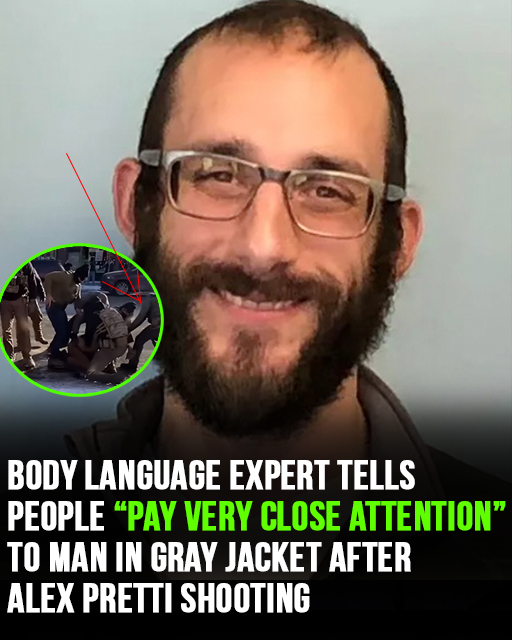
A growing body of expert analysis is challenging the official account of how Alex Pretti was killed, as a forensic body language specialist urges the public to closely examine the actions of a federal agent in a gray jacket captured on video moments before the fatal shots were fired.
Minneapolis has once again been thrust into the national spotlight after two deadly encounters involving federal immigration officers in the span of just weeks. Following the January killing of Renee Nicole Good, outrage and mistrust have intensified after the death of Pretti, a 37-year-old ICU nurse who was shot during an anti-ICE protest on January 24. For many residents, the incidents have come to symbolize a deeper crisis surrounding federal enforcement tactics, accountability, and transparency.
In the immediate aftermath of Pretti’s death, senior officials moved quickly to defend the operation. Donald Trump publicly backed the agents involved, emphasizing the presence of a firearm. In an interview published January 25, Trump described the gun allegedly taken from Pretti as “very dangerous and unpredictable,” suggesting it could discharge unexpectedly and framing the shooting as a response to a serious threat.
“I don’t like any shooting,” Trump said. “But I don’t like it when somebody goes into a protest with a very powerful, fully loaded gun with two magazines of bullets. That doesn’t play good either.”
The Department of Homeland Security echoed that position. DHS Secretary Kristi Noem stated that Pretti had been “brandishing” a weapon and had attacked officers during the operation, claiming he intended to inflict harm.
“This individual impeded law enforcement operations, attacked officers, had a weapon on him and dozens of rounds of ammunition,” Noem said on the day of the shooting. “He was coming in, brandishing.”
However, as video footage from multiple angles began circulating online, those claims came under increasing scrutiny. None of the publicly available recordings show Pretti holding a gun at any point during the confrontation. While it is undisputed that he was legally carrying a firearm in a belt holster, the footage consistently shows him holding only a phone as agents surrounded him, deployed pepper spray, and forced him to the ground.
Eyewitnesses at the scene have said Pretti appeared to be trying to assist a woman who had been knocked down during the chaos. Rather than acting aggressively, he appeared to be attempting to comply and de-escalate. The videos do not clearly show him reaching for his weapon or making any movement that would indicate an imminent threat at the moment lethal force was used.
The controversy deepened after an in-depth review by Dr. G Explains, a clinical and forensic psychologist who analyzes high-profile incidents through behavioral and body language interpretation. After examining the footage frame by frame, he concluded that key elements of the official narrative were inconsistent with what could be observed on screen.
In a video analysis posted online, Dr. G stated that the agents’ behavior appeared to escalate the situation rapidly rather than de-escalate it.
“This is not somebody trying to calm things down,” he said while narrating the footage. “This is someone actively escalating the situation very, very quickly.”
He pointed out that Pretti appeared to be repeatedly struck with a pepper spray canister after already being forced to the ground and surrounded by multiple agents. According to Dr. G, such actions are difficult to reconcile with claims that officers were responding to an immediate, uncontrollable threat.
Dr. G urged viewers to focus on one specific figure in the video: an agent wearing a gray jacket. As Pretti is shown on his knees, the analyst said the footage appears to capture that agent removing the firearm from Pretti’s waistband. At nearly the same moment, a voice off-camera can be heard shouting the word “gun.”
The analyst emphasized that this moment is critical. According to his interpretation, the agent who removed the weapon did not clearly communicate to other officers that Pretti had been disarmed.
“Watch carefully,” Dr. G said. “This officer has literally pulled the gun out. The firearm is no longer visible. And that’s when the other agents start aiming at him.”
He then highlighted what he described as the most troubling detail. After taking possession of the gun, the agent in the gray jacket appears to turn away from Pretti and run just as shots are fired.
“I want people to notice the immediate response once he gets a hold of the gun,” Dr. G said. “The shooting starts, and he is literally running away, not looking back.”
From a behavioral perspective, Dr. G questioned why an officer would retreat and turn his back if he truly believed the suspect remained armed and dangerous.
“If you genuinely believe someone poses an ongoing lethal threat, turning your back on them would be an extremely risky decision,” he explained. While acknowledging that officers could theoretically fear the presence of a second weapon, he stressed that the visible behavior did not align with that assumption.
This analysis has added fuel to calls for an independent investigation, as critics argue that the sequence of events shown on video does not support claims that Pretti was actively threatening officers at the time he was shot.
Pretti’s family has been outspoken in condemning what they describe as false and damaging statements made by federal officials. In a public statement released after their son was portrayed as an armed aggressor, they accused the administration of spreading misinformation to justify the shooting.
“The sickening lies told about our son by the administration are reprehensible and disgusting,” the family said. “Alex is clearly not holding a gun when attacked. He has his phone in his right hand and his empty left hand raised above his head while trying to protect the woman ICE just pushed down, all while being pepper-sprayed.”
They urged the public to focus on the evidence rather than rhetoric and to examine the footage carefully.
“Please get the truth out about our son,” the statement concluded. “He was a good man.”
As federal reviews continue, the convergence of video evidence, eyewitness testimony, and expert behavioral analysis has intensified public scrutiny. Civil rights advocates argue that the unresolved questions surrounding Pretti’s death reflect broader concerns about the use of force during federal immigration operations, particularly in crowded civilian settings.
For many observers, the case has become emblematic of a wider breakdown in trust between communities and federal authorities. The presence of unanswered questions—especially regarding whether Pretti was disarmed before shots were fired—has left calls for transparency growing louder by the day.
While DHS maintains that its agents acted appropriately, critics say the footage demands more than internal review. They argue that only a fully independent and transparent investigation can restore credibility and determine whether the official narrative aligns with what actually occurred on the ground.
As Minneapolis continues to grapple with the aftermath of back-to-back fatal encounters, the death of Alex Pretti remains a deeply polarizing and unresolved chapter. The focus on the agent in the gray jacket has not settled the debate—but it has sharpened it, forcing a closer examination of moments that may prove decisive in understanding how and why an unarmed man lost his life.
Leave a Reply