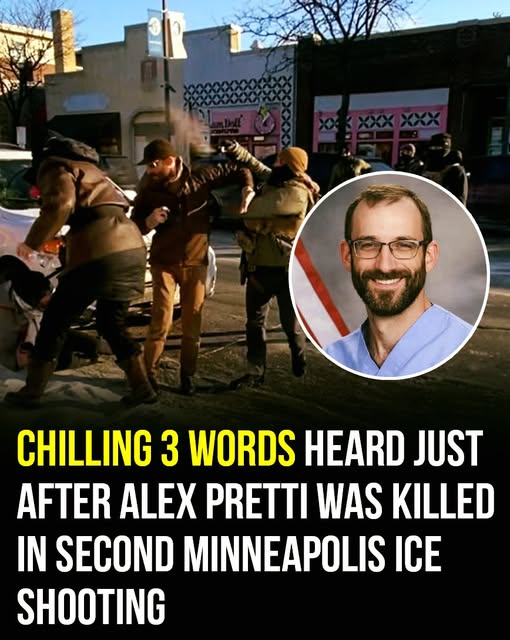
The city of Minneapolis, already weathered by a winter of social and political turbulence, has found itself at the epicenter of a national firestorm following the death of Alex Jeffrey Pretti. A 37-year-old ICU nurse, a devoted son, and a United States citizen, Pretti was fatally shot by federal agents on January 24 during an immigration enforcement operation in South Minneapolis. His death marks the second time in a single month that a resident of the city has been killed by federal tactical teams, a grim statistic that has ignited massive protests and forced a painful re-evaluation of the boundaries of federal authority on American streets.
In the immediate wake of the shooting, the official narrative provided by the Department of Homeland Security painted a picture of a high-stakes tactical encounter. According to the federal statement, Border Patrol agents assisting with the operation encountered an armed individual who resisted their attempts to maintain order. The agency claimed that Pretti produced a firearm, creating a situation where an agent, fearing for the collective safety of the team, fired “defensive shots.” It was a clinical, standard justification for the use of lethal force, designed to frame the event as a tragic but necessary response to an immediate threat.
However, as the hours turned into days, that narrative began to crumble under the weight of digital evidence. Bystanders and neighbors, armed with smartphones, had captured the encounter from multiple angles, and the footage tells a far more ambiguous story. In several videos, Pretti is seen standing with his own phone held high, seemingly documenting the agents’ movements as they moved through the neighborhood. To those watching the footage, he appeared not as an aggressor, but as a citizen-observer. There is no clear evidence of a firearm in his hands during the moments leading up to the confrontation. The struggle that followed was brief and chaotic; in the blur of motion, an agent is seen reaching toward Pretti’s waist, emerging with an object that appears to be a handgun, followed almost instantly by the sound of gunfire.
The most haunting piece of evidence, however, is not a visual one, but a chilling audio recording captured in the seconds after Pretti collapsed to the pavement. When the background noise of the street is isolated and the audio is slowed down, a brief exchange between officers emerges that has sent shockwaves through the legal and activist communities. One officer is heard asking a panicked, urgent question: “Where’s the gun?”
Those three words have become the rallying cry for a movement demanding transparency. To critics and legal experts, the question suggests a terrifying possibility: that the agents were not certain of the existence or location of a weapon until after the fatal shots had already been fired. If the firearm was secured or located only after the use of lethal force, the “defensive” justification for the shooting loses its legal and moral foundation. These three words now sit at the center of a federal internal investigation, as authorities scramble to reconcile the audio with their initial claims of a proactive threat.
Behind the tactical jargon and the forensic debates is the portrait of a man whose life was dedicated to the preservation of others. Alex Pretti’s parents, Michael and Susan, have spoken of their son with a mix of pride and devastating grief. They described him as a “kindhearted soul,” a man who spent his nights in the ICU caring for those who could not care for themselves, including a deep commitment to American veterans. To them, the government’s depiction of their son as a violent threat is not just a falsehood, but a desecration of his character. “Alex wanted to make a difference in this world,” they stated in a heartbreaking address. “Unfortunately, he will not be with us to see his impact.”
The Pretti family has been joined in their grief by a city that feels increasingly under siege. The tension in Minneapolis is palpable, fueled by the memory of Renee Good, another 37-year-old resident who was shot and killed by federal immigration officers just weeks earlier on January 7. The two deaths, occurring in such rapid succession and involving the same federal agencies, have created a rift between local leaders and federal officials. City officials and community activists argue that the expanded federal presence in the city has not brought security, but has instead introduced a culture of fear and a hair-trigger approach to law enforcement that treats residents as combatants rather than citizens.
The protests following Pretti’s death have spread far beyond the borders of Minnesota. In major cities across the United States, the name Alex Pretti has become synonymous with the debate over federal overreach and the militarization of immigration enforcement. Protesters are demanding the full release of all body-worn camera footage and every scrap of communication related to the January 24 operation. They argue that in a democracy, the state does not have the right to keep secrets about the killing of its own citizens on its own soil.
As the internal investigation proceeds, the Department of Homeland Security maintains that it stands by its initial account of the events, while acknowledging the gravity of the incident. They have assured the public that any use of force is subject to rigorous review, yet for a community that has seen this cycle repeat itself, those assurances often ring hollow. The focus remains on the “three words” and the cell phone footage—the digital witnesses that refuse to let the official narrative stand unchallenged.
The story of Alex Pretti is more than a legal case; it is a tragedy that highlights the fragile intersection of civil rights and national security. It is the story of a nurse who went from saving lives to losing his own in a matter of seconds, and a family that must now fight the very government their son served in order to find the truth. As Minneapolis braces for the outcome of the investigation, the memory of Pretti stands as a reminder of the human cost of engineered chaos. His life was a testament to compassion, but his death has become a catalyst for a national demand for justice. The questions raised on that South Minneapolis street—about who is a threat, who is a protector, and who is allowed to hold the gun—remain the most urgent and unanswered questions of our time.
In the end, the legacy of Alex Pretti will not be defined by the gun he supposedly carried or the tactical errors of the agents who confronted him. It will be defined by the silence of the ICU ward where he no longer works, the tears of a family who lost their anchor, and the three words that continue to echo through the halls of power, demanding an answer that has yet to come.
Leave a Reply