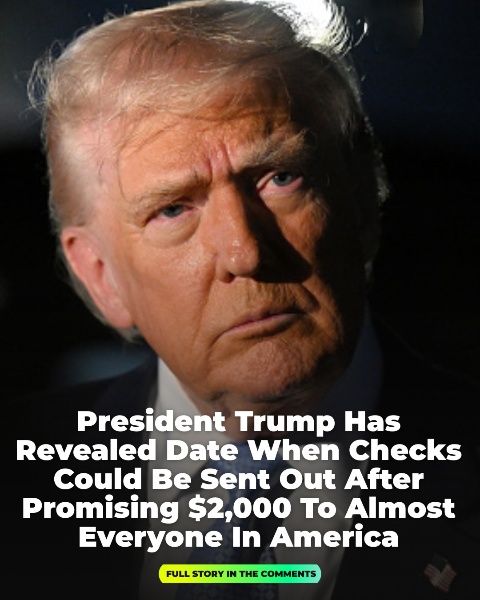
Trump’s promised $2,000 “dividend” was pitched like a quick win — tariffs would pour money into the Treasury, and that “extra” cash would be mailed straight to working Americans. Simple, clean, patriotic. At least, that was the sales pitch.
The reality is messier.
For starters, the tariff revenue itself isn’t even close to funding what Trump promised. Since the policy began, total collections haven’t cracked $200 billion. That may sound like a mountain of money, but spread across hundreds of millions of Americans — and after court challenges and administrative costs — the math collapses instantly. And that’s before we factor in the part no one cheering at rallies wants to hear: a large chunk of that tariff revenue is frozen in legal battles or tied up in disputes that could drag on for years.
Then came the Supreme Court. The justices have made it clear they’re not buying Trump’s broad use of “emergency powers” to impose tariffs without Congress. If the court rules against him — and several legal analysts think that’s likely — the entire foundation of the dividend plan could evaporate overnight. Instead of refund checks going to voters, the government could be forced to issue refunds to companies that overpaid under invalidated tariffs.
That’s the opposite of what Trump promised.
Still, the administration keeps insisting the payouts are coming. Not “maybe,” not “possibly,” but “coming.” Behind the scenes, though, the pieces aren’t in place. Congress hasn’t agreed on:
• who qualifies
• how the payments would be calculated
• how they would be delivered
• whether they would be mailed checks, tax credits, or something else
• or whether the tariff money can legally be used this way at all
Even within Trump’s party, the idea is dividing lawmakers. Some want the payouts tied to income levels, cutting out high earners. Others want only taxpayers to qualify. Some want to restrict payments to citizens only. And some insist the entire thing is unconstitutional without a full appropriations bill — something Congress hasn’t drafted, let alone voted on.
Trump, meanwhile, keeps moving the goalposts. When asked what happens if the courts shut the plan down, he waved the question away: “Then we’ll do something else. We always do.”
Which only adds to the uncertainty.
For everyday Americans who heard “$2,000 checks” and thought relief was finally on the horizon, the situation is now painfully familiar: big headlines, big applause lines, but nothing concrete they can actually count on.
Many voters were hoping for a timeline. A date. A guarantee. Something reliable. Instead, they now face a tangle of court rulings, legislative bottlenecks, and constitutional questions that could drag into next year or longer.
The bottom line is this: until the Supreme Court rules, until Congress negotiates an actual bill, and until the administration outlines a legal distribution plan, there is no payout scheduled, no calendar date, and no mechanism to deliver a dime.
Millions of families who were counting on that money — especially those living paycheck to paycheck — are now sitting in the same holding pattern they’ve been stuck in for years.
For now, the promised dividend is exactly where so many political promises end up: stuck between ambition and reality, loud on the stage but silent at the bank.
And until the legal dust settles, Americans should assume one thing — no checks are coming anytime soon.
Leave a Reply